Who is on this subjectordered by the date of their first quote here
4 of 8 lanes rest on fewer than 5 quotes and are marked thin. Offsets are days from the middle first-quote date, 21 Mar 2024 — a date, and nothing else. It is not a claim about who reached a view first.
-
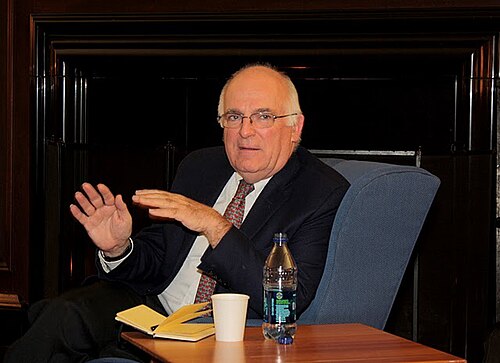 Sir Richard Dearlove
7
29 Oct 2020 – 29 Oct 2020
-1239 d
Sir Richard Dearlove
7
29 Oct 2020 – 29 Oct 2020
-1239 d
-
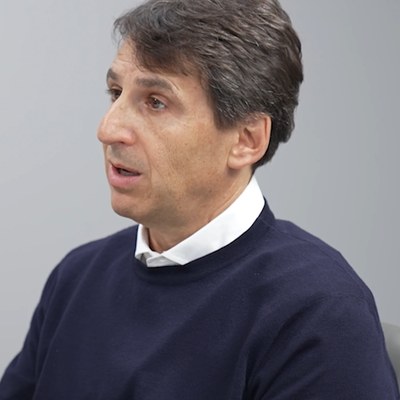 Marc Rowan
6
1 Dec 2020 – 3 Mar 2026
-1206 d
Marc Rowan
6
1 Dec 2020 – 3 Mar 2026
-1206 d
- Dylan Patel 7 5 Dec 2023 – 22 Jul 2026 -107 d
-
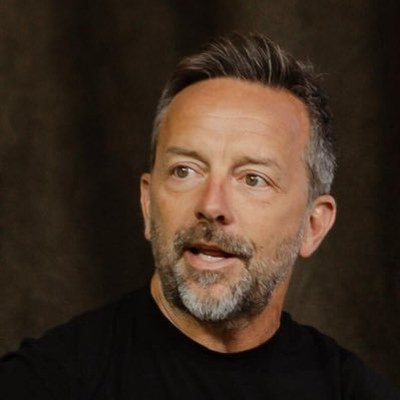 Brad Gerstner
4
thin
21 Mar 2024 – 4 May 2026
+0 d
Brad Gerstner
4
thin
21 Mar 2024 – 4 May 2026
+0 d
-
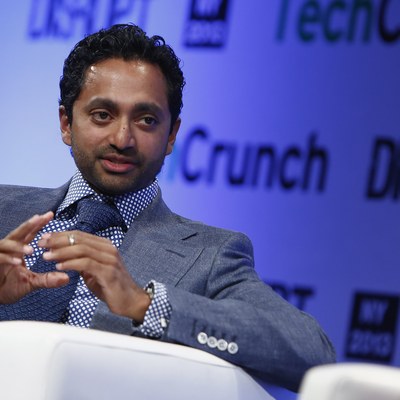 Chamath Palihapitiya
7
10 Oct 2025 – 11 Jul 2026
+568 d
Chamath Palihapitiya
7
10 Oct 2025 – 11 Jul 2026
+568 d
-
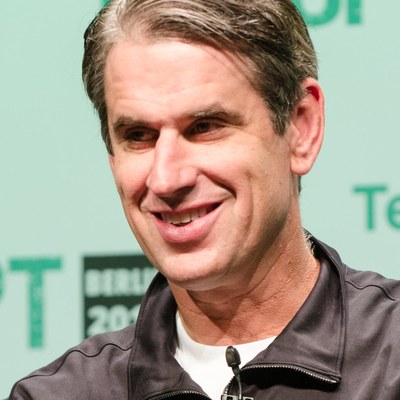 Bill Gurley
4
thin
26 Feb 2026 – 23 Apr 2026
+707 d
Bill Gurley
4
thin
26 Feb 2026 – 23 Apr 2026
+707 d
-
 David Friedberg
2
thin
3 Apr 2026 – 3 Apr 2026
+743 d
David Friedberg
2
thin
3 Apr 2026 – 3 Apr 2026
+743 d
-
 John Williams
1
thin
John Williams
1
thin
The chronologysourced and dated, oldest first
-
-
Sir Richard Dearlove
Dearlove says Russia has roughly the GDP of Italy, ranking thirteenth or fourteenth globally.
“But bear in mind, and people are surprised when I say this, that Russia, in fact, now has more or less the GDP of Italy, somewhere around thirteenth or fourteenth in the world.”
-
Sir Richard Dearlove
Dearlove says Russia's GDP roughly equals Italy's, ranking thirteenth or fourteenth globally with weak industrial base.
“Russia, in fact, now has more or less the GDP of Italy, somewhere around thirteenth or fourteenth in the world. And it has an aging population. It has a very weak industrial base.”
-
Sir Richard Dearlove
Dearlove says Russia has roughly Italy's GDP, ranking thirteenth or fourteenth globally, with an aging population.
“Russia, in fact, now has more or less the GDP of Italy, somewhere around thirteenth or fourteenth in the world. And it has an aging population.”
-
Sir Richard Dearlove
Dearlove characterizes Russia as commodity-dependent with weak industry and demographics, calling it unquestionably a declining power.
“It has a very weak industrial base. It's commodity dependent. It's got dreadful demographics, and it's a declining power unquestionably.”
-
Sir Richard Dearlove
Dearlove argues the Palestinian issue no longer defines Middle Eastern regional politics, marking huge shift.
“the basic fact is that the Palestinian issue is no longer being allowed to define much of the region's politics. And this is a huge change.”
-
Sir Richard Dearlove
Dearlove argues most Arab state leaders lost patience with Palestinians, ending the issue's regional dominance.
“The truth about the Palestinian issue, in my opinion, is that most Arab leaders, or the leadership of most Arab states, lost patience with the Palestinians”
-
Sir Richard Dearlove
Dearlove predicts a return to nineteenth-century style congress of nations forming alliances and groups.
“what we're going to see is some sort of congress of nations along the line of the nineteenth century, where nation states enter alliances or groups, and that will sort of order the international scene.”
-
Marc Rowan
Bourkoff visited the Arabian Peninsula recently following the Abraham Accords to observe progress.
“Just a few weeks ago, I visited the Arabian Peninsula in the wake of the Abraham Accords, experiencing how an ancient civilization and a young country embraces the future.”
-
-
-
Dylan Patel
Patel argues the semiconductor supply chain is highly fragmented with critical monopolies in countries like Austria.
“People don't understand how fragmented the semiconductor supply chain really is and how many monopolies there are. The US could absolutely shut shut down the Chinese semiconductor supply chain.”
-
-
-
Brad Gerstner
Gerstner says AI has become the leading edge of sovereign battles, making TikTok's status quo path inconceivable.
“So given that, I think it's almost inconceivable for me now to see how TikTok US has a path forward under kind of the status quo.”
-
-
-
Marc Rowan
Rowan worries most about damage to US brand regarding long-term agreements and security pacts from tariff approach.
“The one I worry about more is the second, which is damage to The US brand. What does our brand mean when it comes to long term agreements, long term security packs?”
-
Brad Gerstner
Gerstner warns chip export ban increases risk China invades Taiwan over existential AI needs.
“If we keep the chip ban in place, here's my biggest concern. I think it dramatically increases the chances that China is forced to move on Taiwan.”
-
Brad Gerstner
Gerstner warns Huawei went from 0% to 50% Saudi market share, arguing US must export AI technology.
“Huawei has gone from 0% market share in Saudi Arabia to 50% market share in Saudi Arabia.”
-
Chamath Palihapitiya
Palihapitiya argues Middle East countries seek peace because oil is becoming less valuable over time in the ground.
“So when that oil sits in the ground, the longer it sits in the ground, the less valuable it is to you because it doesn't actually add to your balance sheet.”
-
Chamath Palihapitiya
Palihapitiya predicts AI will create three geopolitical tiers with only China and America exporting intelligence.
“In bucket number one, you're an exporter of that intelligence. And I think right now, steady state, it's gonna be China and America.”
-
Chamath Palihapitiya
Palihapitiya frames China competition as existential and says winning requires keeping it focused on AI and economics.
“The war with China is existential because if we can keep it on the battlefield of AI and intellectual and economic prowess, we have a very good chance of winning.”
-
-
-
Chamath Palihapitiya
Palihapitiya argues Iran is fundamentally different from other Middle Eastern countries in culture, religion, and language.
“It's a very different culture than the other Middle East countries. It's a fundamentally different religion. It's a fundamentally different language.”
-
Dylan Patel
Patel frames AI competition as economic war determining whether China rises to global hegemony.
“at the end of the day, this is an economic war. Right? If The US and the West win in AI and control, you know, more powerful AI systems that have this feedback loop that improve economic growth and weapon systems and whatever else, right, engineering of grids and cyber attacks and all these sorts of things.”
-
Dylan Patel
Patel argues Western AI dominance determines whether China becomes global hegemon; without it, China will win economically.
“They have this like advantage over China, then China will not rise to be the global hegemony. But without AI, China definitely will rise to be the global hegemony.”
-
Dylan Patel
Patel argues US AI dominance across economic and military systems will prevent China from becoming global hegemon.
“They have this like advantage over China, then China will not rise to be the global hegemony.”
-
Bill Gurley
Gurley warns undiplomatic behavior could push global partners toward China, which he saw performing strongly in August.
“if we are undiplomatic with our partners around the globe, that they will, it'll be more easier for them to rationalize agreements with China.”
-
Bill Gurley
Gurley warns undiplomatic US behavior could push global partners toward China, which he observed hitting on many cylinders in August.
“And China is, I just spent some time there in August is hitting on many, many cylinders.”
-
Bill Gurley
Gurley warns alienating trade partners could result in China serving global AI markets while America is isolated.
“I think this could even happen with AI models where there's a fence around America and China's serving the rest of the world.”
-
“But now, as we've been saying, it's only 70% of what you need to worry about. The other 30% is geopolitics, it's government borrowing, it's excesses in capital markets, and it's technological change.”
-
Marc Rowan
Rowan argues the 30% market overhang from geopolitics, inflation, and technology was foreseeable and predictable.
“I think the 30% overhang of geopolitics, inflation, technological change is now here. It was foreseeable, not maybe exactly how it occurred, but it was foreseeable. It was predictable.”
-
“But now as we've been saying, it's only 70% of what you need to worry about. The other 30% is geopolitics. It's government borrowing. It's excesses in capital markets and it's technological change.”
-
Marc Rowan
Rowan states the 30% overhang from geopolitics, inflation, and tech change was foreseeable and predictable.
“I think the 30% overhang of geopolitics inflation technological change is now here. It was foreseeable, not maybe exactly how it occurred, but it was foreseeable. It was predictable.”
-
Chamath Palihapitiya
Palihapitiya says China's economy is enormously dependent on imported oil, about 20% of their economy.
“If you look at the conditions inside of the Chinese economy, the most interesting takeaway is that they are enormously dependent on imported oil, So about 20% of their economy.”
-
David Friedberg
Friedberg states 400 million people entered malnourishment after Ukraine war with 1200 calories or less daily.
“This means more than one year of 1,200 calories or less per day for a year, 400,000,000 people after Ukraine.”
-
David Friedberg
Friedberg says largest urea producer in Qatar damaged and will be incapacitated for three to five years.
“That facility got damaged, the the main facility that's being used to make fertilizer. So that is the largest producer of urea in the world that's now gonna be incapacitated for three to five years.”
-
Chamath Palihapitiya
Palihapitiya warns Israel risks losing America as steadfast ally without finding quick off-ramp
“And I think that that's problematic for Israel far more than it's problematic for The United States.”
-
Bill Gurley
Gurley predicts US AI regulation could create a fence letting China serve the global market instead.
“I think what could happen with AI is we could build a fence around ourselves, and China could end up serving the rest of the world.”
-
Brad Gerstner
Gerstner warns $120 oil will hurt markets if Iran situation isn't resolved in three to four months.
“A $120 oil will take its toll on the market if we don't solve that over the course of the next three to four months.”
-
Dylan Patel
Patel cites estimates of 20% economic decline if Taiwan is invaded, comparable only to world wars.
“And then subsequently, that that sends the world into a depression. Right? The world has not experienced a 20 free fall since maybe, like, a one of the great wars.”
-
Dylan Patel
Patel notes China has a fully self-sufficient vertical semiconductor supply chain, though behind by three to fifteen years.
“China has a vertical supply chain. Yes. In many cases, it's fifteen years behind, ten years behind, in some cases, only three years behind.”
-
Chamath Palihapitiya
Palihapitiya says countries will build sovereign AI stacks with open source models even if only 95% as good.
“And if the models are 99% as good or 95% as good, there's going to be a claim that some countries make, which is it's just good enough.”
-
Dylan Patel
Patel reports both US and Chinese governments unhappy about Chinese open-source models benefiting American companies more than Chinese ones.
“There have been reports in China about the Chinese government not so happy that American companies are profiting more from Chinese open source models than Chinese companies are.”
-
-
-
John Williams
Williams identifies supply shocks, geopolitical uncertainty, AI and payments tech as shaping today's complex central bank environment.
“Central banks today are confronting an increasingly complex environment shaped by repeated supply shocks, geopolitical uncertainty, and rapid advances in artificial intelligence and payments technologies.”
-
Where they overlapsame programme, same subject
- All-In Podcast also carries Chamath Palihapitiya and David Friedberg on this subject, at different times.
- CNBC Television also carries Brad Gerstner and Marc Rowan on this subject, at different times.