Who is on this subjectordered by the date of their first quote here
7 of 11 lanes rest on fewer than 5 quotes and are marked thin. Offsets are days from the middle first-quote date, 1 May 2023 — a date, and nothing else. It is not a claim about who reached a view first.
-
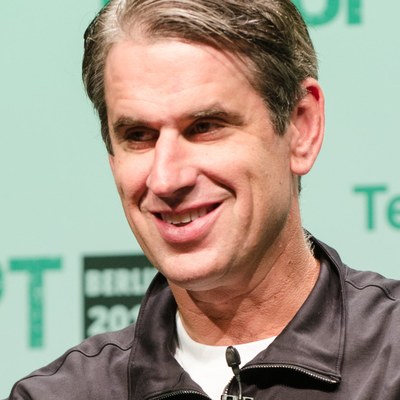 Bill Gurley
1
thin
15 Feb 2018 – 15 Feb 2018
-1901 d
- Stanley Druckenmiller 1 thin 6 Jan 2020 – 6 Jan 2020 -1211 d
-
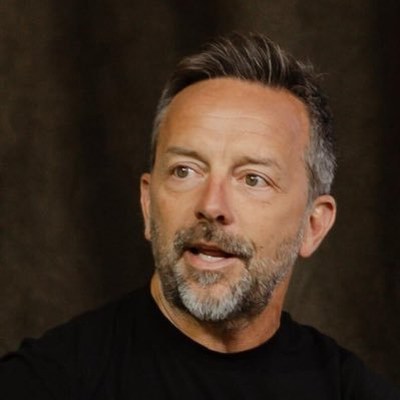 Brad Gerstner
9
23 Jun 2020 – 12 Jan 2024
-1042 d
-
 David Friedberg
5
17 Oct 2022 – 29 Aug 2026
-196 d
-
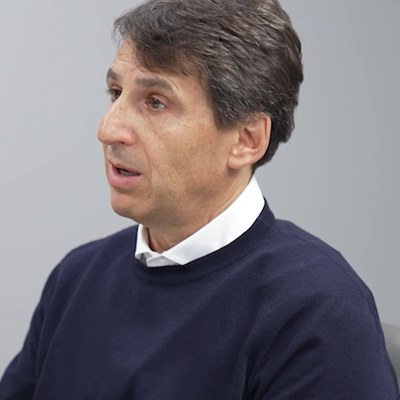 Marc Rowan
7
1 May 2023 – 21 Dec 2025
+0 d
-
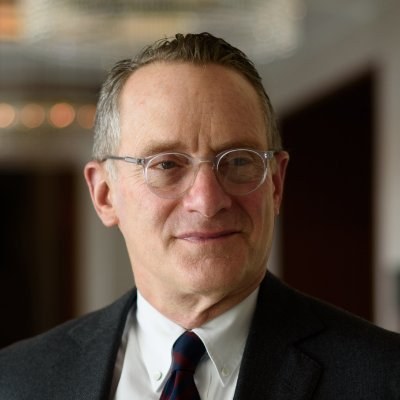 Howard Marks
7
4 Oct 2023 – 2 Mar 2026
+156 d
-
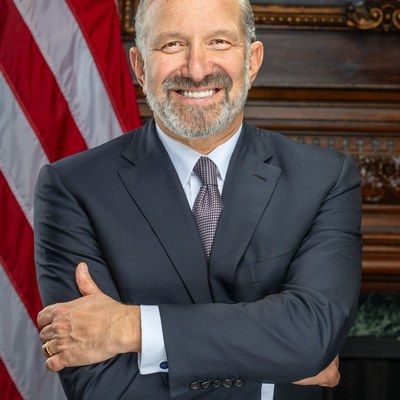 Howard Lutnick
2
thin
12 Mar 2025 – 12 Mar 2025
+681 d
-
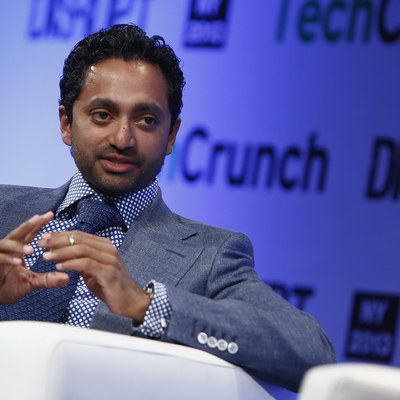 Chamath Palihapitiya
1
thin
7 Sep 2025 – 7 Sep 2025
+860 d
-
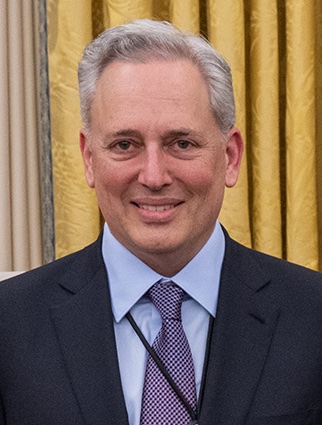 David Sacks
1
thin
7 Feb 2026 – 7 Feb 2026
+1013 d
- Dylan Patel 2 thin 25 Aug 2026 – 25 Aug 2026 +1212 d
-
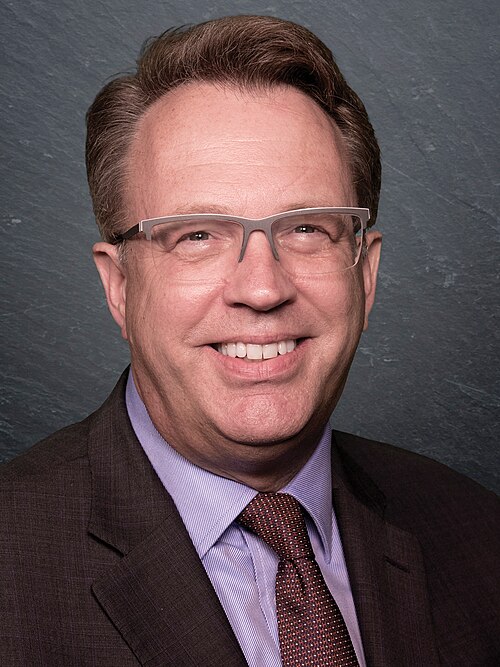 John Williams
2
thin
The chronologysourced and dated, oldest first
-
-
Bill Gurley
Gurley quotes Druckenmiller saying cheap money drives speculation like oilmen drilling with others' capital.
“Drucker Miller just, you know, who's someone that's made a name in macro investing says, if you give, you know, Texas oilman the ability to drill holes with someone else's money, they'll drill as many as you possibly can. And so low interest rates drive speculation,”
-
-
-
Stanley Druckenmiller
Druckenmiller says current Fed funds rate of 1.5% is absurd given economic conditions; appropriate level would be 3.5%.
“If I came down from Mars and you showed me the the broad landscape and asked me where Fed funds would be, probably would guess three and a half, somewhere in there.”
-
Brad Gerstner
Gerstner calculates that 150 bps lower discount rates should add two to three turns to software multiples.
“If I reduce my discount rate on any growth software company by 150 bps over the next ten years, the multiple will go up by two to three turns, right?”
-
-
-
Brad Gerstner
Gerstner predicted every one percent move in ten-year treasury causes 10 to 20 percent drawdown in growth multiples.
“Right? And for every 1% move in the ten year, you've got a 10 to a 20% drawdown in growth multiples.”
-
-
-
Brad Gerstner
Gerstner reports the Fed expects 2% negative real rates by year-end, with 4.3% inflation and 2.3% ten-year rate.
“They said we expect inflation exiting the year to be 4.3 and we expect the ten year to be around 2.3.”
-
Brad Gerstner
Gerstner states a 1% change in interest rates causes 15-20% change in valuation multiples.
“the iron law of investing is interest rates. A 1% change in rates leads to a 15 or 20% change in a multiple.”
-
David Friedberg
Friedberg warns US debt service could hit $1.5 trillion, over a third of the federal budget.
“We're spending $800,000,000,000 a year on debt service right now. That could skyrocket to $1,500,000,000,000 which is over a third of the federal budget each year going into next year.”
-
-
-
David Friedberg
Friedberg explains rising interest rates compressed VC time horizons from ten-fifteen years to under five years.
“When interest rates jump up to 4%, well, now I can invest my money and I can make 20% back on my money in four and a half years.”
-
Marc Rowan
Rowan says institutional investors prefer locking in 5% tax-free returns after a decade of low rates.
“They prefer 5% to 2%. It's no more we can make it really complicated, but when they're they've had a decade of very low ability to provide for retirement income, all of a sudden, can lock in 5% plus tax free for the next decade.”
-
Marc Rowan
Rowan states all commercial real estate purchased before 2022 is now worth less due to rates.
“Everything that was purchased prior to 2022 is today worth less. The change in cap rates, the change in interest rates has simply made the market worth less.”
-
Brad Gerstner
Gerstner highlights the shift from zero rates to 8% mortgages as evidence of dramatic policy change.
“We've gone from effectively a 0% interest rate environment in ZERP, where corporations borrowed for free and consumers borrowed for free, to now we have 8% mortgages.”
-
Brad Gerstner
Gerstner notes rates have jumped from zero to 8% mortgages, 10% car loans, and 20% credit cards.
“We've gone from effectively a 0% interest rate environment in ZERP, where corporations borrowed for free and consumers borrowed for free, to now we have 8% mortgages. We have 10% car loans.”
-
Brad Gerstner
Gerstner lists specific consumer borrowing costs: 10% car loans and 20% credit cards.
“We have 10% car loans. We have 20% credit cards. Student loans are about to kick in.”
-
Howard Marks
Marks describes Fed funds rate declining from 20% in 1980 to zero forty years later as dominant financial factor.
“Forty years later, the Fed funds rate was zero, and I had a loan outstanding from bank at two and a quarter.”
-
Howard Marks
Marks says interest rates fell 20 percentage points from 1980 to 2020, the most important financial event in fifty years.
“So the decline of interest rates by 20 percentage points over that period was a dominant factor in the financial world.”
-
Howard Marks
Marks forecasts Fed funds rate will settle between two and four percent, not zero to two.
“what I said in the memo is that rates are likely to be between two and four, not between zero and two, the Fed funds rate.”
-
Howard Marks
Marks predicts Fed funds rate will normalize between two and four percent, not zero to two.
“rates are likely to be between two and four, not between zero and two, the Fed funds rate. And, you know, between zero and two is, an emergency measure.”
-
Howard Marks
Marks says the Fed funds rate should exceed inflation to maintain a positive real rate.
“If inflation's two, then the Fed funds rate should be higher than that so that there's a positive real Fed funds rate.”
-
Howard Marks
Marks illustrates how refinancing environment shifted from 800 million at 5% to 500 million at 8%.
“You went to the bank. They said we'll lend you 800,000,000 at 5%. Now the loan is up for renewal. You go in. They say, fine. We'll lend you 500,000,000 at 8%.”
-
Brad Gerstner
Gerstner predicts the ten-year treasury will settle in a three to four percent range, creating a highly investable period.
“I think we're going back to a period of three to four on the ten year, a highly investable period.”
-
-
-
Brad Gerstner
Gerstner explains falling inflation increases economic restrictiveness, requiring rate cuts to maintain same restrictiveness level.
“every month that inflation goes down, the effective restrictiveness of the economy goes up, holding all else equal. So you gotta take rates down just to keep it at the same level of restrictiveness.”
-
Marc Rowan
Rowan declares we've had a soft landing after rates rose 400 basis points without breaking the economy.
“I think we've had a soft landing. When rates have gone up 400 basis points and the wheels haven't come off the bus, as they say, I think that's the definition of a soft landing.”
-
Marc Rowan
Rowan declares a soft landing achieved after 400 basis point rate increase without economic breakdown.
“we've had a soft landing. When rates have gone up 400 basis points and the wheels haven't come off the bus, as they say, I think that's the definition of a soft landing.”
-
David Friedberg
Friedberg calculates refinancing half of U.S. debt at higher rates adds $300 billion in annual interest payments.
“And when that happens, you know, 2% increase in interest on $15,000,000,000,000 that's another $300,000,000,000 of interest payments a year.”
-
Marc Rowan
Rowan criticizes Fed rate cuts as expensive insurance when financial markets are wide open and equities at all-time highs.
“What's expensive about it. The notion that we would cut rates. Financial markets are wide open. Equities are at all time high. Financing is available.”
-
Marc Rowan
Rowan questions Fed rate cuts given wide-open markets, record equity highs, and rising real estate.
“The notion that we would cut rates. Financial markets are wide open. Equities are at all time high. Financing is available. Real estate prices are going up”
-
-
-
Howard Lutnick
Lutnick predicts Trump will balance the budget and interest rates will drop 150 basis points during his term.
“Let Donald Trump is going to balance the budget of The United States Of America. Interest rates are gonna drop a 150 basis points during his term.”
-
Howard Lutnick
Lutnick predicts interest rates will drop 150 basis points during Trump's term along with energy prices.
“Interest rates are gonna drop a 150 basis points during his term. Oil and our gas prices are gonna come smashing down. Egg prices come smashing down.”
-
Chamath Palihapitiya
Palihapitiya argues a 25 basis point cut is insufficient for a $32 trillion economy hampered by faulty data.
“So a 25 basis point cut to a $32,000,000,000,000 economy is not a strategy. And I think that the reason they don't know what to do exactly is because they have extremely faulty data.”
-
Marc Rowan
Rowan observes ten-year rates rising while short rates fall, steepening the yield curve.
“And what we're seeing is a steepening of the yield curve. Rates that matter, the ten year, are higher even if short rates are lower.”
-
-
-
“So I do think that over the next say six months to a year, he's gonna wanna cut rates.”
-
David Friedberg
Friedberg calculates that 5% interest rates would add $650 billion yearly, bringing total interest expense near $2 trillion.
“But if rates climb closer to 5%, as I mentioned in the past, just using the current debt levels, it adds another $650,000,000,000 a year of interest expense, which takes interest expense almost up to 2,000,000,000,000 a year just paying the interest on the past debt.”
-
Howard Marks
Marks describes personal borrowing rates falling from 22.25% in 1980 to 2.25% in 2020.
“And forty years later in 2020, I was able to borrow at two and a quarter fixed for fifteen years.”
-
Dylan Patel
Patel argues Meta could pay 8% interest rates versus current 5-6% because compute returns are enormous.
“So why wouldn't interest rates Yep. For Amazon go from, you know, from where they are today? I think Meta pay okay, let's like so this is going be extremely lived out.”
-
Dylan Patel
Patel argues hyperscalers would pay 8% interest rates versus current 5-6% given AI compute returns.
“Meta's raised at, like, 5% to 6%. I don't see why they wouldn't pay 8% Because they would happily pay 8% because the return from the compute that they're going to build is humongous.”
-
David Friedberg
Friedberg states each 1% interest rate increase costs US government 1.25% of GDP annually in interest.
“For every 1% change in the interest rate, the US government has to pay 1.25% of GDP in excess interest each year.”
-
-
-
John Williams
Williams reports Treasury repo rates fell 15 basis points below IORB in mid-May, causing two basis point EFFR decline.
“Treasury repo rates later notably declined, falling as low as 15 basis points below the interest rate on reserve balances (IORB) in mid-May, though they have since rebounded.”
-
John Williams
Williams says immediate recognition of productivity shifts produces trivial inflation effects below 0.1 percentage points with instant rate rises.
“Indeed, with immediate recognition (not shown), the depressing effect on the inflation rate is trivial, less than one tenth of a percentage point.”
-
Where they overlapsame programme, same subject
- All-In Podcast also carries Brad Gerstner, Chamath Palihapitiya, David Friedberg and David Sacks on this subject, at different times.
- Bloomberg Television also carries Marc Rowan and Stanley Druckenmiller on this subject, at different times.
- CNBC Television also carries Brad Gerstner and Marc Rowan on this subject, at different times.