Who is on this subjectordered by the date of their first quote here
4 of 7 lanes rest on fewer than 5 quotes and are marked thin. Offsets are days from the middle first-quote date, 30 Apr 2023 — a date, and nothing else. It is not a claim about who reached a view first.
-
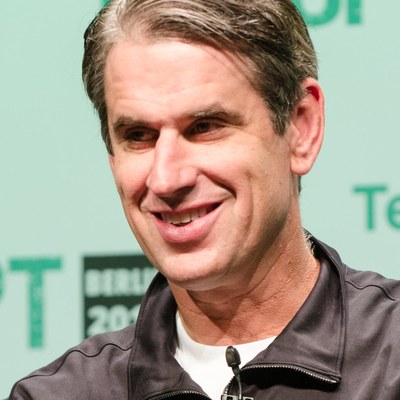 Bill Gurley
16
17 Nov 2017 – 12 Feb 2026
-1990 d
Bill Gurley
16
17 Nov 2017 – 12 Feb 2026
-1990 d
-
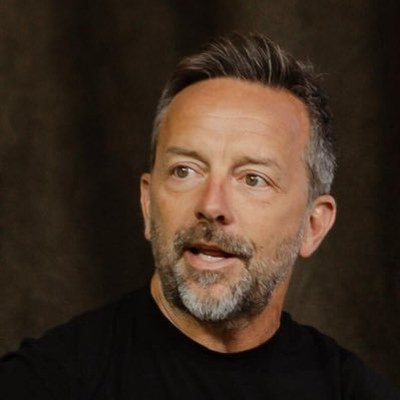 Brad Gerstner
33
27 Oct 2020 – 2 Jul 2026
-915 d
Brad Gerstner
33
27 Oct 2020 – 2 Jul 2026
-915 d
-
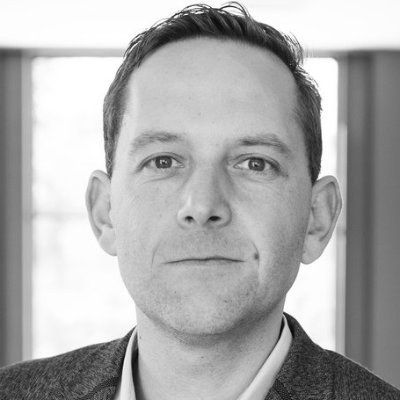 David Friedberg
1
thin
30 Apr 2023 – 30 Apr 2023
+0 d
David Friedberg
1
thin
30 Apr 2023 – 30 Apr 2023
+0 d
- Dylan Patel 2 thin 21 Jan 2025 – 16 Jul 2026 +632 d
-
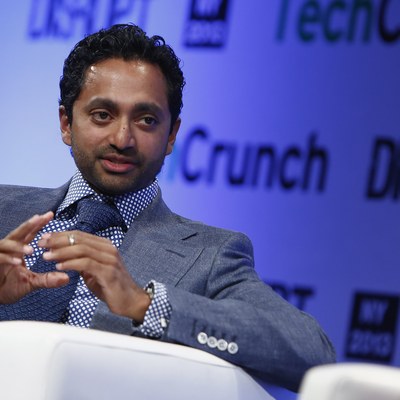 Chamath Palihapitiya
5
11 Mar 2026 – 4 Sep 2026
+1046 d
Chamath Palihapitiya
5
11 Mar 2026 – 4 Sep 2026
+1046 d
-
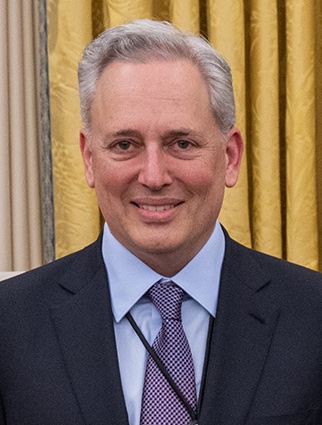 David Sacks
2
thin
19 Jun 2026 – 25 Aug 2026
+1146 d
David Sacks
2
thin
19 Jun 2026 – 25 Aug 2026
+1146 d
-
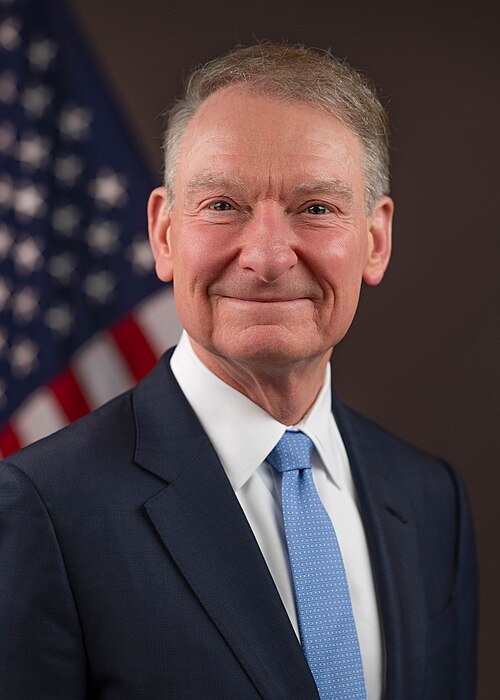 Paul Atkins
2
thin
Paul Atkins
2
thin
The chronologysourced and dated, oldest first
-
-
Bill Gurley
Gurley says Stitch Fix created $60 million in free cash flow, raising only $40 million before IPO.
“The company had only raised $40,000,000. Hence, we had created $60,000,000 in free cash flow, something that's extremely rare in Silicon Valley these days.”
-
“Over 60% of the management team's female. Over 60% of the board is female. And I found out this morning she may be the youngest female founder to actually take their company public ever.”
-
Bill Gurley
Gurley says Katrina Lake may be the youngest female founder ever to take a company public.
“I found out this morning she may be the youngest female founder to actually take their company public ever.”
-
Bill Gurley
Gurley notes Katrina Lake may be the youngest female founder to take a company public ever.
“I found out this morning she may be the youngest female founder to actually take their company public ever. And so these success points and data points create role models that help bring everything forward.”
-
-
-
Bill Gurley
Gurley argues IPO process has devolved from wide marketing to hand allocation among 10 to 15 firms.
“I think there that it used to be that the IPO process was about disseminating and marketing and selling far and wide, and it's become a game of just hand allocating shares to the same 10 or 15 firms.”
-
Bill Gurley
Gurley argues direct listings remove steps since IPOs use equivalent opening process the next day anyway.
“And so in the direct listing process, you're actually removing steps because once you do an IPO, you actually do with the exact equivalent of direct listing opening the next morning.”
-
-
-
Bill Gurley
Gurley argues IPO allocations transferred $4.5 billion in wealth from Snowflake to allocation recipients overnight.
“And so the day after the IPO, the people that were allocated the stock the night before have 4,500,000,000 in wealth they didn't have before. And that money didn't just come out of nowhere.”
-
Bill Gurley
Gurley argues founders who stay private longer fail their duty to maximize shareholder value for all constituents.
“Like the minute you started giving stock to your employees, you're in the game And your job is to maximize shareholder value for all your constituents, your investors, your employees, everything else.”
-
Brad Gerstner
Gerstner criticizes traditional IPOs as year-long processes where companies don't know pricing or shareholders until the end.
“It's a year long process where you don't know the price for your shares or even who your shareholders are going to be until the end of the line.”
-
Brad Gerstner
Gerstner argues traditional IPO bank fees of 6-7% plus historical-only financials leave investors unable to evaluate high-growth companies.
“And on top of that, of course, you can only give historical financials, which leaves most investors in the dark about a high growth company's future prospects.”
-
Brad Gerstner
Gerstner says Altimeter's SPAC model lets companies set their own price and charges zero fees to the company.
“You set the price, you tell the story with forward looking forecasts. We serve up a world class group of mutual funds and hedge funds as your shareholders.”
-
Brad Gerstner
Gerstner says Altimeter's SPAC model lets founders set their own price and select their shareholders.
“You set the price, you tell the story with forward looking forecasts. We serve up a world class group of mutual funds and hedge funds as your shareholders. You ring the bell, it's your IPO.”
-
-
-
Brad Gerstner
Gerstner says traditional IPO costs include upfront fees and structural underpricing as the larger expense.
“There's the upfront fee, five and a half, 6%, whatever they're paying on the amount of capital raised. But he would argue the much bigger expense, right, is the indirect cost of the structural underpricing.”
-
Brad Gerstner
Gerstner claims Grab achieved 20-30% higher valuation than traditional IPO would have delivered.
“So in a traditional IPO, let's say you have a $10,000,000,000 enterprise value raising a billion dollars. If it's being underpriced, he would argue structurally by 40%.”
-
Brad Gerstner
Gerstner calculates over $1 billion in cost savings for Grab employees and shareholders.
“And so if you say it's 30 percent on a $4,000,000,000 raise, that's over a billion dollars of savings. Right? Over $1,000,000,000 of indirect cost savings to the employees and the shareholders.”
-
-
-
Brad Gerstner
Gerstner predicts most IPOs in the next twelve months will price below their last private round.
“majority of companies that come public in the next twelve months are going out below their last”
-
-
-
David Friedberg
Friedberg states two-thirds of post-COVID IPOs now trade below total cash raised.
“I think two thirds of the companies that went public since COVID are trading at less than the cash they raised to date as public companies now.”
-
Brad Gerstner
Gerstner says IPO investors today demand significantly higher returns than 2021 deals as margin of safety.
“anybody who does an IPO today, okay, is going to demand a, you know, a rate of return into that offering that is a significant margin of safety relative to all deals that were done in 2021.”
-
Brad Gerstner
Gerstner says companies going public now must offer bigger discounts than pre-correction 2021 levels to attract investors.
“in order to get into the public markets, they have to, you know, step in with a bigger discount than they would have, you know, pre this correction.”
-
Bill Gurley
Gurley notes hyper-competition removed liquidation preference protection on IPOs, enabling founders to convert preferences below value.
“There was a term removed from most term sheets that gave investors the right to protect their LICPREF on an IPO, that's gone in most of these cases.”
-
Brad Gerstner
Gerstner reveals Altimeter tracked 100 potential IPOs in 2021, three in 2022, and zero in 2023 year-to-date.
“So that was 46 in 2020, a 100 in 2021, three in 2022, and zero year to date in 2023.”
-
Brad Gerstner
Gerstner says Instacart will IPO at around $10B versus its $50-60B private valuation, an 80% down round.
“Right? Super high quality company. I think its last private round was 50 or 60,000,000,000 in the bubble, and now it's rumored to be going public at somewhere around $10,000,000,000.”
-
Brad Gerstner
Gerstner forecasts 5-7 good-sized IPOs in Q4 2023 and closer to 10 in Q1 2024.
“I think we're gonna see five, six, seven IPOs, good sized IPOs in q four. We'll probably see closer to 10 in q one,”
-
-
-
“He said to me, the IPO market is slow in volume terms for lack of supply, not lack of demand. And I've been making this case that the IPO window is wide open.”
-
Brad Gerstner
Gerstner says Instacart needed board courage to ignore prior high valuations and go public at lower valuation.
“I think one of the obstacles. Right? So it's performed incredibly well. Off of the bottom, it's performed really well since the IPO, but it took a board that had the courage to say, you know, we're going to ignore what the prior valuations were, and we're gonna focus on getting the the company public.”
-
Brad Gerstner
Gerstner argues historic tech IPOs needed capital access, unlike today's companies with deep private markets.
“I think the biggest thing that has changed over the last twenty years, you know, back to you know, if we think about the companies that went public in in in those early vintages, the Microsofts, the Apples, the Googles, the Salesforce, etc. What was one commonality, Bill? They needed access to capital to grow.”
-
Brad Gerstner
Gerstner identifies deep private capital from sovereign wealth funds as structural change preventing companies from going public unlike past decades.
“And if you look at the private market alternatives for them for capital, we didn't have sovereign wealth funds that were writing multi billion dollar checks at that point in time.”
-
Brad Gerstner
Gerstner reports Coatue's Philippe suggested companies now need $10 billion market cap to go public.
“he implied you tell me if I got this wrong. He implied that in the modern era, you need to be $10,000,000,000 to go public. Yeah. Market cap. Yes.”
-
Brad Gerstner
Gerstner says Philippe implied companies need $10 billion market cap to go public, calling this threshold problematic.
“He implied that in the modern era, you need to be $10,000,000,000 to go public. Yeah. Market cap. Yes. Which if it's 10,000,000,000 or bust, that's a bitch, man.”
-
Bill Gurley
Gurley explains compounding IPO ratchets create misalignment by making late investors want lower IPO prices.
“The the later stage investors that wrote this compounding ratchet term actually want the IPO to be as low as possible because they'll they'll get more shares.”
-
Brad Gerstner
Gerstner argues regulatory burdens keep companies private longer, harming retail investors.
“I think we're better off as a country when these companies are coming public sooner. But that's that's in fact what's happened. So we invest early.”
-
-
-
Bill Gurley
Gurley says private companies with low growth rates are no better off than public ones with same metrics.
“But guess what? If you're private at a 100,000,000 revenue with a 10% growth rate, it's not like you're better off.”
-
Dylan Patel
Patel reports CoreWeave has over 200,000 GPUs, billions in revenue, $20 billion valuation, and plans to IPO in 2025.
“CoreWeave now has, like, 200 k plus GPUs. Right? Like Yeah. A lot of GPUs. Right? They're doing, like, you know, billions of dollars of revenue.”
-
“So we're three years into this recovery. We've got this incredible group of companies that are still private, you know, think of the Stripes and Databricks and SpaceX, etcetera.”
-
Brad Gerstner
Gerstner says OpenAI's $150 billion round with 10 investors created a dream IPO cap table, calling it a private IPO.
“If you looked at that, the cap table for the 10 investors in that round, it would be a dream day one IPO cap table for any company that wanted to enter the public markets.”
-
Brad Gerstner
Gerstner says OpenAI and Anthropic deals are bigger than any tech IPO in five years.
“I was just looking at these. I think these are bigger private IPOs than any public IPO done in the last five years in the tech market.”
-
Brad Gerstner
Gerstner calculates OpenAI could IPO at a trillion dollar valuation at 10x $100 billion revenue, below Facebook's IPO multiple.
“if you guys went public at 10 times 100,000,000,000 in revenue, right, which would be I think a lower multiple than Facebook went public at, a lower multiple than a lot of other big consumer companies went public at, That would put you at a trillion dollars.”
-
-
-
Brad Gerstner
Gerstner predicts Anthropic and OpenAI will go public within twelve to eighteen months.
“Over the course of the next twelve to eighteen months, both Anthropic and OpenAI will come public would be my guess.”
-
Bill Gurley
Gurley argues the IPO process is broken due to regulatory capture and most people don't understand how it actually works.
“I think the IPO process almost certainly also because of regulatory capture is remarkably broken. I don't actually think the average citizen even knows.”
-
Bill Gurley
Gurley argues citizens mistakenly believe IPOs work like direct listings with price-based allocation.
“I think they think a bunch of people put orders in, you sort them based on who's willing to pay the highest price”
-
Bill Gurley
Gurley argues freshman students would design IPO process as anonymous auction matching supply and demand.
“They would craft a direct listing. It's obvious that you should match supply and demand and be indifferent to who the It should be an anonymous auction.”
-
Bill Gurley
Gurley argues IPO bankers handpick both price and allocation, creating expected first-day pops for decades.
“So it's a handpicked price and it's hand allocated. And for the past twenty five, thirty years, you have these pops that have become expected,”
-
Bill Gurley
Gurley says IPO bankers hand-pick price and allocations, creating expected pops as one-day giveaways to clients.
“And for the past twenty five, thirty years, you have these pops that have become expected, I would say. And it's a one day giveaway to their clients.”
-
Chamath Palihapitiya
Palihapitiya argues investors capturing returns in private markets changed how public markets behave and delayed IPOs.
“And so investors said, well, let's go capture these in the private markets for us and our LPs. But what it also does is then change the nature of how these markets behave.”
-
Chamath Palihapitiya
Palihapitiya asks whether quarterly reporting burdens have contributed to killing the IPO market, citing Trump's proposal for longer cycles.
“But recently, Paul president Trump said maybe we should move to six month reporting or one year reporting, and it was really well received by a lot of people.”
-
Chamath Palihapitiya
Palihapitiya says OpenAI and Anthropic must IPO immediately as no other companies are as important.
“These two companies need to get out as quickly as possible. And the reason is every single company that comes after it, all those companies that you just named, Jason, are not nearly as important and do not need the money nearly as badly as these guys do.”
-
Brad Gerstner
Gerstner says institutional demand for Cerebras is around $250-275 range, while demand over $300 is mostly retail investors.
“I would say it's more in that range. That's what I'm hearing from the institutions. I think most of the demand over 300 is frankly retail that listen.”
-
Brad Gerstner
Gerstner says Cerebras is opening at over $100 billion valuation within minutes of speaking.
“We had the risk capital that stepped in, and now it's gonna go public today. I'm hearing in less than two minutes at over a 100 over a $100,000,000,000.”
-
Brad Gerstner
Gerstner warns retail investors not to YOLO into Cerebras at $400 per share.
“I get worried about Scott, like I said on the show Yeah. With retail investors, I would not be YOLO ing into this thing at $400.”
-
Brad Gerstner
Gerstner says SpaceX IPO rumored for June 12 will raise about $75 billion.
“We have incredible IPOs coming starting with SpaceX rumored on June 12. Hopefully, I'll be back in the New York Stock Exchange with you guys. It's gonna be an incredible IPO.”
-
Brad Gerstner
Gerstner states SpaceX IPO will raise approximately $75 billion and is rumored for June 12.
“It's gonna be an incredible IPO. It's gonna raise about 75 it's gonna raise about $75,000,000,000.”
-
Brad Gerstner
Gerstner says SpaceX IPO is rumored for June 12 at the New York Stock Exchange.
“We have incredible IPOs coming starting with SpaceX rumored on June 12. Hopefully, I'll be back in the New York Stock Exchange with you guys.”
-
Brad Gerstner
Gerstner says SpaceX IPO will raise about $75 billion, requiring Altimeter to sell other holdings to participate.
“It's gonna raise about 75 it's gonna raise about $75,000,000,000. Okay? So when when if Altimeter and we do wanna buy the SpaceX IPO, I've gotta raise that money from somewhere.”
-
David Sacks
Sacks explains Musk's net worth increased after SpaceX IPO but he has no more cash in the bank.
“He doesn't have one more dollar in the bank than he did the day before the IPO.”
-
Brad Gerstner
Gerstner predicts a robust back half if OpenAI hits $100 billion exit revenue and IPOs this year.
“If that revenue is on track, right, if they're headed to a $100,000,000,000 of exit revenue, you know, this year and and and have an IPO in the back half, I think you could see a really robust, you know, back half of the year.”
-
Chamath Palihapitiya
Palihapitiya claims OpenAI's IPO timing is controlled by banks maximizing embedded gains for clients.
“That has everything to do with who is lead left and who is lead right deciding how much embedded gain they can transfer to their best clients.”
-
Dylan Patel
Patel says Anthropic's billion-dollar operating profit figures will appear in their IPO.
“And so this is this is their financials that they're going to be putting out in their IPO.”
-
David Sacks
Sacks claims Dario's regulatory vision would have prevented Anthropic from achieving a successful IPO.
“Because I think if he had if he had realized his dream of this highly regulated AI apparatus, I don't think that company would be set up for a hugely successful IPO.”
-
Chamath Palihapitiya
Palihapitiya estimates Anthropic and OpenAI IPOs will generate over $500 billion in charitable giving combined.
“The interesting thing that's gonna happen post the Anthropic and OpenAI IPOs is if you think about the amount of charitable giving or DAFs that are going to be funded by both of these two IPOs, it's going to be north of $500,000,000,000 between the two companies, and it could be even more than that.”
-
-
-
Paul Atkins
Atkins says the agenda includes proposals to transform the disclosure regime to revitalize IPOs.
“This agenda includes a number of proposals critical to realizing that mission by transforming our disclosure regime.”
-
Paul Atkins
Atkins describes IPOs as invitations for workers and savers to participate in American enterprise prosperity.
“Every IPO is an invitation to workers and savers to participate in the prosperity of the next generation of American enterprise.”
-
Where they overlapsame programme, same subject
- Bill Gurley and Brad Gerstner — All-In Podcast, 1 appearance together
- CNBC Television also carries Bill Gurley, Brad Gerstner and Chamath Palihapitiya on this subject, at different times.
- All-In Podcast also carries Chamath Palihapitiya and David Sacks on this subject, at different times.
- BG2 Pod also carries Bill Gurley and Brad Gerstner on this subject, at different times.