Who is on this subjectordered by the date of their first quote here
1 of 2 lane rests on fewer than 5 quotes and is marked thin. Offsets are days from the middle first-quote date, 30 Mar 2015 — a date, and nothing else. It is not a claim about who reached a view first.
-
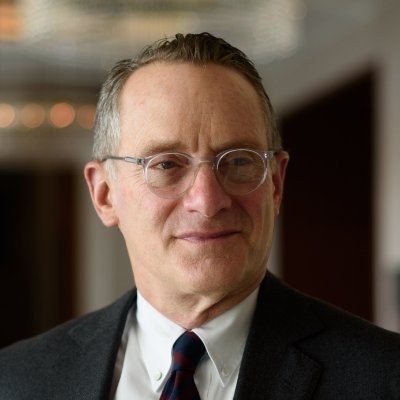 Howard Marks
129
30 Mar 2015 – 12 Jun 2026
+0 d
Howard Marks
129
30 Mar 2015 – 12 Jun 2026
+0 d
-
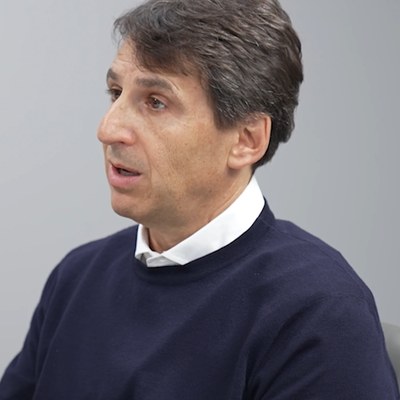 Marc Rowan
1
thin
6 Feb 2026 – 6 Feb 2026
+3966 d
Marc Rowan
1
thin
6 Feb 2026 – 6 Feb 2026
+3966 d
The chronologysourced and dated, oldest first
-
-
Howard Marks
Marks argues outcomes cannot determine decision quality because randomness causes good decisions to fail and bad ones to succeed.
“you can't tell from an outcome whether a decision was good or bad. It's very important. Most people don't understand this. Totally counterintuitive.”
-
Howard Marks
Marks says good decisions fail and bad decisions succeed frequently due to randomness in investing.
“good decisions fail to work all the time. Bad decisions work all the time. The investment business is full of people who are, quote, right for the wrong reason.”
-
Howard Marks
Marks argues investors must not assume likely outcomes will occur, unlike in physical sciences where determinism applies.
“you should not act as if the things that should happen are the things that will happen. Again, in the world of the physical sciences, you can probably bet that that's true.”
-
Howard Marks
Marks cites definition that risk means more things can happen than will happen.
“There's a professor at the London Business School who put it succinctly. He said risk means more things can happen than will happen. And again, this is profound in my opinion.”
-
Howard Marks
Marks quotes London Business School professor defining risk as more outcomes being possible than will actually occur.
“risk means more things can happen than will happen. And again, this is profound in my opinion. In the economic world, people generally make their decisions based on something called expected value,”
-
Howard Marks
Marks states the secret to investing is buying assets for less than intrinsic worth, not buying quality.
“So if you buy a high quality asset and I say in the book, there's a guy on the radio when I lived in LA,”
-
Howard Marks
Marks cites buying America's best companies from 1968 to 1973 lost 90% due to overpricing.
“if you bought the bonds of Hewlett Packard, PerkinElmer, Texas Instruments, Merck, Lilly, Xerox, IBM, Kodak, Polaroid, AIG, Coca Cola, and Procter and Gamble, and if you bought them all in 'sixty eight and you held them until 'seventy three, you lost 90% of your money. Why? Because they were overpriced.”
-
Howard Marks
Marks recounts losing 90% buying America's best companies 1968-73 because they were overpriced at 80-90 times earnings.
“if you bought the bonds of Hewlett Packard, PerkinElmer, Texas Instruments, Merck, Lilly, Xerox, IBM, Kodak, Polaroid, AIG, Coca Cola, and Procter and Gamble, and if you bought them all in 'sixty eight and you held them until 'seventy three, you lost 90% of your money.”
-
Howard Marks
Marks describes investing in best companies lost 90% while worst companies made most money.
“Then you go to the high yield bond business, you invest in the worst companies in America, you make the most money.”
-
Howard Marks
Marks reveals fund averaging 37th percentile yearly ranked fourth over fourteen years because managers blow up spectacularly.
“What percentile do you think that fund was in for the whole fourteen years? Four. Four. And if you think about it, it's really almost mysterious. Why the fourth, not the thirty seventh?”
-
Howard Marks
Marks illustrates how zero yields on safe investments drive investors mindlessly into riskier assets.
“He gets a statement from Fidelity. He opens it up, and it says, the yield on your fund is now zero. He grabs the phone.”
-
-
-
Howard Marks
Marks identifies it's different this time as the four worst words in the world for investors.
“If you say to them, you know, well that happened twenty and forty years ago and it ended badly, what they say is they use the four worst words in the world.”
-
Howard Marks
Marks quotes Feynman saying physics would be harder if electrons had feelings, unlike investors.
“And, you know, Richard Feynman, the great physicist, said that, physics would be much harder if electrons had feelings.”
-
Howard Marks
Marks argues understanding psychology's ebb and flow is crucial to improving upon buy-and-hold investing.
“I think that if you want to exist in the investment world and you want to, you can just buy and hold good things if you want to take that approach, But if you want to improve upon that, I think it's very important to understand the ebb and flow of psychology and act accordingly.”
-
Howard Marks
Marks argues that at cycle extremes investors need money and nerve to spend it, not selectivity.
“you don't need conservatism, caution, risk control, discipline, patience or selectivity. You need money and the nerve to spend it.”
-
Howard Marks
Marks identifies too much money chasing too few deals as the seven worst words in investing.
“Now remember, the four worst words in the world were, it's different this time, the seven worst words in the world are too much money chasing too few deals.”
-
-
-
Howard Marks
Marks argues that average returns with below-average risk are a great accomplishment but easily overlooked because only returns are visible.
“I believe that achieving an average return with below average risk is an equally significant accomplish, but easily overlooked because only the risk is evident, only the return is evident.”
-
“Even when it's over, you can't tell. Was that a safe investment that it was sure to produce a double? Or was it a risky investment where you got lucky?”
-
Howard Marks
Marks contends that the belief that there's no risk is itself the riskiest thing because it drives risky behavior.
“I believe that the riskiest thing in the world is the belief that there's no risk.”
-
Howard Marks
Marks argues the belief that there is no risk is the riskiest thing because it encourages dangerous behavior.
“the riskiest thing in the world is the belief that there's no risk. Because when police when people believe there's no risk, they act in very risky ways, which makes the world a risky place.”
-
Howard Marks
Marks explains how the absence of prior nationwide mortgage defaults led investors to view mortgage securities as safe before 2008.
“prior to the subprime crisis, the fraudulent mortgages that gave rise to the global financial crisis, there had never been a nationwide wave of mortgage defaults.”
-
Howard Marks
Marks uses a probability metaphor: investment outcomes are like drawing one ticket from many possible outcomes in a bowl.
“the outcome of pulling a ticket from the bowl, the outcome of which investment performance will occur, never amounts to one ticket picked from among many.”
-
Howard Marks
Marks says when any company can raise money on any basis, that's a danger signal in the market.
“I'd hold up an article from the news, I said, Look at this piece of crap that got issued yesterday. If a company can raise money on this basis, there's something wrong in the market.”
-
Howard Marks
Marks explains Oaktree's logic for buying during the Lehman crisis: if the system melts down, nothing matters anyway.
“Either the financial system is going to melt down or it's not. If it melts down, it doesn't matter whether we bought or not, because it's, you know, it's game over for everything.”
-
Howard Marks
Marks argues bubbles exist because overpriced markets can become more overpriced before eventually reverting.
“And if it were true that every overpriced markets reverts and becomes fairly priced, then we would never get a bubble because they would stop going up here.”
-
Howard Marks
Marks quotes Swensen saying successful investing requires uncomfortably idiosyncratic positions against the crowd.
“successful investing requires the adoption of uncomfortably idiosyncratic positions. Everybody has the same influences, everybody thinks pretty much the same,”
-
Howard Marks
Marks quotes Swenson that successful investing requires uncomfortably idiosyncratic positions; tomorrow's winners are today's losers.
“Everybody has the same influences, everybody thinks pretty much the same, everybody anoints the same winners and criticizes the same losers, and obviously tomorrow's winners are usually found on the pile of today's losers,”
-
-
-
Howard Marks
Marks says few recognize the shift in interest rates as a major change despite his emphasis.
“Some people come up to me and say, yes. You're right. Interest rates are are low. Nobody has said this is a major change as you say it is.”
-
Howard Marks
Marks argues security prices depend on people's reactions to events, not the events themselves.
“it's not just whether the event was positive, it's how people reacted to the event that determines the impact on the security prices.”
-
-
-
Howard Marks
Marks says output quality is the one thing within your control when randomness governs so much else.
“One thing within your control is the quality of your output. Amen. You should have a simple goal to put out a product which is the highest quality you can.”
-
Howard Marks
Marks says sharing investment wisdom poses little risk because most people cannot implement the concepts even if they know them.
“So I'm not putting myself at risk, because some people are gonna say, well, that's what he says. I'm not into that.”
-
Howard Marks
Marks criticizes daily market commentary writers who predict the future and are only right half the time on average.
“And if if they ever kept a scorecard on the things that they wrote about what's gonna happen tomorrow, they would see that on average they get it right half the time”
-
Howard Marks
Marks argues academics adopted volatility as the risk measure largely because it was quantifiable, not because it was accurate.
“The academics developing investment theory, largely at the University of Chicago in the early sixties, just a couple years before I got there, adopted volatility as their measure of risk.”
-
Howard Marks
Marks defines risk as the probability of loss, not volatility as academics measure it.
“So if risk is not volatility, then what is it? And in my opinion, and in the real world sense, risk is the probability of loss.”
-
Howard Marks
Marks realized in 2006 that risk cannot be quantified even after the fact, not just in advance.
“I was writing my first memo about risk in 2006. I wrote about my belief that risk is not quantifiable in advance.”
-
Howard Marks
Marks says buying at highs and holding through declines eventually recovers as new highs exceed old highs.
“The fact that you experienced a downward fluctuation might have been uncomfortable for a little while. But by the time the new high is achieved, you're you're you're back to to your cost and more.”
-
Howard Marks
Marks quotes Rick Kane saying everything interesting in finance happened outside two standard deviations, not within them.
“My friend Rick Kane once said that 96% of financial history has occurred within two standard deviations, but everything interesting has happened outside of two standard deviations.”
-
Howard Marks
Marks says risk is hidden and deceptive; loss occurs when potential for loss meets negative events.
“I think it's important to grasp a concept. Risk is hidden, and risk is deceptive. Loss is what happens when risk, the potential for loss, collides with negative events.”
-
Howard Marks
Marks argues investment success comes from buying things well, not buying good things, as any asset can become overpriced.
“My conclusion was it's not what you buy, it's what you pay. And investment success doesn't come from buying good things, but from buying things well.”
-
Howard Marks
Marks argues no asset is so good it cannot be overpriced or so bad it cannot become attractively cheap.
“There are no assets that are so good that they can't become overpriced and dangerous. There are very few assets that are so bad that they can't be cheap enough to be attractive as investments.”
-
Howard Marks
Marks refutes the idea that riskier assets produce higher returns, arguing they only offer higher expected returns to induce participation.
“Very simply, if it were true that riskier assets produce higher returns, then they wouldn't be riskier, would they? So that can't be the right explanation.”
-
Howard Marks
Marks says risky assets must offer higher expected returns to attract investors, but do not have to deliver them.
“What the upward sloping line, the positive correlation, means is that investments that are perceived as being risky have to be perceived as offering higher returns to induce people to make those investments.”
-
Howard Marks
Marks argues imprecise expert judgment about loss probability beats precise but irrelevant volatility numbers.
“I believe imprecise qualitative expert opinion about the probability of loss is far more useful than precise but largely irrelevant numbers concerning past and projected volatility.”
-
Howard Marks
Marks argues risk control should follow soccer's continuous play model, not American football's discrete offense-defense switches.
“I think the right model for thinking about whether we need risk control isn't American football, it's soccer. In American football, the team with the ball has the offense on the field.”
-
-
-
Howard Marks
Marks warns that at PE ratio of 23, historical S&P returns over next decade were always between 2% and -2%.
“And it showed that historically, you bought the S and P when the PE ratio was 23, in every case, there were no exceptions.”
-
Howard Marks
Marks shares trader's wisdom that when it's time to buy, psychological conditions make you not want to.
“I came across a great quote within the last year from a guy who's a retired trader, When the time comes to buy, you won't want to.”
-
Howard Marks
Marks asserts that following the crowd guarantees you will not outperform the market.
“The only thing I'm sure of is if you zig when they zig, you're not gonna outperform.”
-
Howard Marks
Marks detected excessive risk-taking in 2005-06 by observing low-quality deals getting done easily, signaling inadequate prudence.
“I'd say, look at this piece of junk that got issued yesterday. There's something wrong. If a deal like this can get done, the world is exercising inadequate prudence.”
-
Howard Marks
Marks explains the strong form of efficient market hypothesis claims you cannot beat the market.
“the efficient market hypothesis posits that because of the concerted action of investors, prices converge with fair value, everything is priced right, and you can't beat the market.”
-
Howard Marks
Marks warns that assuming you are smart and others are dumb is a major investing mistake.
“One of the biggest mistakes you can make in life, but especially in investing, is to assume that you're smart and everybody else is dumb.”
-
Howard Marks
Marks says beating competitors requires either more winners or fewer losers, rarely both simultaneously.
“I can have more of the things that go up a lot than you do or less of the things that go down a lot than you do.”
-
Howard Marks
Marks says investor psychology swings from flawless to hopeless while reality fluctuates more moderately.
“in real life things fluctuate between pretty good and not so hot but in the minds of investors, they go from flawless to hopeless.”
-
Howard Marks
Marks notes that while the internet transformed society, 99% of internet stocks from 1999 are worthless.
“Can you imagine the world today without the internet? And yet I imagine that 99% of the internet stocks that came out are worthless today.”
-
Howard Marks
Marks defines bubbles primarily as psychological excess where no price seems too high.
“To me, the main ingredient in bubbles is psychological excess. There's no such thing as a price too high.”
-
Howard Marks
Marks says current AI frenzy has not reached bubble-level mania yet.
“And I don't detect that level of mania at this time, so I have not put the bubble label Right.”
-
Howard Marks
Marks says he has not labeled current AI frenzy a bubble because mania has not reached critical level.
“And I don't detect that level of mania at this time, so I have not put the bubble label Right. On this on this incident.”
-
Howard Marks
Marks says AI will change the world and has been successful, with investors piling in amid FOMO.
“I think there's relatively little doubt that AI will change the world. And AI has been successful as an investment, and people are piling in, and there's some fear about being left out.”
-
Howard Marks
Marks cites Buffett's principle that investor imprudence requires greater personal prudence and should signal worry.
“Buffett says, the less prudence with which others conduct our affairs, the greater the prudence with which we must conduct our own affairs.”
-
Howard Marks
Marks cites Buffett principle that imprudent market behavior should increase investor caution and worry.
“So when other people are acting imprudently and mindlessly and carefree, we should be worried.”
-
Howard Marks
Marks characterizes Fed interventions as price controls that induce excessive risk-taking when money is artificially cheap.
“And the Fed manipulations are a form of price controls. You know, they control the price of money. And if Fed puts money artificially cheap, then it induces behavior like risk taking.”
-
Howard Marks
Marks calls Fed rate setting a form of price controls that forces investors into riskier activities.
“And the Fed manipulations are a form of price controls. You know, they control the price of money.”
-
Howard Marks
Marks argues artificially cheap Fed money forces investors into riskier activities when safe returns are too low.
“And if Fed puts money artificially cheap, then it induces behavior like risk taking. It forces people into riskier activities because the returns on safe activities are so low.”
-
Howard Marks
Marks says current S&P PE ratios historically predict very low single-digit returns over next decade.
“Historically, if you bought at this PE ratio, your return over the next ten years averaged in the very low single digits. So I I think we're in a moderate return scenario.”
-
“And the answer turns out to be that most investors, shoot for the stars and occasionally shoot themselves in the foot and wreck their record.”
-
Howard Marks
Marks says even when he thinks he is right on market calls he assumes probability is only eighty-twenty.
“But, you know, in the investment business, even when you're even when you think you're right, you shouldn't assume that it's more than $80.20.”
-
Howard Marks
Marks says nobody has explained how AI will change the world or become profitable despite its power.
“I've never heard anybody tell me how AI is going to change the world. We know it's a powerful force. Can think, it can process data.”
-
Howard Marks
Marks questions whether AI eliminating half of entry-level jobs will translate into profits or just lower consumer prices.
“if you can produce The US GDP and eliminate half the entry level jobs, it could be more profitable or certainly more productive. But the question is, will it be more profitable?”
-
-
-
Marc Rowan
Rowan contrasts tolerance for daily equity volatility with outsized reaction to small private credit moves.
“In fact, every day the market goes up or down, but we don't think of those as losses. And yet, the private credit market moves down two points and the world comes apart.”
-
Howard Marks
Marks says nobody can explain how AI will change the world, unlike the internet bubble where the vision was clearer.
“I've never heard anybody tell me how AI is going to change the world. We know it's a powerful force. Can think, it can process data.”
-
“I always make this point that the bubbles are very, very around something new because the imagination is untrammed and it can go off in a flight of fancy.”
-
Howard Marks
Marks argues bubbles never form around prosaic industries like timber because outcomes are too predictable.
“You're never going to have a bubble in paper stocks or timber stocks. It's too prosaic. People can say, well, we can tell how many houses you're going to build.”
-
Howard Marks
Marks says 2023-2025 is the seventh best three-year period for the S&P 500 in a century, signaling elevated optimism.
“The period, twenty three four five is for the S and P 500 is, I think, the seventh best three year period out of the last 100. Seventh out of a 100.”
-
Howard Marks
Marks argues feeling uncomfortable when investing during crisis is normal and necessary for good investing.
“If you committed to spend money as we did on September 19 and you're not uncomfortable, there's something wrong with you.”
-
Howard Marks
Marks notes investors sell more when prices fall, opposite of normal behavior in every other walk of life.
“In every other walk of life, we buy more when things go on sale. In the markets, we sell more when things go on sale.”
-
Howard Marks
Marks argues it's desirable to learn investment lessons early when there's not much money at stake.
“And so that was very informative and it's very desirable to learn your lessons early and also preferable to learn your lessons when there's not a lot of money at stake, which I did.”
-
Howard Marks
Marks admits his risk aversion was costly since 1980 when optimism consistently paid off.
“And given the, if you think about it, from 1980 when the inflation was solved, essentially to date, generally speaking, the more optimistic you were, the more money you made.”
-
Howard Marks
Marks defines risk as the probability of an undesirable outcome, not volatility or fluctuation.
“Risk, in my opinion, and my view has evolved, risk is the probability negative outcome, of an undesirable outcome.”
-
Howard Marks
Marks defines risk as the probability of an undesirable outcome, not volatility.
“Risk, in my opinion, and my view has evolved, risk is the probability negative outcome, of an undesirable outcome. It is not the volatility of the stream.”
-
Howard Marks
Marks explains risky assets must appear to offer high returns but do not have to deliver them.
“If a risky asset can be counted on to have a high return, then it's not risky. So it can't be true. It's incorrect on its face.”
-
Howard Marks
Marks explains risky assets must appear to offer high returns, but don't have to deliver them.
“What the relationship means is that an asset that appears to be risky has to appear to offer a high return or else nobody will buy it.”
-
Howard Marks
Marks notes the last three years rank among the top six in S&P 500 history.
“The S and P 500 stock index has been around for about a century. There have been ninety seven or ninety eight three year periods by definition.”
-
Howard Marks
Marks says only six three-year periods in a century were better than the last three years for S&P 500.
“There have been ninety seven or ninety eight three year periods by definition. And there have been only six which were better than the last three years.”
-
Howard Marks
Marks cites Thinking Machine Labs raising 2 billion dollars at 12 billion valuation without disclosing its product as bubble indicator.
“And I say in the memo, for example, that some woman left OpenAI, started a company called Thinking Machine Labs, went out to raise money, and she said this company is going to engage in AI, but I can't tell you what we're going to do. It's a secret. And people gave her $2,000,000,000 for a sixth of the company.”
-
Howard Marks
Marks cites Thinking Machine Labs raising two billion dollars at twelve billion valuation without disclosing its product as bubble behavior.
“some woman left OpenAI, started a company called Thinking Machine Labs, went out to raise money, and she said this company is going to engage in AI, but I can't tell you what we're going to do. It's a secret. And people gave her $2,000,000,000 for a sixth of the company.”
-
Howard Marks
Marks warns AI may move faster than society can adjust, creating a formula for disruption.
“one of my concerns is that AI moves faster than the ability of society to adjust to it. And that and that is a formula for disruption.”
-
Howard Marks
Marks says if you think you know what will happen with AI, you don't understand what's going on.
“I think it was Walter Cronkite who said if you're not confused, you don't know what's going on. I would say if you think you know what's gonna happen,”
-
Howard Marks
Marks describes AI as the first inning of a long unpredictable game with unknown rules.
“We're at the we're in the first inning of a very long unpredictable game. We don't know what the rules are or or have any idea how many innings there are”
-
Howard Marks
Marks reports 99% of Oaktree's high yield bonds paid off but warns competition periodically erodes returns and safety.
“I think it's 99% of the high yield bonds we bought paid off. So, you know, there's nothing wrong with it fundamentally, intrinsically.”
-
Howard Marks
Marks notes worst loans are made in best times, citing seventeen years of good times since March 2009 bottom.
“one of the long standing sayings in the banking business is that the worst of loans are made in the best of times, and it's for this reason.”
-
Howard Marks
Marks argues markets have enjoyed seventeen years without a truly tough period since March 2009, despite brief disruptions.
“the stock market bottomed March 6, I think it was, of 2009, seventeen years ago, this month, and there hasn't really been a tough time in the financial market since then.”
-
Howard Marks
Marks says S&P prices doubled since September 2022 while intrinsic values have not.
“since roughly 09/30/2022, I would venture that the S and P has doubled. I mean, company values haven't doubled, intrinsic values, but prices have doubled, so it's been a great time,”
-
Howard Marks
Marks notes the S&P 500 has doubled since September 2022 while intrinsic values have not, discouraging analysis.
“I mean, company values haven't doubled, intrinsic values, but prices have doubled, so it's been a great time, and great times encourage the desire to put money to work and discourage analysis,”
-
Howard Marks
Marks observes yield spreads at low end of range indicate no fear or compensation for elevated defaults.
“if the yield spreads are at the low end of normal range, you would have to say that the fear of elevated defaults is not present and compensation for an elevated default rate is not available.”
-
Howard Marks
Marks says optimism and credulousness dominate today's market, making excess returns harder to achieve.
“I think you would have to say, optimism, not pessimism, credulousness, not skepticism, are in the ascendancy today, and when optimism and credulousness are in the ascendancy, it gets hard to make return investments that will produce what we call excess returns,”
-
Howard Marks
Marks recalls Citibank and money center banks invested in the nifty 50 in 1969, believing no price was too high.
“Well, know, when I started Citibank in September sixty nine, the bank and most of the money center banks, it's an old fashioned expression, invested in what we call the nifty 50.”
-
Howard Marks
Marks recalls nifty fifty stocks in 1969 where banks believed nothing could go wrong at any price.
“These were the 50 best and fastest growing companies in America, where nothing could go wrong and there was no price too high.”
-
Howard Marks
Marks says holding nifty fifty stocks for five years from September 1969 resulted in 95% losses.
“So if you bought the stocks the day I got there, I think it was 09/22/1969, if I'm not mistaken, and if you held them tenaciously for five years, the greatest company is America, you lost about 95% of your money.”
-
Howard Marks
Marks questions why investors focus exclusively on private credit while ignoring public credit alternatives.
“And I would say, let's talk about credit. Why do you skip all the way from zero to private credit, glossing over public credit,”
-
Howard Marks
Marks recalls the Nifty Fifty lost 95% over five years despite being the greatest companies in America.
“And if you bought the stocks the day I got to work in '69 and you held them for five years, the greatest companies in America, you lost about 95% of your money.”
-
Howard Marks
Marks states nothing is a good idea in the absence of price, lesson from Nifty Fifty experience.
“But the lesson I learned from my experience with the nifty 50 in '69 was that it's not what you buy, it's what you pay that matters.”
-
Howard Marks
Marks argues private asset valuation is fundamentally ambiguous with no clear standard for what constitutes fair value.
“Am I supposed to value these things at what they're worth? What I could sell them for? What I could sell half for?”
-
Howard Marks
Marks notes optimists have been winning the market tug of war for forty-three months.
“The pessimist the optimists had basically been winning for the last, I think now it's, forty three months.”
-
“I happen to believe that the Mag seven, most of or all of them are the best companies I've ever seen.”
-
“And, you know, they're mostly selling at PE ratios in the thirties, highest earnings ratios. That doesn't seem high to me.”
-
Howard Marks
Marks compares today's Mag Seven PE ratios of thirties to Nifty Fifty's sixty to ninety in 1969.
“When I was a kid and came into this business in '69, the Nifty Fifty were selling at PE ratios between sixty and ninety. So today's Mag seven in the thirties seem reasonable.”
-
Howard Marks
Marks argues government can replace paychecks but not the sense of purpose and structure that work provides.
“And and the government, in theory, can make up the paycheck, but they can't make up the sense of purpose and the reason to get out of bed and the structure for your day.”
-
Howard Marks
Marks describes how emotion drives buying when prices rise and selling when prices fall.
“Emotion, what we call human nature, tends to get us excited when things go well. And as things go well, prices prices rise rise rise and people wanna buy more and more and more.”
-
Howard Marks
Marks identifies the biggest investor mistake as believing something can outperform forever, leading to overvaluation.
“The the biggest I thought I've spent a lot of time thinking about the biggest mistake that investors make. It is the belief that something can go up more than something else forever.”
-
Howard Marks
Marks defines cognitive dissonance as the brain's ability to reject information that contradicts predisposition.
“And, cognitive dissonance is something that you should all familiarize yourself with. And it is basically the human brain's ability to reject information which is at odds with its predisposition.”
-
Howard Marks
Marks defines cognitive dissonance as the brain's ability to reject information at odds with predisposition.
“cognitive dissonance is something that you should all familiarize yourself with. And it is basically the human brain's ability to reject information which is at odds with its predisposition.”
-
Howard Marks
Marks defines cognitive dissonance as the brain's ability to reject information at odds with predisposition.
“And it is basically the human brain's ability to reject information which is at odds with its predisposition.”
-
Howard Marks
Marks argues investors have inherent optimism bias because investing requires giving money hoping for more later.
“Because you have to be optimistic to be an investor. What is investing? You take your money, you give it to somebody else in the hope you'll get back more later.”
-
Howard Marks
Marks reframes economic cycles as excesses and corrections around trend lines rather than simple ups and downs.
“So rather than thinking of cycles as ups and downs, which I think most people do, think of them as excesses and corrections, excesses and corrections.”
-
Howard Marks
Marks reframes cycles not as ups and downs but as excesses and corrections around a trend line.
“So rather than thinking of cycles as ups and downs, which I think most people do, think of them as excesses and corrections, excesses and corrections. Fluctuations around the trend line.”
-
Howard Marks
Marks observes S&P returns almost never fall between eight and twelve percent despite ten percent average.
“And not only is that an interesting phenomenon to think about, but even more so, the fact that the return on the S and P, which averages 10, is almost never between eight and twelve.”
-
Howard Marks
Marks states Nifty Fifty investors lost 95% over five years despite being greatest companies in America.
“if you bought those stocks the day I got to work in September of 'sixty nine, if you held them tenaciously for five years, you lost about 95% of your money.”
-
Howard Marks
Marks quotes trader Wally Deemer: When the time comes to buy, you won't want to.
“And there was a guy named Wally Deemer, was an old time trader, who had some great quotes and he turned them into”
-
Howard Marks
Marks argues readily available quantitative information cannot produce success because everyone has it.
“readily available quantitative information about the present cannot hold the key to success, because everybody has it. Success in investing is doing better than others.”
-
Howard Marks
Marks explains that while underlying progress is gradual, prices fluctuate wildly around trend lines due to psychology.
“So the point is that that whereas, the underlying thing progresses gradually, the price fluctuates wildly around that trend line, and the main reason is, the fluctuation of psychology.”
-
Howard Marks
Marks states the riskiest condition in markets is when people believe there is no risk.
“The scariest thing in the world, the riskiest thing in the world is the belief there's no risk.”
-
Howard Marks
Marks says every prior technological bubble saw too much capital flow in, too much infrastructure built, and investors lose money.
“In every case, too much capital flowed in. I think it's fair to say too much infrastructure was built and prices were paid that were too high.”
-
Howard Marks
Marks argues if AI exuberance does not produce a money-losing bubble, it will be the first such innovation.
“if this technological innovation with its exuberance doesn't produce a money losing bubble, it'll be the first. And now it could happen. You know, you can't rule these things out.”
-
Howard Marks
Marks characterizes current market valuations using traditional PE ratios as lofty but not nutty based on year-ago assessment.
“And, you know, those things showed the the market to be, I used the expression a year ago, lofty but not nutty.”
-
“You know, the the the non Shiller PE ratio is about 23 or so today. The eighty year average is 16. So we're roughly 50% higher today. But in 2000, I think it was 32.”
-
Howard Marks
Marks argues making money in a favorable environment proves nothing, as it can result from luck rather than skill.
“To make money in a salutary investment environment, you can do it on the basis of good judgment and hard work and skill, or you can do it on aggressiveness and getting lucky.”
-
Howard Marks
Marks identifies October 1, 2022 as the turning point when Fed dovishness began driving market optimism.
“I'll say since 10/01/2022, which is a special date for a reason, it's when the Fed turned more dovish.”
-
Howard Marks
Marks says investors must prepare for less optimistic times even while optimism drives markets higher.
“And part of that means with everything you do, some part of your body has to be saying, yes, but how do we prepare for less optimistic times?”
-
Howard Marks
Marks describes competitive pressure forcing lenders to cut loan prices to avoid losing deals.
“If I don't cut the price of this loan, my competitor will make the loan, and I'll have to look on. So these this is what happens.”
-
Howard Marks
Marks argues companies are not failing and investors paint software concerns with too broad a brush.
“It I I think there's an expectation. And and, you know, investors tend to paint things with the broad brush and not make fine distinctions.”
-
Howard Marks
Marks believes market worry about software sector distress is excessive and outcomes will be better than expected.
“I think today, if you could if you could ascertain people's expectations, I personally think that the that the level of worry and the universality of worry with regard to software is probably excessive.”
-