Who is on this subjectordered by the date of their first quote here
3 of 5 lanes rest on fewer than 5 quotes and are marked thin. Offsets are days from the middle first-quote date, 29 Jan 2024 — a date, and nothing else. It is not a claim about who reached a view first.
-
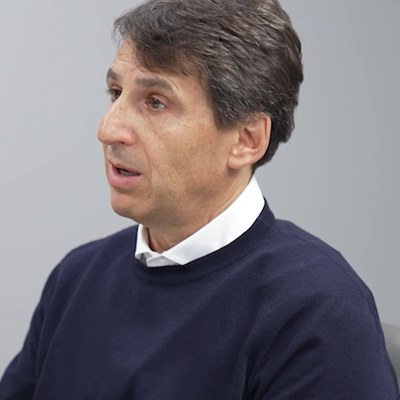 Marc Rowan
1
thin
20 Apr 2022 – 20 Apr 2022
-649 d
- Dylan Patel 5 4 Oct 2023 – 25 Aug 2026 -117 d
-
 Brad Gerstner
6
29 Jan 2024 – 20 Jun 2025
+0 d
-
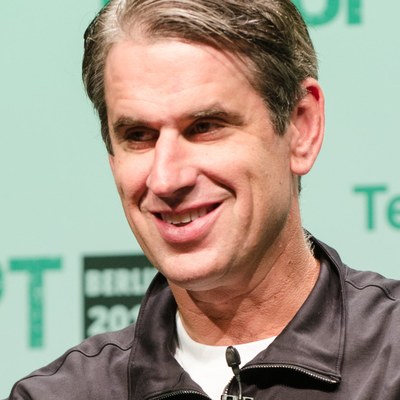 Bill Gurley
2
thin
23 Dec 2024 – 4 Aug 2026
+329 d
-
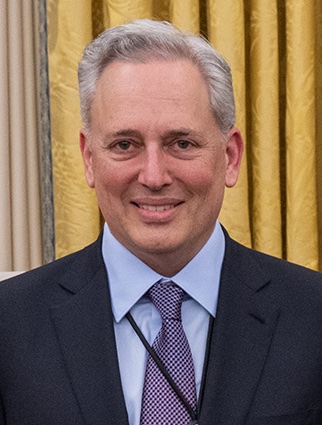 David Sacks
2
thin
7 Sep 2025 – 26 Mar 2026
+587 d
The chronologysourced and dated, oldest first
-
-
Marc Rowan
Rowan cites banking market share by region and targets gaining just one percentage point in Asia as success.
“So I've told my partner Matt Mickalini who runs this business your job is to get market share in Asia from 90 to 89.”
-
-
-
Dylan Patel
Patel says ASML projects China will reach 30% semiconductor market share, displacing Western suppliers and creating excess capacity.
“And, you know, of course it makes sense for them. Right? Like, let me have my own domestic industry, but it's gonna create an excess supply dynamic.”
-
Dylan Patel
Patel says ASML projects China will grow from under ten percent to thirty percent chip manufacturing market share.
“Go from sub 10% market share in the chip industry to somewhere around 30% market share in the manufacturing industry, right?”
-
-
-
Brad Gerstner
Gerstner says NVIDIA holds 90% plus market share and trades at historical average multiples.
“So if you wanna express that bet, right, which is AI leadership at 25 to 30 times earnings, which is consistent with historical averages for NVIDIA.”
-
Brad Gerstner
Gerstner notes consensus forecasts assume Nvidia's share of global compute buildout drops from 55% today to 26% by 2028.
“The line running through the center that starts at 55% and goes down to 26%. That is Nvidia's share of that global compute build out based on current consensus numbers for Nvidia.”
-
Brad Gerstner
Gerstner argues consensus Nvidia forecast assumes market share drops from 55% to 26% by 2028.
“Okay, so the consensus forecast that has the stock at $700 a share assumes, if you believe this TAM to be accurate, assumes that their share will go from 55% today to 26% in 2028.”
-
Bill Gurley
Gurley states NVIDIA holds 98% of purchased AI workloads when captive workloads are excluded.
“If you just look at, I guess, workloads people are purchasing to do work on their own, so you take the captives out, you're at 98, right?”
-
-
-
Brad Gerstner
Gerstner warns Huawei went from 0% to 50% Saudi market share, arguing US must export AI technology.
“Huawei has gone from 0% market share in Saudi Arabia to 50% market share in Saudi Arabia.”
-
Brad Gerstner
Gerstner says NVIDIA had 80% China market share with developers in CUDA ecosystem, generating billions in US taxes.
“NVIDIA has you know, it went from 80% market share in China where all the developers, second largest developer market in the world, were were developing in CUDA.”
-
Brad Gerstner
Gerstner reports Google page views drop 8-11% peak to trough after users subscribe to ChatGPT.
“And you can see peak to trough is down 8% year over year. Peak to trough is, let's say, down 11.”
-
David Sacks
Sacks estimates 90% of AI revenue goes to OpenAI, giving them dominant consumer position.
“And if you look at AI revenue, I think something like 90% of it is going to OpenAI. I mean, they have the dominant position among consumers.”
-
-
-
Dylan Patel
Patel predicts AMD will remain in single-digit percentage market share despite being credible competitor.
“I don't think they'll go beyond, like I think they'll stay in single digits market share, single digit percentage market share. Yeah. Single digit percentage market share”
-
Dylan Patel
Patel says NVIDIA has locked up over 60% of market capacity in long-term contracts this year.
“NVIDIA has locked up over 60% of the capacity this year in long term contracts alone, and they're buying more on top of that.”
-
David Sacks
Sacks argues American tech stack becoming global standard benefits US economically and for national security.
“You want the American tech stack to become the global standard. That's good for us economically. I think it's also good in terms of national security and spreading our influence.”
-
Bill Gurley
Gurley told OpenTable CFO they would reach 99% market share, not 17%, due to network effects understanding.
“And he said, oh, no one gets more than 17% market share, all the businesses I've worked with. Because I believed in network effects, I was like, we're gonna get 99.”
-
Dylan Patel
Patel says OpenAI and Anthropic represent 30% of new compute in 2025, rising to 40-50% in 2026.
“When you when you look at the incremental compute added, that's about 30% of the compute added this year.”
-
Where they overlapsame programme, same subject
- BG2 Pod also carries Bill Gurley and Brad Gerstner on this subject, at different times.
- CNBC Television also carries Brad Gerstner and Dylan Patel on this subject, at different times.