Who is on this subjectordered by the date of their first quote here
2 of 7 lanes rest on fewer than 5 quotes and are marked thin. Offsets are days from the middle first-quote date, 13 Oct 2024 — a date, and nothing else. It is not a claim about who reached a view first.
-
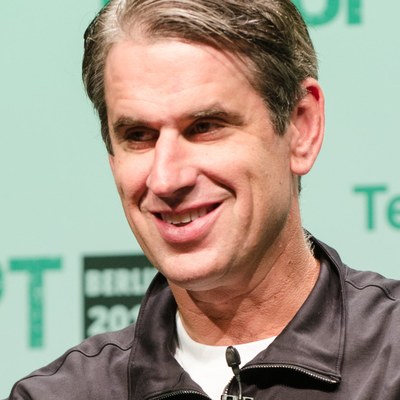 Bill Gurley
32
10 Oct 2023 – 4 Aug 2026
-369 d
- Dylan Patel 10 5 Dec 2023 – 22 Jul 2026 -313 d
-
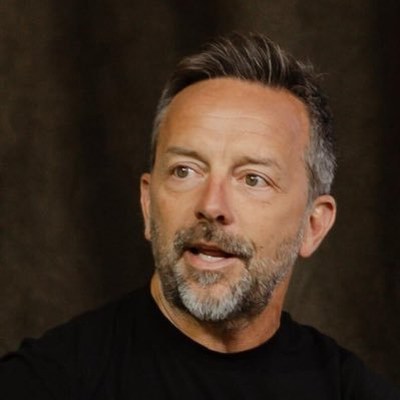 Brad Gerstner
6
25 Jul 2024 – 11 Apr 2026
-80 d
-
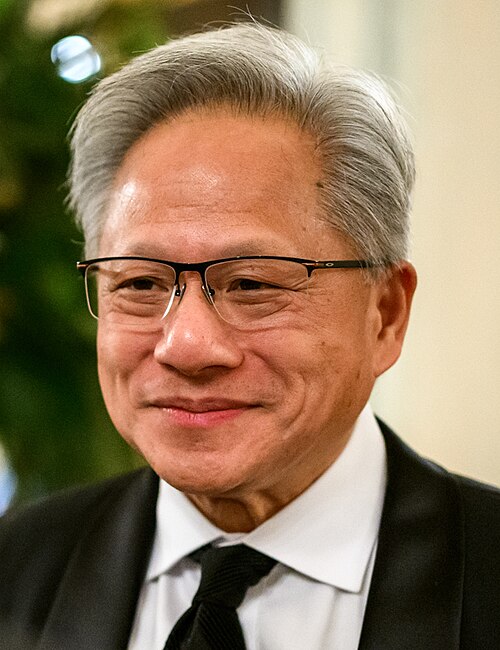 Jensen Huang
1
thin
13 Oct 2024 – 13 Oct 2024
+0 d
-
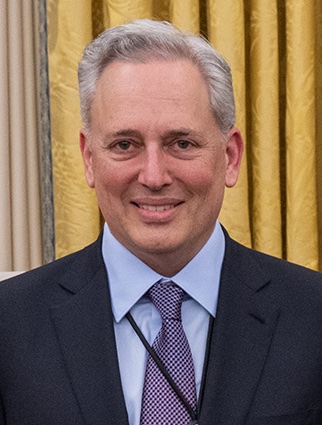 David Sacks
5
31 Jan 2025 – 24 Aug 2026
+110 d
-
 Chamath Palihapitiya
6
30 Jan 2026 – 4 Sep 2026
+474 d
-
 Gavin Baker
2
thin
4 Aug 2026 – 4 Aug 2026
+660 d
The chronologysourced and dated, oldest first
-
-
Bill Gurley
Gurley reports open source models like Llama 2 are gaining market share among portfolio startups using AI tools.
“What I'm hearing internally from our portfolio is this specifically the ilama too, Sunny sent me another one today, are really starting to gain market share amongst the startups that are using these tools.”
-
Bill Gurley
Gurley finds it suspect that incumbents, not academicians, are leading the charge to regulate open source AI.
“The people that are leading the charge calling for the regulation and calling and some of them raising this question of whether open source should be allowed are the incumbents.”
-
Bill Gurley
Gurley argues regions that shut down open source AI will fail to innovate relative to regions that allow it.
“So if you shut it down in a particular region, that region is gonna fail to innovate relative to the other regions that are out there.”
-
Dylan Patel
Patel predicts open source will match GPT-4 but frontier models will continue advancing beyond it.
“Open source will match GPT-four, but then it's like, what about GPT-four Vision? Or what about five and six and all these kind of stuff?”
-
-
-
Bill Gurley
Gurley notes OpenAI wouldn't exist if Google's attention mechanism had been patented instead of open-sourced.
“This concept was done inside of Google as an open source concept, immediately copied by all the other players. So OpenAI doesn't exist today if that's patented and controlled.”
-
Bill Gurley
Gurley says OpenAI only exists because Google's attention mechanism was open-sourced, not patented.
“OpenAI doesn't exist today if that's patented and controlled. There's it just doesn't, which is another irony around this open source argument because they've been infringed from massively from a major but the idea of being shared, and this is also why I'm such a massive open source proponent”
-
Bill Gurley
Gurley says big AI model companies and Vinod Khosla openly advocated for making open source illegal or blocked.
“And then Vinod started basically saying that literally, like, yes, we should block open source.”
-
Bill Gurley
Gurley predicts restricting open source AI in US while leaving it available elsewhere will shift innovation abroad.
“if you pull up and say there's no open source here and you leave open source there, guess where it's going to be the most innovative, where where you're going to have the most entrepreneurs, where you're going to have the most innovation. It's gonna be over there,”
-
Brad Gerstner
Gerstner says smart Silicon Valley companies use open source as defensive weapon, starting with Google's Android.
“Something happened over the past, I'd say fifteen years, where some of the smartest companies in Silicon Valley have developed a new strategic play, where they use open source as a defensive weapon rather than as an offensive weapon. That's my terminology. Of the first to do it was Google with Android”
-
Brad Gerstner
Gerstner identifies a fifteen-year trend of top tech companies using open source strategically as a defensive weapon, starting with Android.
“And Google convinced the rest of the world, all the handset manufacturers, the carriers to support this model by telling them it was going be open.”
-
Bill Gurley
Gurley says Zuckerberg described Apple blocking product improvements as soul crushing, motivating Meta's open source commitment.
“Great word. When you develop, work really hard on a product improvement, and then you have a company that says, no.”
-
Jensen Huang
Huang claims Nemotron 340B is the world's best model for reward systems and critique.
“our model, Nemotron 350B is 340B is the best model in the world for reward systems. And so it is the best critique.”
-
Bill Gurley
Gurley praises Anthropic's decision to open source their MCP data connection tool with GitHub and Slack integrations.
“They released several integrations already in the initial pack, with good GitHub and Slack and a few others so that you can start having your agents interact with these things.”
-
-
-
David Sacks
Sacks argues open-sourcing makes strategic sense for DeepSeek as a Chinese company trying to catch up.
“And so if you're if you're behind and you're trying to catch up, then open source is a strategy that actually really makes sense for you.”
-
Dylan Patel
Patel says open source AI definition is still being defined, unlike software's established freedoms for modification and use.
“So for what I do, I work at the Allen Institute for AI. We're a nonprofit. We want to make AI open for everybody,”
-
Dylan Patel
Patel says many entities can afford 100x DeepSeek's $5 million cost, ensuring open models will continue emerging.
“DeepSeek has this shocking $5,000,000 number. Think about how many entities in the world can afford a 100 times that to have the best open source model that people use in the world.”
-
Dylan Patel
Patel argues open source AI lacks software's feedback loops because reusing models requires significant compute and expertise.
“fundamentally, I would say that that's because open source AI does not have the same feedback loops as open source software.”
-
Bill Gurley
Gurley reports 1,300 variants of DeepSeek R1 appeared on Hugging Face within days of its release.
“And so, like, forty eight hours after r one was posted, they had 500 variants on Hugging Face. And today I pinged them this morning before we started, they're up to 1,300.”
-
Bill Gurley
Gurley reports 1,300 variants of DeepSeek R1 appeared on Hugging Face within days of release.
“forty eight hours after r one was posted, they had 500 variants on Hugging Face. And today I pinged them this morning before we started, they're up to 1,300.”
-
Bill Gurley
Gurley notes Chinese companies are among the leading donors to major open source projects like Linux.
“If you look at all of the major projects like Linux or MySQL, and most of these open source projects have a website and you can see who the leading donors are.”
-
Brad Gerstner
Gerstner reports Sam Altman said OpenAI has been on wrong side of history on open source.
“Sam said, yes. We are discussing. I personally think we have been on the wrong side of history here, and we need to figure out a different open source strategy.”
-
Bill Gurley
Gurley notes China now has four deep-pocketed open source AI models including Baidu's upcoming release, creating competitive innovation advantage.
“this will be the fourth deep pocket funded model in China that are all open source. And when you consider I mean, this is a competitive dynamic, right, that leads to that.”
-
Bill Gurley
Gurley notes DeepSeek triggered Alibaba and Xiaomi releasing open source models, with Baidu announcing June open source release.
“What happened in China, however, is Alibaba made Twin open source. Xiaomi has a model out now.”
-
Bill Gurley
Gurley predicts four deep-pocketed Chinese open-source AI models will create massive experimentation advantage over US.
“And so that level of competition, if it leads to four deep pocketed all open products is gonna be ultra powerful.”
-
Brad Gerstner
Gerstner characterizes OpenAI as shifting from regulatory advocacy to launching open source models.
“And now I think it's like more clear, the distinction that's being drawn. OpenAI is talking about launching an open source model here shortly,”
-
Dylan Patel
Patel predicts China will stop open sourcing AI models once ahead and closed source will ultimately win.
“China's open sourcing stuff only because they're behind the moment they're ahead, they will stop open sourcing stuff. And at the end of the day, closed source will win. Unfortunately, closed source will win.”
-
Brad Gerstner
Gerstner notes Alibaba's Qwen model has passed 400 million downloads under Apache 2.0 license.
“Of course, that's released like these other models under the Apache 2.0 open source license, so very open, as Bill's talked about.”
-
Bill Gurley
Gurley argues seven to eight deep-pocketed Chinese open-source models can distill each other to accelerate improvement.
“I think there may be seven or eight dig pocketed players with open models in China, they all learn from each other extremely fast.”
-
Bill Gurley
Gurley introduces farming analogy to explain competitive dynamics between open and closed innovation communities.
“I came up with a little analogy for people. I'll try and do it quickly, but imagine you had two communities. They're both farming communities and let's say there's 10 to 20 farms in each.”
-
Bill Gurley
Gurley argues community sharing best practices achieves higher global output than proprietary competition alone over time.
“I don't know who would force them, but they're forced to share all their best practices from that week with everybody and everyone does it and everyone shares their best practice.”
-
Bill Gurley
Gurley predicts new US entrants will co-evolve with Chinese models without national identity like Linux.
“I think you're gonna see new entrants pop up that try to co evolve with the Chinese models. You know, is Linux American? Is Linux Chinese?”
-
Bill Gurley
Gurley says Mistral should be distilling Chinese models right now if they want to compete.
“I do expect to see that. And if I'm the Mistral team, if you're not distilling on these Chinese models, I don't know what you're doing right now.”
-
Dylan Patel
Patel notes OpenAI is releasing custom kernels with model weights so everyone has optimized inference day one.
“Make your own inference implementation, But OpenAI is, like, actually, like, dropping the model weights and, like, all these custom kernels for people to implement in inference.”
-
Dylan Patel
Patel announces InferenceMax is completely open source under Apache 2.0 license for full transparency.
“InferenceMax is aiming to change all of that in the benchmarking space. So it's completely transparent in that it's completely open source, Apache 2.0 license.”
-
Bill Gurley
Gurley notes China has ten open source AI models in hyper competition versus US proprietary approach.
“Wild. And by the way, I mean, not to divert too much back, but right now China has 10 open source AI models.”
-
-
-
Bill Gurley
Gurley predicts AI will shift from innovation to optimization like dot-com era Oracle-to-Linux migration.
“So there were you went from a period of innovation to a period of optimization where people are much more worried about cost.”
-
Chamath Palihapitiya
Palihapitiya argues open source AI gives sovereignty to companies and especially countries through transparency.
“But open source is important because it's transparent. It gives everybody their own sovereignty, whether you're a company and, frankly, really more importantly, whether you're a country.”
-
Chamath Palihapitiya
Palihapitiya says Kimi K 2.5 is a trillion parameter mixture of experts model.
“So this is why it's so important because it was incredibly profound. It's a trillion parameter mixture of expert model.”
-
Chamath Palihapitiya
Palihapitiya explains forking open source AI from Moonshot becomes worthless due to version drift.
“Because there's so much investment by Moonshot, that's the company that makes Kimikay two in that example, that you'll have so much drift in one version, your fork will be worthless.”
-
Bill Gurley
Gurley warns that China's open source AI dynamic creates hypercompetitive weapon politicians don't understand.
“And I don't think the world, especially the the the politicians understand how, like unbelievably powerful open source is as a a as a weapon, like, as a competitive weapon.”
-
Bill Gurley
Gurley argues open source creates hypercompetitive dynamics politicians don't understand as competitive weapon.
“I don't think the world, especially the the the politicians understand how, like unbelievably powerful open source is as a a as a weapon, like, as a competitive weapon.”
-
Bill Gurley
Gurley argues open source creates hypercompetitive dynamics where innovations are immediately absorbed across competitors.
“And if you have 10 companies all doing open source, the minute an idea is shared, it's available to the other 10, and they absorb it immediately.”
-
Bill Gurley
Gurley argues leading AI companies seek regulatory protection because their biggest threat is open source movement.
“They're leading the biggest secondary transactions for their employees in the history of venture capital, the history of the world.”
-
Bill Gurley
Gurley argues leading AI model providers seek regulatory protection as biggest threat to their billions is open source movement.
“And so people are putting billions of dollars in their pocket. And so there's also a huge incentive to from the two leading model providers to seek regulatory protection, which most people wouldn't think regulation is but they've been begging for regulation since they started from from three years ago.”
-
Bill Gurley
Gurley says AI leaders want regulation because open source is their biggest business threat
“And the reason I think they want it is the biggest threat to their businesses where they're cashing in billions of dollars is the open source movement.”
-
Bill Gurley
Gurley identifies open source as the biggest threat to leading AI model providers' businesses.
“the biggest threat to their businesses where they're cashing in billions of dollars is the open source movement.”
-
Brad Gerstner
Gerstner poses whether AI's future will be dominated by closed corporate giants or open source.
“Are we heading towards a future dominated by a few closed corporate giants or will open source win the day?”
-
Bill Gurley
Gurley argues China's open-source AI models create a system capable of innovating faster than closed US models.
“And the other society, when the farmers come to market, they're forced to share best practices with all the other farmers. Which which one of those is gonna gonna evolve faster?”
-
Chamath Palihapitiya
Palihapitiya says Meta profoundly fumbled opportunity to be third leg of AI stool alongside closed and open source.
“I mean, they have completely fumbled it. I don't know the organization well enough, nor do I understand the political dynamics to understand why they failed as miserably as they have. But they've profoundly failed.”
-
Chamath Palihapitiya
Palihapitiya says countries will build sovereign AI stacks with open source models even if only 95% as good.
“And if the models are 99% as good or 95% as good, there's going to be a claim that some countries make, which is it's just good enough.”
-
Dylan Patel
Patel claims all good open source models are Chinese, with American and French models being terrible.
“American open source models are terrible. French open source models. Well, Mistral just stopped open sourcing models really. Are there any of the good ones? So it's it's all Chinese open source models.”
-
Dylan Patel
Patel reports both US and Chinese governments unhappy about Chinese open-source models benefiting American companies more than Chinese ones.
“There have been reports in China about the Chinese government not so happy that American companies are profiting more from Chinese open source models than Chinese companies are.”
-
“Base Ten, like Tuhin's probably made more money off of, you know, Minimax or GLM or DeepSeq than those companies have because he's serving those models at scale. And same with, Linett Fireworks.”
-
Bill Gurley
Gurley argues NIH-funded research should be open source rather than becoming proprietary.
“Why wouldn't we say if you take NIH dollars, your research is open source? Why do we use government dollars to fund stuff that becomes proprietary? That doesn't make any sense to me.”
-
Bill Gurley
Gurley proposes global open source standard for nuclear reactors to lower costs.
“And I wonder what if the globe had a standard for, you know, fission based nuclear reactor?”
-
Gavin Baker
Baker explains Silicon Data token index dip reflects mix shift to cheaper open source, not demand weakness.
“What the Silicon Data token index captures is mix, and they don't see all the tokens.”
-
Gavin Baker
Baker argues companies shifting to cheaper open source models may reduce spend while increasing GPU compute hours consumed.
“a company getting smarter about which model to use for which task, that, you know, that may lead to a a stabilization in their spend or even a decline, but it actually has nothing to do with the amount of, you know, GPU compute hours they are effectively consuming”
-
David Sacks
Sacks warns an open source ban is coming by requiring open models to meet closed model standards.
“I got bad news for you, Jamaf. An open source ban is coming. They're not gonna call it that. You know what they're going to say?”
-
David Sacks
Sacks predicts an open source AI ban disguised as equal standards for open and closed models.
“An open source ban is coming. They're not going to call it that. They're going to say that we simply have to apply the same standards to open models that we apply to close.”
-
David Sacks
Sacks explains that open models cannot be monitored or rolled back after release due to local deployment.
“Once you release an open model into the world, you can't roll it back and you can't monitor exactly how people are using it because they run it on their own hardware.”
-
David Sacks
Sacks predicts open models will be gradually shut out due to inability to meet closed-model standards.
“The open models cannot comply in the same way and gradually they will be shut out of the market.”
-
Chamath Palihapitiya
Palihapitiya predicts AGI-level capabilities will be matched by open source alternatives within three to four months.
“I also think that these capabilities will be matched or close to matched by a handful of closed source alternatives and open source alternatives probably within the next three or four months.”
-
Where they overlapsame programme, same subject
- Bill Gurley and Brad Gerstner — BG2 Pod, 3 appearances together
- All-In Podcast also carries Chamath Palihapitiya and David Sacks on this subject, at different times.
- Invest Like the Best also carries Bill Gurley and Gavin Baker on this subject, at different times.