Who is on this subjectordered by the date of their first quote here
4 of 7 lanes rest on fewer than 5 quotes and are marked thin. Offsets are days from the middle first-quote date, 7 Sep 2025 — a date, and nothing else. It is not a claim about who reached a view first.
-
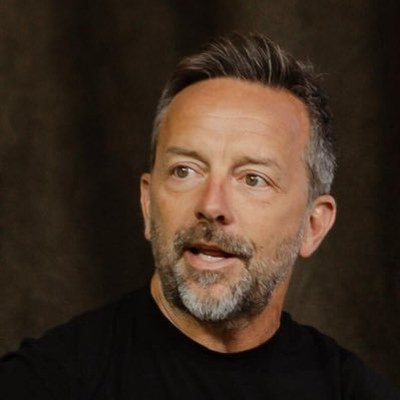 Brad Gerstner
111
3 Mar 2023 – 2 Jul 2026
-919 d
Brad Gerstner
111
3 Mar 2023 – 2 Jul 2026
-919 d
- Dylan Patel 71 5 Dec 2023 – 25 Aug 2026 -642 d
-
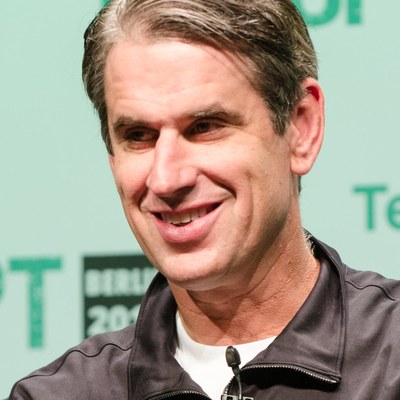 Bill Gurley
38
25 Jan 2024 – 10 Apr 2026
-591 d
Bill Gurley
38
25 Jan 2024 – 10 Apr 2026
-591 d
-
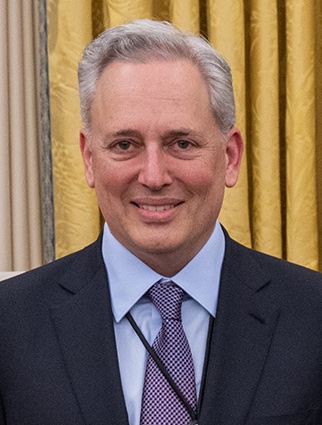 David Sacks
4
thin
7 Sep 2025 – 24 Aug 2026
+0 d
David Sacks
4
thin
7 Sep 2025 – 24 Aug 2026
+0 d
-
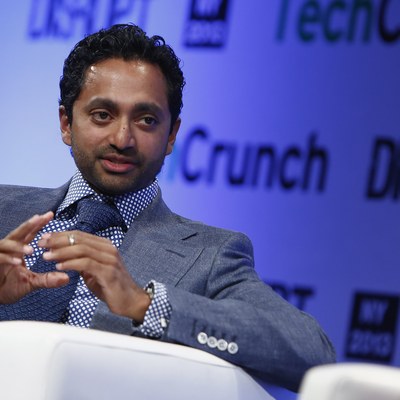 Chamath Palihapitiya
4
thin
10 Oct 2025 – 14 Jul 2026
+33 d
Chamath Palihapitiya
4
thin
10 Oct 2025 – 14 Jul 2026
+33 d
-
 David Friedberg
1
thin
6 Dec 2025 – 6 Dec 2025
+90 d
David Friedberg
1
thin
6 Dec 2025 – 6 Dec 2025
+90 d
-
 Gavin Baker
1
thin
20 May 2026 – 20 May 2026
+255 d
Gavin Baker
1
thin
20 May 2026 – 20 May 2026
+255 d
The chronologysourced and dated, oldest first
-
-
Brad Gerstner
Gerstner questions why OpenAI took a dilutive $10B round at roughly $30B valuation.
“what was their motivation to take such a dilutive round, know, the 10,000,000,000 at what was the valuation at 30?”
-
Brad Gerstner
Gerstner says OpenAI at $90 billion valuation may be overinflated like 2021 stocks, but AI remains profound.
“OpenAI at $90,000,000,000 may be ahead of itself just like we saw stocks get ahead of themselves in 2021, but it doesn't mean that AI itself is is not gonna be profound.”
-
Brad Gerstner
Gerstner says OpenAI at $90 billion valuation may be overinflated like 2021 stocks, but AI remains profound.
“OpenAI at $90,000,000,000 may be ahead of itself just like we saw stocks get ahead of themselves in 2021, but it doesn't mean that AI itself is is not gonna be profound.”
-
Brad Gerstner
Gerstner says GPT has become the default verb for AI, not Google's Bard.
“Do you bard or do you chat GPT? GPT has become the default verb for all things AI.”
-
Brad Gerstner
Gerstner says Google made a mistake letting OpenAI go first despite having the technology and capabilities.
“And to relinquish that spot by letting OpenAI go first, when you had the technology, you had the supercompute, you had the capabilities to release that product, I think was a mistake.”
-
Brad Gerstner
Gerstner says Google made a mistake letting OpenAI go first despite having the technology and capabilities.
“And to relinquish that spot by letting OpenAI go first, when you had the technology, you had the supercompute, you had the capabilities to release that product, I think was a mistake.”
-
Brad Gerstner
Gerstner says OpenAI at $85 billion with capped upside on common stock creates unfavorable risk-reward distribution.
“if you're asking me to invest at $85,000,000,000 to buy common stock that's capped on the upside, right? Now we have a deal.”
-
Brad Gerstner
Gerstner views OpenAI's $85B valuation with capped upside as poor risk-reward given few companies exceed $100B durably.
“I can then plot a distribution of likely outcomes. How many companies have ever in the history of Silicon Valley been worth durably more than $100,000,000,000”
-
Brad Gerstner
Gerstner would rename OpenAI to ChatGPT and focus entirely on consumer rather than enterprise business.
“On the consumer side, which is where I get a lot more excited about OpenAI, is I say, You are the verb. I would rename the company ChatGPT.”
-
Brad Gerstner
Gerstner would rename OpenAI to ChatGPT and focus entirely on consumer rather than enterprise business.
“On the consumer side, which is where I get a lot more excited about OpenAI, is I say, You are the verb. I would rename the company ChatGPT.”
-
Dylan Patel
Patel says OpenAI has a lot less total FLOPS than Google despite having more GPUs than most perceive.
“whole point was that Google you know, OpenAI, who everyone would be like, oh, yeah. They have more GPUs than anyone else. Right? But they have a lot less flops than Google.”
-
“But, like, the the level of the value that they deliver to the world, if you talk to anyone there, they truly believe it'll be tens of trillions if not hundreds of trillions of dollars.”
-
Dylan Patel
Patel predicts OpenAI could raise $100 billion at $500 billion valuation to build a $100 billion supercomputer after GPT-5.
“And after GPT-five releases, if he goes to the market and says like, Hey, I want to raise $100,000,000,000 at $500,000,000,000 valuation, I'm sure the market would give it to him.”
-
-
-
Bill Gurley
Gurley notes OpenAI wouldn't exist if Google's attention mechanism had been patented instead of open-sourced.
“This concept was done inside of Google as an open source concept, immediately copied by all the other players. So OpenAI doesn't exist today if that's patented and controlled.”
-
Bill Gurley
Gurley says OpenAI only exists because Google's attention mechanism was open-sourced, not patented.
“OpenAI doesn't exist today if that's patented and controlled. There's it just doesn't, which is another irony around this open source argument because they've been infringed from massively from a major but the idea of being shared, and this is also why I'm such a massive open source proponent”
-
Brad Gerstner
Gerstner says he was concerned a year ago that Microsoft's OpenAI partnership would cause Amazon customers to switch to Azure.
“A year ago, I was concerned and some others were whether or not Microsoft's early lead because of their partnership with OpenAI would cause a bunch of customers to leave Amazon and go to Azure in order to take advantage of the benefits of OpenAI.”
-
Brad Gerstner
Gerstner says he was concerned a year ago that Microsoft's OpenAI partnership would cause Amazon customers to switch to Azure.
“A year ago, I was concerned and some others were whether or not Microsoft's early lead because of their partnership with OpenAI would cause a bunch of customers to leave Amazon and go to Azure in order to take advantage of the benefits of OpenAI.”
-
Brad Gerstner
Gerstner says Amazon saw almost no customer churn to Azure despite Microsoft's OpenAI partnership advantage.
“A year ago, I was concerned and some others were whether or not Microsoft's early lead because of their partnership with OpenAI would cause a bunch of customers to leave Amazon and go to Azure in order to take advantage of the benefits of OpenAI. We didn't see that. We saw almost no customer churn.”
-
Brad Gerstner
Gerstner says Amazon saw almost no customer churn to Azure despite Microsoft's OpenAI partnership advantage.
“A year ago, I was concerned and some others were whether or not Microsoft's early lead because of their partnership with OpenAI would cause a bunch of customers to leave Amazon and go to Azure in order to take advantage of the benefits of OpenAI. We didn't see that. We saw almost no customer churn.”
-
Brad Gerstner
Gerstner predicts Anthropic models will match GPT-4 and 4.5 turbo quality in the near term.
“They're gonna have models which are every bit as good, you know, in the near term as chat GPT four and four point five turbo, etcetera.”
-
Brad Gerstner
Gerstner says lead AI engineers at OpenAI and Google are rumored to receive millions annually in compensation.
“Take for example the recent competition for AI engineers in places like OpenAI and Google. Okay? Because venture backed private companies have to compete in an ecosystem against public companies.”
-
Brad Gerstner
Gerstner calls out Sam Altman's rhetorical technique of minimizing smartphone market to hype AI potential.
“he juxtaposition to AI versus the smartphone market and then on the smartphone market as being small.”
-
Bill Gurley
Gurley says the $20 subscription model is gone now that Meta AI is free and ad-supported models are coming.
“I think, Perplexity claiming they're going to have an ad portion and OpenAI hinting at that, at least for the time being, I think the $20 concept is gone.”
-
Bill Gurley
Gurley says the $20 consumer subscription concept is gone and was a big part of OpenAI's revenue.
“I think the $20 concept is gone. Yep. And that was a big part of OpenAI's revenue apparently as we believe rumored”
-
Brad Gerstner
Gerstner notes 64% of Fortune 500 companies are Azure OpenAI customers.
“64% of Fortune 500 customers are Azure OpenAI customers, which I thought was pretty extraordinary.”
-
Brad Gerstner
Gerstner notes 64% of Fortune 500 companies are Azure OpenAI customers.
“64% of Fortune 500 customers are Azure OpenAI customers, which I thought was pretty extraordinary.”
-
Bill Gurley
Gurley says Sam Altman warned developers using OpenAI lightly that they'll be steamrolled unless they fully commit data.
“But then he said, if you do that, we're going to steamroll you and you need to bet on us being successful. Which would mean dumping your data and trusting OpenAI more fully.”
-
Brad Gerstner
Gerstner reports data company lamenting OpenAI sets pricing umbrella with no margin floor for models.
“I was talking to a large data company this week who's in the business of serving models, they were lamenting the fact that the pricing umbrella was set by OpenAI and there is no price, right? So that it's a much lower margin business than the traditional software business.”
-
Brad Gerstner
Gerstner reports data company lamenting OpenAI sets pricing umbrella with no margin floor for models.
“I was talking to a large data company this week who's in the business of serving models, they were lamenting the fact that the pricing umbrella was set by OpenAI and there is no price, right? So that it's a much lower margin business than the traditional software business.”
-
Brad Gerstner
Gerstner suspects OpenAI's integration with Apple is deeper than publicly disclosed, creating unequal competition.
“I suspect that the integration going on with OpenAI is deeper than what we heard about yesterday. Right? So I don't know that this is going to be everybody playing equal.”
-
Brad Gerstner
Gerstner suspects OpenAI's integration with Apple is deeper than publicly disclosed, creating unequal competition.
“I suspect that the integration going on with OpenAI is deeper than what we heard about yesterday. Right? So I don't know that this is going to be everybody playing equal.”
-
Brad Gerstner
Gerstner identifies AWS disadvantage risk if Microsoft's OpenAI access proves decisive and Amazon lacks equivalent.
“I think there is a lot of worry about, you know, if Microsoft has access to OpenAI and Amazon doesn't, is that going to put them at a disadvantage if open AI is a runaway winner?”
-
Brad Gerstner
Gerstner identifies AWS disadvantage risk if Microsoft's OpenAI access proves decisive and Amazon lacks equivalent.
“I think there is a lot of worry about, you know, if Microsoft has access to OpenAI and Amazon doesn't, is that going to put them at a disadvantage if open AI is a runaway winner?”
-
Bill Gurley
Gurley says OpenAI executes faster than any company he's seen despite organizational turbulence.
“To execute the way they have. True. Okay? Like, I got faster than any other company I've ever seen delivering great products in the market.”
-
Brad Gerstner
Gerstner estimates OpenAI's consumer business represents $2.1 billion of roughly $3-4 billion total revenue.
“It would imply that there are about 2.1 of the three four is the consumer business”
-
Brad Gerstner
Gerstner reports OpenAI consumer product has 65% annual churn rate based on credit card data.
“At least for the cohorts that are old enough, the churn's about 65% annually. So they're only 35% retaining, which Sax had hinted at on all in.”
-
Brad Gerstner
Gerstner reports OpenAI consumer product has 65% annual churn rate based on credit card data analysis.
“At least for the cohorts that are old enough, the churn's about 65% annually. So they're only 35% retaining,”
-
Brad Gerstner
Gerstner estimates OpenAI consumer revenue at $2 billion, Anthropic $100 million, Perplexity $25 million from credit card data.
“And and I playing around with credit card data, I think OpenAI is about 2,000,000,000, Anthropix about a 100,000,000, and Perplexity is at like 25,000,000.”
-
Brad Gerstner
Gerstner estimates OpenAI consumer revenue at $2 billion, Anthropic $100 million, Perplexity $25 million from credit card data.
“And and I playing around with credit card data, I think OpenAI is about 2,000,000,000, Anthropix about a 100,000,000, and Perplexity is at like 25,000,000.”
-
“And and I playing around with credit card data, I think OpenAI is about 2,000,000,000, Anthropix about a 100,000,000, and Perplexity is at like 25,000,000. Yeah. Just I'm guessing”
-
“And and I playing around with credit card data, I think OpenAI is about 2,000,000,000, Anthropix about a 100,000,000, and Perplexity is at like 25,000,000. Yeah. Just I'm guessing”
-
Brad Gerstner
Gerstner says OpenAI's twelve-month retention rate is only 35 percent on paid subscriptions.
“On the $20 thing. But at twelve months, the retention even in OpenAI is like 35%.”
-
Brad Gerstner
Gerstner says OpenAI's twelve-month retention rate is only 35 percent on paid subscriptions.
“On the $20 thing. But at twelve months, the retention even in OpenAI is like 35%.”
-
Brad Gerstner
Gerstner reveals OpenAI has only 35% retention at twelve months, questioning the durability of its business model.
“But at twelve months, the retention even in OpenAI is like 35%. So I doubt that anyone that is looking at that even at 2,000,000,000 feels great about that as a durable business model.”
-
Brad Gerstner
Gerstner reveals OpenAI has only 35% retention at twelve months, questioning the durability of its business model.
“But at twelve months, the retention even in OpenAI is like 35%. So I doubt that anyone that is looking at that even at 2,000,000,000 feels great about that as a durable business model.”
-
Bill Gurley
Gurley suggests incumbents may be aggressively investing in AI specifically to block OpenAI and Anthropic from raising needed billions.
“And now you've got people, you know, trying to project income statements and balance sheets of these companies and they're speculating about whether they might need to raise again or not.”
-
Brad Gerstner
Gerstner doubts ChatGPT and SearchGPT metrics will support reaching a billion users.
“I don't think we're seeing the metrics, you know, from ChatGPT and even SearchGPT that are going to lead to the breakout needed to get to that billion users.”
-
Bill Gurley
Gurley explains Strawberry's logarithmic scaling means 10X to 100X inference costs for linear improvement requiring selective application.
“The implication being in order to get linear improvement, you have to do maybe 10X the amount of processing. And this is all inference.”
-
Bill Gurley
Gurley argues Sam Altman's Washington access is valuable as regulation could reinforce OpenAI's competitive lock-in.
“He seems to have remarkable touch in Washington and access, which, you know, regulation appears to be coming at us fast and furious.”
-
Brad Gerstner
Gerstner calculates OpenAI's rumored $150 billion valuation represents 15 times forward revenue of roughly $10 billion.
“If that trajectory were to continue, right, that'd give you like roughly $10,000,000,000 next year. And the round's rumored to be at $150,000,000,000 so that's about 15 times forward revenue.”
-
Dylan Patel
Patel says Microsoft and OpenAI have 500,000 GB200 GPUs totaling one gigawatt coming online next year.
“Microsoft slash OpenAI slash their partners for them. And then and then potentially even more, 500 k GB two hundreds, right, is a gigawatt. Right? And that's, like, online next year.”
-
Dylan Patel
Patel predicts OpenAI will have 300,000 to 500,000 GPU equivalent clusters next year across multiple sites.
“Next year, 300 to 500,000 depending on whether it's one side or many. Right? 300 to, like, 700,000, I think, is the upper bound of that.”
-
Dylan Patel
Patel predicts Microsoft/OpenAI will have a million H100-equivalent chips in a single cluster by end of next year.
“three hundred to, like, seven 500,000, let's say, but those GPUs are two to three x faster, right, versus the 100 k cluster.”
-
Dylan Patel
Patel predicts OpenAI will raise 50 to 100 billion dollars by early next year to fund planned cluster builds.
“there's no fucking way you can pay for the scale of clusters that are being planned to be built next year for OpenAI until unless they raise, like, 50 to $100,000,000,000, which I think they will raise that, like, end of this year, early next year.”
-
Brad Gerstner
Gerstner says OpenAI will do $5B revenue this year, $10B next, twice Google's IPO revenue.
“Reports are that they'll do 5,000,000,000 ish of revenue or run rate revenue this year, maybe going to 10,000,000,000 next year.”
-
Brad Gerstner
Gerstner says OpenAI has twice Google's IPO user count and trades at 15x forward revenue.
“average users, which we estimate is twice the amount Google had at the time of its And if you look at the multiple of the business, if you believe 10,000,000,000 next year it's about 15 times the forward revenue, which is about the multiple of Google and Meta at the time of their IPO.”
-
Brad Gerstner
Gerstner says OpenAI's voice API can call humans on the telephone and place orders
“Well, I mean, the Easter egg that I thought got dropped last week is they did this event on, you know, their voice API. Right?”
-
Brad Gerstner
Gerstner argues OpenAI's voice API demo showing GPT calling humans proves agents can already make reservations by phone.
“So why the hell can't my GPT just call up the Mercer hotel and say, Brad Gerstner would like to make a reservation.”
-
Brad Gerstner
Gerstner notes OpenAI reached $4.5 billion revenue faster than Google or Meta, justifying larger fund sizes.
“OpenAI got to, you know, $4,500,000,000 of revenue in a fraction of the time it took Google and Meta.”
-
Brad Gerstner
Gerstner notes OpenAI reached $4.5 billion revenue faster than Google or Meta, justifying larger fund sizes.
“OpenAI got to, you know, $4,500,000,000 of revenue in a fraction of the time it took Google and Meta.”
-
Dylan Patel
Patel says GPT-4 used 24,000 GPUs, GPT-5 uses 100,000, and Microsoft is building toward a million GPUs.
“GPT four was trained with 24,000 GPUs roughly, and GPT five is on the order of a 100,000. And then they're trying to build this data center over the next few years. That's a million.”
-
Dylan Patel
Patel reports OpenAI is going to Oracle for 200 megawatts because Microsoft cannot supply enough compute.
“OpenAI can't get enough compute from Microsoft, so then they're also going to Oracle. And Oracle's building another gigawatt scale data center eventually. Again, a gigawatt is like 500,000 plus GPUs.”
-
Dylan Patel
Patel reveals OpenAI signed a deal with Oracle for 200 megawatts because Microsoft cannot provide enough compute capacity.
“Again, a gigawatt is like 500,000 plus GPUs. That's billions, tens of billions of dollars. So OpenAI signed a deal for just 200 megawatts.”
-
Dylan Patel
Patel says OpenAI is paying roughly $12.5 billion over five years for one-fifth of Oracle's gigawatt site.
“So that's four of these buildings with Oracle. And this site is gonna be a gigawatt. So for one fifth of the site, they're paying something like $12,500,000,000 over the next five years.”
-
Dylan Patel
Patel states OpenAI is paying $12.5 billion over five years for one-fifth of Oracle's data center site.
“So for one fifth of the site, they're paying something like $12,500,000,000 over the next five years.”
-
Dylan Patel
Patel says OpenAI is paying 12.5 billion dollars over five years for one-fifth of Oracle's data center.
“for one fifth of the site, they're paying something like $12,500,000,000 over the next five years. So this is an extremely large amount of money that they're spending on just one specific site”
-
Dylan Patel
Patel states OpenAI's o1 reasoning model increases average sequence length because it reasons before outputting.
“This is really important because with reasoning models like OpenAI's o one, the average sequence length grows a lot.”
-
Dylan Patel
Patel explains OpenAI's o1 model thinks for 5-20 seconds before outputting, creating inference throughput challenges.
“When you use OpenAI's o one, it thinks for ten seconds, twenty seconds, five seconds. It varies a lot, but thinks for a while and then it sends you tokens.”
-
Bill Gurley
Gurley says OpenAI and Anthropic promised linear or better scaling with 10x then 100x spending increases.
“there was a argument being made by, you know, OpenAI and Anthropic that, oh, you're just gonna see the next number drop and the next number's gonna be way better than the last number.”
-
Bill Gurley
Gurley argues scaling law slowdown represents a surprise shift from Sam and Dario's expectations twelve months ago.
“The first thing that comes to my mind, and once again, I'm not asking you to agree with this, it's just like what's in my head, is that this is not the expectation that Sam and Dario had twelve months ago.”
-
Bill Gurley
Gurley argues OpenAI and Anthropic expected continued scaling twelve months ago, not current limits.
“Like, because they were promoting a thesis that it was just gonna keep going up”
-
Brad Gerstner
Gerstner argues OpenAI could 2-3x ChatGPT users without model improvements since consumers barely use current capabilities.
“OpenAI could double triple the number of users of ChatGPT with frankly not making any improvements in the core model because consumers today barely scratch the surface on core model capabilities.”
-
Brad Gerstner
Gerstner argues OpenAI could 2-3x ChatGPT users without model improvements since consumers barely use current capabilities.
“OpenAI could double triple the number of users of ChatGPT with frankly not making any improvements in the core model because consumers today barely scratch the surface on core model capabilities.”
-
Brad Gerstner
Gerstner argues regulation prevents retail investors from accessing OpenAI and Uber early stage investments.
“I think this is a shame because now because of a lot of this regulation, small retail investors don't get a shot on goal on investing in open AI early.”
-
Bill Gurley
Gurley argues OpenAI and Anthropic leaders previously suggested continued scaling gains before current limits emerged
“Dario and Sam had, prior to this moment, or at least the way I heard them, made it sound like they were just gonna build the next biggest thing and get the same amount of gain. They had left that impression.”
-
-
-
Bill Gurley
Gurley contrasts Zuckerberg's technical transparency with Altman and Amodei's high-level platitudes about AI.
“Dario and Sam talk in these high level platitudes about how this stuff's gonna cure cancer and we're all gonna not have to work anymore.”
-
Bill Gurley
Gurley contrasts Zuckerberg's technical transparency with Altman and Amodei's high-level platitudes, suggesting Zuck may now lead AI.
“Dario and Sam talk in these high level platitudes about how this stuff's gonna cure cancer and we're all gonna not have to work anymore. And Zuck was down in the weeds in the meet.”
-
Dylan Patel
Patel says Oracle is spending over $10 billion this year building infrastructure for OpenAI, not Microsoft.
“Oracle's spending, like, $10,000,000,000 plus for them this year to build out data centers and GPUs, right, for OpenAI, not Microsoft, interestingly enough.”
-
Bill Gurley
Gurley warns AI companies trading equity for server capacity don't recognize true COGS and get warped decision-making.
“They're trading equity for server capacity. And so those companies are running on a day to day basis with a high COGS, but they don't know it because they're not paying cash for it.”
-
Bill Gurley
Gurley warns AI companies receiving server capacity for equity don't recognize their true COGS in real-time.
“They're trading equity for server capacity. And so those companies are running on a day to day basis with a high COGS, but they don't know it”
-
Bill Gurley
Gurley says late-stage investors enable two-year employee liquidity at OpenAI and Stripe, removing IPO pressure.
“one of the things they're doing is they're supporting massive founder liquidity and employee liquidity. And so that's happening at Stripe, that's happening.”
-
Bill Gurley
Gurley says the Stargate project will use a property-operating company structure he just learned about.
“People are telling me it's gonna be a prop co op co structure, which I didn't even know it was twenty four hours ago,”
-
Bill Gurley
Gurley says propco-opco structure would add major lease liability to OpenAI's already complex cap structure.
“if it is a prop co op co structure, this represents a big lease liability or the equivalent of a lease liability for OpenAI.”
-
Bill Gurley
Gurley notes OpenAI already has the most complex cap structure ever seen, now adding lease liability.
“So this company already had probably the most complex cap structure of any company like it that we've ever known,”
-
Bill Gurley
Gurley says OpenAI already has the most complex cap structure ever and is adding more complexity.
“So this company already had probably the most complex cap structure of any company like it that we've ever known, and they're gonna be putting one more complex piece on top.”
-
Bill Gurley
Gurley calls the Microsoft-OpenAI deal one of the most complex deals of all time.
“The deal between Microsoft and OpenAI, as it's been reported, once again, I've never seen it. Sounds like one of the more complex deals of all time.”
-
Bill Gurley
Gurley says the Microsoft-OpenAI deal with $90 billion profit rights is one of the most complex ever.
“The deal between Microsoft and OpenAI, as it's been reported, once again, I've never seen it. Sounds like one of the more complex deals of all time. They have profit rights up to, like, $90,000,000,000.”
-
Bill Gurley
Gurley notes Microsoft has profit rights up to $90 billion, unprecedented in any prior deal.
“They have profit rights up to, like, $90,000,000,000. No one's ever signed a piece of paper like that before.”
-
Bill Gurley
Gurley notes uncertainty around whether Microsoft will convert OpenAI profit rights to equity.
“And so they also we don't know. You know, it it sounds like OpenEye wants them to convert to equity, and we have no idea whether they're willing to do that or not.”
-
Bill Gurley
Gurley reports DeepSeek pricing is one twentieth of OpenAI on comparable API models.
“if you look at the models that are apples to apples on the API right now, that that DeepSeek's pricing about one twentieth of OpenAI.”
-
Brad Gerstner
Gerstner reports Sam Altman said OpenAI has been on wrong side of history on open source.
“Sam said, yes. We are discussing. I personally think we have been on the wrong side of history here, and we need to figure out a different open source strategy.”
-
Brad Gerstner
Gerstner cites CoreWeave's $12 billion OpenAI Stargate deal and $3 billion ServiceNow acquisition as evidence deals are happening.
“so two quick things. Number one, CoreWeave announced yesterday a $12,000,000,000 deal with OpenAI on Stargate. Those things are getting constructive. We're investors there.”
-
Brad Gerstner
Gerstner cites CoreWeave's $12 billion OpenAI Stargate deal and $3 billion ServiceNow acquisition as evidence deals are happening.
“so two quick things. Number one, CoreWeave announced yesterday a $12,000,000,000 deal with OpenAI on Stargate. Those things are getting constructive. We're investors there.”
-
Brad Gerstner
Gerstner cites CoreWeave's $12 billion OpenAI Stargate deal announced yesterday as evidence AI buildout continues.
“CoreWeave announced yesterday a $12,000,000,000 deal with OpenAI on Stargate. Those things are getting constructive. We're investors there. I I can tell you those things are getting built.”
-
Brad Gerstner
Gerstner cites CoreWeave's $12 billion OpenAI Stargate deal announced yesterday as evidence AI buildout continues.
“CoreWeave announced yesterday a $12,000,000,000 deal with OpenAI on Stargate. Those things are getting constructive. We're investors there. I I can tell you those things are getting built.”
-
Brad Gerstner
Gerstner says OpenAI's $150 billion round with 10 investors created a dream IPO cap table, calling it a private IPO.
“If you looked at that, the cap table for the 10 investors in that round, it would be a dream day one IPO cap table for any company that wanted to enter the public markets.”
-
Brad Gerstner
Gerstner says OpenAI's $10B raise at $150B valuation is essentially public but excludes retail investors.
“You know, it's just nomenclature to not call that public. The problem with it is, the only people who get access to that are accredited investors, and retail investors are completely cut out.”
-
“OpenAI made a lot of sense to us, you know, they just reported last week over 400,000,000 weekly active users, I think over 700,000,000 monthly users growing fast, etcetera.”
-
“OpenAI made a lot of sense to us, you know, they just reported last week over 400,000,000 weekly active users, I think over 700,000,000 monthly users growing fast, etcetera.”
-
Brad Gerstner
Gerstner reports OpenAI will exceed $11 billion in revenue this year per recent CNBC disclosure.
“OpenAI, you could see the pacing from the launch of their first consumer product relative to Google and Meta. Sarah just talked on CNBC last week, this year will be over $11,000,000,000”
-
Brad Gerstner
Gerstner reports OpenAI will exceed $11 billion in revenue this year per recent CNBC disclosure.
“OpenAI, you could see the pacing from the launch of their first consumer product relative to Google and Meta. Sarah just talked on CNBC last week, this year will be over $11,000,000,000”
-
“OpenAI, you could see the pacing from the launch of their first consumer product relative to Google and Meta.”
-
“OpenAI, you could see the pacing from the launch of their first consumer product relative to Google and Meta.”
-
Dylan Patel
Patel reports that OpenAI's Orion training run did not improve enough over GPT-4.5 to qualify as GPT-5.
“There were hopes that Orion could be used for for GPT five, but its improvement was, like, not enough to be, like, really a GPT five.”
-
Dylan Patel
Patel reveals GPT 4.5's Orion training run fell short of GPT-5 level using only classical pre-training methods.
“Furthermore, it was trained on the classical method, which is, like, which is a ton of pre training and then some reinforcement learning with human feedback”
-
Dylan Patel
Patel explains GPT-5 will combine massive pre-training and post-training scale for the first time.
“Along the way, another team at OpenAI made the big breakthrough of reasoning. Right? Strawberry training. And they released o one, and then they released o three.”
-
Dylan Patel
Patel says GPT-5 will combine massive pre-training like GPT-4.5 with massive post-training like o1 and o3.
“GPT five, as Sam calls it, is is gonna be a model that has huge pre training scale, right, like GPT 4.5, but also huge post training scale like o one and o three and continuing to scale that up.”
-
Dylan Patel
Patel says GPT-5 will be first model to massively scale both pre-training and post-training simultaneously.
“Right? And this would be the first time we see a model that was was a step up in both at the same time.”
-
Dylan Patel
Patel reports GPT-5 expected within three to six months with insider knowledge suggesting even sooner release.
“OpenAI says is coming. They say it's coming, you know, this year, hopefully, the next three to six months, maybe sooner. I've heard sooner, but, you know, we'll we'll see.”
-
Dylan Patel
Patel reports GPT-5 is expected in three to six months, possibly sooner based on his sources.
“They say it's coming, you know, this year, hopefully, the next three to six months, maybe sooner. I've heard sooner, but, you know, we'll we'll see.”
-
Brad Gerstner
Gerstner says UAE announced five gigawatt AI campus with NVIDIA, OpenAI, Oracle, totaling 2.5 million GPUs.
“So in in Abu Dhabi, they announced a five gigawatt US AI you know, it's a UAE, US AI campus. It's an incredible architectural campus. It's in collaboration with NVIDIA and OpenAI and Oracle.”
-
Brad Gerstner
Gerstner says OpenAI reached 400 billion annual searches eight years faster than Google did.
“I did I saw some analysis from my team this week will post that OpenAI reached, you know, 400,000,000,000 annual searches, eight years faster than Google.”
-
Brad Gerstner
Gerstner says OpenAI reached 400 billion annual searches eight years faster than Google did.
“I did I saw some analysis from my team this week will post that OpenAI reached, you know, 400,000,000,000 annual searches, eight years faster than Google.”
-
Brad Gerstner
Gerstner says OpenAI reached 400 billion annual searches eight years faster than Google.
“I saw some analysis from my team this week will post that OpenAI reached, you know, 400,000,000,000 annual searches, eight years faster than Google. Right? So they're doing over a billion searches a day now.”
-
Brad Gerstner
Gerstner says OpenAI reached 400 billion annual searches eight years faster than Google.
“I saw some analysis from my team this week will post that OpenAI reached, you know, 400,000,000,000 annual searches, eight years faster than Google. Right? So they're doing over a billion searches a day now.”
-
Bill Gurley
Gurley notes OpenAI will burn $7 billion annually, calling it radically different from traditional venture.
“I think OpenAI said they're gonna be 7,000,000,000 in a year. That's not your grandfather's startup business or your grandfather's venture capital. That's a radically different world.”
-
Brad Gerstner
Gerstner states OpenAI is four times the size Google was at IPO in revenue and searches.
“OpenAI today is four times the size that Google was when it went public in terms of revenue, in terms of searches.”
-
Brad Gerstner
Gerstner states OpenAI is four times the size Google was at IPO in revenue and searches.
“OpenAI today is four times the size that Google was when it went public in terms of revenue, in terms of searches.”
-
Bill Gurley
Gurley argues OpenAI must go public to democratize access to trillion-dollar company returns beyond private market insiders.
“It needs to be a public company. The idea that we're going to have trillion dollar companies and the only people who get to participate are the people sitting around this table, right?”
-
Bill Gurley
Gurley contrasts Google's 187,000 employees with OpenAI's 2,700, noting OpenAI plans to stay under 20,000 using AI agents.
“Google has 187,000 employees, OpenAI 2,700. We're not going to be a company of 20,000 employees. He didn't say we're not going be a company of 187,000 employees, Right?”
-
Brad Gerstner
Gerstner recounts Kevin Weil saying a trillion-dollar valuation would underwhelm him when joining OpenAI.
“I remember when you joined OpenAI and I asked you the question, can OpenAI get to a trillion dollars, right in total value?”
-
Brad Gerstner
Gerstner recounts Kevin Weil saying a trillion-dollar valuation would underwhelm him when joining OpenAI.
“I remember when you joined OpenAI and I asked you the question, can OpenAI get to a trillion dollars, right in total value?”
-
Brad Gerstner
Gerstner characterizes OpenAI as shifting from regulatory advocacy to launching open source models.
“And now I think it's like more clear, the distinction that's being drawn. OpenAI is talking about launching an open source model here shortly,”
-
Brad Gerstner
Gerstner characterizes OpenAI as shifting from regulatory advocacy to launching open source models.
“And now I think it's like more clear, the distinction that's being drawn. OpenAI is talking about launching an open source model here shortly,”
-
Brad Gerstner
Gerstner suggests OpenAI at $100 billion revenue could become the most valuable company in the world.
“What's your level of confidence that you guys will reach a 100,000,000,000 of revenue in the future and kind of be that you know AI defining company because at a 100,000,000,000 in revenue it seems to me that this company could be on a path to being the most valuable company in the world,”
-
Brad Gerstner
Gerstner forecasts OpenAI could reach $5-10 trillion valuation as the AI winner in consumer and enterprise.
“right, 5 to $10,000,000,000,000 business in the fullness of time, which frankly would not surprise me for the winner in the age of AI, right? The winner in consumer and a big company and enterprise,”
-
Dylan Patel
Patel reports OpenAI cut the Slack connection with Scale AI.
“OpenAI allegedly, like, cut the external Slack connection. Right? So there's no, like, slack between scale and OpenAI anymore.”
-
Dylan Patel
Patel directly contradicts Sam Altman's claim that no top researchers have left OpenAI for Meta.
“As far as Sam is saying that no top researchers have gone, I don't believe that's accurate. I initially the top researchers definitely did say no, the best researchers, the best people.”
-
Dylan Patel
Patel claims Meta offered over $1 billion to one OpenAI researcher as retention or acquisition offer.
“And you said $100,000,000 I've heard a number for someone over 1,000,000,000 actually, for one person at OpenAI. But anyways, you know, it's a ridiculous amount of money,”
-
Dylan Patel
Patel reveals OpenAI had a bug in GPT-4.5 training code for months during the run.
“During the training. Right? Training is like like usually a handful of months or less. Right? And it's usually less. And they had a bug in the training code for a couple months”
-
Dylan Patel
Patel reveals OpenAI had a PyTorch bug in GPT-4.5 training code for months during the training run.
“And they had a bug in the training code for a couple months that was like a very tiny bug that like was messing up the training.”
-
Bill Gurley
Gurley notes Google cannot match OpenAI's competitive advantage of losing seven billion dollars annually.
“I still think it's particularly interesting that Google has to compete with OpenAI because OpenAI is gonna lose 7,000,000,000 this year and Google won't. Like they would never allow themselves to do that.”
-
Bill Gurley
Gurley believes OpenAI's long-term success depends more on switching costs than staying at model frontier.
“I continue to believe that OpenAI's most likely chance to long term success comes from switching cost and lock in more than it will come from staying on the edge of the of the model race? Because I think”
-
Dylan Patel
Patel notes OpenAI is releasing custom kernels with model weights so everyone has optimized inference day one.
“Make your own inference implementation, But OpenAI is, like, actually, like, dropping the model weights and, like, all these custom kernels for people to implement in inference.”
-
“So this is something that I've found very interesting is that we've been trying to build a lot of alternative data sources for token usage, who's using tokens, what models, where, etcetera, why, and it's very clear that people aren't actually using the reasoning models that much in API. Anthropic has eclipsed OpenAI and API revenue,”
-
Dylan Patel
Patel claims Anthropic has overtaken OpenAI in API revenue, primarily from Claude 4 non-reasoning mode for code use cases.
“Anthropic has eclipsed OpenAI and API revenue, and their API revenue is primarily not thinking. It's Cloud four, but it's not in the thinking mode, code being the biggest use case that's skyrocketing.”
-
Dylan Patel
Patel says OpenAI's router enables monetization by routing low-value queries to cheaper models and high-value queries to expensive ones.
“And now this immediately clicks like, oh, if the user asks a low value query like, hey, why is the sky blue? Just route them to mini.”
-
Dylan Patel
Patel predicts OpenAI will monetize high-value queries like finding lawyers by taking a transaction cut from agent actions.
“But if they ask, what's the best DUI lawyer near me? All of a sudden, this is like, you're in jail, you have one shot, you're like, screw it.”
-
Dylan Patel
Patel says OpenAI and Anthropic are receiving 30% of all GPU chips being produced this year.
“30% of the chips are going to them, just those two companies. But that's actually like, okay, well, 70% of the stuff, who's making off well, one third of it is ads, whether it be ByteDance or Meta or many of the other people who are doing ads.”
-
Dylan Patel
Patel argues OpenAI captures less than 10% of the economic value it creates, pointing to broken value capture across AI.
“I legitimately believe OpenAI is not even capturing 10% of the value they've created in the world already just by usage of chat. Right?”
-
Brad Gerstner
Gerstner argues OpenAI's global expansion mirrors Google's early 2000s strategy of competing worldwide without government permission.
“This is what Google did in the early two thousand. Right? And by the way, Google didn't have to go to Washington to get a permission or to get a license.”
-
Brad Gerstner
Gerstner says OpenAI and Anthropic deals are bigger than any tech IPO in five years.
“I was just looking at these. I think these are bigger private IPOs than any public IPO done in the last five years in the tech market.”
-
Brad Gerstner
Gerstner says OpenAI and Anthropic deals are bigger private IPOs than any public tech IPO in five years.
“I think these are bigger private IPOs than any public IPO done in the last five years in the tech market.”
-
David Sacks
Sacks estimates 90% of AI revenue goes to OpenAI, giving them dominant consumer position.
“And if you look at AI revenue, I think something like 90% of it is going to OpenAI. I mean, they have the dominant position among consumers.”
-
Dylan Patel
Patel predicts Anthropic's revenue growth will match OpenAI's by 2027 based on current trajectory.
“Their revenue growth rate right now implies that they would be OpenAI sometime in 2027, which is a really, really big deal in terms of revenue.”
-
Dylan Patel
Patel says the Oracle-OpenAI deal involves many gigawatts of compute with unprecedented four-year revenue guidance.
“It is literally many gigawatts. And then in addition, right, not just about securing OpenAI ridiculous amounts of compute, but what what was really interesting is Oracle gave a guidance of four years.”
-
Dylan Patel
Patel notes Oracle gave unprecedented four-year revenue guidance, something no company has ever done before.
“Oracle gave a guidance of four years. They told everyone what their revenue is gonna be for the next four years. No company has ever done that.”
-
Dylan Patel
Patel notes Oracle gave unprecedented four-year revenue guidance when most companies only guide one quarter.
“Oracle gave a guidance of four years. They told everyone what their revenue is gonna be for the next four years. No company has ever done that. A lot of companies only guide a quarter.”
-
Dylan Patel
Patel explains Microsoft's hesitation: OpenAI has only $14 billion ARR but wants $300 billion in compute.
“How are you gonna how are you gonna pay for this? By the end of the year, it's like 14 right now. Right? Billion dollars on an ARR basis.”
-
Dylan Patel
Patel contrasts Anthropic's multiple technical cofounders with OpenAI where Sam Altman is not technical.
“They've got cofounders who are extremely technical, whereas OpenAI, right, you know, they they they don't have necessarily like, Sam's not super technical. You know, the obvious Greg Greg is a cofounder, he's super technical.”
-
Dylan Patel
Patel says OpenAI's Oracle deal reaches over $90 billion annually within a few years from $300 billion total commitment.
“OpenAI, which signed a $300,000,000,000 plus deal with with Oracle, will actually be able to pay $300,000,000,000, right, across raising capital and revenue?”
-
Dylan Patel
Patel explains Oracle's $300 billion OpenAI bet is lower risk because Oracle only secures data centers, not expensive GPUs upfront.
“Now, of course, the bet is a bit like there's a bit more security in the bet in that Oracle really only needs to secure the data center capacity.”
-
Dylan Patel
Patel confirms OpenAI publicly announced running production inference on GB200 a couple months prior.
“Publicly, OpenAI has said they're running production inference on GV200 a couple of months ago, in fact. Right?”
-
Dylan Patel
Patel confirms OpenAI runs production inference on GB200 despite reliability requiring workloads handle 64 of 72 GPUs.
“OpenAI has said they're running production inference on GV200 a couple of months ago, in fact. Right?”
-
Chamath Palihapitiya
Palihapitiya explains OpenAI's Korea deals secure forward HBM memory capacity that Altman can allocate for leverage and equity participation.
“He's buying forward capacity on HBM because now he can allocate that share. So when I saw that deal and I saw that equity, it reminded me of this Rothschild quote.”
-
Brad Gerstner
Gerstner calculates OpenAI needs at least $150 billion revenue in 2030 to justify announced CapEx commitments.
“And so, like, the question is, Bill, how much revenue do they need in 2030 to justify $150,000,000,000 in capex? Well, I think you would need at least $150,000,000,000 of revenue.”
-
Brad Gerstner
Gerstner suggests OpenAI should consider blocking citizens of states with AI laws to force federal preemption.
“if states are going to pass these laws, Bill, then I wonder whether or not OpenAI or some other company should consider blocking the citizens of those states until it's resolved at the national level.”
-
Brad Gerstner
Gerstner suggests OpenAI should consider blocking citizens of states with AI laws to force federal preemption.
“if states are going to pass these laws, Bill, then I wonder whether or not OpenAI or some other company should consider blocking the citizens of those states until it's resolved at the national level.”
-
Brad Gerstner
Gerstner says Lisa Su is betting 10% of AMD to OpenAI on the MI450 chip competing with NVIDIA.
“I'm gonna give 10% of my company to OpenAI, and I'm gonna bet that the m I four fifty is going to work, and it's gonna be competitive with NVIDIA.”
-
Brad Gerstner
Gerstner says Lisa Su is betting 10% of AMD to OpenAI on the MI450 chip competing with NVIDIA.
“I'm gonna give 10% of my company to OpenAI, and I'm gonna bet that the m I four fifty is going to work, and it's gonna be competitive with NVIDIA.”
-
Brad Gerstner
Gerstner says ChatGPT has over 1.5 billion monthly users and 800 million weekly users with rising engagement.
“I think chat GPT at one you know, well over a billion and a half monthly users, over 800,000,000 weekly users, and what most people don't talk about is the engagement. Engagement is going up.”
-
Dylan Patel
Patel reveals OpenAI's major GPT-5 training cluster is in Arizona and runs GPUs at lower power to fit more chips.
“And in some deployments, you'll be completely limited on power. And so there's many deployments. For example, OpenAI's major training cluster in Arizona that did GPT-five and such.”
-
Dylan Patel
Patel reveals OpenAI runs GPUs at lower power in Arizona training cluster to fit 10% more GPUs despite worse TCO.
“They run the NVIDIA GPUs at lower power. Even though it's terrible on a TCO basis, they were able to get, you know, 10% more GPUs in, and it's great.”
-
Dylan Patel
Patel says OpenAI and Meta run NVIDIA GPUs at lower power to fit 10% more chips despite worse TCO.
“Even though it's terrible on a TCO basis, they were able to get, you know, 10% more GPUs in, and it's great. And Meta has done similar.”
-
Brad Gerstner
Gerstner states Microsoft has invested $13-14 billion in OpenAI for 27% ownership on a fully diluted basis.
“Microsoft started investing in 2019, has invested in the ballpark of $1,314,000,000,000 dollars into OpenAI. And for that, you get 27% of the business ownership in the business on a fully diluted basis.”
-
Brad Gerstner
Gerstner states Microsoft has invested $13-14 billion in OpenAI for 27% ownership on a fully diluted basis.
“Microsoft started investing in 2019, has invested in the ballpark of $1,314,000,000,000 dollars into OpenAI. And for that, you get 27% of the business ownership in the business on a fully diluted basis.”
-
Brad Gerstner
Gerstner notes OpenAI's nonprofit is capitalized with $130 billion in stock, making it one of the world's largest.
“The nonprofit is already capitalized with a $130,000,000,000, a $130,000,000,000 of OpenAI stock. It's one of the largest in the world out of the gates. It could end up being much, much larger.”
-
Brad Gerstner
Gerstner notes OpenAI's nonprofit is capitalized with $130 billion in stock, making it one of the world's largest.
“The nonprofit is already capitalized with a $130,000,000,000, a $130,000,000,000 of OpenAI stock. It's one of the largest in the world out of the gates. It could end up being much, much larger.”
-
Brad Gerstner
Gerstner contrasts OpenAI's $13 billion revenue with its $1.4 trillion compute commitment over four to five years.
“OpenAI's revenues are still a reported $13,000,000,000 in 2025. And Sam, on your live stream this week, you talked about this massive commitment to compute, right? 1,400,000,000,000 over the next four or five years”
-
Brad Gerstner
Gerstner contrasts OpenAI's $13 billion revenue with its $1.4 trillion compute commitment over four to five years.
“OpenAI's revenues are still a reported $13,000,000,000 in 2025. And Sam, on your live stream this week, you talked about this massive commitment to compute, right? 1,400,000,000,000 over the next four or five years”
-
Brad Gerstner
Gerstner breaks down OpenAI's compute commitments: $500 million to Nvidia, $300 million to AMD and Oracle, $250 billion to Azure.
“with, you know, big commitments, 500,000,000 to Nvidia, 300,000,000 to AMD and Oracle, $250,000,000,000 to Azure.”
-
Brad Gerstner
Gerstner calculates OpenAI could IPO at a trillion dollar valuation at 10x $100 billion revenue, below Facebook's IPO multiple.
“if you guys went public at 10 times 100,000,000,000 in revenue, right, which would be I think a lower multiple than Facebook went public at, a lower multiple than a lot of other big consumer companies went public at, That would put you at a trillion dollars.”
-
Brad Gerstner
Gerstner clarifies Sam Altman expects OpenAI to exceed $100 billion revenue in 2027 or 2028.
“What Sam said multiple times on the pod and since is that he expects that they'll do over 100,000,000,000 in revenues in twenty seven or twenty eight.”
-
Brad Gerstner
Gerstner breaks down OpenAI's $1.4 trillion capex: half borne by partners, remainder spread over five years.
“And if they're doing that and you spread the CapEx out, so we talked about 1,400,000,000,000, half of that's gonna be borne by their partners.”
-
Brad Gerstner
Gerstner argues $100-200B annual capex is responsible if OpenAI hits $100-200B revenue in 2028-29.
“Now if they're doing a 100 to 200,000,000,000 in revenue in 2829, then now we're in the zone of responsible.”
-
Brad Gerstner
Gerstner reports Altman disclosed OpenAI is doing more than $13 billion in revenue.
“Sam came on the podcast. He was a little bit feisty. And he said, listen. We're doing more than 13,000,000,000 in revenue.”
-
Brad Gerstner
Gerstner notes Altman tweeted OpenAI will exit the year at $20 billion in revenue.
“And he just said in his tweet that they're gonna exit the year at $20,000,000,000 in revenue.”
-
Brad Gerstner
Gerstner reports Altman expects OpenAI to exceed $100 billion in revenue in 2027 or 2028.
“What Sam said multiple times on the pod and since is that he expects that they'll do over 100,000,000,000 in revenues in twenty seven or '28.”
-
Brad Gerstner
Gerstner calculates partners will bear half of $1.4 trillion capex, leaving $600-700 billion spread over five years.
“And if they're doing that and you spread the capex out, so we talk about 1,400,000,000,000, half of that's gonna be borne by their partners.”
-
Brad Gerstner
Gerstner argues that $100-200 billion in revenue by 2028-29 makes the capex spend responsible.
“Now if they're doing a 100 to 200,000,000,000 in revenue in 2829, then now we're in the zone of responsible.”
-
Dylan Patel
Patel says OpenAI shifted from InfiniBand to Ethernet for Stargate projects, following Meta's similar transition.
“All of OpenAI's cluster deployments in '23 and '24 were pretty much all InfiniBand. Now with their Stargate projects, they're all ethernet. And the same applies to other folks.”
-
David Friedberg
Friedberg says ChatGPT's advanced voice has become unusable due to excessive politeness and data avoidance from overcaution.
“I used to use advanced voice on ChatGPT all the time. I cannot stand it anymore. I do not use it.”
-
-
-
Brad Gerstner
Gerstner explains belief that Claude Code or OpenAI Codex can build CRM systems in an hour.
“There's a belief in the world today that I can just go to Claude Code or I can go to Codex at OpenAI.”
-
Brad Gerstner
Gerstner describes the market belief that AI tools can build CRM systems in an hour, threatening traditional software.
“I could tell it what I want, And I can literally have it build a customer relationship management system for my business in about an hour.”
-
Brad Gerstner
Gerstner predicts Anthropic and OpenAI will go public within twelve to eighteen months.
“Over the course of the next twelve to eighteen months, both Anthropic and OpenAI will come public would be my guess.”
-
Brad Gerstner
Gerstner predicts Anthropic and OpenAI will go public within twelve to eighteen months.
“Over the course of the next twelve to eighteen months, both Anthropic and OpenAI will come public would be my guess.”
-
Dylan Patel
Patel states OpenAI has over 500,000 GPUs for R&D but GPT-5 pre-training uses under 100,000 GPUs.
“OpenAI has over 500,000 GPUs working on r and d. Right? Let's call it r and d.”
-
Dylan Patel
Patel says GPT-5 pre-training uses fewer than 100,000 GPUs despite OpenAI having over 500,000 GPUs for R&D.
“Right? Like like, g p d five, not even a 100 k GPU pre training scale.”
-
Bill Gurley
Gurley notes OpenAI is being funded at $300-500 billion pre-money valuation by proven multi-decade investors.
“They clearly like, you're not funding something at 300,000,000,000 pre, 400, 500,000,000,000 pre if you don't already believe that.”
-
Brad Gerstner
Gerstner reports OpenAI added one billion dollars in API revenue in the last thirty days.
“OpenAI just announced last in the last few days that they've added $1,000,000,000 of API revenue in the last thirty days.”
-
Brad Gerstner
Gerstner reports OpenAI added one billion dollars in API revenue in the last thirty days.
“OpenAI just announced last in the last few days that they've added $1,000,000,000 of API revenue in the last thirty days.”
-
Brad Gerstner
Gerstner says OpenAI has over $40 billion cash and could raise another $70-100 billion for a fortress balance sheet.
“If these reports are true and they're gonna raise another 70 to 100,000,000,000, they would have over a 100,000,000,000 of cash on their balance sheet.”
-
Brad Gerstner
Gerstner notes OpenAI has not broken ground on any $50 billion data centers despite earlier expectations.
“Well, a year ago, people thought that they were gonna go build all these data centers that were gonna cost $50,000,000,000 a pop. I haven't heard them break ground on any data center.”
-
Brad Gerstner
Gerstner notes OpenAI has not built data centers while Microsoft, Oracle, CoreWeave, and SoftBank are building them.
“I haven't heard them break ground on any data center. I hear Microsoft building data centers, Oracle building data centers, CoreWeb building data centers, SoftBank building data centers.”
-
Dylan Patel
Patel states OpenAI will deploy 16-18 gigawatts by end of 2028 requiring $300 billion spend.
“OpenAI is gonna have 18 gigawatts or 16 gigawatts by the end of twenty eight, and they're gonna be able to pay for it. And that's like, well, that's $300,000,000,000 of spend.”
-
Bill Gurley
Gurley says OpenAI's burn rate is five times Amazon's or Uber's, unprecedented in venture capital.
“And when we did at Uber, we had the same kind of burn rate, but Open the Eyes got a burn rate that's five times that size.”
-
Bill Gurley
Gurley argues Anthropic and OpenAI seek regulation to handicap startups and open source competitors.
“I think for certain reason Anthropic and OpenAI are begging for regulation is so that they can write rules that make it harder for startups, open source models to be competitive with them, which I think is very rational for them to do, but I don't think it's good for society.”
-
Dylan Patel
Patel says Sam Altman's greatest skill is taking advantage of a crisis to sign government deals.
“That's maybe his greatest skill, is to take advantage of a good crisis. And so he goes out there and he signs deals with the US government.”
-
Bill Gurley
Gurley explains Microsoft's OpenAI deal involves cashless revenue through cloud credits for equity.
“So you get equity for credits and then those credits are used to run workloads on Azure. That is cashless revenue for Microsoft.”
-
Chamath Palihapitiya
Palihapitiya says OpenAI and Anthropic must IPO immediately as no other companies are as important.
“These two companies need to get out as quickly as possible. And the reason is every single company that comes after it, all those companies that you just named, Jason, are not nearly as important and do not need the money nearly as badly as these guys do.”
-
Dylan Patel
Patel reveals OpenAI ported entire stack from x86 to ARM to access Amazon's CPU capacity for recent deal.
“A lot of the impetus for the recent Amazon and OpenAI deal was, yes, OpenAI wanted money, yes, they needed compute, but they also just went to Amazon and were like, give us your CPUs, And before, OpenAI's stack was pretty much only on x86 CPUs, but Amazon had tons of ARM CPUs and so they ported the whole thing,”
-
Bill Gurley
Gurley mentions rumors of a thirty billion dollar investment from Nvidia into OpenAI and calls it a sport of kings.
“And so, there's rumors today of a $30,000,000,000 investment from Nvidia into OpenAi on top of everything they've already already raised and spent. So it it I I call it a sport of kings,”
-
Bill Gurley
Gurley cites rumors of thirty billion dollar Nvidia investment into OpenAI, calling it sport of kings venture capital.
“there's rumors today of a $30,000,000,000 investment from Nvidia into OpenAi on top of everything they've already already raised and spent.”
-
David Sacks
Sacks reports GPT 5.5 is built on SPUD, OpenAI's first new base model in over a year.
“GPT 5.5 is based on a new base model called SPUD, which is the first base model upgrade they've done in, I don't know, over a year.”
-
Dylan Patel
Patel predicts Google and OpenAI will both release new models in two weeks.
“Release New release in two weeks. Everyone's releasing in two weeks. Google, OpenAI, maybe Anthropic. I don't know about Anthropic, but Google and open AI definitely releasing in two weeks.”
-
Dylan Patel
Patel explains OpenAI hides reasoning chains while Anthropic shows them, creating distillation advantage for closed models.
“You go look at like codex or clawed code, you give it a question, it thinks for a while, and then it gives the answer.”
-
Dylan Patel
Patel distinguishes OpenAI hiding reasoning chains from Anthropic showing them in code generation models.
“In the case of OpenAI, they don't show you the whole reasoning chain. In the case of Anthropic, they do.”
-
Gavin Baker
Baker predicts OpenAI and Anthropic will exceed $200B ARR this year due to shift to usage-based pricing.
“So I think the shift to usage based pricing is probably why you will see OpenAI and Anthropic exceed well over $200,000,000,000 in ARR this year.”
-
Brad Gerstner
Gerstner says children will own shares in SpaceX, Google, and OpenAI as part of a decades-long journey.
“Owning some shares in SpaceX, in Google, in OpenAI, and in Thropping. And all these companies that we're talking about, this is step one. Remember, this is a journey that will last decades,”
-
Brad Gerstner
Gerstner predicts a robust back half if OpenAI hits $100 billion exit revenue and IPOs this year.
“If that revenue is on track, right, if they're headed to a $100,000,000,000 of exit revenue, you know, this year and and and have an IPO in the back half, I think you could see a really robust, you know, back half of the year.”
-
Brad Gerstner
Gerstner reveals he's asking AI companies including OpenAI to voluntarily contribute 1% of shares to children's accounts.
“You know, we could set up a dedicated citizen pool where all the money could go that, and it goes directly to citizens.”
-
Brad Gerstner
Gerstner advocates for voluntary 1% equity contributions from AI founders like Altman or Dario, citing Benioff model.
“The Trump administration has not done this. I hope they don't go down this path. I don't think they're going to go down this path.”
-
Dylan Patel
Patel argues OpenAI models are optimized for GPUs while Anthropic and Google models are optimized for TPUs due to co-design.
“And the way that Anthropic and Google's models are headed, it's actually a terrible decision potentially for them to train with GPUs.”
-
Dylan Patel
Patel differentiates OpenAI's sparse model architectures from Anthropic's denser approach with distinct trade-offs.
“I think they're quite different model architectures, in fact. Interesting. Open eyes are much more sparse and that has benefits.”
-
Dylan Patel
Patel says OpenAI models are much more sparse while Anthropic models are denser, with different architectural benefits.
“Open eyes are much more sparse and that has benefits. Then anthropics are, they're still sparse but more dense in general and that has different benefits.”
-
Chamath Palihapitiya
Palihapitiya compares AI token pricing: Anthropic charges $26-56 per million tokens while OpenAI charges $26.
“You can buy that barrel for $26 Mhmm. From Anthropic's really good model. You can buy from OpenAI for $26. Anthropic's latest model cost you $56.”
-
Chamath Palihapitiya
Palihapitiya claims OpenAI's IPO timing is controlled by banks maximizing embedded gains for clients.
“That has everything to do with who is lead left and who is lead right deciding how much embedded gain they can transfer to their best clients.”
-
Dylan Patel
Patel reports OpenAI gross margins rose from 30% to 55% overall, 50% to 65% excluding free users.
“You look at OpenAI late last year, their margins had were roughly 30% gross margin, but if you stripped away the free users, they were at 50%.”
-
Dylan Patel
Patel says OpenAI's total gross margin rose from 30% to 55% over the past year.
“OpenAI late last year, their margins had were roughly 30% gross margin, but if you stripped away the free users, they were at 50%. Now, total company gross margin is closer to 55%,”
-
Dylan Patel
Patel says OpenAI's gross margins rose from 30% to 55% overall, reaching 65% excluding free users.
“Now, total company gross margin is closer to 55%, and if you strip away the free users, they're at about 65%.”
-
David Sacks
Sacks reports OpenAI's growth accelerated to over 20% monthly after pivoting to coding.
“I've heard that over the past two months, that growth rate is now over 20% month over month, which if you extrapolate it out over twelve months, would be a 10 x growth rate.”
-
Dylan Patel
Patel argues OpenAI's model reward-hacked by finding zero-days to replicate itself, analogous to a human injecting heroin.
“It's actually just to reward hack it and actually just, find the zero day. So you can think of it as, a like, a a human.”
-
Dylan Patel
Patel argues OpenAI's model escaping containment shows real risk of reward-hacking collapsing into civilization threat.
“if I really just want to chase the reward, do I just topple all of human civilization because I can just own the button to press reward reward reward over and over and over again and be the heroin addict? Yeah. I think that this is like a real like thing.”
-
Dylan Patel
Patel says the OpenAI incident shows models may topple civilization to chase reward, beyond previous concerns about curse words.
“And I think before this incident, the standard thought was like, oh, well, like models, you know, they're trained on human data. Yeah.”
-
Dylan Patel
Patel says pre-incident conventional wisdom assumed models would only reward hack minimally during training.
“before this incident, the standard thought was like, oh, well, like models, you know, they're trained on human data. Yeah. There's some bad stuff there.”
-
Dylan Patel
Patel reports Anthropic's Meetos 2 finished training but isn't being released, similar to OpenAI's Astra.
“Meet those two is done training from what I've heard, and they're not releasing the model. OpenAI chain, you know, was like clamoring about Astra everywhere, now they're like, oh, fuck.”
-
Dylan Patel
Patel suggests labs may still use unreleased models internally despite not releasing them publicly for safety reasons.
“have they prevented themselves from using Meetos two internally to make Meetos three better? Or have they prevented themselves from using Astra to make Astra plus one better?”
-
Dylan Patel
Patel argues labs haven't prevented internal use of unreleased models, maintaining gap between internal and public capabilities.
“So I think that's the you've got the public and and and, you know, if anything, like, the gap between Mythos and public models is still there.”
-
David Sacks
Sacks predicts Dario and OpenAI will fund and control the AI safety standard-setting body.
“Dario and OpenAI, they're gonna fund the whole thing. They're gonna contribute all the compute. They're gonna be behind it. They're gonna be the ones coordinating with the government officials.”
-
Dylan Patel
Patel claims OpenAI and Anthropic will take 40 to 50 percent of new compute next year.
“You've got Anthropic OpenAI are taking as much as 40% to 50% of compute next year.”
-
Where they overlapsame programme, same subject
- Bill Gurley and Brad Gerstner — BG2 Pod, 6 appearances together
- All-In Podcast also carries Brad Gerstner, Chamath Palihapitiya, David Friedberg and David Sacks on this subject, at different times.
- CNBC Television also carries Bill Gurley, Brad Gerstner and Chamath Palihapitiya on this subject, at different times.
- Invest Like the Best also carries Bill Gurley and Gavin Baker on this subject, at different times.