Who is on this subjectordered by the date of their first quote here
4 of 6 lanes rest on fewer than 5 quotes and are marked thin. Offsets are days from the middle first-quote date, 2 Oct 2024 — a date, and nothing else. It is not a claim about who reached a view first.
-
 Gavin Baker
18
26 Nov 2019 – 8 Jul 2026
-1772 d
Gavin Baker
18
26 Nov 2019 – 8 Jul 2026
-1772 d
-
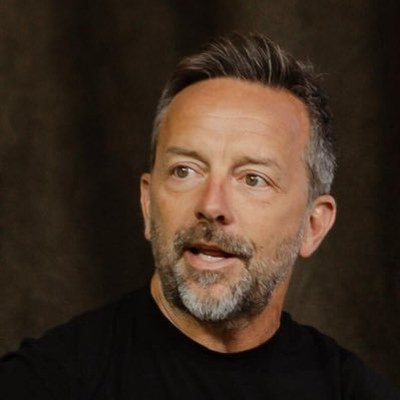 Brad Gerstner
3
thin
22 Feb 2024 – 2 Jul 2026
-223 d
Brad Gerstner
3
thin
22 Feb 2024 – 2 Jul 2026
-223 d
- Dylan Patel 9 2 Oct 2024 – 13 May 2026 +0 d
-
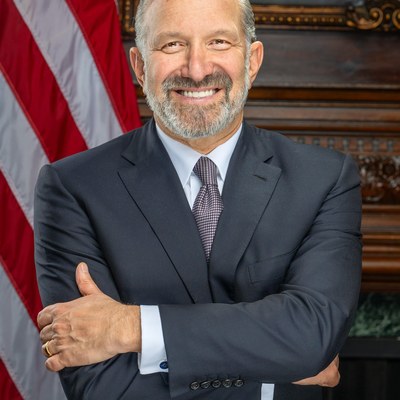 Howard Lutnick
1
thin
20 Mar 2025 – 20 Mar 2025
+169 d
Howard Lutnick
1
thin
20 Mar 2025 – 20 Mar 2025
+169 d
-
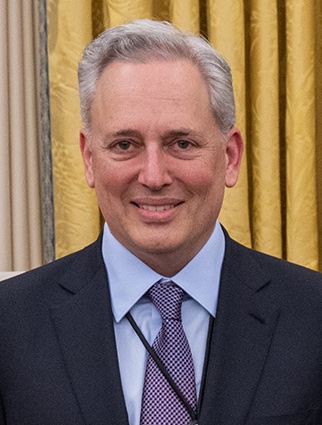 David Sacks
4
thin
4 Nov 2025 – 19 Dec 2025
+398 d
David Sacks
4
thin
4 Nov 2025 – 19 Dec 2025
+398 d
-
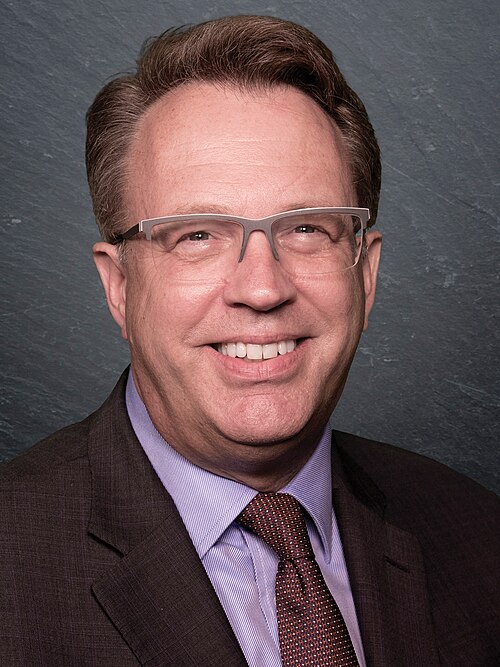 John Williams
1
thin
John Williams
1
thin
The chronologysourced and dated, oldest first
-
-
Gavin Baker
Baker explains Intel's historical advantage of reaching semiconductor nodes first gave them 15-20% embedded advantage.
“Intel for the last, I don't know, fifty years, sixty years always got to the next node in semiconductor manufacturing first.”
-
Gavin Baker
Baker quantifies Intel's manufacturing lead as 15-20% advantage that Taiwan Semi overtook in 2018.
“And in 2018, and it's important that the Taiwan Semi seven nanometer node is equivalent to the Intel 10 nanometer node.”
-
Gavin Baker
Baker says Taiwan Semi reached the node before Intel in 2018, creating a competitive shift.
“Taiwan Semi got to the node before Intel, which meant that Taiwan Semi, who supplies most semiconductor companies that you can think of Yeah.”
-
-
-
Gavin Baker
Baker notes Taiwan Semi will spend more on CapEx in two years than in the preceding five years.
“Taiwan Semi, their 2022 CapEx is going to be many multiples of 2019. 2021 and 2022, they'll spend more than they did in the preceding five years. So there is a massive supply response coming.”
-
Gavin Baker
Baker says Taiwan Semi will spend more on CapEx in 2021-2022 than in the preceding five years.
“Taiwan Semi, their 2022 CapEx is going to be many multiples of 2019. 2021 and 2022, they'll spend more than they did in the preceding five years.”
-
Gavin Baker
Baker argues semiconductor industry has consolidated into monopolies or duopolies in every subsector over fifteen years.
“Let's step back and look at the last fifteen years of semis. The industry has completely consolidated to where you almost have these monopolies and almost monopolies or duopolies.”
-
Gavin Baker
Baker describes semiconductor industry as consolidated into monopolies, duopolies, or three-player oligopolies in every subsector.
“In every subsector of semis, you either have a monopoly, duopoly, or in the worst case, an oligopoly of three.”
-
Gavin Baker
Baker cites research showing AI algorithm quality doubles with every 10x increase in training data.
“Microsoft wrote about this in a research paper ten years ago, or maybe not twelve years ago, the quality of a given AI algorithm doubles with every 10x increase in the amount of data you use to train that algorithm.”
-
Gavin Baker
Baker identifies extreme consolidation in semiconductors with only three companies making leading edge logic.
“Today, Intel, Samsung, Taiwan, Semi, they the only companies in the world that can make leading edge logic. There's only three companies that can make leading edge DRAM, maybe four for NAND.”
-
Gavin Baker
Baker identifies Intel, Samsung, and Taiwan Semi as the only companies capable of making leading edge logic chips.
“Today, Intel, Samsung, Taiwan, Semi, they the only companies in the world that can make leading edge logic.”
-
-
-
Brad Gerstner
Gerstner cites Morris Chang explaining why Texas cannot compete with Taiwan fab plants.
“The U. Yeah. Interestingly enough, he ran a fab plant for Texas Instruments in Texas. And he explains why Taiwan, like why Texas could never possibly compete with a fat plant in Taiwan.”
-
Dylan Patel
Patel argues US export controls are counterproductive because China can now build better chips domestically than what's allowed for export.
“They can build better chips in China, then we restrict them in terms of chips that NVIDIA or AMD or an Intel can sell to China.”
-
Dylan Patel
Patel argues current export controls are flawed because China can build better chips domestically than what West can sell them.
“the equipment that is shipped can be used to build chips that are better than what the Western companies can actually ship them. John, Dylan seems to think the”
-
-
-
Howard Lutnick
Lutnick claims $2 trillion in production commitments returned to US in seven weeks due to tariffs.
“$2,000,000,000,000 of committed domestic production coming back because of his tariffs. TMC saying, I'll build, you know, semiconductor wafers.”
-
David Sacks
Sacks says October 2023 restrictions assumed US semiconductor monopoly justified any export controls.
“We were the only ones who could really make advanced semiconductor, so therefore, we could impose whatever restrictions we Nobody would have a choice.”
-
Gavin Baker
Baker says there hasn't been a true semiconductor capacity cycle since the late nineties due to TSMC smoothing supply.
“We haven't seen a true capacity cycle in semis arguably since the late nineties. And that's because Taiwan Semi has been so good at aggregating and smoothing supply.”
-
“I just saw an article that said that China was rejecting the h 200, so apparently, they don't want them.”
-
David Sacks
Sacks states the administration views H200 as no longer leading edge but a previous generation chip.
“And I think the the administration's view is that, the h 200 was once a leading chip couple years ago. It is no longer on the leading edge. It's a previous generation chip.”
-
“And it's sort of the perfect export control because there's only one company that makes these machines.”
-
-
-
Dylan Patel
Patel notes semiconductor industry doubles transistors yearly but energy industry wasn't prepared for similar growth.
“Whereas the energy industry in America wasn't. And and so, like, initially, people were, like, not creative. They're like, let's do let's do these kinds of gas plants.”
-
Dylan Patel
Patel predicts semiconductor shortages will return as the primary constraint in 2027 after power constraints ease.
“But it will fully beach semiconductors again in '27. Right? And so we see this across the entire space of the ecosystem. It's not just TSMC.”
-
Dylan Patel
Patel says China's entire culture is semiconductor-focused, even appearing in romance dramas.
“I think the entire country is like semiconductor pilled. Mhmm. Right? There are dramas where people fall in love in the fab or dramas where people fall in love and they're photovoltaic,”
-
Dylan Patel
Patel says China's entire culture is semiconductor pilled with romance dramas set in fabs and solar research.
“There are dramas where people fall in love in the fab or dramas where people fall in love and they're photovoltaic, like, solar cell researchers and engineers.”
-
Dylan Patel
Patel claims China has the most vertical semiconductor stack and could run fabs independently unlike TSMC.
“China has the most vertical stack in semiconductors today and they're the best at semiconductors in the world because their fabs could still run somewhat on a lot of things because they have built some of these chemical supply chains. Right? Like TSMC for certain kinds of chemicals 100% share from Japan.”
-
Dylan Patel
Patel identifies semiconductors as the returning bottleneck, with chip fabs being most complicated buildings requiring multi-year timelines.
“Semiconductors are extremely cyclical. The the the buildings that chips are made in are the most complicated buildings people make. You know, they are they are know, they have multi year timelines.”
-
Brad Gerstner
Gerstner notes memory and logic stocks trade at five times fully taxed earnings with flat to down multiples.
“if you look at the multiples, the fully taxed gap earnings of those businesses, the multiples are actually flat to down, Scott. They're they're trading at five x fully taxed earnings.”
-
Dylan Patel
Patel identifies semiconductors, AI, and aerospace engines as the only three industries China doesn't own.
“There's only two industries three industries they don't own. Semiconductors, it's AI, and it's aerospace engines. Right? It's those three things.”
-
Gavin Baker
Baker reveals SpaceX and Tesla are building world's largest fab in America with Intel partnership access.
“It's a SpaceX, I believe Tesla's involved as well, joint venture to build the world's largest fab here in America. I think they're going to be successful.”
-
Gavin Baker
Baker explains TSMC caught Intel because semiconductor equipment suppliers wanted to avoid Intel's monopsony power.
“They wanted them to catch up. They don't like having a monopsony. The a teams were in Taiwan working. Intel made some mistakes and presto.”
-
Gavin Baker
Baker warns VCs that Jensen sees Taiwan Semi processes before any startup claiming special access.
“If you're a VC and you're investing a semiconductor company that is telling you they are going to have an advantage because of a Taiwan Semi process that they have special access to, I promise you the Jensen saw that process when it was a twinkle in Taiwanese eyes.”
-
Brad Gerstner
Gerstner defends Intel government stake as smart negotiated transaction that saved critical resource and generated handsome profit.
“I I disagree with that. I think the intel stake intel was gonna go bankrupt. The US government intervened. It saved a critical national resource.”
-
“I published a note, I think in, February 2000 after six weeks of looking at these stocks.”
-
Gavin Baker
Baker says Jensen Huang was obviously exceptional when they first met in early 2000s.
“I was a pretty young man. It was obvious to me he was exceptional, like for sure one of the most exceptional people I'd ever met.”
-
Gavin Baker
Baker explains semiconductor manufacturing advantage comes from recipe not ingredients, despite using same equipment.
“And semi's and semiconductor manufacturing, you have a big advantage if you were ahead. Everybody it's like baking. Everybody uses the same ingredients or whatever.”
-
Gavin Baker
Baker argues silicon will eat the world because AI is far more computationally intensive than deterministic software.
“And the nature of AI just as AI eats the world, silicon is going to eat the world because it's so much more computationally intensive than deterministic software written by humans.”
-
-
-
John Williams
Williams sees sharp price increases in semiconductors and power transformers from AI demand outpacing supply.
“As a result, we are seeing sharp increases in the prices of semiconductors, power transformers, and other technology that is essential for the AI buildout.”
-
Where they overlapsame programme, same subject
- CNBC Television also carries Brad Gerstner and David Sacks on this subject, at different times.