Who is on this subjectordered by the date of their first quote here
4 of 6 lanes rest on fewer than 5 quotes and are marked thin. Offsets are days from the middle first-quote date, 21 Jan 2026 — a date, and nothing else. It is not a claim about who reached a view first.
-
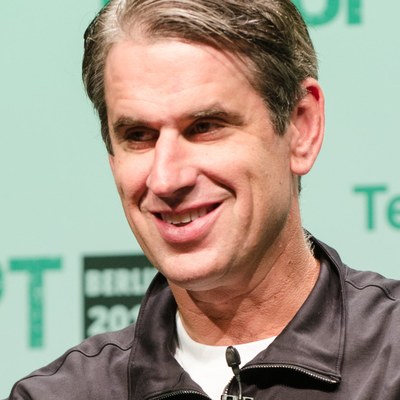
 David Friedberg
5
8 Oct 2011 – 22 May 2025
-5219 d
-
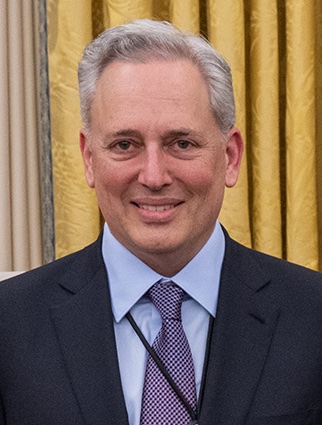
 Bill Gurley
9
21 Jul 2023 – 15 Jul 2026
-915 d
-
 David Sacks
1
thin
21 Jan 2026 – 21 Jan 2026
+0 d
- Dylan Patel 1 thin 3 Feb 2026 – 3 Feb 2026 +13 d
-
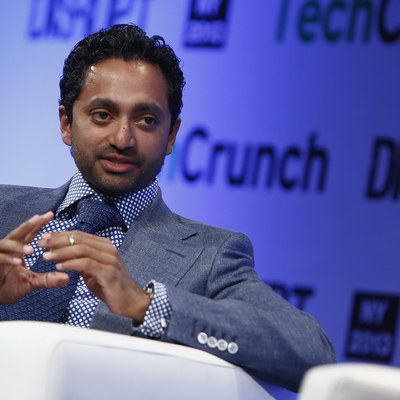 Chamath Palihapitiya
1
thin
14 Jul 2026 – 14 Jul 2026
+174 d
-
 Gavin Baker
1
thin
4 Aug 2026 – 4 Aug 2026
+195 d
The chronologysourced and dated, oldest first
-
-
David Friedberg
Friedberg states the odds of building a billion-dollar company are 0.0006%, yet that's what gets all the attention.
“The odds of the guy of being the guy on the left are according to a study and I put the URL up there, point 0006%.”
-
David Friedberg
Friedberg calculates median startup founder payoff at $300,000 over 49 months, or $73,000 annualized—less than Google.
“And assuming three founders, your median expected payoff to the founders would be about $300,000 each, which works out to an annualized salary equivalent of $73,000”
-
-
-
David Friedberg
Friedberg claims 99% of startup assumptions are wrong and success comes from iterating to find the right approach.
“Most people don't realize when you haven't built a business from the ground up, but 99% of your assumptions are wrong going into it.”
-
Bill Gurley
Gurley suggests Austin and Miami being fun cities may be a problem for attracting the most determined startup founders.
“I think many cities, whether it's Austin or Miami, they they have a problem that sounds ironic, but they're a lot of fun.”
-
-
-
Bill Gurley
Gurley says healthcare startups trying to monetize end up reinforcing bad system dynamics instead of changing them
“And then and then some of them end up in a place where they're actually reinforcing the bad stuff, you know, and making it worse.”
-
Bill Gurley
Gurley says entrepreneurs design with cutting-edge AI models but switch to cheaper versions for 20x savings.
“It's like 20x differential. And when I talk to our entrepreneurs that are using these models, they might design with the cutting edge model, but they all back off to the affordable models”
-
-
-
David Friedberg
Friedberg argues AI enables building deep tech companies with 100 to 200 people instead of thousand-plus person teams.
“there's the opportunity to build deep tech companies, to build technically difficult companies, to build businesses that historically may have been the realm of thousand plus person companies with a 100 to 200 people.”
-
David Friedberg
Friedberg argues AI enables small startups to pursue multi-billion dollar markets previously requiring much larger teams.
“I actually think the addressable economic opportunity for startups has actually grown. So startups that otherwise might not have been able with 50 or 100 people to go after a multi billion dollar seed market, which is kind of the market that we're in, can now do so because of the leverage they get with AI.”
-
Bill Gurley
Gurley cites research showing over 500 Chinese EV startups compared to four legitimate US ones.
“And I, you know, I think the data suggest in this this piece of research would suggest that's why they've been so successful in EVs where there were over 500 EV startups,”
-
Bill Gurley
Gurley contrasts China's 500 EV startups with only four legitimate ones in the United States.
“in EVs where there were over 500 EV startups, 500 in The US. What has there been? Four legitimate ones?”
-
-
-
David Sacks
Sacks argues patchwork state AI regulation burdens startups while big tech can comply, threatening US seamless national market advantage.
“The big tech companies are gonna figure out how to comply with that, but it's a tremendous burden for small tech, for startups, for entrepreneurs.”
-
Dylan Patel
Patel predicts AI startup revenue will exceed $100 billion by end of year, calling it unbelievable to most.
“by the end of the year do how many people even believe by the end of the year AI startup revenue is over a $100,000,000,000?”
-
Bill Gurley
Gurley says young AI companies begging for regulation is unprecedented and threatens idealistic entrepreneurship.
“So there's these new areas there and now AI where very young companies are begging for regulation, which is not anything I've seen in my career either.”
-
Chamath Palihapitiya
Palihapitiya warns California wealth tax will hit startup founders with $50 million bills despite having no liquid cash.
“This is not a not not really. I mean, these valuations happen all the time.”
-
Bill Gurley
Gurley says founders are the chief salesperson for their company, selling to investors, employees, and customers constantly.
“But if you're a founder, you're selling to new investors, you're selling to employees, you own the company culture and the perception of the company, you're striking deals, you're selling to customers, you're just out selling all you're the number one sale you're the chief salesperson for your company,”
-
Bill Gurley
Gurley explains VCs can only join about two boards per year, unlike public investors evaluating unlimited positive-IRR opportunities.
“If it's positive IRR and I'll make 14%, I'll do it. Yep. But venture capitalists have a limited number of boards they can go on, probably two a year.”
-
Bill Gurley
Gurley notes owning 100% of a $20 million exit creates lifetime wealth and attracts more acquirers than larger exits.
“Your boss won't care. If you own a 100% of a $20,000,000 company, that's lifetime wealth.”
-
Gavin Baker
Baker reports a top startup rented several thousand Blackwells at mid-$2 per GPU hour recently.
“And they had rented a cluster of several thousand black wells, And we'll just call it, you know, somewhere in the mid $2 per GPU hour.”
-