Who is on this subjectordered by the date of their first quote here
11 of 15 lanes rest on fewer than 5 quotes and are marked thin. Offsets are days from the middle first-quote date, 31 Jan 2025 — a date, and nothing else. It is not a claim about who reached a view first.
-
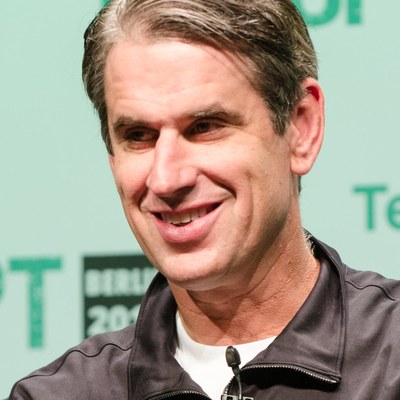 Bill Gurley
9
1 Oct 2010 – 26 Mar 2026
-5236 d
Bill Gurley
9
1 Oct 2010 – 26 Mar 2026
-5236 d
-
 David Friedberg
1
thin
13 Jul 2021 – 13 Jul 2021
-1298 d
David Friedberg
1
thin
13 Jul 2021 – 13 Jul 2021
-1298 d
-
 Marc Rowan
12
15 Jul 2021 – 4 Aug 2026
-1296 d
Marc Rowan
12
15 Jul 2021 – 4 Aug 2026
-1296 d
-
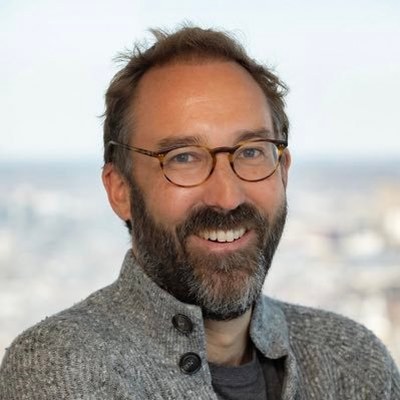 Gavin Baker
3
thin
25 Jan 2022 – 4 Aug 2026
-1102 d
Gavin Baker
3
thin
25 Jan 2022 – 4 Aug 2026
-1102 d
-
 David Tepper
2
thin
13 Oct 2022 – 13 Oct 2022
-841 d
David Tepper
2
thin
13 Oct 2022 – 13 Oct 2022
-841 d
-
 Brad Gerstner
12
28 Sep 2023 – 10 Feb 2026
-491 d
Brad Gerstner
12
28 Sep 2023 – 10 Feb 2026
-491 d
-
 David Sacks
3
thin
31 Jan 2025 – 18 Jul 2026
+0 d
David Sacks
3
thin
31 Jan 2025 – 18 Jul 2026
+0 d
- Dylan Patel 8 30 Jun 2025 – 22 Jul 2026 +150 d
-
 Sir Richard Dearlove
3
thin
25 Sep 2025 – 13 Mar 2026
+237 d
Sir Richard Dearlove
3
thin
25 Sep 2025 – 13 Mar 2026
+237 d
-
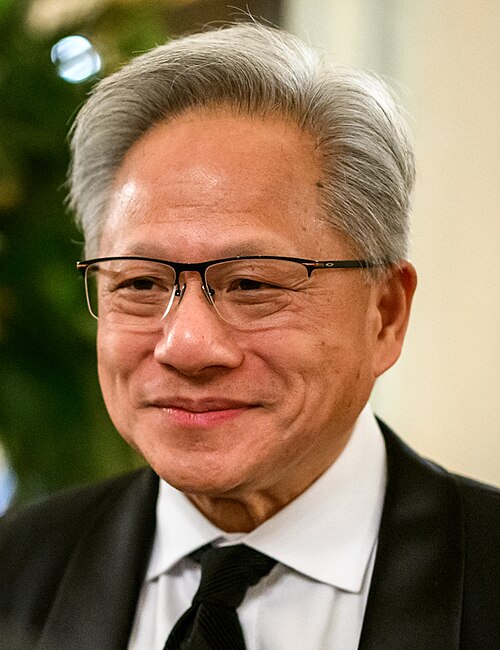 Jensen Huang
1
thin
4 Feb 2026 – 4 Feb 2026
+369 d
Jensen Huang
1
thin
4 Feb 2026 – 4 Feb 2026
+369 d
-
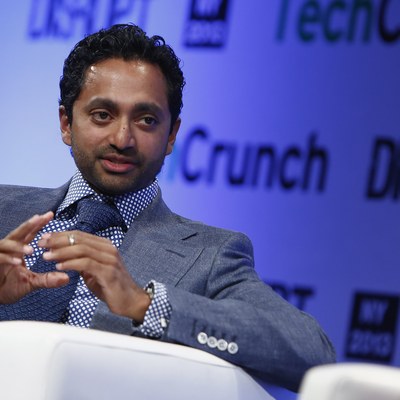 Chamath Palihapitiya
2
thin
22 May 2026 – 29 May 2026
+476 d
Chamath Palihapitiya
2
thin
22 May 2026 – 29 May 2026
+476 d
-
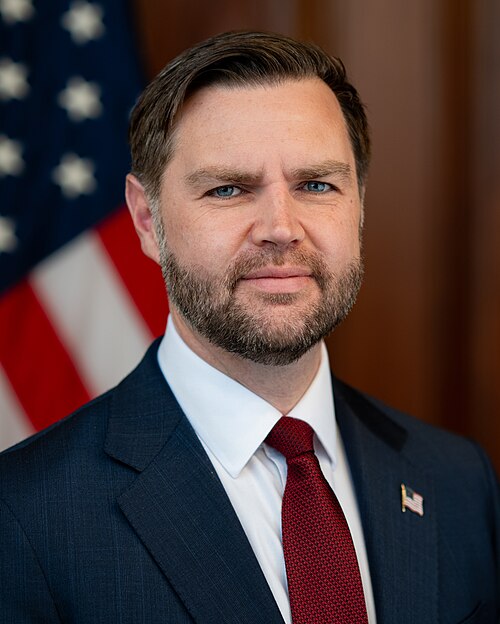 JD Vance
1
thin
24 Aug 2026 – 24 Aug 2026
+570 d
JD Vance
1
thin
24 Aug 2026 – 24 Aug 2026
+570 d
-
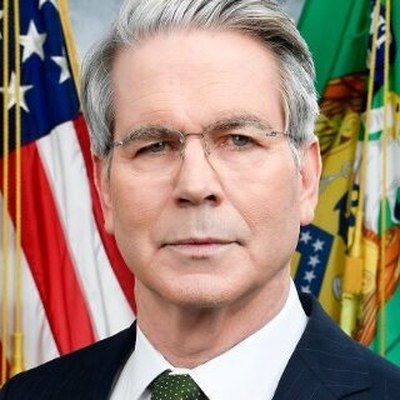 Scott Bessent
3
thin
24 Aug 2026 – 24 Aug 2026
+570 d
Scott Bessent
3
thin
24 Aug 2026 – 24 Aug 2026
+570 d
-
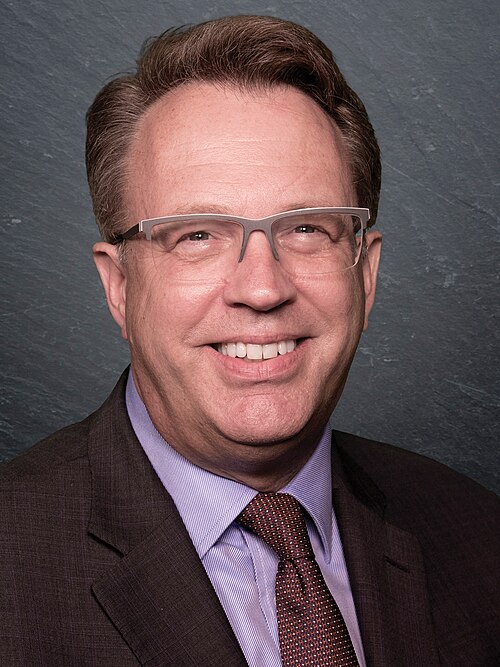 John Williams
1
thin
John Williams
1
thin
-
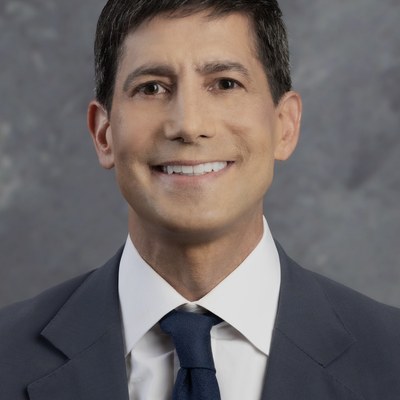 Kevin Warsh
1
thin
Kevin Warsh
1
thin
The chronologysourced and dated, oldest first
-
-
Bill Gurley
Gurley cites Data Domain and ArcSight as examples of IPO-then-acquisition premium strategy working.
“Another interesting thing is with Data Domain and ArcSight and three part, you've seen companies go public, establish a valuation and then get an M and A premium on top of that.”
-
-
-
Bill Gurley
Gurley explains Benchmark isn't judged on IRR and would pass on 20% IRR deals due to board seat limits.
“You know, we're luckily in a business where we're not judged on IRR per se.”
-
Bill Gurley
Gurley says Benchmark turns down twenty percent IRR opportunities because LPs invest for beta and home runs, not steady returns.
“Like if there's an opportunity where we can make a 20% IRR someone might go, oh you should do every one of those, but we're limited by the number of board seats we can take and our LPs are investing in us to get beta and so they want the home runs”
-
Bill Gurley
Gurley describes venture capital as an artisan business that fundamentally does not scale.
“In the long run, we like to believe that this is an artisan business that doesn't scale and that if you want someone to help you and trusted you taking this company to the next level that you want what is an artisan,”
-
-
-
Bill Gurley
Gurley says bug bounties are the only offensive security solution versus defensive dam-building approaches.
“It is the only offensive solution. Most of the security solutions are defensive where you're just building a bigger and bigger dam and trying to hold people out.”
-
-
-
Bill Gurley
Gurley says marketplace success requires doing unscalable things early, which frustrates most business school-trained entrepreneurs.
“And if you took 90% of the entrepreneurs that have been to business school and understand scaling, it drives them nuts.”
-
Bill Gurley
Gurley criticizes SoftBank's strategy of deploying hundreds of millions, which forces companies into massive losses.
“I've I've been quoted publicly, like, they've, you know, played a strategy where you hand hundreds of millions of dollars to a company and say, here, go win in the market with this.”
-
-
-
David Friedberg
Friedberg argues traditional financial firms face a catch-22 in M&A: autonomy loses cross-sell leverage.
“And if they do that, they lose the leverage of their over their existing customer base, which is to cross sell digital services in.”
-
Marc Rowan
Rowan tells his team Apollo will change more in the next five years than in the past five.
“I've told our internal team our business is gonna change more in the next five years than it's changed in the past.”
-
Marc Rowan
Rowan commits to 15% plus annual cash-on-cash growth with optionality from finance democratization.
“And what we've told the Street is we will grow our business 15% plus cash on cash year over year, and I think that's really good.”
-
Marc Rowan
Rowan tells his team Apollo will change more in the next five years than the past five.
“I've told our internal team our business is going to change more in the next five years than it's changed in the past. And it's changed a lot in the past five years.”
-
Bill Gurley
Gurley would bet on a 500 million user communication platform adding avatars over a perfect avatar system without users.
“if I had to place a bet on whether someone that had 500,000,000 users on a digital place platform where people are communicating and that they might add avatars or some digital thing that makes it more immersive versus someone that built the perfect digital three d avatar immersive system but doesn't have the users yet?”
-
-
-
Gavin Baker
Baker describes adopting a multistage venture strategy from mentor Antonio Gracias.
“But his whole strategy a lot of his strategy for venture, which I ruthlessly copied, is around the idea of their profound advantages towards being multistage.”
-
David Tepper
Tepper emphasizes need to carefully manage the Panthers' $200 million salary cap and limited draft picks.
“Look, we have to be very careful about how we use our limited resources. We have 200,000,000, 200 plus million salary cap.”
-
David Tepper
Tepper emphasizes being careful with limited resources including the 200-plus million salary cap.
“Look, we have to be very careful about how we use our limited resources. We have 200,000,000, 200 plus million salary cap. We have how many draft choices we have.”
-
-
-
Marc Rowan
Rowan says Apollo focused on private investment grade markets and now competes for assets amid banking turbulence.
“We went for the private investment grade market. That is the dominant franchise we have built. What we're seeing right now, particularly the turbulence in banking, these are the kind of assets we compete for.”
-
Marc Rowan
Rowan says Apollo's existing business plan upside is so large that any distraction is too costly.
“The upside from simply executing the business plan that's in front of us is so high that the price of distraction is just very hard to contemplate.”
-
Marc Rowan
Rowan says Apollo runs private equity for returns not growth, calling it a farming business.
“But literally, we run this business for rate of return. If we do a good job for investors, we will grow a little.”
-
Brad Gerstner
Gerstner says Google made a mistake letting OpenAI go first despite having the technology and capabilities.
“And to relinquish that spot by letting OpenAI go first, when you had the technology, you had the supercompute, you had the capabilities to release that product, I think was a mistake.”
-
Brad Gerstner
Gerstner would rename OpenAI to ChatGPT and focus entirely on consumer rather than enterprise business.
“On the consumer side, which is where I get a lot more excited about OpenAI, is I say, You are the verb. I would rename the company ChatGPT.”
-
Marc Rowan
Rowan says Apollo plans to double its business, limited by excess return not capital raising.
“Our business plan calls for a doubling of our business. And at the end of the doubling, liking who we are as a culture, our limiter is not capital raising.”
-
-
-
Brad Gerstner
Gerstner argues high valuations force you to double that number, so $100B becomes $200B, distorting strategy.
“it forces the business strategy to fit that outcome. And worse yet, Dara, not only do you have to get to that number, you have to double that number.”
-
Brad Gerstner
Gerstner says smart Silicon Valley companies use open source as defensive weapon, starting with Google's Android.
“Something happened over the past, I'd say fifteen years, where some of the smartest companies in Silicon Valley have developed a new strategic play, where they use open source as a defensive weapon rather than as an offensive weapon. That's my terminology. Of the first to do it was Google with Android”
-
Brad Gerstner
Gerstner explains nine units of risk means 4.5 billion directionally long on 5 billion portfolio.
“So let's say that you're managing $5,000,000,000 of public equities. Nine units of risk would be that you have 4,500,000,000 of that risk directionally long the market.”
-
Brad Gerstner
Gerstner argues AI policy and energy policy must be integrated at national level.
“you cannot have a strategic AI policy at a national level without a strategic energy policy at a at a national level. They're really tight at the hip.”
-
-
-
“I kind of divided it into three buckets. One, legal and economic. We have a legal and economic fight. The second is we have a hearts and minds fight.”
-
David Sacks
Sacks argues open-sourcing makes strategic sense for DeepSeek as a Chinese company trying to catch up.
“And so if you're if you're behind and you're trying to catch up, then open source is a strategy that actually really makes sense for you.”
-
Marc Rowan
Rowan says he wouldn't have taken Trump's tariff gamble and cites short-term uncertainty and longer-term brand as risks.
“That's not a gamble I would have taken from the position we had. Having said that, short term uncertainty, that's the risk. Longer term brand, that's the risk,”
-
Marc Rowan
Rowan prescribes sequencing tariff deals with Mexico and Canada first, then budget, before addressing China and Europe.
“Four four big markets. Mexico, Canada, Europe, China. Get Mexico and Canada done first. Get your budget done.”
-
Marc Rowan
Rowan states he would not have employed this riskier tariff strategy, citing short-term uncertainty and long-term brand risks.
“It's not the strategy I would have employed. It's a riskier strategy than I personally would have employed. I think it has risks short term, uncertainty, longer term brand,”
-
Dylan Patel
Patel identifies a major shift in Zuckerberg's strategy toward pursuing superintelligence recently.
“He was chasing like AI is good and great, but like AGI is not a thing that is gonna happen soon. So sort of this is a big shift in strategy”
-
Dylan Patel
Patel suggests NVIDIA should use its massive tax bill to invest directly in data center infrastructure despite customer conflicts.
“Now this is obviously gonna be, like, crazy because, like, now they're buying g p their own GPUs and putting them in data centers and doing stuff, and they're competing with their own customers,”
-
Brad Gerstner
Gerstner argues OpenAI's global expansion mirrors Google's early 2000s strategy of competing worldwide without government permission.
“This is what Google did in the early two thousand. Right? And by the way, Google didn't have to go to Washington to get a permission or to get a license.”
-
Brad Gerstner
Gerstner warns believing China only wins through theft or subsidies prevents US self-improvement.
“if we have this view that the only reason China's competitive or winning is because they're they're stealing or they're subsidized, I think what that view does is it allows us to dilute ourselves into believing we don't need to get better ourselves.”
-
Brad Gerstner
Gerstner argues focusing on slowing China distracts from accelerating US competitiveness.
“And I think by if we focus too much on how do we slow down China, we take the eye off the ball on how to accelerate our own race.”
-
Dylan Patel
Patel explains Anthropic's strategy prioritizes solving software engineering and computer use to accelerate AGI development recursively.
“First, we have to solve software engineering, and then we can use that to build all the other pieces. Right? First, we have to solve computer use.”
-
Sir Richard Dearlove
Dearlove says big bang system changes are the worst approach for intelligence communities.
“And, of course, the worst thing that you want to do is to have a big bang change in the intelligence community and introduce a new system.”
-
Sir Richard Dearlove
Dearlove warns that big bang system changes are the worst approach for intelligence agencies.
“of course, the worst thing that you want to do is to have a big bang change in the intelligence community and introduce a new system.”
-
Dylan Patel
Patel notes early GPU systems had low volume but Supermicro continued engineering through generations anticipating future demand.
“What there there wasn't much volume. Right? In those initial systems. Right? In the early time frame. Yeah. Early time frame.”
-
-
-
David Sacks
Sacks argues nine electoral vote shift means Republicans wouldn't need to crack PA, MI, WI blue wall.
“It's really important because what it means is that a future Republican would not need to somehow crack the Democrats' blue wall of Pennsylvania, Michigan, and Wisconsin.”
-
Brad Gerstner
Gerstner notes OpenAI has not broken ground on any $50 billion data centers despite earlier expectations.
“Well, a year ago, people thought that they were gonna go build all these data centers that were gonna cost $50,000,000,000 a pop. I haven't heard them break ground on any data center.”
-
Brad Gerstner
Gerstner notes OpenAI has not built data centers while Microsoft, Oracle, CoreWeave, and SoftBank are building them.
“I haven't heard them break ground on any data center. I hear Microsoft building data centers, Oracle building data centers, CoreWeb building data centers, SoftBank building data centers.”
-
Dylan Patel
Patel argues NVIDIA's divergent product lines reveal uncertainty about AI's direction.
“But really it screams, oh crap, we don't really know exactly where AI is going, which I don't think anyone does. Right?”
-
Jensen Huang
Huang says every company now has opportunity to transform into a technology company using AI.
“So it is the it is the case that all of you, all of you, everybody in in this room today, you have the opportunity to apply this technology to become a technology company.”
-
Dylan Patel
Patel explains Jensen fears specialized chips could undercut NVIDIA's margins if they only made general-purpose GPUs.
“Jensen is very paranoid about losing. Right? These specializations if he just kept making his mainline chip would mean people could you know point point solutions for specific parts of the market would crush him on cost and performance, then he can't justify his margin.”
-
Brad Gerstner
Gerstner argues US should focus on running fastest race rather than restricting China's chip access.
“The US wins when the world runs on American technology, and I think we need to focus on running the fastest race we can possibly run.”
-
Dylan Patel
Patel says Sam Altman's greatest skill is taking advantage of a crisis to sign government deals.
“That's maybe his greatest skill, is to take advantage of a good crisis. And so he goes out there and he signs deals with the US government.”
-
Sir Richard Dearlove
Dearlove warns Israel risks winning militarily against Iran but losing politically despite extraordinary achievement.
“This small country with a relatively small population has taken on and defeated a country of 90,000,000 people. You know, it's an extraordinary military achievement. But beware, you could win militarily and lose politically.”
-
Bill Gurley
Gurley recommends reading Porter's Competitive Strategy because selling into consolidated industries is tough versus fragmented ones.
“I always tell people to read the first two chapters of Competitive Strategy by Michael Portner, because like if you're building a product and trying to sell into a consolidated industry, it's really tough.”
-
Chamath Palihapitiya
Palihapitiya explains SpaceX's revenue creates a capital moat that accelerates technology and execution moats in a flywheel.
“Because what he creates is a capital moat that then accelerates a technology moat that then accelerates an execution and a learning moat.”
-
Chamath Palihapitiya
Palihapitiya argues frontier AI labs use game theory to absorb capital and shape regulation by creating less capable oversight bodies.
“And how do you create an oversight body that is less capable and intellectually aware as you are about the actual details?”
-
Gavin Baker
Baker explains Hock Tan's model is opposite of Dell's: find drained profit pools with no competition, enter, and raise prices.
“Hock's model has always been to find a profit pool that has been drained and there's no competition left, enter that and jack prices up.”
-
David Sacks
Sacks argues tech companies must draw a line on regulation or government will keep taking more control.
“The government will be happy to take this and then come back for more and more and more until it's fully under government control.”
-
Dylan Patel
Patel argues companies cannot pause to measure ROI because experimentation is the only path to finding AI value.
“So how one say, oh, pause, let me measure value, when trying a bunch of stuff is the only way you can actually get to figuring out where the value is versus what doesn't work?”
-
Gavin Baker
Baker argues breaking memory supply agreements could destroy franchises due to allocation loss risk.
“I just think given that this is, the axis around which kind of everything is revolving, man, like, might blow up your entire business and your franchise by breaking an LTA.”
-
Marc Rowan
Rowan announces new Austin office intended to build future businesses rather than replicate existing operations.
“We confirmed yesterday that we will be opening a new office in Austin, Texas. And unlike a new office that simply houses more of the same,”
-
Scott Bessent
Bessent argues Treasury's credibility with secondary sanctions depends on not taking their use lightly.
“And in the terrorism finance department and in OFAC, the reason we are able to use secondary sanctions is because we do not take their use lightly.”
-
Scott Bessent
Bessent says Iran has long calculated American enforcement as negotiable while its own retaliation is certain.
“For decades, this regime has drawn strength from a calculus that regards Iranian retaliation as certain and American enforcement as negotiable.”
-
JD Vance
Vance says administration will defeat socialism by giving people a stake in the American dream.
“We wanna fight for you, and we wanna fight for your children's future. We're gonna defeat socialism by giving you a stake in the American dream,”
-
-
-
Kevin Warsh
Warsh notes the FOMC unanimously reaffirmed its Statement on Longer-Run Goals and Monetary Policy Strategy at its organizational meeting.
“The Federal Open Market Committee, at its annual organizational meeting this week, unanimously reaffirmed its "Statement of Longer-Run Goals and Monetary Policy Strategy."”
-
Scott Bessent
Bessent cites 2026 strategy identifying far-left terrorists as one of three major U.S. threats.
“The 2026 U.S. Counterterrorism Strategy identifies violent far-left terrorist groups as one of the three major terrorist threats facing the United States today.”
-
John Williams
Williams outlines three key features for monetary policy: consistent strategy, readiness to act, and disciplined adaptation to changing conditions.
“Third, it implies being clear-eyed and disciplined in adapting to and communicating the changing economic landscape and resulting policy trade-offs and decisions.”
-
Where they overlapsame programme, same subject
- CNBC Television also carries Brad Gerstner, David Friedberg and Marc Rowan on this subject, at different times.
- All-In Podcast also carries Chamath Palihapitiya and David Sacks on this subject, at different times.
- Forbes Breaking News also carries JD Vance and Scott Bessent on this subject, at different times.
- Invest Like the Best also carries Bill Gurley and Gavin Baker on this subject, at different times.