Who is on this subjectordered by the date of their first quote here
5 of 6 lanes rest on fewer than 5 quotes and are marked thin. Offsets are days from the middle first-quote date, 25 Jan 2022 — a date, and nothing else. It is not a claim about who reached a view first.
-
 David Friedberg
2
thin
19 Mar 2020 – 3 Apr 2026
-677 d
David Friedberg
2
thin
19 Mar 2020 – 3 Apr 2026
-677 d
-
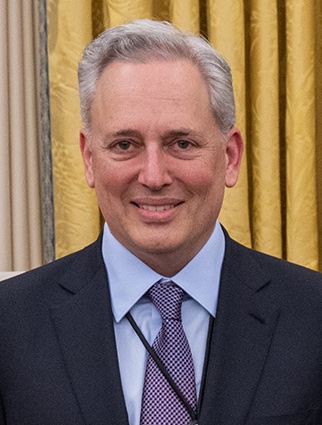 David Sacks
1
thin
21 May 2020 – 21 May 2020
-614 d
David Sacks
1
thin
21 May 2020 – 21 May 2020
-614 d
-
 Gavin Baker
2
thin
25 Jan 2022 – 4 Aug 2026
+0 d
Gavin Baker
2
thin
25 Jan 2022 – 4 Aug 2026
+0 d
- Dylan Patel 36 9 Aug 2023 – 9 Jul 2026 +561 d
-
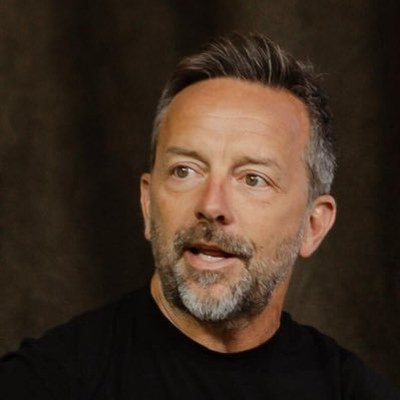 Brad Gerstner
1
thin
12 Mar 2025 – 12 Mar 2025
+1142 d
Brad Gerstner
1
thin
12 Mar 2025 – 12 Mar 2025
+1142 d
-
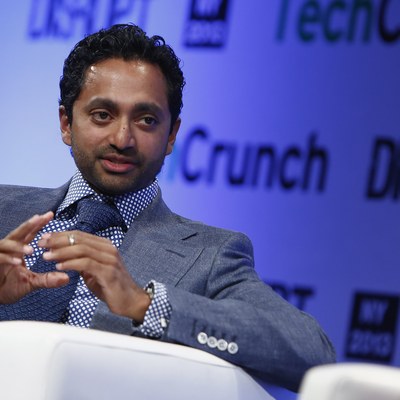 Chamath Palihapitiya
2
thin
10 Oct 2025 – 10 Oct 2025
+1354 d
Chamath Palihapitiya
2
thin
10 Oct 2025 – 10 Oct 2025
+1354 d
The chronologysourced and dated, oldest first
-
-
David Friedberg
Friedberg warns the world has only a 30-day food supply if production stops.
“The the world lives on a thirty day food supply. So if you stop food production today, there would only be thirty days of food for the whole world to eat based on our calorie consumption per day, and especially with an isolated border and we import a lot of food in The United States.”
-
David Sacks
Sacks argues the US should not depend on China for antibiotics, medicines, or PPE critical to survival.
“It doesn't really make sense for us to be dependent on China for our antibiotics, for our medicines, for our PPE, for any of these products that are important for national survival.”
-
-
-
Gavin Baker
Baker notes Amazon spent more on CapEx in two years than in the preceding twenty years.
“It's not a comment on Amazon. It's just a comment on the supplier response. They have spent more money on CapEx in the last two years than they did in the preceding twenty years.”
-
-
-
Dylan Patel
Patel says chip orders take a minimum of three months from order to delivery from TSMC.
“the moment you even put an order in, even if TSMC started working on it immediately, you could not get a chip out for three more months.”
-
Dylan Patel
Patel says GPU orders take four to six months from placement to data center installation.
“call it four or five five, six months between, you know, when an order is placed and you can actually have it installed in your data center if it got worked on immediately.”
-
Dylan Patel
Patel claims Google is massively ramping TPU production, a closely guarded secret most DeepMind employees don't know.
“Google's actually ramping up TPU production massively. And I think people in AI would be like, Well, duh. But like, okay, who has the capability of figuring out the number?”
-
Dylan Patel
Patel says Google's TPU production numbers are closely guarded secrets that even most Google DeepMind employees don't know.
“Right? That's like a very closely guarded secret, most people that work at Google DeepMind don't even know number.”
-
Dylan Patel
Patel argues the semiconductor supply chain is highly fragmented with critical monopolies in countries like Austria.
“People don't understand how fragmented the semiconductor supply chain really is and how many monopolies there are. The US could absolutely shut shut down the Chinese semiconductor supply chain.”
-
-
-
Dylan Patel
Patel argues Western power grid supply chains have not expanded in decades unlike China, India, and Indonesia.
“The Japanese power grid has been like this. The Korean power grid has been like Only China and India and Indonesia, their power grids have been growing really fast.”
-
-
-
Brad Gerstner
Gerstner says CEO uncertainty from tariff negotiations forces real decisions on pricing and supply chains.
“They gotta make real life decisions about what do I do with prices, what do I do with my supply chain, etcetera.”
-
Dylan Patel
Patel argues TSMC's $100 billion US investment still relies on Taiwan R&D, not securing supply chain.
“Even if they do fully do the full $100,000,000,000 they commit to, completely still relying on R and D in Taiwan.”
-
Dylan Patel
Patel argues TSMC's $100 billion US investment won't secure R&D supply chain or new node development.
“The R and D fab they announced is not going to secure R and D supply chain, right? It's not going to secure new node development, right?”
-
Dylan Patel
Patel notes that as recently as 2022, most of China's robots were imported from Japan and Germany.
“And so even as near as twenty twenty two, the majority of China's robots were being imported. Right? Japan and Germany being the largest market share players,”
-
Dylan Patel
Patel notes China was importing majority of robots as recently as 2022 from Japan and Germany.
“even as near as twenty twenty two, the majority of China's robots were being imported. Right? Japan and Germany being the largest market share players, but also USA, Korea is also in there.”
-
Dylan Patel
Patel notes that as recently as 2022, China imported the majority of its robots from Japan and Germany.
“even as near as twenty twenty two, the majority of China's robots were being imported. Right? Japan and Germany being the largest market share players,”
-
Dylan Patel
Patel recounts that NVIDIA ordered Xbox production volume before receiving Microsoft's official order.
“No. No. No. Like, NVIDIA ordered the volume for the Xbox before Microsoft gave them the order.”
-
Dylan Patel
Patel reveals NVIDIA doubled system-level testing time for Blackwell compared to Hopper generation.
“NVIDIA learning from the issues on Hopper, with Blackwell, they actually doubled the time for system level test.”
-
Chamath Palihapitiya
Palihapitiya explains OpenAI's Korea deals secure forward HBM memory capacity that Altman can allocate for leverage and equity participation.
“He's buying forward capacity on HBM because now he can allocate that share. So when I saw that deal and I saw that equity, it reminded me of this Rothschild quote.”
-
Chamath Palihapitiya
Palihapitiya asserts energy control will enable equity participation in AI companies, elevating suppliers from low-margin to high-leverage positions.
“What's a different example? Brad mentioned this before, but energy will be the gating item beyond a shadow of a doubt.”
-
-
-
Dylan Patel
Patel says 10-15% of NVIDIA GPUs fail and need RMA in the first two weeks after cluster deployment.
“When you first turn on the cluster, about ten to fifteen percent of them fail RMA in the first two weeks. Wow. And then that's fine.”
-
Dylan Patel
Patel predicts semiconductor shortages will return as the primary constraint in 2027 after power constraints ease.
“But it will fully beach semiconductors again in '27. Right? And so we see this across the entire space of the ecosystem. It's not just TSMC.”
-
Dylan Patel
Patel predicts semiconductor shortages will return as primary constraint in 2027 affecting both TSMC and memory manufacturers.
“But it will fully beach semiconductors again in '27. Right? And so we see this across the entire space of the ecosystem. It's not just TSMC. It's also memory both.”
-
Dylan Patel
Patel says memory makers have not built new fabs since 2022 due to cyclical nature.
“The memory makers, in fact, have just not expanded capacity. Basically, new they've not built new fabs since 2022. Yeah. Because their their cycle their cycle is so undulating.”
-
Dylan Patel
Patel claims China has the most vertical semiconductor stack and could run fabs independently unlike TSMC.
“China has the most vertical stack in semiconductors today and they're the best at semiconductors in the world because their fabs could still run somewhat on a lot of things because they have built some of these chemical supply chains. Right? Like TSMC for certain kinds of chemicals 100% share from Japan.”
-
Dylan Patel
Patel explains TSMC must follow US export restrictions regardless of Taiwan's government due to banking and equipment dependencies.
“The way American export restrictions are upheld is that Taiwan utilizes American banking systems, American equipment industries. And so they'll still have to uphold any US export restrictions.”
-
Dylan Patel
Patel identifies semiconductors as the returning bottleneck, with chip fabs being most complicated buildings requiring multi-year timelines.
“Semiconductors are extremely cyclical. The the the buildings that chips are made in are the most complicated buildings people make. You know, they are they are know, they have multi year timelines.”
-
Dylan Patel
Patel says NVIDIA has locked up over 60% of market capacity in long-term contracts this year.
“NVIDIA has locked up over 60% of the capacity this year in long term contracts alone, and they're buying more on top of that.”
-
Dylan Patel
Patel reports NVIDIA will sign over $250 billion in supply contracts this year across components.
“as you look at what they're negotiating in the market today, there's over 250,000,000,000 of wafers, of memory, of substrates, of PCBs, of networking equipment that they're going to sign this year,”
-
Dylan Patel
Patel contrasts competitors' limited scale with NVIDIA's supply chain designed for tens of millions of chips.
“I can buy 10,000. I could buy a 100,000. I can't buy millions, tens of millions, which is what Jensen's, setting his supply chain up for.”
-
David Friedberg
Friedberg says largest urea producer in Qatar damaged and will be incapacitated for three to five years.
“That facility got damaged, the the main facility that's being used to make fertilizer. So that is the largest producer of urea in the world that's now gonna be incapacitated for three to five years.”
-
Dylan Patel
Patel says AI chips consuming all TSMC 3nm and 2nm capacity is forcing companies to alternative fabs.
“More importantly is that AI is buying all the capacity on three nanometer and two nanometer in a couple years that, people are having to turn to other directions.”
-
Dylan Patel
Patel says AI chips are consuming all three-nanometer capacity, forcing others to alternative fabs.
“AI is buying all the capacity on three nanometer and two nanometer in a couple years that, people are having to turn to other directions.”
-
Dylan Patel
Patel reveals NVIDIA acquired Grok partly because Grok chips are made on Samsung, accessing non-TSMC capacity.
“Part of it was because they want to have really fast inference, but like part of it is that Grok is manufactured on Samsung. Right?”
-
Dylan Patel
Patel explains NVIDIA acquired Grok partly because it manufactures on Samsung due to no TSMC 3nm capacity available.
“Because there's no three nanometer capacity for them at TSMC, they need to chip somewhere else, and if you just if AI is as crazy as like we believe it is, and demand is as crazy as we believe it is, it's gonna be even crazier next year,”
-
Dylan Patel
Patel explains AI chips are crowding onto three nanometer nodes, displacing mobile chip production.
“Right? Because all the AI chips are on three nanometer and it takes time, Small mobile chips are easier to make than big AI chips, so all the AI chips are moving to three nanometer now, right? MI three fifty from”
-
Dylan Patel
Patel lists AMD MI350, Amazon Trainium 3, and Google TPU v7 as AI chips now on 3nm process node.
“MI three fifty from late last year from AMD or Tranium three and TPU v seven from late last year, or slash early this year from Amazon and Google”
-
Dylan Patel
Patel says TSMC is forcing Apple, Qualcomm, and MediaTek off three-nanometer, pushing them toward Intel.
“They're telling Qualcomm and MediaTek to get off and all three of these companies are like, oh, maybe we should use Intel because they're not telling us to get off”
-
“We try and track the entire supply chain from tools that manufacture chips, fabs, data centers, energy, industrials, and then AI models and who's using them, how much, and where.”
-
Dylan Patel
Patel estimates five to eight years of global tool manufacturing would be needed to replace Taiwan's chip capacity.
“It would take five to eight years of all of the world's tool manufacturing capability Yeah. To even replace the capacity in Taiwan.”
-
Dylan Patel
Patel notes China has a fully self-sufficient vertical semiconductor supply chain, though behind by three to fifteen years.
“China has a vertical supply chain. Yes. In many cases, it's fifteen years behind, ten years behind, in some cases, only three years behind.”
-
Dylan Patel
Patel reveals Google runs three separate TPU design programs with Broadcom, MediaTek, and undisclosed partner.
“They're making a TPU with Broadcom, that's a different architecture than a TPU with MediaTek, that's a different TPU than the architecture that is, I won't disclose, by research.”
-
Dylan Patel
Patel predicted memory prices would soar because capacity grows 30% annually while demand doubles.
“Memory capacity is only growing 30% a year for the next three years. And yet demand is doubling, is doubling. And so what's gonna end up happening is memory prices are gonna keep soaring.”
-
Dylan Patel
Patel predicts iPhone and MacBook prices must rise as AI demand drives memory shortages.
“And right now, you know, if MacBook prices or iPhone prices go up a $100, that market's not gonna adjust too much,”
-
Gavin Baker
Baker argues breaking memory supply agreements could destroy franchises due to allocation loss risk.
“I just think given that this is, the axis around which kind of everything is revolving, man, like, might blow up your entire business and your franchise by breaking an LTA.”
-
Where they overlapsame programme, same subject
- All-In Podcast also carries Chamath Palihapitiya, David Friedberg and David Sacks on this subject, at different times.
- CNBC Television also carries Brad Gerstner and Dylan Patel on this subject, at different times.