Who is on this subjectordered by the date of their first quote here
1 of 4 lane rests on fewer than 5 quotes and is marked thin. Offsets are days from the middle first-quote date, 7 Mar 2024 — a date, and nothing else. It is not a claim about who reached a view first.
-
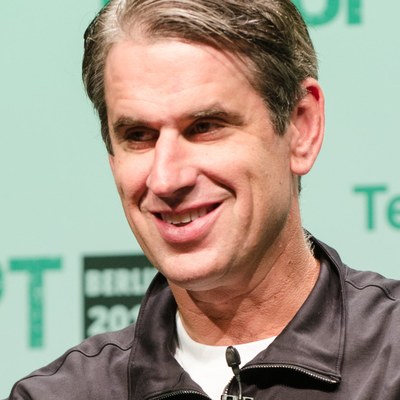 Bill Gurley
8
7 Mar 2024 – 9 Jun 2026
+0 d
-
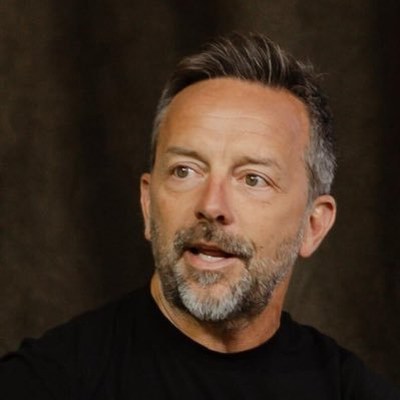 Brad Gerstner
17
7 Mar 2024 – 3 Apr 2025
+0 d
-
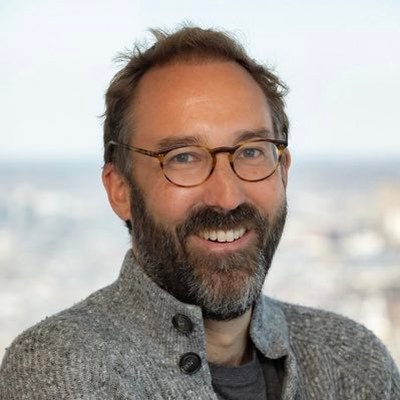 Gavin Baker
6
27 Aug 2024 – 8 Jul 2026
+173 d
-
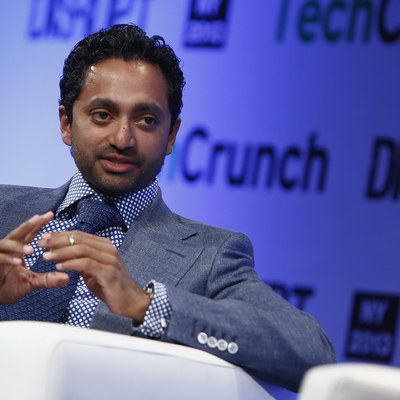 Chamath Palihapitiya
3
thin
22 May 2026 – 31 Jul 2026
+806 d
The chronologysourced and dated, oldest first
-
-
Bill Gurley
Gurley says Tesla replaced coded self-driving with neural network using driver videos as input and controls as output.
“What we learned this week is that they've completely tossed all of that out and gone with a neural network model where they're uploading videos from their best drivers.”
-
Bill Gurley
Gurley says Tesla replaced coded rules with neural networks using driver video as input and pedal/steering as output.
“And literally the videos are the input and the output is the steering wheel, the the brake, and the gas pedal. Yeah. Extraordinary.”
-
Brad Gerstner
Gerstner explains Tesla's new FSD model uses driver behavior as the label, not deterministic code for stoplights.
“Now in this new model, it's pixels in. So the model itself has no code. It doesn't know this is a stoplight per se. In fact, they just watched the driver's behavior.”
-
Brad Gerstner
Gerstner explains Tesla FSD 12 uses driver behavior as labels rather than deterministic code for objects.
“the driver's behavior is actually the label. It says when we see pixels like this on the screen, here's how the model should behave, which I thought is just an extraordinary break.”
-
Bill Gurley
Gurley notes Tesla drivers upload 115 gigabytes monthly, infrastructure impossible five years ago.
“Here here's here's someone who's who's Tesla uploaded a 115 gigabyte in a month. Right? And so these are massive numbers. And the infrastructure five years ago, your car couldn't have done this.”
-
Bill Gurley
Gurley argues Waymo and Cruise cannot compete because their $150,000 cars make fleet scale mathematically impossible.
“And their cars cost 150,000. So if they wanted to have like, the math just doesn't work. You can't build the footprint. You know? And so who could? I don't know.”
-
Brad Gerstner
Gerstner notes Tesla has 7% FSD penetration at $12,000 per customer, with mixed reviews before version 12.
“If you look at it today, they have about 7% penetration of s FSD. That was, let's call it, through FSD 11, and those people paid $12,000 incrementally for that FSD.”
-
Brad Gerstner
Gerstner models Tesla FSD penetration rising from 7% to 20% at $500 monthly versus current $1000.
“if you assume that you have, you know, penetration, you know, go from 7% to 20%, give it to everybody for free, they drive around for a month, they're like, wow, this really does feel like a human driver. I'm happy to pay $500 a month.”
-
Brad Gerstner
Gerstner models Tesla FSD penetration rising from 7% to 20% at $500 monthly maintaining contribution margin despite lower price.
“I'm happy to pay $500 a month. You know, if you get to, you know, 20% penetration, then your contribution margin at Tesla, right, is about the same, even though you're charging half as much.”
-
Bill Gurley
Gurley calls it an inefficient broken capital market when someone with nine profitable shares can bring derivative lawsuits.
“Someone with nine shares who made money can bring that kind of legal case against the company where the stock went up. That's really bad.”
-
Brad Gerstner
Gerstner estimates robotaxi revenue per car drops from $140K to $100K due to increased supply lowering prices despite more rides.
“When you do that in self driving, we think it goes down to about a 100,000. Why? Well, you have actually more rides in the self driven car.”
-
Brad Gerstner
Gerstner calls Elon Musk's Tesla compensation package the most shareholder-aligned CEO pay structure he has seen.
“the Elon package is the most shareholder aligned comp CEO compensation package I've ever seen. I would be thrilled if all of my hired CEOs had a very similar package. Right. I'd be thrilled.”
-
Brad Gerstner
Gerstner emphasizes Tesla derivative lawsuit plaintiff held only nine shares despite seeking billions in legal fees.
“Nine shares. They went up. Yes. So if you consider the fact that, oh, I could be a public company in Delaware. My stock could go up.”
-
Bill Gurley
Gurley reports Chinese autonomous driving companies are three years behind Tesla, still catching up to FSD 11.
“She said, you know, they're still catching up to FSD 11. Now remember, FSD 11 was so they're like three years behind on full self driving.”
-
Gavin Baker
Baker says Tesla FSD 12.5 is at GPT-3 level and can consistently drive him most places without interventions.
“I think 12 dot five is like GPT three, and it can consistently drive me most places with no interventions. I'm a seasonal driver. I really only drive my Tesla in the summer.”
-
Gavin Baker
Baker says FSD 12.3 contained all the progress of the previous ten years in one release.
“This year, it's like when we turned on 12 dot three, it's like all of the progress over the last ten years was in that one release from the first time I had that Tesla.”
-
Gavin Baker
Baker predicts Tesla FSD will achieve 100x improvement quickly as compute scales to GPT-4.5 levels.
“I think they're going to go really fast to GPT-4.5 compute, which means you're going to get, using these orders of magnitude, you're going get a 100x improvement really fast.”
-
Gavin Baker
Baker predicts FSD skeptics will be humiliated and says Tesla's data is 100-10,000x bigger than Waymo's.
“We could argue whether it's a 100 x, a thousand x, 10,000 x, bigger than the second biggest trading dataset, which is Weibo.”
-
Gavin Baker
Baker quotes Elon saying only synthetic data and real world video scale infinitely, identifying synthetic video as key risk.
“The only two data sources that will scale infinitely are synthetic data and real world video. And I thought that was interesting.”
-
Brad Gerstner
Gerstner estimates Tesla FSD 13 will match Waymo at around 25,000 miles per critical disengagement at Q4 launch.
“At launch in q four of this year, it looks like version 13 will be somewhere around 25,000 miles per critical disengagement.”
-
Brad Gerstner
Gerstner projects Tesla FSD could reach 500,000 miles per critical disengagement by mid-2025, matching human accident rates.
“And at the current rate of improvement, right, in q one of next year, they could be at a 100,000 miles per critical disengagement. By the middle of next year, 500,000 miles per critical disengagement.”
-
Brad Gerstner
Gerstner says Tesla employs 20,000 people and produced 550,000 cars in Fremont, criticizing Newsom's exclusion plan.
“So Tesla, of course, produces cars over in Fremont just across across the bay from here, employs 20,000 people, produced over 550,000 Teslas in the Fremont factory.”
-
Brad Gerstner
Gerstner notes Tesla's Fremont factory employs 20,000 people and produces over 550,000 cars.
“Tesla, of course, produces cars over in Fremont just across across the bay from here, employs 20,000 people, produced over 550,000 Teslas in the Fremont factory.”
-
-
-
Brad Gerstner
Gerstner says FSD versions 12.3 and 12.9 convinced him autonomy had arrived.
“And starting in the spring of last year when we saw full self driving, you know, 12.3, and then by the end of the year, 12.9, we just knew autonomy was here.”
-
Brad Gerstner
Gerstner reports his December Tesla Model S drives him everywhere without touching the steering wheel.
“I have a a new Tesla Model s I bought in December. It drives me everywhere. I tweeted about it the other day. I don't touch the steering wheel. I think it's quite extraordinary.”
-
Brad Gerstner
Gerstner says his December Tesla Model S drives him everywhere without touching the steering wheel.
“I have a a new Tesla Model s I bought in December. It drives me everywhere. I tweeted about it the other day. I don't touch the steering wheel.”
-
Brad Gerstner
Gerstner doubts Uber's partnerships can match Tesla's full stack autonomous solution.
“I just don't have the confidence yet that that has fully come together and is really going to be able to stand up to the full stack solution that Tesla has.”
-
Brad Gerstner
Gerstner says Tesla robotaxi needs fastest pickup and lowest price in Austin June launch or no market exists.
“But to your point, Josh, if they don't have speed of pickup in Austin when they launch in June and if they don't have the lowest price, then there is no market for them.”
-
-
-
Chamath Palihapitiya
Palihapitiya reveals Andre Karpathy spent about a quarter of his time hand-labeling Tesla video data in 2016-17.
“I don't know if he said this publicly or not, but where he spent a portion of his time, I wanna say a quarter of his time labeling data.”
-
Chamath Palihapitiya
Palihapitiya predicts Tesla will eventually be merged into SpaceX, combining physical movement and AI capabilities.
“And as I've told you, that will get merged in. And now you have this incredible corpus of physical capability, movement of all kinds, x, y, and z.”
-
Bill Gurley
Gurley says he would offer Elon's Tesla compensation package to every company he's worked with.
“that package, that type of package that they did for Elon, I've said this, you know, publicly, I would agree to that type of package for every company I've ever worked with, and most CEOs wouldn't take it. It basically says you don't make money unless the stock goes way up.”
-
Bill Gurley
Gurley defends Tesla's Elon Musk compensation as aligned with shareholders despite ISS opposition.
“It basically says you don't make money unless the stock goes way up. And if your stock goes way up, you make an obscene amount of money.”
-
Gavin Baker
Baker emphasizes Antonio Gracias had chapter in Isaacson's Elon biography for his impact on Tesla story.
“There's a chapter about him at the Walter Isaacson book. He was on the field having an impact on the outcome, along with the incredibly talented people at Tesla and Elon.”
-
Chamath Palihapitiya
Palihapitiya reports Tesla plans to increase US solar production by an order of magnitude to over 100 gigawatts annually.
“They said, well, I think we're just going to increase the production of solar in America by an entire order of magnitude.”
-
Where they overlapsame programme, same subject
- Bill Gurley and Brad Gerstner — BG2 Pod, 2 appearances together