Who is on this subjectordered by the date of their first quote here
6 of 9 lanes rest on fewer than 5 quotes and are marked thin. Offsets are days from the middle first-quote date, 1 Dec 2020 — a date, and nothing else. It is not a claim about who reached a view first.
-
 David Friedberg
2
thin
21 May 2020 – 21 May 2020
-194 d
David Friedberg
2
thin
21 May 2020 – 21 May 2020
-194 d
-
 David Sacks
1
thin
21 May 2020 – 21 May 2020
-194 d
David Sacks
1
thin
21 May 2020 – 21 May 2020
-194 d
-
 Sir Richard Dearlove
1
thin
3 Jun 2020 – 3 Jun 2020
-181 d
Sir Richard Dearlove
1
thin
3 Jun 2020 – 3 Jun 2020
-181 d
-
 Marc Rowan
9
1 Dec 2020 – 5 May 2025
+0 d
Marc Rowan
9
1 Dec 2020 – 5 May 2025
+0 d
-
 Brad Gerstner
10
21 Mar 2024 – 28 Aug 2025
+1206 d
Brad Gerstner
10
21 Mar 2024 – 28 Aug 2025
+1206 d
-
 Bill Gurley
4
thin
16 May 2024 – 26 Feb 2026
+1262 d
Bill Gurley
4
thin
16 May 2024 – 26 Feb 2026
+1262 d
-
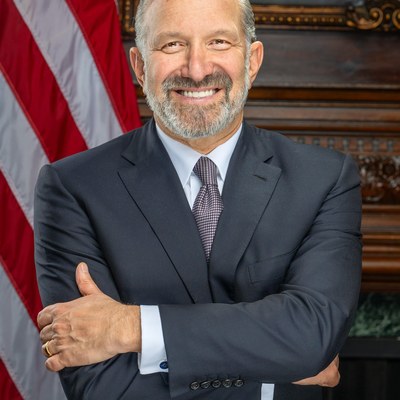 Howard Lutnick
4
thin
20 Mar 2025 – 20 Mar 2025
+1570 d
Howard Lutnick
4
thin
20 Mar 2025 – 20 Mar 2025
+1570 d
-
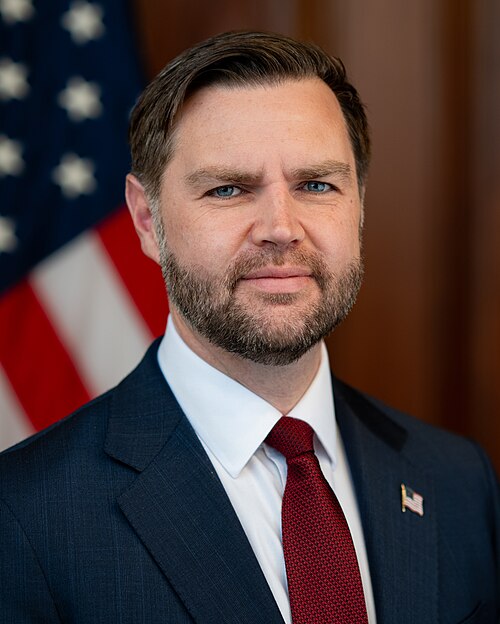 JD Vance
12
21 Aug 2026 – 25 Aug 2026
+2089 d
JD Vance
12
21 Aug 2026 – 25 Aug 2026
+2089 d
-
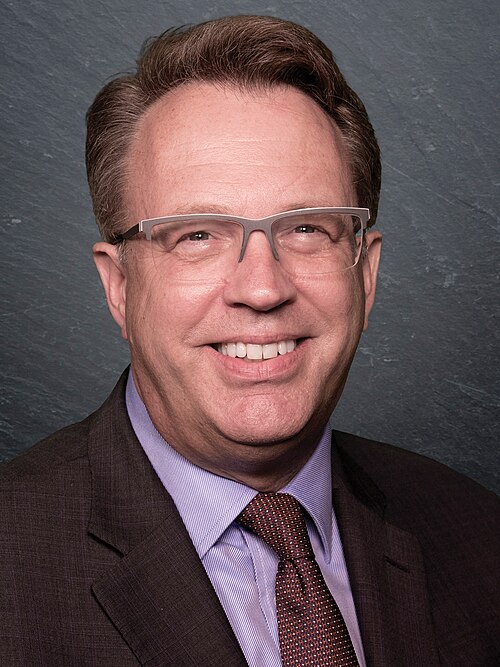 John Williams
1
thin
John Williams
1
thin
The chronologysourced and dated, oldest first
-
-
David Sacks
Sacks predicts China decoupling will become a bipartisan issue in the 2020 election.
“Decoupling from China is gonna be a bipartisan issue now. I think both candidates now will be well, Trump is gonna is gonna run blaming China for for what happened,”
-
David Friedberg
Friedberg says 112 million Chinese factory workers and purpose-built facilities make China hard to replace for U.S. production.
“Factories in China are purpose built. So they're built to make a thing, and then they gotta get retooled if you wanna make another thing.”
-
David Friedberg
Friedberg states 112 million Chinese factory workers in purpose-built facilities make replacing China as production source very difficult.
“It's very hard to kind of replace China as a source of production for a lot of what we consume in this country. That's the reality.”
-
Sir Richard Dearlove
Dearlove argues China entered WTO without proper restraints and the West is now suffering consequences.
“And we have allowed China so much rope that we are now suffering the consequences, and it's time to pull the rape in and to, as it were, tighten the way that we do business.”
-
Marc Rowan
Bourkoff observed Israeli-grown fruit in Dubai markets as tangible evidence of Abraham Accords progress.
“I saw fruit in a market in Dubai that was grown in Israel. Sometimes progress looks like a grapefruit.”
-
-
-
Brad Gerstner
Gerstner says we're entering a global AI cold war on the economic front, which he doesn't celebrate.
“So I don't celebrate that we're entering what appears to be a global AI cold war Yeah. On the economic front.”
-
Bill Gurley
Gurley argues deglobalization is highly inflationary and makes US companies less competitive, not more.
“Like, this is just, you know, deglobalization, highly inflationary, and will make our companies less competitive, not more.”
-
Bill Gurley
Gurley questions why Iowa worker needs $40 hourly when Mexican worker will work hard for $15.
“And it's unclear to me why a worker in Iowa needs $40 an hour if there's a worker in Mexico that's willing to bust his ass for 15.”
-
Bill Gurley
Gurley questions moral basis of protecting $40/hour Iowa workers versus $15/hour Mexican workers.
“it's unclear to me why a worker in Iowa needs $40 an hour if there's a worker in Mexico that's willing to bust his ass for 15.”
-
-
-
Howard Lutnick
Lutnick reveals Kuwait has the highest tariffs against the US despite America freeing them.
“You know who has the highest tariffs against The United States Of America? The number one country with the highest tariffs against The United States Of America? Kuwait. And you think, what? That's insane.”
-
Howard Lutnick
Lutnick claims Kuwait has the highest tariffs against the US despite being freed by America.
“You know who has the highest tariffs against The United States Of America? The number one country with the highest tariffs against The United States Of America? Kuwait.”
-
Howard Lutnick
Lutnick says high school educated workers live seven years less than college educated due to despair.
“Average life expectancy of high school educated workforce so by the way, United States Of America, two thirds is high school educated, one third is college educated.”
-
Howard Lutnick
Lutnick says high school educated workers live seven years less than college educated, attributing it to despair.
“The difference today of average life expectancy between those two categories is seven years. Seven year average life expectancy. It's not the air. It's not the food. It's not the medicine. It's despair.”
-
Marc Rowan
Rowan warns tariff strategy increases risk of financial accident and damages long-term US brand.
“Longer term brand, that's the risk, and the propensity for a financial accident has definitely gone up, but we just don't know yet.”
-
Marc Rowan
Rowan grades the U.S. economy an A for capital allocation but a C for understanding trade's impact on labor.
“give us an a as an economy for allocation of capital and construction of assets, and give us a c for understanding trade and its impact on labor.”
-
Marc Rowan
Rowan says the U.S. won't manufacture low-value goods like sneakers given 4% unemployment and other priorities.
“we are not going to make sneakers in The US. We have 4% unemployment. We're building all these other things.”
-
Marc Rowan
Rowan argues the U.S. cannot be a low-cost manufacturing center without massive immigration.
“To the extent we do not want massive amounts of immigration, we are not going to be the low cost manufacturing center for low value goods.”
-
Marc Rowan
Rowan argues US and Mexico should dominate economically for fifty years with US manufacturing and Mexico as workshop.
“The US and Mexico should be positioned to dominate the economic landscape for the next fifty years. US advanced manufacturing, Mexico the workshop, and so on and so on.”
-
“US and Mexico together should be the driving economic force in the world for the next fifty years.”
-
Marc Rowan
Rowan reports a Mexican industrialist told him they would accept tariffs to make Mexico great again.
“As one leading Mexican industrialist said to me, if it takes tariffs to make Mexico great again, so be it.”
-
Marc Rowan
Rowan warns the tariff approach has damaged the US brand for stability and predictability, with long-term costs.
“Longer term, the way we've done this, we have done damage to The US brand. The brand for stability, for predictability, for regularity. That will eventually have some cost to us.”
-
Brad Gerstner
Gerstner quotes Buffett saying free and fair trade has been the most powerful engine for prosperity for fifty years.
“Just this weekend, he said, free and fair trade, right, has been the most powerful engine for prosperity on a global basis and this country for the last fifty years.”
-
Brad Gerstner
Gerstner recalculates tariffs at $300 billion under new framework versus $77 billion last year.
“And if you put China at 30% on strategic, at 15% on nonstrategic, and the rest of the world roughly at 10%, you come up with about 300,000,000,000 in tariffs.”
-
Brad Gerstner
Gerstner proposes trading AI chip access to China for rare earth materials access.
“On point three, it gets us right? If we do this trade, and I don't know that China would do this trade, but if we did this trade, then it would get us access to those rare earths right now, which is absolutely critical, and it buys us time to stand up our own rare earth supply.”
-
Brad Gerstner
Gerstner observes import prices rising slower than domestic goods, opposite of expected tariff impact.
“Import prices have been going up at a slower rate than domestically produced goods. Okay, so this is the exact opposite of what you would have expected from tariffs.”
-
Brad Gerstner
Gerstner predicts president wants biggest-ever China deal and is not ideologically rigid on China.
“I think this president wants to do the biggest deal ever done with China. I don't think he's dogmatic at all. I don't think he's some big China hawk.”
-
Brad Gerstner
Gerstner predicts Trump will pursue the biggest-ever China deal, calling himself a deal junkie at AI summit.
“He said at the AI summit last week, I'm a deal junkie. I like to do deals. You can't be the biggest deal maker in the world without doing a big deal with China.”
-
Brad Gerstner
Gerstner forecasts major China deal after Trump visit planned for September through November timeframe.
“They've invited the president to China. The president has suggested he's going to go to China the first week of September, sometime between September and November.”
-
Brad Gerstner
Gerstner predicts a major US-China deal will be completed before end of 2025.
“I think that there's gonna be a big Chinese deal done before the year's out.”
-
Brad Gerstner
Gerstner notes US is only 14% of China's exports and 3% of China's GDP.
“The US only represents about 14% of China's exports. The US only represents about 3% of China's GDP.”
-
-
-
Bill Gurley
Gurley warns undiplomatic behavior could push global partners toward China, which he saw performing strongly in August.
“if we are undiplomatic with our partners around the globe, that they will, it'll be more easier for them to rationalize agreements with China.”
-
JD Vance
Vance says every Democrat voted against eliminating taxes on tips, Social Security, overtime, and American-made car loans.
“Every single Democrat, everyone voted against no taxes on tips, voted against no taxes on Social Security, voted against no taxes on overtime, and voted against no taxes on car loans so long as those cars were made right here in America.”
-
JD Vance
Vance cites economists linking opioid crisis to locations where jobs were shipped overseas.
“Now economists have measured the ways in which the opioid crisis exploded in the very locations where jobs were shipped overseas.”
-
JD Vance
Vance argues politicians and private sector cronies got rich building overseas while American communities got poor.
“Our politicians and frankly the cronies in the private sector, people who didn't wanna build in America like Cleveland Cliffs, but people who were happy to build overseas, they got rich and communities like this one got poor.”
-
“If you were lucky, your neighbor's job got shipped to a foreign country while your tax dollars got shipped to fraudsters.”
-
JD Vance
Vance quotes Wall Street Journal editorial writer linking free trade and capital movement to free movement of labor.
“He said someone who believes, this is a quote, in the free trade and free movements of capital, they declared, will quite naturally believe in the free movement of labor.”
-
JD Vance
Vance argues worker replacement by foreign labor was the desired outcome of American elites, not an accident.
“Being replaced by foreign workers, in other words, it was not an accident, my friends. It was the desired outcome of a generation of American elites.”
-
JD Vance
Vance describes American workers being forced to train their foreign replacements before losing their jobs.
“In other cases, American workers didn't just have their jobs destroyed, they got told they were being replaced by a foreign worker, and then they had to train that worker before they got replaced.”
-
JD Vance
Vance recounts specific case of computer programmer Kevin Flanagan losing his job at a bank.
“A computer programmer, not a mill worker, a computer programmer by the name of Kevin Flanagan was let go at the bank that he worked at.”
-
JD Vance
Vance claims Canadian dairy enters Maine at 0% tariffs while Maine dairy faces 250% tariffs.
“If you buy dairy, cheese, butter, milk that comes from Canada into Maine, you probably are buying a product that has 0% tariffs on it.”
-
JD Vance
Vance characterizes the old consensus as prioritizing corporate profits and foreign workers over citizens.
“What we really needed, they told us, was just to juice the short term profits of a few big corporations. We needed to open that border and prioritize foreign workers over our own citizens.”
-
JD Vance
Vance accuses Canada of applying ridiculous tariffs on Maine products without expecting retaliation.
“They apply ridiculous tariffs and other non tariff duties on Maine products coming into to Canada, and they don't expect Maine or anybody else to fight back, we're sick of that.”
-
JD Vance
Vance says Canada made unreasonable last-minute demands despite him thinking deal was reached.
“And what happened at the very end is they came in with a bunch of unreasonable last minute demands. I frankly thought we had a deal.”
-
-
-
John Williams
Williams says average effective tariff rate estimates range between 15 and 20 percent.
“Combining enacted and announced tariffs, estimates of the resulting average effective tariff rate range somewhere between 15 and 20 percent.”
-
Where they overlapsame programme, same subject
- David Friedberg and David Sacks — All-In Podcast, 1 appearance together
- BG2 Pod also carries Bill Gurley and Brad Gerstner on this subject, at different times.
- CNBC Television also carries Brad Gerstner and Marc Rowan on this subject, at different times.