Who is on this subjectordered by the date of their first quote here
4 of 10 lanes rest on fewer than 5 quotes and are marked thin. Offsets are days from the middle first-quote date, 16 Jun 2022 — a date, and nothing else. It is not a claim about who reached a view first.
-
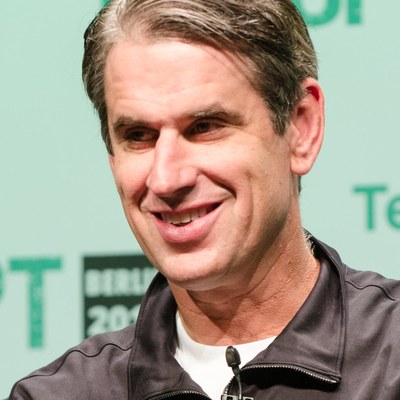 Bill Gurley
59
1 Oct 2010 – 4 Aug 2026
-4276 d
Bill Gurley
59
1 Oct 2010 – 4 Aug 2026
-4276 d
-
 Gavin Baker
9
26 Nov 2019 – 4 Aug 2026
-933 d
Gavin Baker
9
26 Nov 2019 – 4 Aug 2026
-933 d
-
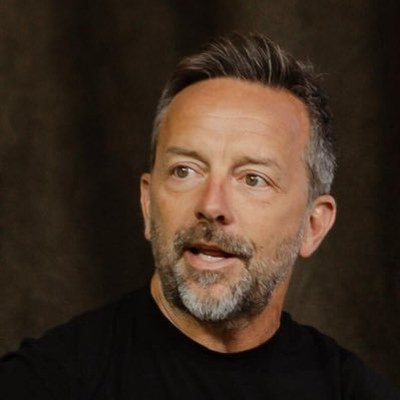 Brad Gerstner
97
23 Jun 2020 – 6 Jul 2026
-723 d
Brad Gerstner
97
23 Jun 2020 – 6 Jul 2026
-723 d
-
 Howard Marks
34
2 May 2022 – 12 Jun 2026
-45 d
Howard Marks
34
2 May 2022 – 12 Jun 2026
-45 d
- Stanley Druckenmiller 1 thin 16 Jun 2022 – 16 Jun 2022 +0 d
-
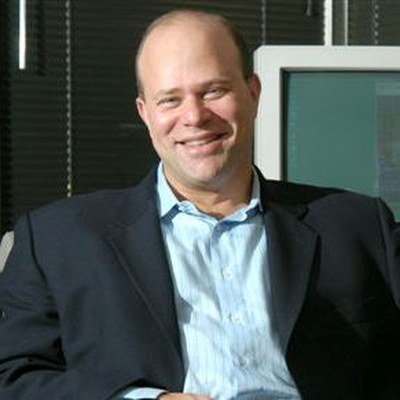 David Tepper
4
thin
22 Dec 2022 – 18 Sep 2025
+189 d
David Tepper
4
thin
22 Dec 2022 – 18 Sep 2025
+189 d
-
 David Friedberg
3
thin
30 Apr 2023 – 8 Aug 2026
+318 d
David Friedberg
3
thin
30 Apr 2023 – 8 Aug 2026
+318 d
-
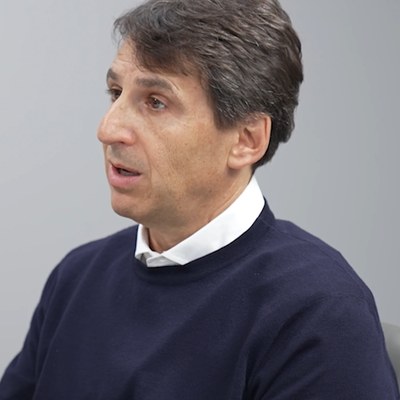 Marc Rowan
5
11 May 2023 – 25 May 2026
+329 d
Marc Rowan
5
11 May 2023 – 25 May 2026
+329 d
- Dylan Patel 4 thin 5 Dec 2023 – 14 Aug 2025 +537 d
-
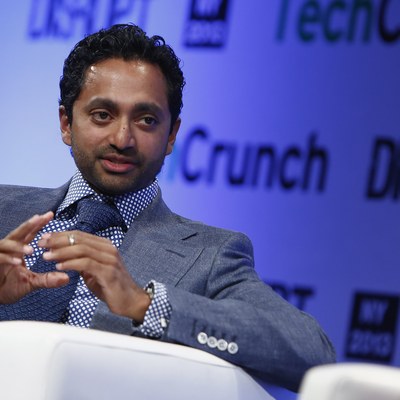 Chamath Palihapitiya
5
14 Nov 2025 – 19 Dec 2025
+1247 d
Chamath Palihapitiya
5
14 Nov 2025 – 19 Dec 2025
+1247 d
The chronologysourced and dated, oldest first
-
-
Bill Gurley
Gurley argues companies benefit from going public before M&A to let markets establish price and then capture premium.
“I think they were way better off having gone public prior to the sale to let the market establish a price and then get a premium.”
-
-
-
Bill Gurley
Gurley observes IPO market valuations currently exceed M&A market valuations.
“I think another interesting characteristic of that, in my mind, the IPO market's paying much higher valuations in the m and a market right now.”
-
Bill Gurley
Gurley argues organic versus bought traffic is a critical distinction for valuing Internet businesses.
“One that one that I think people really should focus on is where, especially for these Internet businesses, is whether traffic is organic or bought.”
-
Bill Gurley
Gurley argues marketing-heavy companies rent customers and should trade at lower multiples than organic-growth companies.
“I don't see any reason why a company that's heavy on marketing will get the same kind of multiple as someone with an organic customer base.”
-
-
-
Bill Gurley
Gurley claims late-stage private market investments have less information than pink sheet stocks and may be historically uninformed.
“I mean, you you could have more financial information on a thinly traded pink sheet Canadian public company than you have.”
-
Bill Gurley
Gurley calls late-stage private investments the least informed in history, with less disclosure than pink sheet stocks.
“These these might be these might be the least informed investment actions in in our history.”
-
Bill Gurley
Gurley argues late-stage private investments may be the least informed in history and shouldn't be equated to public valuations.
“These these might be these might be the least informed investment actions in in our history. And so I don't know that you can pay too much attention to the price because they're very uninformed.”
-
Bill Gurley
Gurley states most acquisitions are $20-70 million, but venture backing raises expectations to $150 million or more.
“The number one type of acquisition that the big companies like to do is twenty to seventy million dollars and the minute you take venture, they help you raise the B and all of a sudden everyone's expectation is it's got to be 150 or more or we're not saying yes.”
-
Bill Gurley
Gurley calculates that owning 80% of a $30 million exit yields $24 million for the entrepreneur.
“And so if you have a killer product that might elicit a $30,000,000 exit and you can bootstrap and hustle your way and own 80% of it, you know, 80% of 30,000,000 is $24,000,000.”
-
Bill Gurley
Gurley traces late-stage private market boom to Yuri Milner's contrarian Facebook bet below ten billion valuation.
“And a very, very smart man, Yuri Milner makes a bet on Facebook at a price that seems fairly high.”
-
Bill Gurley
Gurley calls late-stage private market of past two years the most reckless investment behavior since the bubble.
“I think if you look back, could say over the past two years, the most reckless investment behavior we've seen since the bubble was the late stage private market of the past two years.”
-
-
-
Bill Gurley
Gurley says late-stage private market is the frothiest since the late '90s despite down IPOs.
“I would say on a couple of fronts, the late stage private market continues to be the most frothy thing I've seen since the late '90s.”
-
Bill Gurley
Gurley says the late stage private market is the frothiest he has seen since the late 1990s.
“the late stage private market continues to be the most frothy thing I've seen since the late '90s.”
-
Bill Gurley
Gurley says capital available to late stage private companies is unbelievable with behavior reminiscent of the late nineties.
“the amount of dollars available to successful late stage private companies is unbelievable. And the behavior that you'll see for the competition in those dollars is very reminiscent of the late 90s.”
-
-
-
Bill Gurley
Gurley claims only three to five companies per decade sustain market caps of $50 billion or greater.
“And what I think is really interesting, if you think about value creation, in any decade, are really three to five companies that sustain $50,000,000,000 market caps or greater.”
-
Bill Gurley
Gurley cites JPMorgan research showing 15% of companies lose 70% of value annually, now invisible in private markets.
“And that's happening in the private market, just like the public market, but it's invisible.”
-
-
-
Bill Gurley
Gurley criticizes Silicon Valley's crude valuation approach, where entrepreneurs expect 10x revenue regardless of business model quality.
“I've always felt Silicon Valley has a very crude understanding of valuation. Most entrepreneurs think they all deserve 10 times revenue and also with zero regard for what the revenue is.”
-
Bill Gurley
Gurley criticizes entrepreneurs who seek 10x revenue valuations regardless of business quality, citing his blog post analyzing public tech multiples.
“Most entrepreneurs think they all deserve 10 times revenue and also with zero regard for what the revenue is.”
-
Bill Gurley
Gurley quantifies Silicon Valley IPO underpricing at $171 billion over thirty-nine years based on day-one price jumps.
“So the first slide is about underpricing, and this is solely looking at the difference between the price that the stocks handed out to the night before and the close the next day.”
-
Gavin Baker
Baker says growth investors must assume multiple compression and be paid on business outcomes, not valuation.
“It's critical in growth investing to assume multiple compression. It doesn't always happen, but you want to be paid based on business outcomes and assume valuation is not part of the outcome.”
-
Gavin Baker
Baker forecast Facebook's ad revenue from $5B to $11B using time-spent versus ad-spend gap analysis.
“Facebook was roughly 7% of consumers' time spent across all mediums in The United States. And it was just under 4% of advertising dollars.”
-
Gavin Baker
Baker argues measurable things like search may be overvalued compared to unmeasurable things like physical slotting fees.
“You could just measure search in a way you can't measure slotting fees. Anything you can measure generally gets, in some ways, may be overvalued in today's Internet world.”
-
-
-
Gavin Baker
Baker says valuation spreads within sectors reached 4.5 standard deviations, now at 3.5 standard deviations.
“Valuation spreads within a sector between individual stocks are at all time highs. It was a 4.5 standard deviation relative to the norm only a few days ago.”
-
Brad Gerstner
Gerstner argues AWS, GCP and Azure enable software companies to scale faster than previous generations like Salesforce.
“But the fact of the matter is because of AWS, GCP and Azure, software companies are scaling faster”
-
Brad Gerstner
Gerstner nearly invested in Zoom pre-IPO at $5 billion valuation, emphasizing need for disciplined frameworks.
“We were within probably a 100 or $200,000,000 of doing a meaningful pre IPO round in Zoom. The company was valued at around $5,000,000,000 compared to where it is two years later.”
-
Brad Gerstner
Gerstner calculates that 150 bps lower discount rates should add two to three turns to software multiples.
“If I reduce my discount rate on any growth software company by 150 bps over the next ten years, the multiple will go up by two to three turns, right?”
-
Brad Gerstner
Gerstner dismisses valuation concerns for Snowflake at 100x forward sales given 100%+ growth in strategic software category.
“No growth investor would listen to that and think that there's anything unusual about a company growing well over a 100% in the most strategic location of all of software.”
-
Brad Gerstner
Gerstner reports Altimeter's software index expanded from 11x to 14.5x and internet index from 23x to 33x.
“I feel obliged to do that. We started the year in our gross software index at 11 times. Now we're at about 14 and a half times two year forward.”
-
Brad Gerstner
Gerstner reports software multiples expanded from 11x to 14.5x and internet from 23x to 33x in 2020.
“We started the year in our gross software index at 11 times. Now we're at about 14 and a half times two year forward.”
-
Brad Gerstner
Gerstner notes internet multiples expanded from 23x to 33x in 2020, mirroring 2018 Q4 contraction without COVID.
“If you look at the multiple expansion that's occurred, it's almost the identical mirror image of the multiple contraction that occurred in the fall of twenty eighteen. In Q4 twenty eighteen, we didn't have COVID.”
-
Brad Gerstner
Gerstner argues 2020 multiple expansion mirrors 2018 contraction when Nasdaq fell 25% without earnings misses.
“If you look at the multiple expansion that's occurred, it's almost the identical mirror image of the multiple contraction that occurred in the fall of twenty eighteen.”
-
Brad Gerstner
Gerstner argues markets correctly priced digital transformation arc despite initial concerns after 50% bounce in May.
“What it has been slow in pricing in is how dramatically different the arc will be for many of these digital businesses. I remember having conversations with Rich and many others in May.”
-
-
-
Brad Gerstner
Gerstner predicted every one percent move in ten-year treasury causes 10 to 20 percent drawdown in growth multiples.
“Right? And for every 1% move in the ten year, you've got a 10 to a 20% drawdown in growth multiples.”
-
Brad Gerstner
Gerstner expects more multiple compression in public markets over next three months despite Tiger's activity.
“You can believe the next three months that we're likely to have more multiple compression in the public markets. Right?”
-
“And I said, well, what does Airbnb have to accomplish to earn out this valuation that it has?”
-
Bill Gurley
Gurley notes Lemonade, Unity, and Palantir are still trading at 20 times sales despite falling 60%.
“And yesterday in preparing for this, I was looking at some of the stocks that are outliers on price to sales and lemonade, unity and Palantir, which have come in 60% are still at 20 times over sales.”
-
Bill Gurley
Gurley notes Lemonade, Unity, and Palantir are down 60% but still trade at 20 times sales.
“I was looking at some of the stocks that are outliers on price to sales and lemonade, unity and Palantir, which have come in 60% are still at 20 times over sales.”
-
Bill Gurley
Gurley cites twelve-year bull run and extreme SaaS multiples as major IPO incentives.
“Add into that a roaring, screaming public market that's been on a bull run for, what, twelve years? And multiples in the public markets, especially in, the SaaS world that are out of this world.”
-
-
-
Gavin Baker
Baker estimates average tech growth stocks under $100B market cap are down 40-65% from all-time highs.
“I would say probably the average tech or consumer oriented growth stock that's below a $100,000,000,000 in market cap is probably somewhere between 40 and 65 percent off its all time high.”
-
Gavin Baker
Baker argues AI has changed cybersecurity economics, enabling companies to exceed $20B valuations for the first time.
“That's why for the first time ever, for a long time, I forget the exact numbers, but you never had a cybersecurity outcome over 20,000,000,000.”
-
Brad Gerstner
Gerstner predicts most IPOs in the next twelve months will price below their last private round.
“majority of companies that come public in the next twelve months are going out below their last”
-
Howard Marks
Marks says high-quality assets can be risky if overpriced, citing nifty-fifty stocks that lost almost everything from 1969 to 1974.
“A high quality asset can be priced so high that it's risky. I started work at Citibank in September 1969, when I got out of Chicago Booth.”
-
“And if you bought those stocks, the day I got there in '69, and you held them firmly for five years, you lost almost all your money.”
-
Howard Marks
Marks states good investing is not buying good things but buying things well; price determines risk.
“it's not what you buy, it's what you pay that determines whether your investment is risky or not. B, that good investing is not a matter of buying good things, but buying things well.”
-
Howard Marks
Marks states that price, not asset quality, determines risk, and good investing means buying things well, not buying good things.
“B, that good investing is not a matter of buying good things, but buying things well. And the difference is not only grammatical.”
-
Bill Gurley
Gurley says the abrupt nature of risk-off cycles requires rapid mental adjustment, creating structural problems for cap tables.
“And the thing that's really tough about that is it requires a mental adjustment very quickly.”
-
Brad Gerstner
Gerstner states a 1% change in interest rates causes 15-20% change in valuation multiples.
“the iron law of investing is interest rates. A 1% change in rates leads to a 15 or 20% change in a multiple.”
-
“And so what really values companies, you know, it's typically a discounted cash flows. And so now all of a sudden, the buy side's asking SaaS companies about net dollar retention, about long term operating margin, about whether their free cash flow is greater or less than their net income, about SBC as a percentage of free cash”
-
“And so now all of a sudden, the buy side's asking SaaS companies about net dollar retention, about long term operating margin, about whether their free cash flow is greater or less than their net income, about SBC as a percentage of free cash”
-
Brad Gerstner
Gerstner found only 21 public software companies exceed $2B revenue and $25B value.
“Public software companies over 2,000,000,000 in revenue, we got to 21. Okay? There are only 21 that are worth more than $25,000,000,000”
-
Brad Gerstner
Gerstner says only 21 public software companies exceed $2B revenue, yet dog walking software got 100x multiples.
“There are only 21 that are worth more than $25,000,000,000 in all the public markets of all the millions of software companies that have been started.”
-
Brad Gerstner
Gerstner says he would refuse Tiger deals at 75x ARR, emphasizing differentiated underwriting over following herd.
“You're you have an obligation to play a differentiated game. And what I would say today is if somebody calls me up tomorrow and says, hey, Tiger's doing this deal at seventy five times ARR.”
-
Stanley Druckenmiller
Druckenmiller notes many good companies have been derated 70% without fundamental changes.
“A lot of very good companies have been de rated 70% without a whole lot of change in fundamentals.”
-
David Tepper
Tepper questions high equity multiples on S&P 220 earnings estimates given current interest rate levels.
“I saw somebody else on your show the other day, they had a two twenty price to two twenty earnings estimates for the S and P.”
-
David Tepper
Tepper notes going from a 12 to 16 multiple would represent a 33% market increase.
“If it's a 16 multiple, in those days you would have said great going from twenty ten. We talked about those days. I go to twelve, sixteen, that's a 33% increase.”
-
-
-
Bill Gurley
Gurley tells entrepreneurs the 2020-21 boom was a fantasy, not normal, and current conditions are reality.
“Then I'm not the only one, there's other VC's getting, this is normal dude. Like that was a fantasy you were in and you need to forget it fast, but you can't.”
-
Brad Gerstner
Gerstner questions why OpenAI took a dilutive $10B round at roughly $30B valuation.
“what was their motivation to take such a dilutive round, know, the 10,000,000,000 at what was the valuation at 30?”
-
David Friedberg
Friedberg states two-thirds of post-COVID IPOs now trade below total cash raised.
“I think two thirds of the companies that went public since COVID are trading at less than the cash they raised to date as public companies now.”
-
Marc Rowan
Rowan states all commercial real estate purchased before 2022 is now worth less due to rates.
“Everything that was purchased prior to 2022 is today worth less. The change in cap rates, the change in interest rates has simply made the market worth less.”
-
Brad Gerstner
Gerstner says IPO investors today demand significantly higher returns than 2021 deals as margin of safety.
“anybody who does an IPO today, okay, is going to demand a, you know, a rate of return into that offering that is a significant margin of safety relative to all deals that were done in 2021.”
-
Brad Gerstner
Gerstner says companies going public now must offer bigger discounts than pre-correction 2021 levels to attract investors.
“in order to get into the public markets, they have to, you know, step in with a bigger discount than they would have, you know, pre this correction.”
-
Brad Gerstner
Gerstner cites Wiz raising at $10B valuation with $200M ARR as evidence of late-stage market activity.
“I just read Wiz raised more money. It's got $200,000,000 ARR raised at 10,000,000,000. So those markets are definitely”
-
Brad Gerstner
Gerstner predicts private market valuations will normalize to match public market declines of 50%, not just 5-10%.
“There was some you know, there's a report out this week that lots of people comment on Twitter where public markets were down 50% and private marks were down, I don't know, five to 10%.”
-
Bill Gurley
Gurley observes tech valuations rise slowly but crash immediately, and he has now seen this pattern three times.
“it tends to go up slowly, and it tends to crash immediately. And so this is the third time I've seen valuations crash,”
-
Bill Gurley
Gurley says massive multiple contraction happened across the industry, not due to company performance but market repricing.
“Like, it just happened. There was massive multiple contraction writ large across the industry, and the companies have to navigate it.”
-
Bill Gurley
Gurley states valuation crashes are industry-wide and unrelated to individual company operations, requiring navigation not wishful thinking.
“They can't magically wish for the valuation they want to add because it's not actually related to how they're operating.”
-
Bill Gurley
Gurley says valuation disparity takes time to accept because stakeholders have been repeatedly told they're worth much more.
“these this valuation disparity that they just talked about is a real issue, and it takes a while for people to come around. Like, they've been told, you're worth this.”
-
Brad Gerstner
Gerstner argues AI follows the 1998-99 internet pattern: overpriced short-term but underestimated long-term impact.
“But much like the Internet in 9899, where there was overpricing in the short run, we dramatically underestimated the impact it was going to have over the preceding decade.”
-
Brad Gerstner
Gerstner says OpenAI at $90 billion valuation may be overinflated like 2021 stocks, but AI remains profound.
“OpenAI at $90,000,000,000 may be ahead of itself just like we saw stocks get ahead of themselves in 2021, but it doesn't mean that AI itself is is not gonna be profound.”
-
Brad Gerstner
Gerstner argues NVIDIA at $400 from $100 looks expensive but trades only 20x next year's earnings.
“But the fact of the matter is on consensus forecast for next year, it's trading just over $20 or 20 times earnings.”
-
Brad Gerstner
Gerstner argues NVIDIA at $400 trades at 20x earnings, lower multiple than many cyclical stocks.
“But the fact of the matter is on consensus forecast for next year, it's trading just over $20 or 20 times earnings. It's trading at a lower multiple than many cyclicals in the public market.”
-
Brad Gerstner
Gerstner advises startups to reprice businesses honestly or shut down rather than extend convertible debt.
“reprice the business, get the price right, and if that is not satisfying to you, if you don't own enough of the business at that point in time or whatever, call it quits and restart, right? Because you've got to have the foundation right in these businesses.”
-
Brad Gerstner
Gerstner says OpenAI at $85 billion with capped upside on common stock creates unfavorable risk-reward distribution.
“if you're asking me to invest at $85,000,000,000 to buy common stock that's capped on the upside, right? Now we have a deal.”
-
Brad Gerstner
Gerstner views OpenAI's $85B valuation with capped upside as poor risk-reward given few companies exceed $100B durably.
“I can then plot a distribution of likely outcomes. How many companies have ever in the history of Silicon Valley been worth durably more than $100,000,000,000”
-
Marc Rowan
Rowan says 100% of S&P returns this year came from 10 stocks at 50 PE, constituting 35% of the index.
“A 100% of our returns this year are from 10 stocks which constitute 35% of the S and P that traded an average PE of 50.”
-
“But, like, the the level of the value that they deliver to the world, if you talk to anyone there, they truly believe it'll be tens of trillions if not hundreds of trillions of dollars.”
-
-
-
Brad Gerstner
Gerstner describes negative reflexivity of overpriced rounds forcing companies to spend money foolishly to match valuation.
“I wouldn't have had to spend money like a fool. They nail it yet again. The negative reflexivity that occurs when you have a headline valuation,”
-
Brad Gerstner
Gerstner argues high valuations force you to double that number, so $100B becomes $200B, distorting strategy.
“it forces the business strategy to fit that outcome. And worse yet, Dara, not only do you have to get to that number, you have to double that number.”
-
Brad Gerstner
Gerstner argues MANG participation is distorting market prices compared to arm's length transactions with financial investors.
“I do think that it is a really important thing that you're pointing out, which is at a very minimum, I think we can say that the participation of MANG, Microsoft, Amazon, Nvidia, and Google, is distorting the price in the market in a way that wouldn't occur if it was all arm's length transaction with financial investors.”
-
Brad Gerstner
Gerstner says portfolio return targets normalized from 80% in early 2023 to 20-30% now.
“I think the return to target in our portfolio is 20 to 30%, whereas the start of last year, Bill, it was like 80%.”
-
Brad Gerstner
Gerstner argues normalized valuations mean 2024 won't match easy returns of early 2023.
“So that's the big thing. The world is normalized. Multiples have normalized. It's not gonna be as easy as it was at the start of '23.”
-
Brad Gerstner
Gerstner notes NVIDIA traded at 20x earnings last year, its lowest multiple ever.
“So NVIDIA ended last year at 20 times earnings. Its lowest multiple of earnings it's ever traded at, despite the fact that it's the the the purest play AI name in in the space.”
-
Brad Gerstner
Gerstner says NVIDIA holds 90% plus market share and trades at historical average multiples.
“So if you wanna express that bet, right, which is AI leadership at 25 to 30 times earnings, which is consistent with historical averages for NVIDIA.”
-
Brad Gerstner
Gerstner reveals Meta was trading at 6x fully taxed earnings at the start of 2023.
“Meta was trading at six times fully taxed earnings, right? And so unless you were doing the work”
-
Brad Gerstner
Gerstner calculates the market assigns negative $120 per share valuation to Reality Labs.
“The market's assigning a 20 times multiple to the company. So that's effectively an implied valuation of negative $120 per share for Reality Labs.”
-
Brad Gerstner
Gerstner says NVIDIA traded at 20x earnings, its lowest multiple ever, and is now up 25-30 percent.
“It was overvalued despite the fact it was trading at 20 times earnings, its lowest multiple in history. Now it's up 25 or 30% after opening, the year down.”
-
Bill Gurley
Gurley says Silicon Valley rushes to price-to-revenue multiples because it's the crudest, least intelligent valuation method.
“I've always said that Silicon Valley has the crudest kind of least intelligent view of valuation. They always rush to price to revenue because it's easy and because quite frankly, it's easier to be optimistic.”
-
Brad Gerstner
Gerstner notes that growth historically commands a 2-3x valuation premium over margin in the rule of 40.
“What this chart shows is that, you know, again during dessert period, right growth was a huge multiplier like that's all people cared about.”
-
Brad Gerstner
Gerstner explains that rule of 40 and revenue multiples are shortcuts for determining free cash flow multiples.
“Whether your rule of 40 or a multiple of revenue, those are shorthands for getting at the multiple of free cash flow.”
-
Brad Gerstner
Gerstner argues consensus Nvidia forecast assumes market share drops from 55% to 26% by 2028.
“Okay, so the consensus forecast that has the stock at $700 a share assumes, if you believe this TAM to be accurate, assumes that their share will go from 55% today to 26% in 2028.”
-
Brad Gerstner
Gerstner explains that ARR (annual recurring revenue) gets high multiples because it's predictable like cable subscriptions.
“ARR stands for annual recurring revenue. And recurring revenue, like a monopoly cable subscription, gets a really high multiple. That's why softwares have gotten high multiples. They're very predictable.”
-
Brad Gerstner
Gerstner coined ERR (experimental run rate revenues) to replace ARR for AI company revenues.
“one of the things we call them ERR, experimental run rate revenues, And so when I look at these, you know, one of the things that in inflection and these other models”
-
“He said to me, the IPO market is slow in volume terms for lack of supply, not lack of demand. And I've been making this case that the IPO window is wide open.”
-
Brad Gerstner
Gerstner says Instacart needed board courage to ignore prior high valuations and go public at lower valuation.
“I think one of the obstacles. Right? So it's performed incredibly well. Off of the bottom, it's performed really well since the IPO, but it took a board that had the courage to say, you know, we're going to ignore what the prior valuations were, and we're gonna focus on getting the the company public.”
-
“Like like, you're just fooling yourself. Right? In fact, like, because of a a lack of liquidity premium, you're probably worth less than that public company.”
-
Brad Gerstner
Gerstner notes buy-side estimates reach $5 per share for NVIDIA, implying $150 price target at 30x.
“There are numbers on the buy side that are as high as $5 a share. So if you if you go to $5 and you place a 30 times earnings multiple on that,”
-
Brad Gerstner
Gerstner says Philippe implied companies need $10 billion market cap to go public, calling this threshold problematic.
“He implied that in the modern era, you need to be $10,000,000,000 to go public. Yeah. Market cap. Yes. Which if it's 10,000,000,000 or bust, that's a bitch, man.”
-
Brad Gerstner
Gerstner calculates OpenAI's rumored $150 billion valuation represents 15 times forward revenue of roughly $10 billion.
“If that trajectory were to continue, right, that'd give you like roughly $10,000,000,000 next year. And the round's rumored to be at $150,000,000,000 so that's about 15 times forward revenue.”
-
Brad Gerstner
Gerstner says OpenAI has twice Google's IPO user count and trades at 15x forward revenue.
“average users, which we estimate is twice the amount Google had at the time of its And if you look at the multiple of the business, if you believe 10,000,000,000 next year it's about 15 times the forward revenue, which is about the multiple of Google and Meta at the time of their IPO.”
-
Bill Gurley
Gurley asks what percentage of 1,400 pre-LLM private unicorns could raise up rounds today.
“What percentage of those could raise an up round right now? Yeah. What is the number?”
-
Brad Gerstner
Gerstner argues NVIDIA at 30 PE versus Cisco's 120 PE means comparison to 2000 bubble is uninformed.
“So you would have to think that there would be 70% PE compression from here or that their revenue was going to fall by 70% or that their earnings were going to fall by 70%.”
-
-
-
Bill Gurley
Gurley says private companies with low growth rates are no better off than public ones with same metrics.
“But guess what? If you're private at a 100,000,000 revenue with a 10% growth rate, it's not like you're better off.”
-
Bill Gurley
Gurley says private companies with weak metrics aren't better off than public ones; staying private is self-deception.
“If you're private at a 100,000,000 revenue with a 10% growth rate, it's not like you're better off. Like like, you're just fooling yourself.”
-
Brad Gerstner
Gerstner explains last four weeks of market decline through rising uncertainty driving up discount rates and risk premiums.
“So think about what we just talked about. It's all uncertainty. Yeah. When uncertainty goes up, discount rates go up, risk premiums go up, multiples come down, markets come down.”
-
Brad Gerstner
Gerstner explains recent market decline as rising uncertainty increasing discount rates and compressing multiples.
“When uncertainty goes up, discount rates go up, risk premiums go up, multiples come down, markets come down. That's that's the explanation for the last four weeks in the market.”
-
“So we're three years into this recovery. We've got this incredible group of companies that are still private, you know, think of the Stripes and Databricks and SpaceX, etcetera.”
-
Marc Rowan
Rowan argues equity prices are not low, with average PE in mid-twenties versus historical 16.
“I do not believe prices are low. They are lower, but we're still talking about an average PE as a reference in the mid twenties versus 16 over time.”
-
Marc Rowan
Rowan argues extreme valuations in top stocks reflected money flows, not fundamentals.
“We had one stock which was larger than the market cap of every stock exchange in the world other than Japan. That was not necessarily fundamentals. That was money flow.”
-
Brad Gerstner
Gerstner says Amazon is up 200x from 2000 peak and 1000x from 2000 low on split-adjusted basis.
“On a split adjusted basis, where is Amazon today relative to that $150? It's up 200x. Where is it relative to where it was in December 2020? Up 1000x.”
-
Brad Gerstner
Gerstner recounts Amazon peaked at $243 in 1998, fell to $26 after Blodgett's $400 call.
“Amazon, if you recall, Bill, and I know you do, it peaked at $243 a share in 1998. But at the start of 2000, it's at $150 a share.”
-
Bill Gurley
Gurley states there are approximately a thousand private companies valued over a billion dollars pre-LLM.
“There's somewhere around a thousand. So these are a thousand private companies that have raised money over a billion dollars.”
-
Bill Gurley
Gurley identifies approximately 1,000 private companies valued over $1 billion pre-LLM era.
“So these are a thousand private companies that have raised money over a billion dollars. And Chad GBD told me it was $12.50. NBCA says 900. Let's just say it's near a thousand.”
-
Bill Gurley
Gurley argues GPs self-report private investment valuations to LPs with no incentive for accuracy.
“No one has an incentive to get the marks right. For those that don't know this world, private investing, both on the PE side and the VC side is this weird world where the GPs, the people responsible for the investments, report the price to the LPs. They get to pick it.”
-
Brad Gerstner
Gerstner references Henry Blodgett's $400 Amazon call in 2000 as historical precedent for AI investments.
“I talked about Henry Blodgett's 400 call on Amazon back in 2000. Right? What do you think Amazon is today relative to the $400 call that Henry Blodgett made in 2000?”
-
Brad Gerstner
Gerstner says Amazon is up 87 times from Henry Blodget's ridiculed $400 call in 2000.
“He got ridiculed and laughed off of Wall Street for it. But Amazon is up 87 times today from where it was when he made that call.”
-
Brad Gerstner
Gerstner compares Bitcoin at $2 trillion to gold at $15-20 trillion and global net worth of $500 trillion.
“And then we're like Bitcoin at two. And I'm like, god, so Bitcoin represents two out of 500 of the net worth of the world”
-
“we're like Bitcoin at two. And I'm like, god, so Bitcoin represents two out of 500 of the net worth of the world or 400, whatever. It moves a little bit. Could it be four?”
-
Brad Gerstner
Gerstner calculates Microsoft could reach $7 trillion market cap in ten years growing at just 7% annually.
“the largest company, Microsoft, today is like 3 and onetwo trillion. Let's say that Microsoft, I don't know, doubles in ten years. It would only be growing at 7% per year.”
-
Brad Gerstner
Gerstner recounts Kevin Weil saying a trillion-dollar valuation would underwhelm him when joining OpenAI.
“I remember when you joined OpenAI and I asked you the question, can OpenAI get to a trillion dollars, right in total value?”
-
Brad Gerstner
Gerstner suggests OpenAI at $100 billion revenue could become the most valuable company in the world.
“What's your level of confidence that you guys will reach a 100,000,000,000 of revenue in the future and kind of be that you know AI defining company because at a 100,000,000,000 in revenue it seems to me that this company could be on a path to being the most valuable company in the world,”
-
Brad Gerstner
Gerstner forecasts OpenAI could reach $5-10 trillion valuation as the AI winner in consumer and enterprise.
“right, 5 to $10,000,000,000,000 business in the fullness of time, which frankly would not surprise me for the winner in the age of AI, right? The winner in consumer and a big company and enterprise,”
-
Brad Gerstner
Gerstner says Anthropic raising $5B at $170B valuation on $5B revenue, unprecedented venture scale.
“I think that Iconic is going to lead a $5,000,000,000 round into Anthropic at $170,000,000,000 In the case of Anthropic, it's, you know, 170,000,000,000 on rumored $5,000,000,000 in revenue.”
-
Dylan Patel
Patel questions xAI's valuation exceeding Anthropic's despite no leading model, crediting only their fast Colossus infrastructure build.
“What has xAI actually done to deserve their prior funding rounds? They haven't released a leading edge model, and yet their evaluation's higher than Anthropic today.”
-
Dylan Patel
Patel questions xAI's valuation exceeding Anthropic's despite lacking a leading model, crediting infrastructure execution over product.
“They haven't released a leading edge model, and yet their evaluation's higher than Anthropic today. At least Anthropic's racing, It's Elon, A, and B, they've tackled a problem creatively”
-
Dylan Patel
Patel says xAI's valuation exceeds Anthropic's despite no leading model, crediting Elon and Colossus infrastructure speed.
“At least Anthropic's racing, It's Elon, A, and B, they've tackled a problem creatively and done it way faster than anyone else, which is building Colossus.”
-
Howard Marks
Marks warns that at PE ratio of 23, historical S&P returns over next decade were always between 2% and -2%.
“And it showed that historically, you bought the S and P when the PE ratio was 23, in every case, there were no exceptions.”
-
Brad Gerstner
Gerstner calculates 50% growth would bring NVIDIA to $300 billion datacenter revenue, about $8 per share.
“So the consensus for next year is 250,000,000,000 of data center revenue. If they grow up 50%, that's gonna be closer to 300,000,000,000 or closer to $8 a share.”
-
Howard Marks
Marks says it's generally bad to buy what everybody loves and good to look at what everybody hates.
“in general, it's a bad idea to buy the things that everybody loves and it's a good idea to buy the things that everybody hates.”
-
David Tepper
Tepper says Chinese stocks trade at low teens multiples versus US, making them relatively interesting.
“I mean, I think the move has been good, the earnings unlike here are still relatively low. I mean, you're, you know, you're talking, you know, low teens versus where we are.”
-
David Tepper
Tepper says China valuations are low teens multiples compared to US market levels.
“the earnings unlike here are still relatively low. I mean, you're, you know, you're talking, you know, low teens versus where we are.”
-
Brad Gerstner
Gerstner says NVIDIA is cheaper now than at $200 despite being up 35% this year.
“does it make sense that NVIDIA is up 35% given that their top line has grown way faster than 50? The answer is yes. It's cheaper today than when the stock was $200 a share.”
-
Brad Gerstner
Gerstner says over a thousand billion-dollar-plus companies in Silicon Valley are trying to raise capital and will face significant washout.
“There are over a thousand of those in Silicon Valley, over a billion dollars that are trying to raise capital right now.”
-
Brad Gerstner
Gerstner calculates OpenAI could IPO at a trillion dollar valuation at 10x $100 billion revenue, below Facebook's IPO multiple.
“if you guys went public at 10 times 100,000,000,000 in revenue, right, which would be I think a lower multiple than Facebook went public at, a lower multiple than a lot of other big consumer companies went public at, That would put you at a trillion dollars.”
-
Brad Gerstner
Gerstner views recent selloff as healthy, notes NVIDIA now trades below 20x his 2027 estimates.
“I think it's healthy. We're taking some of the air out of the bubble. There's a wall of worry that stands in front of us. NVIDIA now is trading below 20 times our 27 numbers.”
-
Brad Gerstner
Gerstner argues that $100-200 billion in revenue by 2028-29 makes the capex spend responsible.
“Now if they're doing a 100 to 200,000,000,000 in revenue in 2829, then now we're in the zone of responsible.”
-
Chamath Palihapitiya
Palihapitiya says Palantir's premium valuation stems from its uniqueness and lack of alternatives, creating durable cash flows.
“Palantir is both unique and well run, and there's no clear alternative, so there's no place to churn to.”
-
Brad Gerstner
Gerstner argues NVIDIA at 23-24x next year's earnings and 18x 2027 earnings isn't bubble territory.
“I think it's trading at 23, 24 times fully taxed earnings on next year's numbers, 18 times on 27 numbers. That is not the stuff that bubbles are made of.”
-
Brad Gerstner
Gerstner argues NVIDIA at 23-24x forward earnings and Mag Seven at 25-30x are not bubble valuations.
“That is not the stuff that bubbles are made of. Right? I think the rest of the mag seven all trades somewhere between twenty five and thirty times, maybe met is at 21 times earnings.”
-
Chamath Palihapitiya
Palihapitiya argues big tech cash gets little valuation credit, so companies should spend aggressively on products.
“If you actually look at the DCF of the enterprise value of these businesses, it gets very little credit for that cash almost to the point where it's worthless.”
-
Chamath Palihapitiya
Palihapitiya says Google stock doubled on Gemini success, justifying $50 billion spend for trillion in market cap.
“And so if you wanna make Gemini even more incredible, just get pour another billion users into it. And if that costs you 50,000,000,000, it's okay because you'll make a trillion of market cap.”
-
Howard Marks
Marks says current S&P PE ratios historically predict very low single-digit returns over next decade.
“Historically, if you bought at this PE ratio, your return over the next ten years averaged in the very low single digits. So I I think we're in a moderate return scenario.”
-
Chamath Palihapitiya
Palihapitiya argues hundred-billion-dollar deals signal past value while billion-dollar deals indicate future potential.
“$100,000,000,000 deals are typically about things in the past. What is the future? Billion dollar deals.”
-
Chamath Palihapitiya
Palihapitiya says Wall Street values tech company cash at zero, so it should be deployed for social benefit.
“We have so much cash on the balance sheets of these companies. Wall Street values it at zero.”
-
Brad Gerstner
Gerstner argues AI must generate $1 trillion revenue to justify current CapEx versus $400 billion for all software.
“then you've gotta earn about a trillion dollars of AI revenue for all of this CapEx to be worth it.”
-
Brad Gerstner
Gerstner notes entire software industry earns $400B revenue, calling AI revenue requirement a physics problem.
“This and just to put this in context, the entirety of the software industry earns about $400,000,000,000 of revenue. This seems like a physics problem at this point.”
-
-
-
Brad Gerstner
Gerstner notes NVIDIA consensus is 65% earnings growth in 2025 and 30% in 2027 at 25x multiple.
“The consensus estimate this year, I think, is that they're gonna grow earnings about 65%, maybe 30% in 2027. You said it's an earnings driven market, so they don't need to expand multiple.”
-
Brad Gerstner
Gerstner notes AI infrastructure stocks trade at mid-twenties multiples while CoreWeave trades at five times EBITDA.
“All of these stocks are trading in mid twenties in terms of their multiples in the case of something like CoreWeave, which has fallen out of favor, trading at five times EBITDA.”
-
Brad Gerstner
Gerstner says software multiples fell from 17x forward revenue in 2021 to 4.2x today, a generational low.
“We're almost 17 times forward revenue. Today, we're at at about 4.2 times. So we're at a generational low in terms of the the multiple for software.”
-
Brad Gerstner
Gerstner states software trading at 4.2 times forward revenue, a generational low versus 17x peak in 2021.
“Today, we're at at about 4.2 times. So we're at a generational low in terms of the the multiple for software.”
-
Brad Gerstner
Gerstner says software multiples fell from 17x forward revenue in 2021 to 4.2x today, a generational low.
“Look at that peak in 2021. Right? We're almost 17 times forward revenue. Today, we're at at about 4.2 times. So we're at a generational low in terms of the the multiple for software.”
-
Bill Gurley
Gurley cites AI company jumping from $100K seed valuation to $300M Series A with $10M raised.
“I heard just this week about a company that did a seed at a 100 pre and is doing their a for 10,000,000 at 300 pre.”
-
Bill Gurley
Gurley cites AI company going from $100M seed to $300M Series A valuation, diluting investor ownership.
“So that venture investor that's doing 10 at 300 pre is getting, you know, you know, a tiny percent of this company relative to what people used to get.”
-
Bill Gurley
Gurley notes OpenAI is being funded at $300-500 billion pre-money valuation by proven multi-decade investors.
“They clearly like, you're not funding something at 300,000,000,000 pre, 400, 500,000,000,000 pre if you don't already believe that.”
-
Brad Gerstner
Gerstner explains software stocks previously traded at 35x free cash flow due to bond-like predictability.
“Give them 35 times free cash flow because I had that level of predictability. It was like a government bond.”
-
Brad Gerstner
Gerstner says AI uncertainty has rationally caused investors to discount future cash flows and terminal values.
“I can't see as far into the future, so I'm gonna pay less for the terminal value. I'm gonna pay less for those future free cash flows.”
-
Brad Gerstner
Gerstner explains investors aren't penalizing software companies for missing current numbers but reducing terminal value due to AI uncertainty.
“I'm gonna pay less for those future free cash flows. I'm not penalizing them because they're missing their numbers today.”
-
Brad Gerstner
Gerstner describes exponential AI change creating fog of war where investors cannot predict 35 years of cash flows.
“Fog of war. I can't predict thirty five years into the future of those free cash flows, so I have to pull it in a little bit.”
-
Howard Marks
Marks argues bubbles never form around prosaic industries like timber because outcomes are too predictable.
“You're never going to have a bubble in paper stocks or timber stocks. It's too prosaic. People can say, well, we can tell how many houses you're going to build.”
-
Howard Marks
Marks says 2023-2025 is the seventh best three-year period for the S&P 500 in a century, signaling elevated optimism.
“The period, twenty three four five is for the S and P 500 is, I think, the seventh best three year period out of the last 100. Seventh out of a 100.”
-
Bill Gurley
Gurley explains tech stock selloffs occur because terminal value collapses if AI threatens twenty-year survival.
“And for most of these high-tech companies, the next five years cash flow are a fraction of their actual market cap, which means all the values in the terminal value.”
-
Bill Gurley
Gurley explains tech valuations depend on terminal value, so existential concerns collapse price-to-earnings multiples dramatically.
“for most of these high-tech companies, the next five years cash flow are a fraction of their actual market cap, which means all the values in the terminal value.”
-
Brad Gerstner
Gerstner says software stocks are down 30-40% not from missing numbers but from investors seeing cloudier futures.
“They're all hitting the numbers. But what has happened is their stocks are down 30 or 40% because investors are saying the future is cloudier than it was just a few years ago.”
-
Brad Gerstner
Gerstner explains software stocks fall before earnings miss due to higher discount rates and lower terminal values.
“We can't forecast as well. Therefore, the terminal value must be lower. The discount rate is higher and the multiple comes down. So the stocks come down well before they start missing.”
-
Howard Marks
Marks argues good investing is not just buying good things but buying things well at the right price.
“it's not what you buy, it's what you pay. And good investing is not just a function of buying good things, but of buying things well.”
-
Howard Marks
Marks says good investing is not just buying good things but buying things well at the right price.
“And good investing is not just a function of buying good things, but of buying things well.”
-
Howard Marks
Marks notes the last three years rank among the top six in S&P 500 history.
“The S and P 500 stock index has been around for about a century. There have been ninety seven or ninety eight three year periods by definition.”
-
Howard Marks
Marks says only six three-year periods in a century were better than the last three years for S&P 500.
“There have been ninety seven or ninety eight three year periods by definition. And there have been only six which were better than the last three years.”
-
Howard Marks
Marks cites Thinking Machine Labs raising 2 billion dollars at 12 billion valuation without disclosing its product as bubble indicator.
“And I say in the memo, for example, that some woman left OpenAI, started a company called Thinking Machine Labs, went out to raise money, and she said this company is going to engage in AI, but I can't tell you what we're going to do. It's a secret. And people gave her $2,000,000,000 for a sixth of the company.”
-
Howard Marks
Marks argues tech companies' incremental profitability is enormous because virtual products have almost no marginal cost.
“Their incremental profitability is enormous. When your product is virtual and you're selling one, you're making some money, you want to sell two, there's almost no cost in the second one.”
-
Bill Gurley
Gurley wrote a post debunking an NYU professor's analysis that Uber would never exceed $4 billion in value.
“He published this piece that said Uber would never be worth more than $4,000,000,000 And I wrote one of my favorite blog posts ever titled How to Miss by a Mile, where I took apart his analysis and tried to well, I had a little I had an unfair advantage.”
-
Bill Gurley
Gurley wrote How to Miss by a Mile critiquing NYU professor's claim Uber would never exceed $4 billion valuation.
“He published this piece that said Uber would never be worth more than $4,000,000,000 And I wrote one of my favorite blog posts ever titled How to Miss by a Mile, where I took apart his analysis”
-
Bill Gurley
Gurley knew Uber was already 20x bigger than taxi market in San Francisco when professor valued it at $4 billion.
“I already knew in San Francisco that Uber was 20 x bigger than the taxi market. He didn't know that.”
-
Bill Gurley
Gurley argues most US endowments and foundations are over-invested in private markets with no incentive to get paper marks right.
“And I think that the way the industry is structured in this would require longer conversation. There's no incentive for the operators inside of the endowments or foundations to get the paper marks right.”
-
Bill Gurley
Gurley found Dell trading at six times earnings after laptop fire and option hedging problems.
“It was trading at six times earnings. Their laptop had caught on fire, and they had this option hedging strategy gone awry Uh-huh.”
-
Howard Marks
Marks says S&P prices doubled since September 2022 while intrinsic values have not.
“since roughly 09/30/2022, I would venture that the S and P has doubled. I mean, company values haven't doubled, intrinsic values, but prices have doubled, so it's been a great time,”
-
Howard Marks
Marks notes the S&P 500 has doubled since September 2022 while intrinsic values have not, discouraging analysis.
“I mean, company values haven't doubled, intrinsic values, but prices have doubled, so it's been a great time, and great times encourage the desire to put money to work and discourage analysis,”
-
Howard Marks
Marks recalls Citibank and money center banks invested in the nifty 50 in 1969, believing no price was too high.
“Well, know, when I started Citibank in September sixty nine, the bank and most of the money center banks, it's an old fashioned expression, invested in what we call the nifty 50.”
-
Howard Marks
Marks recalls nifty fifty stocks in 1969 where banks believed nothing could go wrong at any price.
“These were the 50 best and fastest growing companies in America, where nothing could go wrong and there was no price too high.”
-
Howard Marks
Marks says holding nifty fifty stocks for five years from September 1969 resulted in 95% losses.
“So if you bought the stocks the day I got there, I think it was 09/22/1969, if I'm not mistaken, and if you held them tenaciously for five years, the greatest company is America, you lost about 95% of your money.”
-
Howard Marks
Marks recalls the Nifty Fifty lost 95% over five years despite being the greatest companies in America.
“And if you bought the stocks the day I got to work in '69 and you held them for five years, the greatest companies in America, you lost about 95% of your money.”
-
Howard Marks
Marks states nothing is a good idea in the absence of price, lesson from Nifty Fifty experience.
“But the lesson I learned from my experience with the nifty 50 in '69 was that it's not what you buy, it's what you pay that matters.”
-
Bill Gurley
Gurley reports 98% of VCs focus solely on AI and non-AI company valuations halved in five weeks.
“98% of venture capitalists are only looking at AI and they're AI all day long, they don't wanna see another business and and and in the past five weeks, the valuations on the non AI companies have been cut in half”
-
Bill Gurley
Gurley claims 98% of VCs focus only on AI and non-AI valuations were cut in half in five weeks.
“98% of venture capitalists are only looking at AI and they're AI all day long, they don't wanna see another business and and and in the past five weeks, the valuations on the non AI companies have been cut in half and so that mentality is gonna be reinforced even more and so there's just no oxygen.”
-
Bill Gurley
Gurley says non-AI company valuations have been cut in half in past five weeks due to VC focus on AI.
“in the past five weeks, the valuations on the non AI companies have been cut in half and so that mentality is gonna be reinforced even more and so there's just no oxygen.”
-
Bill Gurley
Gurley states winning companies now raise $400-500 million minimum before considering going public.
“Today, every company that is being identified as a winner is ingesting 400 or $500,000,000 minimum before they even think about going public, if they're ever gonna think about that.”
-
Bill Gurley
Gurley argues circular deals explain why Nvidia's multiple won't go higher despite strong growth.
“People wanna understand why the Nvidia multiple won't go higher. I think it's the circular deals. Like if they're not material, don't do them.”
-
Howard Marks
Marks argues private asset valuation is fundamentally ambiguous with no clear standard for what constitutes fair value.
“Am I supposed to value these things at what they're worth? What I could sell them for? What I could sell half for?”
-
Howard Marks
Marks defines proper private asset valuation as the price an intelligent, unemotional buyer would pay today.
“I think it should be valued at what an intelligent, unemotional buyer would pay for it today.”
-
“I happen to believe that the Mag seven, most of or all of them are the best companies I've ever seen.”
-
“And, you know, they're mostly selling at PE ratios in the thirties, highest earnings ratios. That doesn't seem high to me.”
-
Howard Marks
Marks compares today's Mag Seven PE ratios of thirties to Nifty Fifty's sixty to ninety in 1969.
“When I was a kid and came into this business in '69, the Nifty Fifty were selling at PE ratios between sixty and ninety. So today's Mag seven in the thirties seem reasonable.”
-
Howard Marks
Marks states Nifty Fifty investors lost 95% over five years despite being greatest companies in America.
“if you bought those stocks the day I got to work in September of 'sixty nine, if you held them tenaciously for five years, you lost about 95% of your money.”
-
Howard Marks
Marks recalls Nifty Fifty PE ratios were sixty to ninety, revealing his role as research director.
“So, it was a and so that was a real disaster for the people who invested in the Nifty Fifty, which was most of the money center banks.”
-
Brad Gerstner
Gerstner notes memory and logic stocks trade at five times fully taxed earnings with flat to down multiples.
“if you look at the multiples, the fully taxed gap earnings of those businesses, the multiples are actually flat to down, Scott. They're they're trading at five x fully taxed earnings.”
-
Brad Gerstner
Gerstner notes memory companies trade at 5x fully taxed earnings and Samsung will profit more than Google this year.
“They're they're trading at five x fully taxed earnings. Samsung's gonna do more in profits this year than Google.”
-
Brad Gerstner
Gerstner notes Nvidia at $195 trades lower than six months ago at 13-14 times fully taxed earnings.
“At a $195, Nvidia is trading lower than it was six months ago. So it's hard to say at 13 or 14 times fully taxed earnings”
-
Brad Gerstner
Gerstner notes Nvidia at $195 trades lower than six months ago at 13-14x earnings.
“At a $195, Nvidia is trading lower than it was six months ago. So it's hard to say at 13 or 14 times”
-
Brad Gerstner
Gerstner asserts Nvidia is terribly under-owned and undervalued, and Altimeter is happy to hold it.
“I think NVIDIA is terribly, under owned. I think it's terribly, undervalued today, and so we're happy to sit in that and to own it.”
-
Brad Gerstner
Gerstner says memory trades at 5x earnings and NVIDIA at 13-14x fully taxed GAAP earnings.
“Think about memory as an industry is only trading at five times earning. In the case of NVIDIA, trading at 13 or 14, fully taxed gap earnings.”
-
Brad Gerstner
Gerstner predicts NVIDIA will be the first $10 trillion company and still believes this in May 2026.
“I've said before, I think NVIDIA will be the first $10,000,000,000,000 company. I you know, as I sit here, you know, in in May '26, I believe that to be true.”
-
Brad Gerstner
Gerstner argues software stocks have reverted from premium valuations to market multiples when adjusted for stock-based compensation.
“Software stocks have reverted from a decade long superior multiple to the market to a market multiple.”
-
Brad Gerstner
Gerstner says Cerebras is opening at over $100 billion valuation within minutes of speaking.
“We had the risk capital that stepped in, and now it's gonna go public today. I'm hearing in less than two minutes at over a 100 over a $100,000,000,000.”
-
Gavin Baker
Baker estimates Anthropic would do $100-200 billion ARR unconstrained by compute, valuing it at 5x URR.
“I think they would be doing materially more a hundred, one hundred and fifty, maybe 200,000,000,000. So you might be buying it at more like five times unconstrained.”
-
Gavin Baker
Baker estimates Anthropic could do $100-200B in unconstrained revenue if compute weren't limited.
“So you might be buying it at more like five times unconstrained. I'm gonna make up a new number. URR, unconstrained revenue.”
-
Marc Rowan
Rowan says Apollo's day-one markups on secondaries across its trillion-dollar platform generated less than $3 million in 2025 revenue.
“To give you a sense of revenue for 2025 as a result of this markup, for the year 2025, revenue was sub $3,000,000”
-
Howard Marks
Marks characterizes current market valuations using traditional PE ratios as lofty but not nutty based on year-ago assessment.
“And, you know, those things showed the the market to be, I used the expression a year ago, lofty but not nutty.”
-
“You know, the the the non Shiller PE ratio is about 23 or so today. The eighty year average is 16. So we're roughly 50% higher today. But in 2000, I think it was 32.”
-
Howard Marks
Marks notes market PE ratio is 23 today versus 80-year average of 16, roughly 50 percent higher.
“the non Shiller PE ratio is about 23 or so today. The eighty year average is 16. So we're roughly 50% higher today.”
-
“When I started in this business as a young man, 1969, in the research department at Citibank, the bank and most of the banks invested in what were called the nifty 50, which were considered to be the best and fastest growing companies in America,”
-
Howard Marks
Marks notes Nifty Fifty PE ratios were 60-90 versus Mag Seven today at PE ratios in the thirties, excluding Tesla.
“So so to look at at the at the max seven take out Tesla, they're selling at PE ratios in the thirties.”
-
Brad Gerstner
Gerstner says Altimeter considered Cursor the next best lab after Frontier Labs, expecting $10 billion revenue this year.
“I think it was probably the next best lab in the country beyond the Frontier Labs. We thought this company could get to 10,000,000,000 in revenue on its own this year.”
-
Brad Gerstner
Gerstner identifies SK Hynix at 7x 2027 earnings as the single greatest bottleneck in token production.
“SK Hynix. Back to your point, seven times twenty twenty seven numbers, the single greatest bottleneck in the production of tokens.”
-
Brad Gerstner
Gerstner notes AI company reached trillion-dollar valuation just three years after product launch.
“We're talking about delaying an IPO for a company that launched its product three years ago and is already at a trillion dollars in valuation.”
-
Bill Gurley
Gurley says most VCs are so focused on AI that non-AI companies can't raise money at any valuation.
“So you really have this massive black, white, have, have not situation where the AI companies are raising money at crazy valuations and the non AI companies can't raise money at any valuation.”
-
Bill Gurley
Gurley warns that high valuations represent discounted future expectations, creating risk for founders.
“The other thing that founders should always realize that they unfortunately, especially young ones, don't understand. Valuations represent discounted future expectations.”
-
Bill Gurley
Gurley warns that higher valuations create higher expectations where slight missteps put companies underwater.
“Valuations represent discounted future expectations. So the higher the valuation you take, the more is expected of you and the slight misstep and you could be way underneath.”
-
Bill Gurley
Gurley explains private cap tables are structured to only go up, unlike public stocks.
“private one last thing. Yeah. Sorry. Private cap tables are not structured very well to go down.”
-
Bill Gurley
Gurley says Uber in San Francisco was 20 times bigger than the taxi market, proving TAM conservatism wrong.
“By the time I wrote that, I already knew that Uber in San Francisco was 20 x bigger than the taxi market in San Francisco.”
-
Gavin Baker
Baker notes NVIDIA trades at its lowest forward PE in ten years.
“NVIDIA is actually, as we record this, at its lowest forward PE of the last ten years.”
-
“Starlink alone could be generating on the order of $40,000,000,000 of revenue top line with a huge amount of that flowing to free cash. That could be a $30,000,000,000 free cash flow within the year.”
-
David Friedberg
Friedberg predicts Starlink alone could reach trillion dollar market cap within eighteen months.
“The Starlink business alone could be a trillion dollar market cap within two years, within eighteen months, let's say.”
-
Where they overlapsame programme, same subject
- Bill Gurley and Brad Gerstner — BG2 Pod, 2 appearances together
- Bill Gurley and Brad Gerstner — All-In Podcast, 1 appearance together
- CNBC Television also carries Bill Gurley, Brad Gerstner, David Tepper and Howard Marks on this subject, at different times.
- Bloomberg Podcasts also carries Bill Gurley, Howard Marks and Marc Rowan on this subject, at different times.
- Invest Like the Best also carries Bill Gurley, Brad Gerstner and Gavin Baker on this subject, at different times.
- All-In Podcast also carries Chamath Palihapitiya and David Friedberg on this subject, at different times.
- Bloomberg Television also carries Howard Marks and Marc Rowan on this subject, at different times.
- Prof G Markets also carries Bill Gurley and Howard Marks on this subject, at different times.