Who is on this subjectordered by the date of their first quote here
3 of 14 lanes rest on fewer than 5 quotes and are marked thin. Offsets are days from the middle first-quote date, 31 Jan 2025 — a date, and nothing else. It is not a claim about who reached a view first.
-
 Bill Gurley
75
17 Nov 2017 – 15 Jul 2026
-2632 d
Bill Gurley
75
17 Nov 2017 – 15 Jul 2026
-2632 d
-
 David Tepper
8
6 May 2018 – 18 Sep 2025
-2462 d
David Tepper
8
6 May 2018 – 18 Sep 2025
-2462 d
-
 Gavin Baker
14
26 Nov 2019 – 8 Jul 2026
-1893 d
Gavin Baker
14
26 Nov 2019 – 8 Jul 2026
-1893 d
-
 Brad Gerstner
75
27 Oct 2020 – 11 Jul 2026
-1557 d
Brad Gerstner
75
27 Oct 2020 – 11 Jul 2026
-1557 d
-
 Howard Marks
56
30 Jun 2022 – 12 Jun 2026
-946 d
Howard Marks
56
30 Jun 2022 – 12 Jun 2026
-946 d
-
 David Friedberg
22
16 Jan 2025 – 13 Aug 2026
-15 d
David Friedberg
22
16 Jan 2025 – 13 Aug 2026
-15 d
-
 David Sacks
12
31 Jan 2025 – 8 Aug 2026
+0 d
David Sacks
12
31 Jan 2025 – 8 Aug 2026
+0 d
-
 Sir Richard Dearlove
1
thin
25 Sep 2025 – 25 Sep 2025
+237 d
Sir Richard Dearlove
1
thin
25 Sep 2025 – 25 Sep 2025
+237 d
-
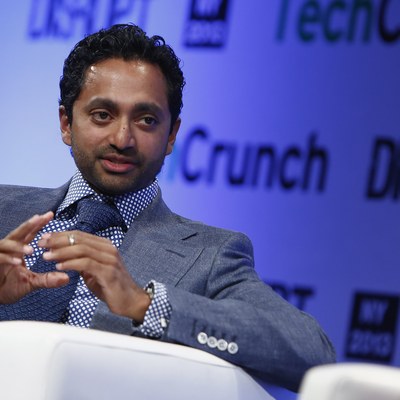 Chamath Palihapitiya
74
10 Oct 2025 – 4 Sep 2026
+252 d
Chamath Palihapitiya
74
10 Oct 2025 – 4 Sep 2026
+252 d
- Dylan Patel 6 31 Oct 2025 – 13 May 2026 +273 d
-
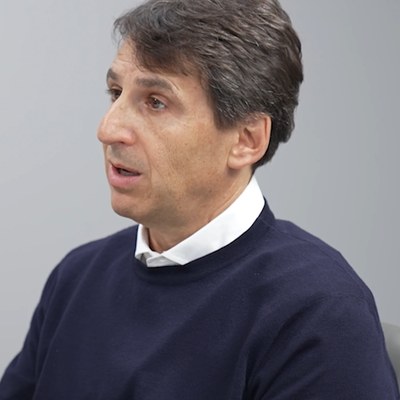 Marc Rowan
7
3 Mar 2026 – 25 May 2026
+396 d
Marc Rowan
7
3 Mar 2026 – 25 May 2026
+396 d
-
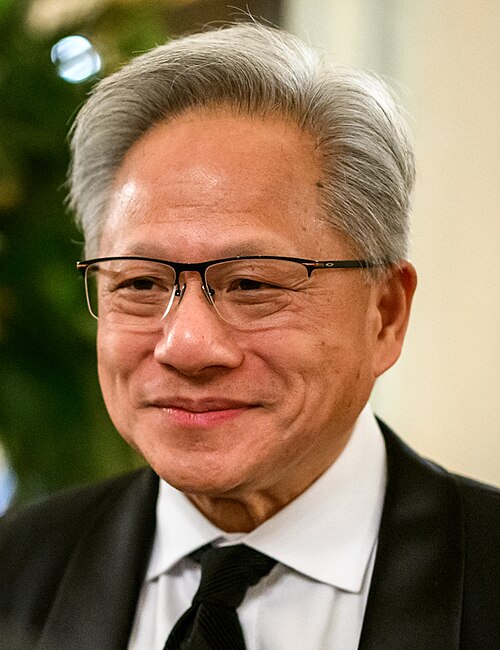 Jensen Huang
1
thin
16 Jun 2026 – 16 Jun 2026
+501 d
Jensen Huang
1
thin
16 Jun 2026 – 16 Jun 2026
+501 d
-
 H.R. McMaster
1
thin
31 Jul 2026 – 31 Jul 2026
+546 d
H.R. McMaster
1
thin
31 Jul 2026 – 31 Jul 2026
+546 d
-
 John Williams
5
John Williams
5
The chronologysourced and dated, oldest first
-
-
Bill Gurley
Gurley describes Stitch Fix using machine learning and collaborative filtering to deliver items customers haven't seen yet via stylists.
“We try and learn as much as we can about the individual, and then we use machine learning and collaborative filtering, a whole bunch of algorithms that helps of our stylists, and we deliver something to you that you haven't even seen yet.”
-
-
-
David Tepper
Tepper says quantitative trading machines are performing poorly this year despite prevalence of algorithmic finance.
“Machines, to compete against machines, which there's a lot of machine finance. The machines are doing shitty this year.”
-
-
-
Gavin Baker
Baker cites research showing AI quality doubles with every 10x increase in training data quantity.
“All that matters is the quantity of data, and it's been very well established in multiple papers from both Google and Microsoft research that for every order of magnitude increase in the data you use to train an algorithm, the quality of the AI doubles.”
-
Gavin Baker
Baker cites research showing every 10x increase in training data doubles AI quality.
“it's been very well established in multiple papers from both Google and Microsoft research that for every order of magnitude increase in the data you use to train an algorithm, the quality of the AI doubles.”
-
-
-
Brad Gerstner
Gerstner warns AI and ML will increase productivity but concentrate wealth distribution even more than today.
“Global wealth, as measured by the mountain of labor and capital that exists in the world, the conveniences that will be available to people will be better than they've ever been before, but the distribution of those will be way more concentrated”
-
-
-
Gavin Baker
Baker cites research showing AI algorithm quality doubles with every 10x increase in training data.
“Microsoft wrote about this in a research paper ten years ago, or maybe not twelve years ago, the quality of a given AI algorithm doubles with every 10x increase in the amount of data you use to train that algorithm.”
-
Gavin Baker
Baker argues AI is now eating software, extending Andreessen's famous thesis.
“Marc Andreessen wrote this op ed, whatever it was, ten years ago about how software is eating the world. Now AI is eating software.”
-
Gavin Baker
Baker argues AI has changed cybersecurity economics, enabling companies to exceed $20B valuations for the first time.
“That's why for the first time ever, for a long time, I forget the exact numbers, but you never had a cybersecurity outcome over 20,000,000,000.”
-
Howard Marks
Marks argues computers cannot identify the next Steve Jobs or Amazon through subjective future judgments.
“I don't think it can look at five business plans and figure out which is the next Amazon. These are subjective judgments about the future,”
-
-
-
Brad Gerstner
Gerstner says AI is a platform shift as big as internet or mobile, with $10-11B invested across 500 companies.
“I mean, I have to agree with Doug that this is a platform shift on the same magnitude as the internet or mobile itself.”
-
Brad Gerstner
Gerstner says AI is a platform shift as big as internet or mobile, potentially bigger.
“I have to agree with Doug that this is a platform shift on the same magnitude as the internet or mobile itself. In fact, it may be bigger than both of those.”
-
Brad Gerstner
Gerstner compares foundation models to search engines in 2000, saying value capture is uncertain.
“It is almost impossible to know with any certainty, much like it was with the search engines in ninety nine, two thousand, who's going to emerge, where the value capture is going to be.”
-
Brad Gerstner
Gerstner says AI is bigger than the Internet because it extracts knowledge rather than just retrieving information.
“when we say it's bigger than the Internet itself, what we mean by that is the Internet really allowed us to discover information, to retrieve information.”
-
Brad Gerstner
Gerstner says AI extracts knowledge from information to provide copilot assistance for better decisions, unlike the internet's retrieval function.
“What AI allows us to do is extract the knowledge from that information to get a copilot to help us make better decisions.”
-
Brad Gerstner
Gerstner identifies AI as the third major platform disruption he has managed, following the web and mobile/cloud eras.
“think in moments of major platform disruptions, and this is the third that I've managed through.”
-
Brad Gerstner
Gerstner frames the $20 trillion question as how the web's open architecture gets rearchitected for AI.
“the $20,000,000,000,000 question is how does the entire open architecture of the web get rearchitected in the age of AI?”
-
“What I would tell you is under 500,000,000, maybe under 600,000,000. Right? Series b and c rounds are as hot as I've ever seen them in data infrastructure and AI and software, etcetera.”
-
Brad Gerstner
Gerstner argues AI follows the 1998-99 internet pattern: overpriced short-term but underestimated long-term impact.
“But much like the Internet in 9899, where there was overpricing in the short run, we dramatically underestimated the impact it was going to have over the preceding decade.”
-
Brad Gerstner
Gerstner contends GPT has become the default verb for AI, not Google's Bard.
“So what is the verb in the age of AI? Do you bard or do you chat GPT? GPT has become the default verb for all things AI.”
-
Brad Gerstner
Gerstner says GPT has become the default verb for AI, not Google's Bard.
“Do you bard or do you chat GPT? GPT has become the default verb for all things AI.”
-
Brad Gerstner
Gerstner predicts 2024 will see more compute deployed than all previous years combined for AI.
“We're gonna launch more. We're gonna deploy more compute in 2024 than in all previous years combined.”
-
Brad Gerstner
Gerstner cites Amazon CodeWhisperer reporting 56% increase in engineering productivity from AI coding tools.
“I think Amazon CodeWhisperer, so this is a cogeneration copilot Mhmm. Is reporting that they've seen 56% increase in engineering productivity”
-
Brad Gerstner
Gerstner reveals ByteDance has 40,000 content moderators and expects 90% reduction via AI within a year.
“ByteDance, where we're investors, has about 40,000 content moderators. Okay? These are folks who are flagging, you know, content that”
-
Brad Gerstner
Gerstner says AI is creating massive bottom-line opportunities as companies like Uber continue reducing headcount.
“The re you know, and Dara told you yesterday, quarter over quarter we've actually reduced head count again. Right. We have this massive bottom line opportunity in all these businesses because of AI.”
-
Brad Gerstner
Gerstner says Nadella predicted fifteen years before ChatGPT that Microsoft needed answers, not links, to beat Google.
“Fifteen years before ChatGPT started producing answers, Satya knew that that's where they had to get to if they were going to leapfrog Google.”
-
Brad Gerstner
Gerstner claims AI delivers 30 to 50 percent productivity gains to engineers, unprecedented in technology history.
“If you think about what AI is already doing for the enterprise, we're seeing 30 to 50% productivity improvements in engineers. There's never been a technology history of technology.”
-
Brad Gerstner
Gerstner predicts 80% of AI benefits over next three to four years will go to incumbent platforms, not venture startups.
“I think 80% of the benefits of AI over the course of the next three to four years are going to inure to the benefit of the incumbents, to the larger platforms that are already public today whose businesses will get better. Their bottom line margins will expand. Their top lines will reaccelerate.”
-
-
-
Brad Gerstner
Gerstner says Zillow's Barton immediately red-teamed AI impact on vertical search after ChatGPT launched.
“We're gonna red team blue team AI. What is the impact that AI is gonna have on 10 blue links? What is the impact that AI is gonna have on vertical search?”
-
Brad Gerstner
Gerstner notes NVIDIA traded at 20x earnings last year, its lowest multiple ever.
“So NVIDIA ended last year at 20 times earnings. Its lowest multiple of earnings it's ever traded at, despite the fact that it's the the the purest play AI name in in the space.”
-
Brad Gerstner
Gerstner says Altimeter's best AI bets over the past two years were NVIDIA, Microsoft, and Snowflake.
“the best bets on AI over the course of the last eighteen months or two years, we were fortunate to be in, were NVIDIA and Microsoft, Snowflake.”
-
Brad Gerstner
Gerstner claims Meta is the largest AI profit beneficiary in public markets outside NVIDIA.
“They are the single largest beneficiary of AI from a profit perspective in the public markets today outside of NVIDIA.”
-
Brad Gerstner
Gerstner declares Meta the single largest AI profit beneficiary in public markets outside NVIDIA.
“They are the single largest beneficiary of AI from a profit perspective in the public markets today outside of NVIDIA. And so I really think it's about that.”
-
Brad Gerstner
Gerstner reports hyperscalers added over $15 billion ARR in the quarter, a record.
“In the quarter, if you aggregate the hyperscalers together, we added over $15,000,000,000 in ARR. That's annual recurring revenue, the single largest quarter in the history”
-
Brad Gerstner
Gerstner predicts a zone of disillusionment will hit within four quarters as AI adoption takes longer than expected.
“I can absolutely see sometime over the next four quarters. We're gonna hit a zone of disillusionment because everybody's pig piled in here.”
-
Brad Gerstner
Gerstner believes AI will have a bigger impact on economic productivity than the internet itself.
“my sense here is, you know, and I've said the AI is gonna be bigger than the Internet itself in terms of impact on economic productivity.”
-
Bill Gurley
Gurley invokes Spielberg's Jaws example to suggest AI expectations may exceed what can actually be delivered.
“I saw this inner great interview once with Spielberg when he was talking about Jaws. And he said, you know, I didn't show the shark until like 75% of the way through this thing.”
-
Bill Gurley
Gurley identifies long-term memory as a major unsolved problem preventing AI from becoming true personal assistants.
“I do think this memory issue is a big, big deal, at least on the consumer side. So none of the major contenders today can remember who you are because it would require them.”
-
Bill Gurley
Gurley identifies long-term memory as a major unsolved AI problem preventing true personal assistant capabilities.
“And I mean, remember over five years, ten years to really become a personal assistant kind of thing that her represented.”
-
Bill Gurley
Gurley explains personalized AI memory requires rebuilding models per user, which is economically unfeasible.
“And it's because you'd have to redo the model for each human. And of course that makes no sense economically.”
-
Bill Gurley
Gurley explains AI memory requires retraining models per person, creating an economically unsustainable structural problem.
“And of course that makes no sense economically. So it's actually a huge structural problem. There are complaints, you know, in Reddit about Character AI on this front.”
-
Bill Gurley
Gurley says Tesla replaced coded rules with neural networks using driver video as input and pedal/steering as output.
“And literally the videos are the input and the output is the steering wheel, the the brake, and the gas pedal. Yeah. Extraordinary.”
-
Brad Gerstner
Gerstner explains Tesla's new FSD model uses driver behavior as the label, not deterministic code for stoplights.
“Now in this new model, it's pixels in. So the model itself has no code. It doesn't know this is a stoplight per se. In fact, they just watched the driver's behavior.”
-
Bill Gurley
Gurley says AI companies operate three to four super PACs and insert staff onto congressional teams to influence regulation.
“They're putting people they're literally inserting people onto the staffs of the different congressmen and senators to try and influence the outcome here.”
-
Bill Gurley
Gurley notes Microsoft hands out $11 billion annually in RSUs, giving them advantage in recruiting AI talent.
“So that's over 11,000,000,000 a year. And this morning we woke up and read about them taking some employees from a hot AI company in the valley.”
-
Brad Gerstner
Gerstner says AI has become the leading edge of sovereign battles, making TikTok's status quo path inconceivable.
“So given that, I think it's almost inconceivable for me now to see how TikTok US has a path forward under kind of the status quo.”
-
Brad Gerstner
Gerstner says we're entering a global AI cold war on the economic front, which he doesn't celebrate.
“So I don't celebrate that we're entering what appears to be a global AI cold war Yeah. On the economic front.”
-
Brad Gerstner
Gerstner argues people would be more excited about nuclear fission if discovered today than they are about AI.
“if World War II never happened, the atomic bomb never happened, and someone just showed up in 2024 and said, I figured out this thing, it's nuclear fission, people would be like, oh my god, like, probably be more excited than you are about AI.”
-
Brad Gerstner
Gerstner describes recent AI startup fast failures including Inflection, noting venture returns are now off the table.
“So, we've had what I call these fast failures. You might maybe the inflection team will get their money back, but that's not what Venture is about.”
-
Brad Gerstner
Gerstner notes Perplexity reversed position on advertising despite previously opposing it, signaling business model shift.
“Perplexity came out and said that they were, you know, considering advertising and they there were statements in their previous releases that were very negative on advertising.”
-
Brad Gerstner
Gerstner reports some AI models are already priced below cost due to hyper-competitive market dynamics.
“the second thing people said was that the runtime models are just highly competitive and many people think that some of the models are already priced under cost, which goes back to the credit investment theme that you and I have talked about.”
-
Brad Gerstner
Gerstner reports major tech CEO plans 50% revenue growth with 10-20% personnel cost reduction over three years via AI.
“And he said, over the course of the next three years, we'll grow our top line 50%, and we'll reduce our personnel costs by 10 to 20%.”
-
Bill Gurley
Gurley says initial LLM versions are structurally flawed around personal memory and RAG approaches don't solve the problem.
“One quick thing, I do think that the initial versions of these models are structurally flawed around providing personal memory and allowing someone to become dependent on one of these things.”
-
Bill Gurley
Gurley says personalized foundational models that can retune for individuals could wildly change AI direction.
“Any of that stuff could create a wildly new direction than what we have today.”
-
Bill Gurley
Gurley says foundational model companies burning $100-200M yearly cannot possibly represent high quality capital allocation.
“100,000,000 a year? 200,000,000 a year? There's no way that's high quality capital allocation from my point of view.”
-
Brad Gerstner
Gerstner says GPT-4o is first model to process voice, text, and vision in single neural net like humans.
“This is the first time that we really have a model that reasons across voice, text, and vision in a single model. You know, it's processing all three modalities in a single neural net.”
-
Brad Gerstner
Gerstner predicts BPO companies face disruption as voice and video modalities threaten their core business.
“BPO companies woke up yesterday and they're like oh my god, this is about voice, this is about call centers, this is about video in, this is about you know?”
-
Brad Gerstner
Gerstner says only 5% of Apple users can access Apple intelligence, requiring device upgrades.
“only 5% of Apple users today can access Apple intelligence. So they're going to have to upgrade these devices in order to play.”
-
Brad Gerstner
Gerstner's survey work shows people are turning to ChatGPT, Claude, and Apple Intelligence over traditional search.
“We do lots of survey work on this, Scott. People are turning to chat GPT, they're turning to Claude, they're turning to, why are we so excited about Apple Intelligence?”
-
Brad Gerstner
Gerstner argues users are shifting from Google's ten blue links to ChatGPT, Claude, and Apple Intelligence.
“Because people are going to turn to Apple Intelligence instead of 10 blue links to find answers to the questions they have.”
-
Brad Gerstner
Gerstner states Google was dominant in 10 blue links but is not dominant in the new AI era.
“They were dominant in 10 blue links. They are not dominant in this. There are a lot of other players in the age of What”
-
Brad Gerstner
Gerstner asserts Google lost its dominance in the AI era despite dominating traditional search.
“They were dominant in 10 blue links. They are not dominant in this. There are a lot of other players in the age of”
-
Brad Gerstner
Gerstner notes four coding AI companies each raised over $400 million, questioning sustainability of further funding rounds.
“There's four companies in the coding AI space that raised over 400,000,000 each. You you think there'll be another round behind that?”
-
Bill Gurley
Gurley explains Strawberry's logarithmic scaling means 10X to 100X inference costs for linear improvement requiring selective application.
“The implication being in order to get linear improvement, you have to do maybe 10X the amount of processing. And this is all inference.”
-
Bill Gurley
Gurley explains Strawberry requires 10X processing for linear improvement, meaning 10-100X inference costs for better solutions.
“in order to get linear improvement, you have to do maybe 10X the amount of processing. And this is all inference. So what are the implications of that?”
-
Bill Gurley
Gurley argues email integration for AI creates insurmountable switching costs for whoever achieves it first.
“Like, that's really, really powerful. And I think the switching costs are insurmountable if someone gets to that place first.”
-
Bill Gurley
Gurley calculates AI companies burning $20M monthly need $500M revenue run rate to reach profitability at 50% margins.
“if you're spending 20,000,000 a month, you're burning $240,000,000 a year. You know, if these companies in AI are 50% gross margin or whatever, you got to get revenue to twice that, you know, you're right at that 500,000,000 run rate before you could think about being profitable.”
-
David Tepper
Tepper says he has no visibility on NVIDIA beyond 2025 into 2026 and 2027.
“Do you have the next generation models that can take their chip so it looks great in '24, looks great in '25? I have no idea in '26 and '27. I am no idea.”
-
David Tepper
Tepper says he has no confidence in NVIDIA earnings forecasts for 2026 and 2027.
“I have no idea in '26 and '27. I am no idea. Okay? I mean, as if I was but I don't believe I don't believe my analysts.”
-
David Tepper
Tepper says meeting AI power needs will require using natural gas.
“It has to be if you're gonna meet these power needs of what they need for AI, you're gonna have to use natural gas. You're gonna have to use natural gas.”
-
David Tepper
Tepper says meeting AI power needs will require using natural gas.
“It has to be if you're gonna meet these power needs of what they need for AI, you're gonna have to use natural gas. You're gonna have to use natural gas.”
-
David Tepper
Tepper argues meeting AI power needs will require natural gas, not just nuclear.
“It has to be if you're gonna meet these power needs of what they need for AI, you're gonna have to use natural gas.”
-
David Tepper
Tepper argues meeting AI power needs will require natural gas, not just nuclear.
“It has to be if you're gonna meet these power needs of what they need for AI, you're gonna have to use natural gas.”
-
Brad Gerstner
Gerstner links job loss fears from AI to anti-immigration sentiment as predictable response.
“You're a driver, you lose your job to autonomous driving. You know, go through the list, and we're gonna see a lot of this. Right?”
-
Brad Gerstner
Gerstner says US productivity growth fell from 2.5-3% in 90s to 1.8% in 2000s to slowest ever in last decade.
“if you look at the 90s our productivity growth in The United States was about 2.5% to 3% a year, okay, and then in the 2000s it slowed down to about 1.8% and then the last ten years has been the slowest productivity growth”
-
Brad Gerstner
Gerstner reports Google confirmed AI-enhanced search results monetize at the same rate as traditional search results.
“one of the key questions there was whether or not the AI enhanced search results were gonna monetize at the same level as non AI enhanced search results.”
-
Bill Gurley
Gurley praises Anthropic's decision to open source their MCP data connection tool with GitHub and Slack integrations.
“They released several integrations already in the initial pack, with good GitHub and Slack and a few others so that you can start having your agents interact with these things.”
-
Bill Gurley
Gurley says Anthropic and investor Eric Schmidt have been pushing for more AI oversight and regulation.
“based on what I've heard and seen and read and listened to on podcast, Anthropic and their investors like Eric Schmidt have been some of the people that have been encouraging, you know, more and more AI oversight and AI regulation”
-
Brad Gerstner
Gerstner predicts AI super cycle will be bigger than internet, mobile, and cloud combined.
“I think this super cycle is going to be bigger than all the other super cycles put together like I think this is what we're going to be investing again against for decades to come.”
-
-
-
Gavin Baker
Baker predicts America will achieve over 5% real GDP growth in one year due to AI and deregulation.
“I think that America over the next at some point over the next four years will print at least one year of greater than 5% GDP growth, real GDP growth.”
-
Bill Gurley
Gurley contrasts Zuckerberg's technical transparency with Altman and Amodei's high-level platitudes about AI.
“Dario and Sam talk in these high level platitudes about how this stuff's gonna cure cancer and we're all gonna not have to work anymore.”
-
Bill Gurley
Gurley contrasts Dario and Sam's platitudes with Zuckerberg being transparent and in the arena on AI.
“And Zuck was down in the weeds in the meet. He's in the arena. Yeah. Being super transparent.”
-
David Friedberg
Friedberg explains LLMs are text predictors, reframing AI as prediction engines applied to genomics.
“They were able to suck up all the text on the internet and use that text to make a prediction on what the answer should be”
-
David Friedberg
Friedberg explains LLMs are text predictors using internet data to generate word-by-word predictions, not true AI.
“They were able to suck up all the text on the internet and use that text to make a prediction on what the answer should be when someone asks a question word by word.”
-
David Friedberg
Friedberg describes genome language models that can predict plant phenotypes from specific trait requirements like 90-day corn.
“I can now build models that some people are calling genome language models or, you know, whatever you wanna call them that can be predictive of a phenotype.”
-
Bill Gurley
Gurley warns AI companies receiving server capacity for equity don't recognize their true COGS in real-time.
“They're trading equity for server capacity. And so those companies are running on a day to day basis with a high COGS, but they don't know it”
-
Bill Gurley
Gurley says founders' brains get warped when not paying cash for costs, forgetting to account for them.
“And my suspicion, having lived in the venture industry for twenty five years, is your brain gets warped in that environment. Like, you don't think about, oh, shit.”
-
Bill Gurley
Gurley says AI consensus is unprecedented in venture history with even Fortune five hundred fully committed.
“And if even if I go back to the mobile wave or the Internet wave, there were plenty of skeptics like within the Fortune 500.”
-
David Sacks
Sacks says people would have been surprised a Chinese company released the second reasoning model after OpenAI.
“if you had said to people a few weeks ago that the second company to release a reasoning model along the lines of o one would be a Chinese company, I think people would have been surprised by that.”
-
David Sacks
Sacks says DeepSeek moved perceptions of China's AI lag from six-to-twelve months to three-to-six months.
“if you had asked most people in the industry a few weeks ago how far behind is China on AI models, they would say six to twelve months.”
-
“OpenAI made a lot of sense to us, you know, they just reported last week over 400,000,000 weekly active users, I think over 700,000,000 monthly users growing fast, etcetera.”
-
Brad Gerstner
Gerstner reports OpenAI will exceed $11 billion in revenue this year per recent CNBC disclosure.
“OpenAI, you could see the pacing from the launch of their first consumer product relative to Google and Meta. Sarah just talked on CNBC last week, this year will be over $11,000,000,000”
-
Brad Gerstner
Gerstner says tariffs and AI create diverging company outcomes requiring active stock picking over index investing.
“So active managers get paid right now to do their job, find those companies that are gonna benefit, and avoid the companies that are gonna get hurt.”
-
David Friedberg
Friedberg uses Arc Institute's EVO2 model in production at Ohalo to score plant DNA before phenotyping.
“We feed the whole DNA sequence of every plant in, and that model will tell us, Hey, these genes are dysfunctional or may have issues.”
-
David Friedberg
Friedberg envisions artists defining boundaries for AI-generated media while preserving shared cultural experiences.
“the artist that creates the fundamental core of that cultural moment can define what is variable and what is not.”
-
Bill Gurley
Gurley clarifies Manus operates exclusively on US models, has no foundational model, and never used Chinese models like DeepSeek.
“first of all, they've only operated on US models. They're a wrapper company. They don't have a foundational model and and they've only operated on top of US models.”
-
Brad Gerstner
Gerstner says OpenAI reached 400 billion annual searches eight years faster than Google did.
“I did I saw some analysis from my team this week will post that OpenAI reached, you know, 400,000,000,000 annual searches, eight years faster than Google.”
-
Bill Gurley
Gurley notes 50% of AI researchers are Chinese-origin and China now leads in AI patents, questioning immigration restrictions.
“some people say 50% of AI researchers are of Chinese origin. And I believe now the patent count in AI coming out of China is larger than The US.”
-
Brad Gerstner
Gerstner cites study showing 40-50% of top US AI researchers are Chinese.
“I saw a study that suggested that 40 to 50% of the AI researchers in The United States, our best researchers are Chinese.”
-
Brad Gerstner
Gerstner calculates that 2.5-3.5% annual productivity growth for a decade could substantially reduce the US debt-to-GDP ratio.
“if productivity for the next decade or so was about two and a half to three and a half percent per year, we could achieve substantial reductions in this key ratio of debt to GDP.”
-
Brad Gerstner
Gerstner argues it is too early to regulate AI, comparing premature regulation to regulating auto industry out of existence.
“I think we definitely are in the camp that it is way too early to obstruct American AI with you know useless regulations like we don't even know what we should be regulating.”
-
Brad Gerstner
Gerstner says AI will need regulations like seatbelts took forty years, but it's too early now.
“It took us forty years to realize we needed seat belts and airbags and that we needed speed limits and things like that and we'll need all those things for AI but I think it's way too early to be doing that”
-
Brad Gerstner
Gerstner forecasts OpenAI could reach $5-10 trillion valuation as the AI winner in consumer and enterprise.
“right, 5 to $10,000,000,000,000 business in the fullness of time, which frankly would not surprise me for the winner in the age of AI, right? The winner in consumer and a big company and enterprise,”
-
Bill Gurley
Gurley identifies Microsoft, Amazon, and Apple as US tech companies not on AI bleeding edge.
“The reason I think that's an interesting data point when you think about The US and, you know, are several big tech companies that seem to be not on the bleeding edge of AI.”
-
Brad Gerstner
Gerstner says Google's monthly token generation exploded 100x in a year, from 9 trillion to 980 trillion tokens.
“Today, it's 980,000,000,000,000 tokens. So from 9,000,000,000,000 to nine eighty, it's a 100 x increase in a year.”
-
Brad Gerstner
Gerstner cites Jensen Huang saying half of world's AI researchers are in China and innovating.
“Jensen Huang reminded us recently that 50% of the world's AI researchers are in China, and they're indeed innovating and not copying.”
-
David Sacks
Sacks estimates 90% of AI revenue goes to OpenAI, giving them dominant consumer position.
“And if you look at AI revenue, I think something like 90% of it is going to OpenAI. I mean, they have the dominant position among consumers.”
-
David Tepper
Tepper says he owns NVIDIA but trades in and out, not holding a constant position.
“I do own NVIDIA, but I go back and forth and back and forth a little bit, because I do, you know, I will trade a little bit.”
-
Sir Richard Dearlove
Dearlove argues AI diagnosis combined with Palantir could make NHS a powerhouse of medical knowledge.
“AI has already proved it can do it a hell of a lot better than the human being in in many, many cases, not every case.”
-
David Friedberg
Friedberg reports new German AI architecture achieved 7000x speedup over Jetson Nano and 100x over H100.
“Their architecture led to a speed up of 7,000 x compared to the NVIDIA Jetson Nano, 300 x compared with NVIDIA RTX forty ninety, and then a 100 x compared to the NVIDIA h 100.”
-
David Friedberg
Friedberg states new architecture reduces AI energy consumption by 70,000x compared to H100 chips.
“And the energy was reduced by 40,000 x compared to Jetson Nano, 90,000 x compared to RDX forty ninety, and a 70,000 x energy reduction for the same outcome over an h 100.”
-
David Friedberg
Friedberg predicts new architecture enables sophisticated LLMs to run locally in robots without data center connections.
“So If this thing's even close to being correct, then you could run the most kind of sophisticated LLMs in a robot without it needing to be run out of a data center going forward and the robots can simply make a request for information from the Internet that they need.”
-
Chamath Palihapitiya
Palihapitiya explains OpenAI's Korea deals secure forward HBM memory capacity that Altman can allocate for leverage and equity participation.
“He's buying forward capacity on HBM because now he can allocate that share. So when I saw that deal and I saw that equity, it reminded me of this Rothschild quote.”
-
Chamath Palihapitiya
Palihapitiya asserts energy control will enable equity participation in AI companies, elevating suppliers from low-margin to high-leverage positions.
“What's a different example? Brad mentioned this before, but energy will be the gating item beyond a shadow of a doubt.”
-
Chamath Palihapitiya
Palihapitiya argues AI infrastructure OpEx over twenty years equals CapEx, making total spending far larger than reported trillion-dollar figures.
“That's just the CapEx. Then you have to think of what the OpEx is. The OpEx is probably the same multiplied by the useful life, which is probably twenty years.”
-
David Sacks
Sacks estimates each gigawatt data center requires roughly 50 billion dollars of investment in chips, land, and power.
“Here's a rule of thumb is that each gigawatt data center is about $50,000,000,000 of investment, roughly. Between the chips, the land power shell, it's about 50,000,000,000 per gigawatt.”
-
David Sacks
Sacks states AI represents 40% of US GDP growth and 80% of stock gains this year.
“40% of US GDP growth this year is AI and AI companies have accounted for 80% of the gain in US stocks this year.”
-
Howard Marks
Marks says current AI frenzy has not reached bubble-level mania yet.
“And I don't detect that level of mania at this time, so I have not put the bubble label Right.”
-
Howard Marks
Marks says he has not labeled current AI frenzy a bubble because mania has not reached critical level.
“And I don't detect that level of mania at this time, so I have not put the bubble label Right. On this on this incident.”
-
Howard Marks
Marks says AI will change the world and has been successful, with investors piling in amid FOMO.
“I think there's relatively little doubt that AI will change the world. And AI has been successful as an investment, and people are piling in, and there's some fear about being left out.”
-
Howard Marks
Marks says AI will change the world and has been successful, with investors piling in.
“I think there's relatively little doubt that AI will change the world. And AI has been successful as an investment, and people are piling in,”
-
Howard Marks
Marks judges that AI investing has not reached the critical mass of mania needed for a bubble.
“But to me, it just hasn't this is a judgment call. And to me, it just hasn't reached that critical mass of mania.”
-
Brad Gerstner
Gerstner argues the AI phase shift is as big as the internet transformation.
“is the phase shift associated with AI? Is the transformation of all computing with now computer assisted intelligence, is it as big as the Internet?”
-
Dylan Patel
Patel estimates AI infrastructure represents 25-75% of current US quarterly economic growth.
“it's a substantial fraction of economic growth, depending on who you ask. It's anywhere from 25% to 75 of the current quarter's economic growth. That's insane for The US.”
-
Dylan Patel
Patel states AI infrastructure represents 25% to 75% of current US quarterly economic growth.
“It's anywhere from 25% to 75 of the current quarter's economic growth. That's insane for The US.”
-
Dylan Patel
Patel released a post on GPT-3 training costs the same day ChatGPT launched, calling it coincidental timing.
“I was lucky enough that the day Chad GPT released, I released a post called that was about the training cost of GPT-three. It was just like a coincidence.”
-
Chamath Palihapitiya
Palihapitiya says distribution matters most in AI markets, favoring Google and Meta despite Meta being behind.
“And, ultimately, what we are learning, especially as all these markets converge, is that distribution still matters a ton, which favors Google. It favors Meta, although Meta's quite behind.”
-
Chamath Palihapitiya
Palihapitiya says Google stock doubled on Gemini success, justifying $50 billion spend for trillion in market cap.
“And so if you wanna make Gemini even more incredible, just get pour another billion users into it. And if that costs you 50,000,000,000, it's okay because you'll make a trillion of market cap.”
-
David Friedberg
Friedberg says ChatGPT's advanced voice has become unusable due to excessive politeness and data avoidance from overcaution.
“I used to use advanced voice on ChatGPT all the time. I cannot stand it anymore. I do not use it.”
-
Gavin Baker
Baker says no one on earth knows how or why scaling laws for pre-training work, only that they do.
“They stated that unequivocally. And that's important because no one on planet earth knows how or why scaling laws for pre training work.”
-
Gavin Baker
Baker says no one on earth knows how or why scaling laws for pre-training work, it's an empirical observation.
“And that's important because no one on planet earth knows how or why scaling laws for pre training work. It's actually not a law.”
-
Gavin Baker
Baker argues SaaS companies are repeating brick-and-mortar retailers' mistake by rejecting lower-margin AI business.
“I think that application SaaS companies are making the exact same mistake that brick and mortar retailers did with e commerce.”
-
Howard Marks
Marks is certain AI will irreversibly change society but questions whether its implementation will prove excessive in scope and financing.
“And the question is, will the implementation prove to have been excessive in scope and in in the way it's financed?”
-
Howard Marks
Marks argues job losses from automation and offshoring coincided with the opiate epidemic in both amount and geographic location.
“And as I said in the addendum, When we lost jobs to automation and offshoring, I think that that coincided with the opiate epidemic and not only in amount but also in location.”
-
Chamath Palihapitiya
Palihapitiya predicts AI will create three geopolitical tiers with only China and America exporting intelligence.
“In bucket number one, you're an exporter of that intelligence. And I think right now, steady state, it's gonna be China and America.”
-
Chamath Palihapitiya
Palihapitiya argues physical dollars preserve privacy through fungibility that digital transactions lack.
“The great thing about the US dollar is when you get a dollar and you put it in your pocket, the physical dollar bill, it is completely fungible.”
-
Howard Marks
Marks says nobody has explained how AI will change the world or become profitable despite its power.
“I've never heard anybody tell me how AI is going to change the world. We know it's a powerful force. Can think, it can process data.”
-
Howard Marks
Marks cites Buffett's distinction that productivity gains from Internet and AI may not translate to profitability.
“There's no doubt that the Internet will produce a great increase in productivity. It's not clear that it'll have a positive impact on profitability. And I think the same is true of AI.”
-
Howard Marks
Marks questions whether AI eliminating half of entry-level jobs will translate into profits or just lower consumer prices.
“if you can produce The US GDP and eliminate half the entry level jobs, it could be more profitable or certainly more productive. But the question is, will it be more profitable?”
-
Bill Gurley
Gurley notes China has ten open source AI models in hyper competition versus US proprietary approach.
“Wild. And by the way, I mean, not to divert too much back, but right now China has 10 open source AI models.”
-
Chamath Palihapitiya
Palihapitiya cites Carnegie building 2,500 libraries as a model for tech companies to provide tangible benefits.
“Andrew Carnegie built 2,500 libraries. The idea was as he built the railroads, you're going to scale GDP. You're going to scale education and knowledge.”
-
Chamath Palihapitiya
Palihapitiya argues tech companies must deliver measurable benefits to tens of millions of Americans.
“We need to self organize better, and we need to be more on the forward foot. We need to start doing things that are practically measurable by tens of millions of American citizens.”
-
Chamath Palihapitiya
Palihapitiya frames China competition as existential and says winning requires keeping it focused on AI and economics.
“The war with China is existential because if we can keep it on the battlefield of AI and intellectual and economic prowess, we have a very good chance of winning.”
-
Chamath Palihapitiya
Palihapitiya frames China competition as existential and says winning requires keeping it focused on AI and economics.
“The war with China is existential because if we can keep it on the battlefield of AI and intellectual and economic prowess, we have a very good chance of winning.”
-
-
-
Brad Gerstner
Gerstner explains belief that Claude Code or OpenAI Codex can build CRM systems in an hour.
“There's a belief in the world today that I can just go to Claude Code or I can go to Codex at OpenAI.”
-
Brad Gerstner
Gerstner describes the market belief that AI tools can build CRM systems in an hour, threatening traditional software.
“I could tell it what I want, And I can literally have it build a customer relationship management system for my business in about an hour.”
-
Brad Gerstner
Gerstner says now is the time to find the 10% of beaten-down software companies that will benefit from AI.
“90% of the companies that are down deserve to be down. Find the 10 that got thrown out with the bathwater. Find the 10%, right, that are going to benefit from AI.”
-
David Sacks
Sacks argues AI will increase demand for knowledge workers by making code cheaper, following Jevons Paradox.
“So the amount of software generated in the economy was limited by that. I think it's gonna increase massively now because the cost of generating code is coming down so much.”
-
Chamath Palihapitiya
Palihapitiya predicts a silicon renaissance where small teams building decode silicon will make fortunes over 10-20 years.
“If you look at the Trail of Breadcrumbs, my belief, there's gonna be a renaissance in silicon. Young, small teams building decode silicon can make a fortune over the next ten to twenty years.”
-
Chamath Palihapitiya
Palihapitiya argues open source AI gives sovereignty to companies and especially countries through transparency.
“But open source is important because it's transparent. It gives everybody their own sovereignty, whether you're a company and, frankly, really more importantly, whether you're a country.”
-
Chamath Palihapitiya
Palihapitiya says Kimi K 2.5 is a trillion parameter mixture of experts model.
“So this is why it's so important because it was incredibly profound. It's a trillion parameter mixture of expert model.”
-
Chamath Palihapitiya
Palihapitiya predicts marrying next-gen systems to open source will cut AI costs by 90 percent.
“If you take these next generation systems and you marry them to open source, you're gonna cut the cost of AI by 90%.”
-
Chamath Palihapitiya
Palihapitiya predicts marrying next-gen systems to open source will cut AI costs by 90 percent.
“If you take these next generation systems and you marry them to open source, you're gonna cut the cost of AI by 90%.”
-
Chamath Palihapitiya
Palihapitiya explains forking open source AI from Moonshot becomes worthless due to version drift.
“Because there's so much investment by Moonshot, that's the company that makes Kimikay two in that example, that you'll have so much drift in one version, your fork will be worthless.”
-
Dylan Patel
Patel frames AI competition as economic war determining whether China rises to global hegemony.
“at the end of the day, this is an economic war. Right? If The US and the West win in AI and control, you know, more powerful AI systems that have this feedback loop that improve economic growth and weapon systems and whatever else, right, engineering of grids and cyber attacks and all these sorts of things.”
-
Dylan Patel
Patel argues US AI dominance across economic and military systems will prevent China from becoming global hegemon.
“They have this like advantage over China, then China will not rise to be the global hegemony.”
-
Brad Gerstner
Gerstner explains investors aren't penalizing software companies for missing current numbers but reducing terminal value due to AI uncertainty.
“I'm gonna pay less for those future free cash flows. I'm not penalizing them because they're missing their numbers today.”
-
David Sacks
Sacks argues established SaaS products have millions of bug reports and enterprise testing that AI-generated code cannot replace.
“Think about how many bug reports have been filed on Salesforce's code base over the last twenty five years, maybe millions of them. That system has been tested across thousands of large customers and enterprises.”
-
David Sacks
Sacks contrasts limited AI copilots within individual SaaS tools with cross-platform AI tools like Claude that span multiple products.
“All these SaaS products are rolling out like AI copilots inside their tools. And some of them work pretty well, but they're limited to playing in that sandbox.”
-
David Friedberg
Friedberg predicts SaaS will shift from per-seat to value-based pricing as software completes entire projects like services businesses.
“And I think it starts to look a lot more like a services type business where maybe the pricing is set up such that this thing will be completed for your business.”
-
Bill Gurley
Gurley says OpenAI's burn rate is five times Amazon's or Uber's, unprecedented in venture capital.
“And when we did at Uber, we had the same kind of burn rate, but Open the Eyes got a burn rate that's five times that size.”
-
Bill Gurley
Gurley says unprecedented capital at every AI project creates uncharted competitive territory.
“now we're in a weird world where the amount of money that gets thrown at every project, I kind of lived through this with Uber Lyft because both companies had billions and billions of dollars”
-
Bill Gurley
Gurley says competing in top AI categories now requires willingness to lose a billion dollars per year.
“So every one of the most interesting AI categories, you may have to be willing to lose 1,000,000,000 a year just to compete”
-
Chamath Palihapitiya
Palihapitiya predicts enterprises will face a critical decision between cloud convenience and on-prem data security due to AI.
“When they realize that that is a problem, the enterprise will have to decide, do I just give up and keep running all of this stuff in the cloud in a shared experience, or do I bear the incremental cost of running this stuff in a more coordinated manner that I control on prem?”
-
David Friedberg
Friedberg says AI researchers are surprised that making output recursive drives major model performance improvements.
“I saw a lot of computer scientists that have worked in AI for some time, I think, be a little bit surprised about this moment that we're in, that we're seeing such incredible strides in model performance just by making the output recursive.”
-
Chamath Palihapitiya
Palihapitiya uses GEICO actuaries as an example of why companies cannot use open LLM instances with proprietary data.
“Do I, if I'm GEICO, want to have all of my actuaries using all of our proprietary private and confidential data on risk pricing in an open instance of an LLM?”
-
Chamath Palihapitiya
Palihapitiya says his company now sets token budgets for developers due to AI costs escalating rapidly.
“We're getting to a place where we have to basically now say, what is the token budget that we're willing to give our best devs?”
-
Howard Marks
Marks says nobody can explain how AI will change the world, unlike the internet bubble where the vision was clearer.
“I've never heard anybody tell me how AI is going to change the world. We know it's a powerful force. Can think, it can process data.”
-
Howard Marks
Marks quotes Buffett distinguishing productivity gains from profitability in technology like internet and AI.
“There's no doubt that the internet will produce a great increase in productivity. It's not clear that it'll have a positive impact on profitability.”
-
Howard Marks
Marks cites Buffett's point that productivity gains from internet and AI may not translate to profitability, now applied to AI.
“There's no doubt that the internet will produce a great increase in productivity. It's not clear that it'll have a positive impact on profitability. And I think the same is true of AI.”
-
Howard Marks
Marks cites CNN reporting AI could eliminate half of entry level jobs.
“My travel, I watched CNN International and they're drumming up interest in a show. And the anchor says to a guest, You say that AI has the ability to eliminate half of entry level jobs.”
-
Howard Marks
Marks notes AI could eliminate half of entry level jobs but questions whether productivity gains translate to profitability.
“You say that AI has the ability to eliminate half of entry level jobs. That was the whole conversation because then they cut to something else. But the point is that may be true.”
-
Howard Marks
Marks notes CNN reported AI could eliminate half of entry level jobs while maintaining US GDP, raising profitability questions.
“And obviously if you can produce The US GDP and eliminate half the entry level jobs, it could be more profitable or certainly more productive.”
-
Howard Marks
Marks questions whether AI savings will accrue as profits or be competed away through lower prices.
“To whom will the savings accrue? If different companies are competing to provide the AI service, maybe they'll compete on price to the point where it's not profitable for them.”
-
Howard Marks
Marks suggests AI savings may accrue to consumers through price competition rather than to company profits.
“If different companies are competing to provide the AI service, maybe they'll compete on price to the point where it's not profitable for them.”
-
Howard Marks
Marks contrasts binary AI startup bets versus investing in established tech companies with AI upside.
“If they have the low probability of success, you should accept that that means chances are good of unsuccessful.”
-
Howard Marks
Marks frames the AI investment choice as binary moonshot bets versus incremental gains in established tech companies.
“Or do you want to invest in a great tech company, which is already existing and making a lot of money where AI could be incremental, but not life changing?”
-
Bill Gurley
Gurley argues workers must understand AI's impact on their industry, comparing it to farmers adopting tractors and drones.
“Like if this technology has the ability to impact your industry, you need to know about it.”
-
Bill Gurley
Gurley argues those who craft bespoke career paths can view AI as jet fuel rather than threat.
“I think you view AI as jet fuel, as something that's going to make what you're capable of even better.”
-
Bill Gurley
Gurley says AI makes safe jobs riskier and pursuing passion a better career defense.
“if you were put in a safe job that you don't truly love, I would encourage you to consider this alternate door that I'm representing, to maybe find something you're passionate about and get away from that risk.”
-
Bill Gurley
Gurley warns alienating trade partners could result in China serving global AI markets while America is isolated.
“I think this could even happen with AI models where there's a fence around America and China's serving the rest of the world.”
-
Brad Gerstner
Gerstner says AI will be bigger than the Internet, the fourth super cycle he has lived through.
“I've lived through four, the Internet, cloud computing, mobile computing, and now we're entering the age of AI. It will be bigger than the Internet itself.”
-
Brad Gerstner
Gerstner says Altimeter's investment thesis for two years has been correlation to intelligence improvements.
“The overarching theme now for two years at Altimeter is we wanna be positively correlated to improvements in intelligence.”
-
Bill Gurley
Gurley advises being the most AI-enabled version of yourself using tractor versus donkey analogy.
“One, in any role in any field, be the most AI enabled version of yourself you can possibly be.”
-
Bill Gurley
Gurley advises being the most AI-enabled version of yourself in any field, citing tool evolution.
“in any role in any field, be the most AI enabled version of yourself you can possibly be. There's tons of anthropologists that have written about how we evolve with our tools.”
-
Bill Gurley
Gurley argues those who best understand AI's impact on their role won't be laid off.
“if there are 40 people in your org all doing the same thing, and you understand how AI affects that role more than the rest of them, you're not getting laid off.”
-
Bill Gurley
Gurley argues AI becomes a superpower for learning and productivity when combined with high agency careers.
“Like, you can learn faster than you could have ever learned before. You can get more things done Yep. Like with fewer people.”
-
Bill Gurley
Gurley quotes Cuban's distinction between using LLMs to learn faster versus not learning at all.
“Mark Cuban the other day tweeted, he said he said there's two types of people. The the people that use LLMs to learn faster and the people that use LLMs to not learn at all.”
-
Bill Gurley
Gurley cites Mark Cuban distinguishing people who use LLMs to learn faster versus not learn at all.
“The the people that use LLMs to learn faster and the people that use LLMs to not learn at all. I thought that was profound.”
-
Howard Marks
Marks cites Thinking Machine Labs raising two billion dollars at twelve billion valuation without disclosing its product as bubble behavior.
“some woman left OpenAI, started a company called Thinking Machine Labs, went out to raise money, and she said this company is going to engage in AI, but I can't tell you what we're going to do. It's a secret. And people gave her $2,000,000,000 for a sixth of the company.”
-
Howard Marks
Marks notes a company raised money at $50 billion valuation without disclosing its product as a warning sign.
“And at the time I was writing the memo, she was out trying to raise more money at a $50,000,000,000 valuation for a company that wouldn't say what its product is.”
-
Marc Rowan
Rowan mocks recent market reaction to AI's software impact as obvious rather than surprising.
“lo and behold, we think that AI might impact software. Is that news? Did we just discover that two weeks ago?”
-
Marc Rowan
Rowan describes simultaneous global build-out across infrastructure, energy, manufacturing, defense, and AI.
“As a world, we are building infrastructure. We're building energy. We're doing energy transmission. We're building next gen manufacturing. We're ramping defense, and we're doing this thing called AI and data.”
-
Marc Rowan
Rowan says simultaneous global buildout of infrastructure, energy, manufacturing, defense, and AI will create largest capital need ever.
“As a world, we are building infrastructure, we're building energy, we're doing energy transmission, we're building next gen manufacturing, we're ramping defense, and we're doing this thing called AI and data.”
-
Bill Gurley
Gurley says AI is a huge threat to people following a conveyor belt career path without differentiation.
“I think those people, AI is a huge threat because they're like, they don't really know why they're there.”
-
Bill Gurley
Gurley argues AI is a jetpack for people running their own lane with bespoke passion and goals.
“For that individual, is AI a threat or is it a jetpack? I actually think it's a jetpack because now I can go learn about anything I want.”
-
Bill Gurley
Gurley argues open source creates hypercompetitive dynamics where innovations are immediately absorbed across competitors.
“And if you have 10 companies all doing open source, the minute an idea is shared, it's available to the other 10, and they absorb it immediately.”
-
Howard Marks
Marks notes OpenAI revealed their new model helped build itself, which he finds eye opening.
“OpenAI brought out a new model. And in the descriptive materials, they said that the that the model helped build the model, which is really eye opening.”
-
Howard Marks
Marks says AI can eliminate a huge percentage of knowledge work, citing Block laying off 4,000 people.
“Clearly, it can eliminate a a huge percentage of of knowledge work. And you we saw Friday block 10,000 employees, let 40%, 4,000 people let go”
-
Howard Marks
Marks says AI can eliminate a huge percentage of knowledge work, citing Block laying off 4,000 employees in one day.
“And you we saw Friday block 10,000 employees, let 40%, 4,000 people let go in one go, who who aren't needed anymore because AI can do it better and cheaper and faster.”
-
Howard Marks
Marks cites Block laying off 4,000 employees in one day because AI can do their work better, cheaper, and faster.
“we saw Friday block 10,000 employees, let 40%, 4,000 people let go in one go, who who aren't needed anymore because AI can do it better and cheaper and faster.”
-
Howard Marks
Marks expresses concern that AI moves faster than society can adjust, creating a formula for disruption.
“So one of my concerns is that AI moves faster than the ability of society to adjust to it. And that and that is a formula for disruption.”
-
Howard Marks
Marks warns AI may move faster than society can adjust, creating a formula for disruption.
“one of my concerns is that AI moves faster than the ability of society to adjust to it. And that and that is a formula for disruption.”
-
Howard Marks
Marks says if you think you know what will happen with AI, you don't understand what's going on.
“I think it was Walter Cronkite who said if you're not confused, you don't know what's going on. I would say if you think you know what's gonna happen,”
-
Howard Marks
Marks argues anyone claiming to know AI's trajectory doesn't understand the situation; we're in the first inning.
“I would say if you think you know what's gonna happen, you don't know understand what's going on. We're at the we're in the first inning of a very long unpredictable game.”
-
Howard Marks
Marks says if you think you know what will happen with AI, you don't understand what's going on.
“I would say if you think you know what's gonna happen, you don't know understand what's going on.”
-
Howard Marks
Marks warns that anyone claiming to know AI's future doesn't understand the situation, comparing it to the first inning.
“if you think you know what's gonna happen, you don't know understand what's going on. We're at the we're in the first inning”
-
Howard Marks
Marks describes AI as the first inning of a long unpredictable game with unknown rules.
“We're at the we're in the first inning of a very long unpredictable game. We don't know what the rules are or or have any idea how many innings there are”
-
Howard Marks
Marks says we're in the first inning of a very long unpredictable AI game with unknown rules.
“We're at the we're in the first inning of a very long unpredictable game. We don't know what the rules are or or have any idea how many innings there are in the game.”
-
Bill Gurley
Gurley compares AI adoption to tractor versus donkey farming saying understanding AI better than peers prevents layoffs.
“you can just imagine a farming competition between a guy with a tractor and some drones and the other guys got a plow and a donkey.”
-
Chamath Palihapitiya
Palihapitiya says his costs are increasing three times every three months while revenues are not.
“But the problem is that my costs are going up three x every three months. My revenues are not. Token use is very addicting.”
-
David Friedberg
Friedberg predicts Google will launch virtual Cowork competitor within 90 days and sweep the market with G Suite integration.
“And once Google, like, has this integrated with G Suite and you have a virtual hosted version of Cowork, I think Google sweeps the market with the same competitor.”
-
Chamath Palihapitiya
Palihapitiya observes automated AI agent-based hedge funds are emerging to replace traditional firms like Citadel and Millennium.
“If you go on x, I've gone down the automated trading rabbit hole. So I don't know if you guys know, but there are these incredible, young, vibrant projects that are basically replacing a citadel, replacing a millennium, and they're building these automated agent based hedge funds that are transacting across all kinds of markets all the time.”
-
Bill Gurley
Gurley used AI to analyze best nonfiction conclusions, discovering eight of ten take orthogonal directions.
“And in reading through that list, I noticed that eight or nine of the 10 took an orthogonal direction to the book, so it didn't summarize.”
-
Bill Gurley
Gurley argues almost any job can be approached as an artisan would, not just creative fields.
“I have this interesting theory where almost any job you could think of it as being an artisan.”
-
Bill Gurley
Gurley argues top performers in any field understand nuance, which AI struggles with.
“Or do you think of, and I would say the best in those And fields probably so what is it they do? They understand nuance in their field quite a bit.”
-
Bill Gurley
Gurley quotes Cuban dividing people into those who use LLMs to learn faster versus those avoiding learning.
“He said, there are two types of people in the world, those that use LLMs to learn faster and even more, and those that use LLMs to avoid learning.”
-
Bill Gurley
Gurley claims this is the best time in history to chase dreams due to AI learning tools.
“the, the methodology in my book, the, the AI tools that are out there for learning and connecting have never been this is the best time in the history of the world to go chase your dreams.”
-
Howard Marks
Marks argues AI makes the world more unpredictable than any time in his lifetime, challenging investment decision-making.
“the changes that are underway today, and in particular the introduction of AI, render the world much less predictable than at any time, probably any time ever, and certainly any time in my lifetime.”
-
Howard Marks
Marks cites Block eliminating 40% of its workforce in one day as evidence most people underestimate AI's impact.
“40% of the workforce gone in one day because AI could do the work cheaper and faster. So how many people in the world understand the potential import of that?”
-
David Friedberg
Friedberg says Auto Research accomplished in thirty minutes work that would normally take seven years as a PhD thesis.
“But the technical stuff, the science stuff, we did something in thirty minutes using auto research, and I love your view on auto research and what that tells us about how far we still have to go in terms of efficiency.”
-
David Friedberg
Friedberg states Auto Research produced work equivalent to a seven-year PhD thesis that would be published in Science journal.
“But using auto research and a chunk of data, something was published internally that we said, oh my god. And that would normally be a PhD thesis that would take seven years.”
-
Howard Marks
Marks doubts AI can pick the best managers because it requires intuition and subjective feel.
“Because picking the best managers requires an intuition and a subjective feel that I would be surprised to learn that AI can be very good at.”
-
Bill Gurley
Gurley estimates 98% of venture capitalists are exclusively focused on AI investments right now.
“From where I sit, 98% of venture capitalists are only looking at AI and they're AI all day long, they don't wanna see another business”
-
Bill Gurley
Gurley reports 98% of VCs focus solely on AI and non-AI company valuations halved in five weeks.
“98% of venture capitalists are only looking at AI and they're AI all day long, they don't wanna see another business and and and in the past five weeks, the valuations on the non AI companies have been cut in half”
-
Bill Gurley
Gurley claims 98% of VCs focus only on AI and non-AI valuations were cut in half in five weeks.
“98% of venture capitalists are only looking at AI and they're AI all day long, they don't wanna see another business and and and in the past five weeks, the valuations on the non AI companies have been cut in half and so that mentality is gonna be reinforced even more and so there's just no oxygen.”
-
Bill Gurley
Gurley says non-AI company valuations have been cut in half in past five weeks due to VC focus on AI.
“in the past five weeks, the valuations on the non AI companies have been cut in half and so that mentality is gonna be reinforced even more and so there's just no oxygen.”
-
David Friedberg
Friedberg argues no late-stage empire has ever gained a technology like AI before.
“There's never been an empire that's been in the late stage that suddenly got a technology like AI.”
-
David Friedberg
Friedberg argues AI enabling humans to reach their potential is a fundamental right in education.
“Practically no one is reaching their potential. Yeah. What AI does is it allows humans to reach their true potential Yeah. As a human.”
-
David Friedberg
Friedberg argues AI enables humans to reach their potential, a fundamental right in educational systems.
“What AI does is it allows humans to reach their true potential Yeah. As a human.”
-
David Friedberg
Friedberg predicts AI apps will create ecosystems where advertisers pay to be embedded, offering dual revenue models.
“There could almost be, whether it's through kind of connectors or embedded tools, an incredible ecosystem that were traditionally advertisers actually pay to be embedded and show up inside of the AI app, and the consumer can either pay for it or the advertiser can pay for it.”
-
Bill Gurley
Gurley argues artisans differentiate on field nuances not in LLM models, which AI attacks last.
“And it's the subtle nuance in any field that's not baked into the LLM models. And so this is where I go back to this notion as an artisan.”
-
Bill Gurley
Gurley argues artisans differentiating at the edge of their field are the last thing AI will replace, not rote work.
“The way you're differentiating yourself is what's out on the edge of that field. And that's the last thing the AI is coming after.”
-
Bill Gurley
Gurley warns people who chose safe jobs without loving them are sitting ducks for AI technology.
“I think you're those are the people, oddly enough, that are kinda sitting ducks for this new technology that's coming along.”
-
Bill Gurley
Gurley cites rumors of thirty billion dollar Nvidia investment into OpenAI, calls modern venture capital sport of kings.
“And so, there's rumors today of a $30,000,000,000 investment from Nvidia into OpenAi on top of everything they've already already raised and spent.”
-
Bill Gurley
Gurley cites rumors of thirty billion dollar Nvidia investment into OpenAI, calling it sport of kings venture capital.
“there's rumors today of a $30,000,000,000 investment from Nvidia into OpenAi on top of everything they've already already raised and spent.”
-
Chamath Palihapitiya
Palihapitiya argues GPT-2's 2019 doomsday rollout by Dario was theater that ended as a nothing burger
“In February 2019, when Dario was still at OpenAI, they did the same thing with GPT two. That was a 1,500,000,000 parameter model, which sounds like a total fart in the wind in 2026.”
-
Chamath Palihapitiya
Palihapitiya questions whether vulnerabilities can be fixed in months when capitalism drives forward regardless
“What do you think they can actually accomplish in two months? Do you actually think that if there's these vulnerabilities, it's all gonna get fixed?”
-
David Sacks
Sacks claims Anthropic has the fastest growing revenue run rate at scale ever seen based on public data.
“Third, Anthropic's revenue run rate is based on what I can tell and what's been publicly released is the fastest growing revenue run rate at scale that I think we've ever seen.”
-
David Friedberg
Friedberg reports AI has increased fusion plasma stability from seventeen seconds to thirty minutes in three years.
“AI seems to be solving that problem because they're now using AI to train the control of the magnetic fields in a way that's working.”
-
David Friedberg
Friedberg reports China now holds fusion plasma magnetic fields for thirty minutes using AI control systems.
“And they're now able to hold these magnetic fields for thirty minutes at a time out of China now”
-
Marc Rowan
Rowan criticizes managers who only recently realized AI threatens enterprise software, calling it foreseeable.
“If you discovered eight weeks ago that enterprise software was vulnerable to AI, you kind of weren't doing your job. This is this is knowable, and we're we're seeing, this technology shift”
-
Marc Rowan
Rowan says the real story is private equity's 30% concentration in enterprise software during an AI-driven technology shift.
“we're seeing, this technology shift take place at a point in time when the private equity industry spent a decade where 30% of their activity was enterprise software. That to me is the story.”
-
Marc Rowan
Rowan argues enterprise software losses are about sector concentration and AI disruption, not public versus private structure.
“Because if you're public and you are concentrated in enterprise software, the stocks are down 6070%.”
-
Chamath Palihapitiya
Palihapitiya says his team finds Codex better than Anthropic for complex coding tasks, Claude better for daily work.
“As it relates to complex long horizon coding tasks, what I can tell you from my team at eighty ninety is codex is better generally than anthropic.”
-
David Sacks
Sacks says Anthropic grew 10x annually to $30B ARR versus OpenAI's 3-4x, projecting $80-100B by year-end.
“So they went from, let's call it 1 to 10,000,000,000 of ARR last year. And by the end of Q1 this year, they were already at 30,000,000,000 of again, let's call it their revenue.”
-
David Sacks
Sacks predicts Anthropic may regret supporting data center nimbyism now that they need to build their own.
“But now that they're, I think, gonna have to move into the game of building their own data centers, they might regret salting the earth for data centers all over the country.”
-
Chamath Palihapitiya
Palihapitiya says Jane Street did a billion dollar investment and $6 billion compute deal, showing massive compute constraints.
“I don't know if you guys saw recently, but Jane Street did billion dollar investment in, essentially, a neos neoscaler and then also did a $6,000,000,000 compute deal with them.”
-
Howard Marks
Marks argues government can replace paychecks but not the sense of purpose and structure that work provides.
“And and the government, in theory, can make up the paycheck, but they can't make up the sense of purpose and the reason to get out of bed and the structure for your day.”
-
Bill Gurley
Gurley cites Brett Taylor as example of founder who repots himself across technology waves from maps to social to AI.
“He's just always right there as the thing changes and on top of the next thing.”
-
Bill Gurley
Gurley notes radiologists have increased in number despite AI automation speeding up reading scans.
“I think there was someone at TED talking about the fact that the number of radiologists has gone up, not down, despite the fact that you can read these things so much faster.”
-
Chamath Palihapitiya
Palihapitiya claims AI company forecast misses are entirely due to power supply constraints, not demand issues.
“The reason that these folks may miss a number or a forecast have nothing to do with demand. It is entirely 100% due to the supply of the power necessary to generate the output token.”
-
Chamath Palihapitiya
Palihapitiya notes less than half of announced energy infrastructure projects are actually being constructed.
“People have announced all these projects, Jason, but less than half of it is actually being built.”
-
Chamath Palihapitiya
Palihapitiya reveals Microsoft's Three Mile Island energy deal costs more than double the prevailing spot rate.
“Do you know what their forward purchase agreement was? It was for more than two x the prevailing spot rate for energy. More than two x.”
-
Chamath Palihapitiya
Palihapitiya predicts hyperscalers will become heavily leveraged industrial businesses within five years due to infrastructure spending.
“They'll have all kinds of different vehicles and term loans and revolvers and all of this stuff. And so they're gonna look like this big bulky industrial business in five years.”
-
Chamath Palihapitiya
Palihapitiya suggests investing in companies receiving the trillion dollars annually spent by hyperscalers, claiming they are underpriced.
“Like, a trillion dollars a year going out of the hyperscalers. Where is it going? Just follow those dollars and buy those companies because those companies are already underpriced.”
-
Howard Marks
Marks questions whether AI can identify future Amazon or Steve Jobs from present information.
“Can AI sit down with five business plans and figure out which one is Amazon? Can AI sit down with five CEOs and figure out which one is Steve Jobs.”
-
Howard Marks
Marks questions whether AI models trained on same history can produce different investment outcomes.
“Are some AI models smarter than others? Since they all have super IQs, computing power, and they all are trained on the same history, are some smarter than others?”
-
Brad Gerstner
Gerstner mentions ChatGPT 5.5 trained on Blackwell chips and Vera Rubin rolling out later this year.
“On new Blackwell chips. We got Vera Rubin rolling out later this year. Notwithstanding all of the noise in the market,”
-
Chamath Palihapitiya
Palihapitiya cites Verizon CEO's forecast that 30% of white collar jobs will disappear by 2030.
“He put out this very public forecast. You know, very smart guy, well regarded in business. And I think he said something like 30% of all white collar jobs will be gone by 2030.”
-
Chamath Palihapitiya
Palihapitiya reveals the foundational AI paper is titled Attention is All You Need.
“You know what the name of the critical paper in AI is? Like, when you go back to, like, the Magna Carta of AI, do you know what it's called?”
-
Chamath Palihapitiya
Palihapitiya reveals the foundational AI paper is titled Attention is All You Need.
“You know what the name of the critical paper in AI is? Like, when you go back to, like, the Magna Carta of AI, do you know what it's called?”
-
Bill Gurley
Gurley says SoftBank threatened to fund competitors if founders refused money, forcing preemptive rounds.
“And there's an implicit threat that, at least at SoftBank, Masa was very direct about and not implicit. That if you don't take it, I'll give it to your competitor.”
-
Dylan Patel
Patel identifies semiconductors, AI, and aerospace engines as the only three industries China doesn't own.
“There's only two industries three industries they don't own. Semiconductors, it's AI, and it's aerospace engines. Right? It's those three things.”
-
Brad Gerstner
Gerstner argues that token production and consumption is the fundamental basis of all AI intelligence.
“There is no intelligence. There's no consumer chat GPT. There's no enterprise intelligence. There's no clawed code without the production of tokens.”
-
Brad Gerstner
Gerstner says Anthropic posted the most parabolic revenue numbers in the history of capitalism.
“If Anthropic had not shown up with the most parabolic revenue numbers in the history of capitalism That shocked the history.”
-
Brad Gerstner
Gerstner says Anthropic added two Databricks and one Palantir worth of ARR in April alone.
“Remember, that's two Databricks and one Palantir, okay, in a month that you're adding in terms of annualized revenue.”
-
Brad Gerstner
Gerstner argues software stocks have reverted from premium valuations to market multiples when adjusted for stock-based compensation.
“Software stocks have reverted from a decade long superior multiple to the market to a market multiple.”
-
Bill Gurley
Gurley says Brett Taylor became an AI expert in three years despite not being one previously.
“Well guess what like three years ago he wasn't an AI expert but he became one.”
-
Bill Gurley
Gurley says most Silicon Valley people have innate FOMO about new technology, installing tools immediately out of competitive fear.
“most people that live in Silicon Valley just have this innate FOMO built into them about what's next.”
-
Bill Gurley
Gurley argues learning has never been easier or freer than today for high-agency people.
“For people that have high agency and want to learn, there's never been a time in the history of the world where that is as easy and free as it is today.”
-
Bill Gurley
Gurley criticizes Dario for being both top cheerleader and doomer while raising billions and cashing out employee shares.
“Dario, the guy leading a company that's raising billions of dollars and cashing out billions in secondary to his employees is simultaneously the top cheerleader and the top doomer.”
-
Gavin Baker
Baker explains continual learning as models dynamically updating weights in real-time, unlike current reinforcement learning approaches.
“Continual learning is a model that dynamically adjusts its weights or adjusts in some way in real time.”
-
Chamath Palihapitiya
Palihapitiya reveals Andre Karpathy spent about a quarter of his time hand-labeling Tesla video data in 2016-17.
“I don't know if he said this publicly or not, but where he spent a portion of his time, I wanna say a quarter of his time labeling data.”
-
Marc Rowan
Rowan says Apollo avoided single-asset AI bets, instead spreading across positions with structures creating convex upside and downside protection.
“We have spread across with the right structures and the right protections with the right risk reward to kind of create convex convex upsides while getting some amount of downside protection and some notion of our money back.”
-
Howard Marks
Marks asked his son if Claude was an ass kisser due to its complimentary tone.
“So I wrote to Andrew. I said, is is is AI is clawed an ass kisser because I thought it was maybe unduly complimentary.”
-
Howard Marks
Marks describes Claude making a wordplay joke when asked to be hypercritical of his memo.
“So it writes me back, and it says, do you want me to be hypercritical or hypocritical? It's making a joke.”
-
Howard Marks
Marks reports Claude made a joke distinguishing between hypercritical and hypocritical.
“So it writes me back, and it says, do you want me to be hypercritical or hypocritical?”
-
Howard Marks
Marks argues AI innovation speed with Claude and coding models is faster than any previous technology.
“I think innovation, I think if you look at the Claude and all the coding models and the way they've progressed and the way and the way Anthropix revenues have progressed, I think you have to say that this is faster than anything we've ever seen before.”
-
Howard Marks
Marks argues AI innovation speed exceeds society's ability to adjust to changes.
“I think that the speed at which AI can innovate is faster than the speed at which society can adjust.”
-
Howard Marks
Marks warns AI's innovation speed exceeds society's adjustment capacity, predicting significant dislocation period.
“Mhmm. So you might say it'll catch up, but I think you could I think at minimum, you're talking about a significant period of dislocation.”
-
Howard Marks
Marks argues AI differs from prior technologies by designing jobs autonomously rather than just doing assigned work.
“AI, it's it's different. It's not just gonna do the job we used to do. It's gonna design new jobs. Mhmm. It's gonna assign new jobs.”
-
Howard Marks
Marks argues AI differs from prior technologies by autonomously designing and assigning new work without instruction.
“It's gonna take on work we didn't think it could do, and it and and it's gonna operate, at some point in time without instruction.”
-
Howard Marks
Marks notes ChatGPT's new model helped design itself, which he finds unprecedented.
“And in the write up for the for the model, they said, basically, in English, AI, the model helped us design the model.”
-
Howard Marks
Marks says AI models designing themselves is unprecedented and people not working is terrible news.
“And, you know, there there are people who say, and I referenced in the memo, there are people who say, oh, I have great news.”
-
Brad Gerstner
Gerstner asserts no one is better at turning electrons into tokens than Elon Musk beyond launch and Starlink.
“There's no human being on the planet that is better at turning electrons into tokens than Elon Musk. Right? Let me say that again. Because we focus a lot on the launch business.”
-
Brad Gerstner
Gerstner says Musk building data centers and acquiring team from Cursor is a game changer for SpaceX IPO.
“Him building the data centers which are gonna power all of AI and him then using those to train up his own AI with incredible team, that he acquired from Cursor, I think is a total game changer for the IPO and puts them in a really”
-
Chamath Palihapitiya
Palihapitiya argues frontier AI labs use game theory to absorb capital and shape regulation by creating less capable oversight bodies.
“And how do you create an oversight body that is less capable and intellectually aware as you are about the actual details?”
-
Chamath Palihapitiya
Palihapitiya cites Rogo eval showing top frontier models now indistinguishable within three-tenths of a percentage point.
“At the top of the leaderboard, Opus four seven, GPT five five, Sonnet four six appear almost indistinguishable, separated by less than, in this case, you know, three tenths of a percentage point overall.”
-
Chamath Palihapitiya
Palihapitiya reports Fortune 20 company spent $200M on AI tokens seeking $1B savings but got minimal results.
“CEO asked for a billion in AI generated OpEx savings at the beginning of the year. So we're six months in. The team has spent $200,000,000 on tokens and with minimal results.”
-
Chamath Palihapitiya
Palihapitiya reports Fortune 20 company spent $200M on AI tokens seeking $1B savings but got minimal results.
“CEO asked for a billion in AI generated OpEx savings at the beginning of the year. So we're six months in. The team has spent $200,000,000 on tokens and with minimal results.”
-
Chamath Palihapitiya
Palihapitiya predicts silicon and software innovations will drop AI training costs from $10B to $10M runs.
“At the scale of what they're trying to do, those kinds of innovations are going to make the cost of model training so much cheaper that it's like, why would we stick to the $10,000,000,000 training runs when we can have the $10,000,000 training runs?”
-
Chamath Palihapitiya
Palihapitiya asserts AI has not delivered measurable productivity gains yet despite token consumption in enterprises.
“But underneath that is not AI because we know this. It hasn't done anything measurable yet at the end consumption of these tokens.”
-
Chamath Palihapitiya
Palihapitiya asserts AI has not delivered measurable productivity gains yet despite token consumption in enterprises.
“But underneath that is not AI because we know this. It hasn't done anything measurable yet at the end consumption of these tokens.”
-
Bill Gurley
Gurley notes AI company burn rates increased from risky million monthly ten years ago to billions yearly today.
“Ten years ago, like, it was super risky to burn 1,000,000 a month. You know, today, these companies are burning 5,000,000,000 a year.”
-
Howard Marks
Marks argues investing in AI is closer to speculating than analytical investing, describing it as a spectrum.
“You have to accept the likelihood that what you're doing is closer to speculating. And I don't say that word pejoratively than analytical investing.”
-
Howard Marks
Marks states nobody can specify what AI will do, when, for whom, or how much profit it will produce.
“I've never heard anybody tell me exactly what AI will be able to do or when or for whom or how much profit it'll produce and for whom.”
-
Howard Marks
Marks wrote that if AI exuberance doesn't produce a money-losing bubble, it will be the first technological innovation not to.
“So I wrote in a memo recently this year, and I think it's true that if this technological innovation with its exuberance doesn't produce a money losing bubble, it'll be the first.”
-
Howard Marks
Marks argues if AI exuberance does not produce a money-losing bubble, it will be the first such innovation.
“if this technological innovation with its exuberance doesn't produce a money losing bubble, it'll be the first. And now it could happen. You know, you can't rule these things out.”
-
Howard Marks
Marks calls AI the hardest thing he has ever seen in investing due to enormous uncertainty.
“This is the hardest thing I think I've ever seen in the investment world because of this enormous degree of uncertainty.”
-
Brad Gerstner
Gerstner says Altimeter considered Cursor the next best lab after Frontier Labs, expecting $10 billion revenue this year.
“I think it was probably the next best lab in the country beyond the Frontier Labs. We thought this company could get to 10,000,000,000 in revenue on its own this year.”
-
Jensen Huang
Huang uses cars and street safety as an example of how society adapted with new social norms.
“We don't tell kids not to go play in the streets. And we have sidewalks. We have crosswalks. We have jaywalking as discouraged.”
-
Chamath Palihapitiya
Palihapitiya says Silicon Valley has decayed from humble misfits building important things in 2001 to less serious endeavors.
“We built important things. Then we veered away from that, and we started building less important things.”
-
Chamath Palihapitiya
Palihapitiya predicts hyperscalers will pitch governments on becoming AI gatekeepers using KYC and audit trails to control access.
“And the very simple opportunity is to convince governments all around the world, not just America, that they should be the gatekeeper.”
-
Chamath Palihapitiya
Palihapitiya argues neoscalers cannot match hyperscalers' decades and trillions invested in infrastructure, making their data centers obsolete.
“It's an impossibility, Jason. So you can take all of those data centers off the map.”
-
Chamath Palihapitiya
Palihapitiya characterizes Dario's worldview as distrusting all actors except those who reason like him under his designed rules.
“The list of trustworthy ones is conspicuously short, and it has a suspicious tendency to resolve towards people who reason the way I do operating under the rules I help design.”
-
Chamath Palihapitiya
Palihapitiya describes AI as putting all expert expertise in everyone's pocket for any use.
“I can create this thing, this magical thing that will give you entirely all the expertise of all the great experts and thinkers in any domain that have come before you.”
-
Chamath Palihapitiya
Palihapitiya contrasts AI expertise with mere knowledge using transistor design as concrete example.
“Now though, what you can say is design me a transistor, and you have a spec that you can now mail to somebody and they can actually tape that out for you and you can get back in the mail an actual functional thing.”
-
Chamath Palihapitiya
Palihapitiya defines real equality as AI making everyone as capable as the smartest, richest, most connected.
“What's real equality? It's when you are as smart as the smartest human. You are as capable as the richest human. You're as ingenious as the most connected human.”
-
Chamath Palihapitiya
Palihapitiya accuses frontier labs of timing apocalyptic AI rhetoric to coincide with fundraising cycles.
“You would see people talking about the insanely apocalyptic characteristics of AI leading up to a model release, which usually was leading up to a fundraising.”
-
Chamath Palihapitiya
Palihapitiya accuses frontier labs of timing apocalyptic AI rhetoric to coincide with fundraising cycles.
“You would see people talking about the insanely apocalyptic characteristics of AI leading up to a model release, which usually was leading up to a fundraising.”
-
Chamath Palihapitiya
Palihapitiya says Meta profoundly fumbled opportunity to be third leg of AI stool alongside closed and open source.
“I mean, they have completely fumbled it. I don't know the organization well enough, nor do I understand the political dynamics to understand why they failed as miserably as they have. But they've profoundly failed.”
-
“And the good news is we were able to hold the line in some of these key places, but just barely.”
-
“They're six months behind on the model, and they're twenty four months behind on the silicon, yet they're only a few months behind in total. So what game are we playing? This is insane.”
-
“If I had to make a guess, I think what's gonna happen is that since 2021, about 40% of all data centers get contested. Right?”
-
Brad Gerstner
Gerstner says children will own shares in SpaceX, Google, and OpenAI as part of a decades-long journey.
“Owning some shares in SpaceX, in Google, in OpenAI, and in Thropping. And all these companies that we're talking about, this is step one. Remember, this is a journey that will last decades,”
-
Chamath Palihapitiya
Palihapitiya reports their harness with open source models achieved 16.4x cost savings versus Anthropic alone.
“But if you wrap the open source model with our software factory, it was 16.4x cheaper.”
-
Chamath Palihapitiya
Palihapitiya predicts Anthropic will face difficulties because they lost trust by disrupting their customers.
“The difficulty that Anthropic is going to face is that I think what Saks said is true, that they have lost this fundamental trust about being able to stay within their sandbox.”
-
Chamath Palihapitiya
Palihapitiya claims California's management is worse than Illinois when compared to Florida's performance.
“And then just ask your favorite AI, compare California on the spectrum of Florida versus Illinois. And what you'll find is California is even worse than Illinois in most of those comparisons.”
-
Chamath Palihapitiya
Palihapitiya frames AI as the culmination of all prior technological infrastructure from internet to Google.
“Or you stand on the shoulders of all these people that have come before you. Think of what has had to happen for AI to happen.”
-
Chamath Palihapitiya
Palihapitiya frames AI as the culmination of all prior technological infrastructure from internet to Google.
“Or you stand on the shoulders of all these people that have come before you. Think of what has had to happen for AI to happen.”
-
Chamath Palihapitiya
Palihapitiya defines real equality as AI making everyone as capable as the smartest, richest, most connected person.
“What's real equality? It's when you are as smart as the smartest human. You are as capable as the richest human. You're as ingenious as the most connected human. That's possible today.”
-
Chamath Palihapitiya
Palihapitiya claims frontier labs alternated apocalyptic AI rhetoric with promotional narratives timed to their fundraising cycles.
“You would see people talking about the insanely apocalyptic characteristics of AI leading up to a model release, which usually was leading up to a fundraising.”
-
Chamath Palihapitiya
Palihapitiya claims frontier labs alternated apocalyptic AI rhetoric with promotional narratives timed to their fundraising cycles.
“You would see people talking about the insanely apocalyptic characteristics of AI leading up to a model release, which usually was leading up to a fundraising.”
-
Gavin Baker
Baker reveals TSMC executives dismissed Sam Altman as a podcast pro when they met with him.
“But they're just not going to and the TSM executives are the people who met with Sam Altman, and they dismissed him as a podcast pro.”
-
Gavin Baker
Baker argues silicon will eat the world because AI is far more computationally intensive than deterministic software.
“And the nature of AI just as AI eats the world, silicon is going to eat the world because it's so much more computationally intensive than deterministic software written by humans.”
-
Gavin Baker
Baker explains AI recomputes answers probabilistically each time, enabling superhuman capabilities but requiring extreme computational expense.
“AI, even if you put a harness on it, even if you do the chain of thought, even if you have multiple agents, it's probabilistic that it is recomputing the answer each time.”
-
Gavin Baker
Baker calculates rendering Monopoly Go with VEO3 would cost over 100x the game's revenue.
“Monopoly Go is a game where we have the revenue and the hours played and it is to render it using list prices for something like VEO3 is more than two orders of magnitude greater than its revenue. So what is the role for human creativity, man? I don't know.”
-
Bill Gurley
Gurley proposes using AI to simulate working in different careers for a week each to test fit.
“you could use AI and just imagine yourself in a career for a week. Like, cause you could just talk to AI every day.”
-
Bill Gurley
Gurley quotes Mark Cuban dividing people into those using LLMs to learn faster versus skip learning.
“Mark Cuban said there are two types of people in this world, those that use LLMs to learn faster than they ever could before and those that use LLMs to skip learning altogether.”
-
“And I mean so at this recent TED, I just went to Neil Cotyal who argued the supreme court case on the tariffs and won.”
-
“The biggest problem is if you're a AI skeptic because you're never trying to figure that out. And the truth of the matter is humans have evolved with their tools forever.”
-
Bill Gurley
Gurley argues competing without AI is like farming with shovel against modern equipment, zero chance.
“If if I ask you to compete with a farmer that has modern farming equipment and I give you a shovel and a hoe and an oxen, there's zero chance you're gonna be competitive.”
-
Chamath Palihapitiya
Palihapitiya reveals AI's actual contribution to S&P 493 EPS growth is only 9%, not 50% as initially calculated.
“I asked a different question, which is then what was the EPS growth of the S and P four ninety three? And the answer was 9%.”
-
Chamath Palihapitiya
Palihapitiya concludes actual AI ROI from publicly available data is between zero and two percent of EPS growth.
“And so the answer, far as all publicly available data, was that the actual ROI was somewhere between zero and two percent.”
-
Chamath Palihapitiya
Palihapitiya says countries will build sovereign AI stacks with open source models even if only 95% as good.
“And if the models are 99% as good or 95% as good, there's going to be a claim that some countries make, which is it's just good enough.”
-
Brad Gerstner
Gerstner argues intelligence represents the largest total addressable market in history.
“I think the thing that's different is that intelligence is the largest TAM we've ever seen in the history of the world.”
-
Chamath Palihapitiya
Palihapitiya predicts CEOs will discover unexpected OpEx misses from runaway AI token spending they don't know about.
“for us. The CEOs and the CFOs, in my opinion, probably have no idea how much token maxing is going on inside of their organizations.”
-
Bill Gurley
Gurley argues that for proactive continuous learners, AI is a jetpack that enables them to achieve more faster.
“For that person, AI is a jetpack. Like they can now do more things faster than they wanted to do, and they can achieve more than they were able to before.”
-
Bill Gurley
Gurley says being the most AI-productive person in your field makes you indispensable and sought-after.
“And if you are the most AI productive human in your field, you're not getting fired. Like, you're you're the one they're asking all the questions of. Like, what's this capable of?”
-
Bill Gurley
Gurley argues that becoming the most AI-productive person in your field makes you indispensable and sought-after for expertise.
“And if you are the most AI productive human in your field, you're not getting fired. Like, you're you're the one they're asking all the questions of.”
-
Bill Gurley
Gurley says being the most AI productive person in your field makes you indispensable and sought after.
“if you are the most AI productive human in your field, you're not getting fired. Like, you're you're the one they're asking all the questions of.”
-
David Friedberg
Friedberg predicts wave of AI-native operators acquiring stale first-generation digital businesses to unlock AI opportunities.
“And when you take a look at those businesses as a modern day AI operator, you're like, what the hell? This thing is so underutilized.”
-
Chamath Palihapitiya
Palihapitiya previews upcoming AI efficiency gains that will cut token consumption by 50 to 75 percent for identical tasks.
“What I would tell you is that there are some incredible efficiencies that I think are about to be demonstrated, which effectively cut token consumption by about 50 to 75% for the same task.”
-
Chamath Palihapitiya
Palihapitiya predicts AI-generated code will eliminate security vulnerabilities by 2028-2030 as models avoid human coding errors.
“These security holes won't exist because the errors that humans make won't be made by these models.”
-
H.R. McMaster
McMaster argues cyber defense must assume breaches will occur and focus on resilience and recovery capabilities.
“Something may get through. But once it gets through, what have you built in terms of resilience and the ability to recover and restore operations?”
-
David Sacks
Sacks says Anthropic grew from $10B to over $80B ARR and will hit $100B forecast early.
“Started the year at 10. It had forecast a 100,000,000,000 as exit ARR for the year, and most people said that that would be impossible to achieve.”
-
“And this has really been the heart of The US economy, at least for the last thirty years, probably going back even further.”
-
Chamath Palihapitiya
Palihapitiya predicts AGI-level capabilities will be matched by open source alternatives within three to four months.
“I also think that these capabilities will be matched or close to matched by a handful of closed source alternatives and open source alternatives probably within the next three or four months.”
-
Chamath Palihapitiya
Palihapitiya predicts AI euphoria will continue for another three years before market correction.
“I honestly, I don't see this stopping. We're at the beginning of the beginning. I think it's gonna be like this for another probably three years.”
-
Chamath Palihapitiya
Palihapitiya estimates Anthropic and OpenAI IPOs will generate over $500 billion in charitable giving combined.
“The interesting thing that's gonna happen post the Anthropic and OpenAI IPOs is if you think about the amount of charitable giving or DAFs that are going to be funded by both of these two IPOs, it's going to be north of $500,000,000,000 between the two companies, and it could be even more than that.”
-
Chamath Palihapitiya
Palihapitiya argues NVIDIA's Hugging Face deal will force major tech companies to compete across entire AI stack.
“And at the same time, what you're gonna do is actually create more rational competition up and down the stack. And I mentioned this last week. Everybody is becoming everything. NVIDIA will look like Amazon.”
-
Chamath Palihapitiya
Palihapitiya warns liberal cities banning AI in schools will create economic segregation trapping kids in poverty.
“In all of these highly liberal bastions, they are embracing this far left wing ideology, and I think it's going to come with these kinds of policies.”
-
-
-
John Williams
Williams argues technology now actively shapes how risk managers perceive and interpret risk, not just manage it.
“This is the critical shift: We are no longer simply using technology to manage risk—we are using technology that is actively shaping how we perceive and interpret risk.”
-
John Williams
Williams says AI investment will support productivity growth but currently supply and demand are racing.
“I am confident that these investments will support strong productivity growth in coming years. But, right now, we’re in a race between available supply and surging demand.”
-
John Williams
Williams identifies supply shocks, geopolitical uncertainty, AI and payments tech as shaping today's complex central bank environment.
“Central banks today are confronting an increasingly complex environment shaped by repeated supply shocks, geopolitical uncertainty, and rapid advances in artificial intelligence and payments technologies.”
-
John Williams
Williams expects GDP growth of 2.5 to 2.75 percent in 2026, driven by fiscal policy and AI investment.
“I expect the economy to grow above trend this year, with real GDP growth between 2-1/2 and 2-3/4 percent.”
-
John Williams
Williams expects GDP growth near 2.5 percent this year from fiscal policy, financial conditions, and AI investment.
“I expect real GDP growth to be close to 2-1/2 percent this year, reflecting tailwinds from fiscal policy, favorable financial conditions, and investment in AI.”
-
Where they overlapsame programme, same subject
- Bill Gurley and Brad Gerstner — BG2 Pod, 4 appearances together
- Chamath Palihapitiya and David Friedberg — All-In Podcast, 3 appearances together
- Chamath Palihapitiya and David Sacks — All-In Podcast, 3 appearances together
- David Friedberg and David Sacks — All-In Podcast, 1 appearance together
- CNBC Television also carries Brad Gerstner, Chamath Palihapitiya, David Tepper, Howard Marks and Marc Rowan on this subject, at different times.
- Bloomberg Podcasts also carries Brad Gerstner, Howard Marks and Marc Rowan on this subject, at different times.
- Invest Like the Best also carries Bill Gurley, Brad Gerstner and Gavin Baker on this subject, at different times.
- All-In Podcast also carries Brad Gerstner and Gavin Baker on this subject, at different times.
- Bloomberg Television also carries Bill Gurley and Howard Marks on this subject, at different times.
- Chris Williamson also carries Bill Gurley and David Friedberg on this subject, at different times.
- This Week in Startups also carries Brad Gerstner and David Friedberg on this subject, at different times.