Who is on this subjectordered by the date of their first quote here
6 of 8 lanes rest on fewer than 5 quotes and are marked thin. Offsets are days from the middle first-quote date, 13 Oct 2022 — a date, and nothing else. It is not a claim about who reached a view first.
-
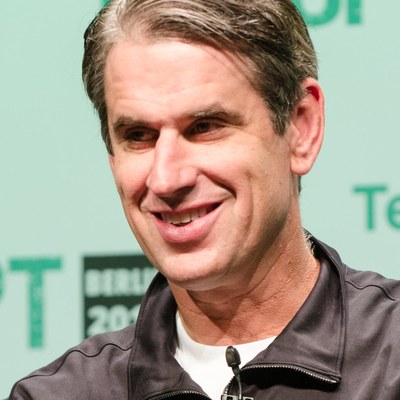 Bill Gurley
10
29 Apr 2013 – 21 Jul 2026
-3454 d
Bill Gurley
10
29 Apr 2013 – 21 Jul 2026
-3454 d
-
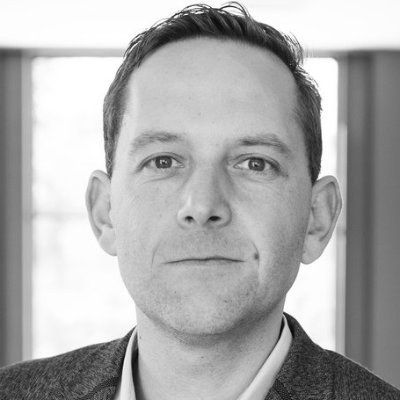 David Friedberg
6
21 May 2020 – 12 May 2026
-875 d
David Friedberg
6
21 May 2020 – 12 May 2026
-875 d
-
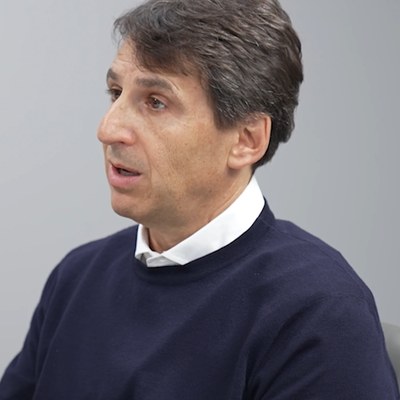 Marc Rowan
1
thin
15 Jul 2021 – 15 Jul 2021
-455 d
Marc Rowan
1
thin
15 Jul 2021 – 15 Jul 2021
-455 d
-
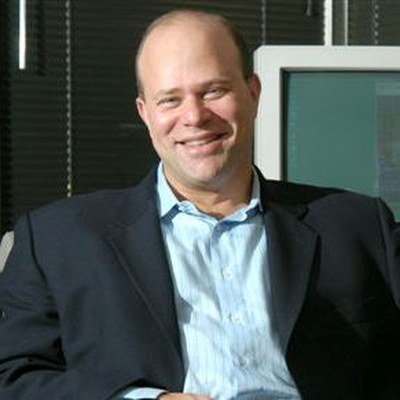 David Tepper
2
thin
13 Oct 2022 – 6 Feb 2026
+0 d
David Tepper
2
thin
13 Oct 2022 – 6 Feb 2026
+0 d
-
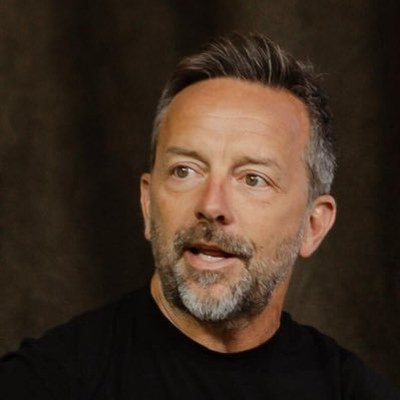 Brad Gerstner
1
thin
28 Sep 2023 – 28 Sep 2023
+350 d
Brad Gerstner
1
thin
28 Sep 2023 – 28 Sep 2023
+350 d
- Dylan Patel 3 thin 18 Sep 2025 – 5 Feb 2026 +1071 d
-
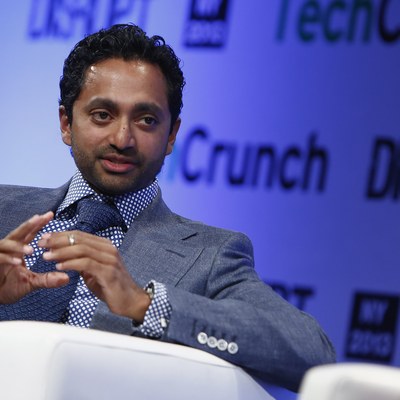 Chamath Palihapitiya
3
thin
13 Dec 2025 – 19 Jun 2026
+1157 d
Chamath Palihapitiya
3
thin
13 Dec 2025 – 19 Jun 2026
+1157 d
-
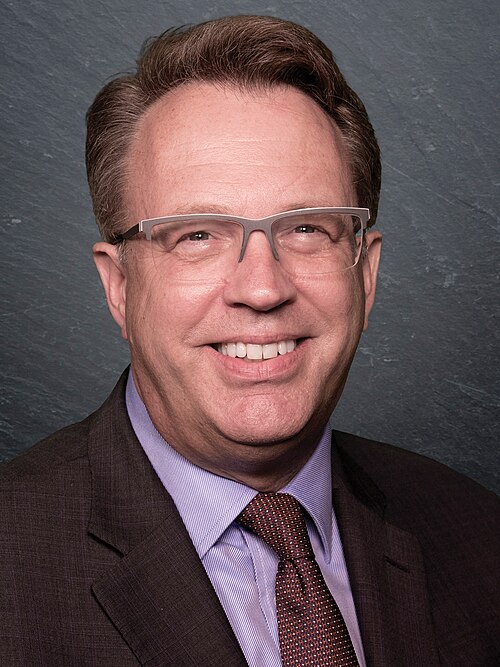 John Williams
2
thin
John Williams
2
thin
The chronologysourced and dated, oldest first
-
-
Bill Gurley
Gurley says Wall Street's anti-loyal mentality focused on cash over equity hurts startup culture in New York.
“I formerly worked on Wall Street years ago and I think the Wall Street mentality is still prevalent in different places. And I consider that a very anti loyal mentality.”
-
Bill Gurley
Gurley says Wall Street's anti-loyalty mentality focused on cash over equity hurts New York startups.
“And I consider that a very anti loyal mentality. People just trade firms constantly and they're really into cash comp and they don't think about equity.”
-
-
-
David Friedberg
Friedberg argues US lockdowns failed because Americans refused to comply unlike China, wanting freedom and social interaction.
“It's so draconian. We're going to shut down the world. And this thing is going to get stopped in thirty days like happened in China.”
-
-
-
Marc Rowan
Rowan says Apollo aims to be the best place to be a partner in financial services industry.
“Team, the articulation I've given internally is we are striving to be the best place to be a partner in the financial services industry bar none.”
-
-
-
David Tepper
Tepper says the Panthers have never had two consecutive winning seasons or a real winning culture.
“This team has never had two winning seasons. So I don't really think it ever had a real culture of winning.”
-
-
-
Brad Gerstner
Gerstner argues Google's culture evolved from product-led growth to a research institution.
“the culture at Google had evolved in such a way that it had become more of a research institution than a product led growth institution.”
-
-
-
Bill Gurley
Gurley argues Google lacks the internal culture to partner in win-win ways due to their cage-match business model.
“In addition to everything I brought up, because their core business model is to throw their customers in a cage match, they don't they don't have the culture internally to partner in a friendly win win way.”
-
David Friedberg
Friedberg contrasts 1950s technology optimism with current negative associations toward technological progress.
“Go back to the 1950s. There were all of these crazy posters about humans will go on rockets to the moon and we're all going to live on star bases on the moon.”
-
David Friedberg
Friedberg notes that Disneyland's Tomorrowland in 1955 originally celebrated future technology opportunities optimistically.
“In 1955, Disneyland opened, I've told this story before with this ride called Tomorrowland. This area called Tomorrowland. I mean, you've been there. And every ride there was about the future opportunity with technology.”
-
David Friedberg
Friedberg explains that in the 1970s Disneyland remade Tomorrowland rides to reflect fear of technology going wrong.
“In the nineteen seventies, they started to turn over all the rides in Tomorrowland at Disneyland and every ride got remade as a fear of technology ride.”
-
-
-
David Friedberg
Friedberg envisions artists defining boundaries for AI-generated media while preserving shared cultural experiences.
“the artist that creates the fundamental core of that cultural moment can define what is variable and what is not.”
-
Dylan Patel
Patel describes Anthropic as cult-like with more unified AGI vision and mission focus than OpenAI.
“They are a bit of a cult. Right? They've they believe in the mission much more than any other lab. Not that OpenAI people aren't cultists as well.”
-
Chamath Palihapitiya
Palihapitiya describes his immigrant compact as absorbing American values, constitution knowledge, and cultural heritage celebration.
“I want to know and be able to talk to you about the constitution of this country. I want to be able to celebrate the cultural heritage of this country.”
-
Bill Gurley
Gurley quotes Dan Wong saying America is run by lawyers while China is run by engineers.
“I think Dan Wong does a good job of saying that America is run by lawyers the author of of Breakneck. Our country's run by lawyers and theirs is run by engineers.”
-
-
-
Dylan Patel
Patel says China's entire culture is semiconductor-focused, even appearing in romance dramas.
“I think the entire country is like semiconductor pilled. Mhmm. Right? There are dramas where people fall in love in the fab or dramas where people fall in love and they're photovoltaic,”
-
Dylan Patel
Patel says China's entire culture is semiconductor pilled with romance dramas set in fabs and solar research.
“There are dramas where people fall in love in the fab or dramas where people fall in love and they're photovoltaic, like, solar cell researchers and engineers.”
-
David Tepper
Tepper expresses confidence in Panthers management team and says the whole building feels better now.
“So, you know, starts there, and I think that, you know, we've done a pretty good job in the draft and stuff like that, and the whole building just feels better.”
-
Chamath Palihapitiya
Palihapitiya predicts autonomous driving will make manual driving as niche as thoroughbred racing is today.
“It will feel like when we look at somebody who really embraces thoroughbred racing, it's just gonna happen in smaller and smaller places and less and less often.”
-
Bill Gurley
Gurley says Nadella diagnosed Microsoft as a know-it-all culture and transformed it into a learn-it-all culture.
“And he said, he told everyone we're gonna change it from a know it all culture to a learn it all culture.”
-
Bill Gurley
Gurley explains Benchmark created an equal partnership structure where all partners earn the same and have equal decision-making power.
“The benchmark guys had lived within those frameworks decided to do something crazy, which was to create an equal partnership where everyone makes the exact same amount of money and everyone has the exact same power within the organization for decision making and there's no leader.”
-
Bill Gurley
Gurley contrasts Silicon Valley's willingness to grant fifteen-minute meetings with other regions.
“I've never, I was always so surprised at how quickly people would take a fifteen minute meeting at Silicon Valley, like just compared to maybe some other places.”
-
David Friedberg
Friedberg argues Silicon Valley companies suffer from oversocialization, replicating each other's operating models.
“I just feel like Silicon Valley, a lot of companies replicate each other. You have to kind of there's this term that's being used a lot now over socialization.”
-
Bill Gurley
Gurley says most Silicon Valley people have innate FOMO about new technology, installing tools immediately out of competitive fear.
“most people that live in Silicon Valley just have this innate FOMO built into them about what's next.”
-
Chamath Palihapitiya
Palihapitiya says Silicon Valley has decayed from humble misfits building important things in 2001 to less serious endeavors.
“We built important things. Then we veered away from that, and we started building less important things.”
-
Bill Gurley
Gurley finds Chinese entrepreneurs have the most cultural affinity with American entrepreneurs globally.
“of all the places I've visited around the world, the one place where I find the most cultural affinity between entrepreneurs, between American entrepreneurs and some foreign entrepreneurs, China. Like, the most like mindedness.”
-
Bill Gurley
Gurley says Chinese entrepreneurs have greatest cultural affinity with American entrepreneurs globally based on social interactions.
“the one place where I find the most cultural affinity between entrepreneurs, between American entrepreneurs and some foreign entrepreneurs, China. Like, the most like mindedness.”
-
-
-
John Williams
Williams defines culture as an operational asset and backup system for judgment when data or models fail.
“Culture is not “soft,” or secondary. Culture is an operational asset. It is a form of resiliency, a non-technical redundancy, a backup system for judgment when data is incomplete, or the model is misleading.”
-
John Williams
Williams asserts culture is an operational asset and form of resiliency, not soft or secondary.
“Culture is not “soft,” or secondary. Culture is an operational asset. It is a form of resiliency, a non-technical redundancy, a backup system for judgment”
-
Where they overlapsame programme, same subject
- All-In Podcast also carries Chamath Palihapitiya and David Friedberg on this subject, at different times.