Who is on this subjectordered by the date of their first quote here
2 of 3 lanes rest on fewer than 5 quotes and are marked thin. Offsets are days from the middle first-quote date, 26 Jan 2023 — a date, and nothing else. It is not a claim about who reached a view first.
-
 Howard Marks
8
14 Jan 2019 – 26 May 2026
-1473 d
Howard Marks
8
14 Jan 2019 – 26 May 2026
-1473 d
-
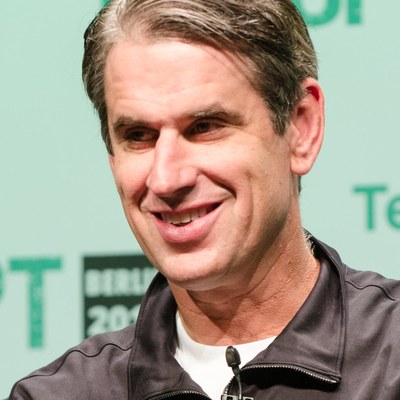 Bill Gurley
2
thin
26 Jan 2023 – 23 Apr 2024
+0 d
Bill Gurley
2
thin
26 Jan 2023 – 23 Apr 2024
+0 d
-
 David Friedberg
1
thin
4 Jun 2024 – 4 Jun 2024
+495 d
David Friedberg
1
thin
4 Jun 2024 – 4 Jun 2024
+495 d
The chronologysourced and dated, oldest first
-
-
Howard Marks
Marks identifies it's different this time as the four worst words in the world for investors.
“If you say to them, you know, well that happened twenty and forty years ago and it ended badly, what they say is they use the four worst words in the world.”
-
Howard Marks
Marks identifies too much money chasing too few deals as the seven worst words in investing.
“Now remember, the four worst words in the world were, it's different this time, the seven worst words in the world are too much money chasing too few deals.”
-
-
-
Bill Gurley
Gurley says profitable companies at IPO dropped from 90% in downturns to 5% by 2020-2021.
“Right? And so in really dark times, the percentage of companies IPOing their profitable is like 90. But by 2020, 2021, that number is 5%.”
-
-
-
Bill Gurley
Gurley says venture industry is structurally flawed on cyclicality and fixing it requires rewriting standard LP agreements.
“You'd have to rewrite the standard GPLP agreement, I think. I'll spend more time thinking about that later, but it is structurally flawed, I think, from a cyclicality standpoint.”
-
David Friedberg
Friedberg argues ag tech's seasonal cycles fundamentally differ from enterprise software, causing multi-year return delays that frustrated investors.
“In ag tech, you have seasonal cycles that you're kind of stuck to, so you don't get the results for a while.”
-
-
-
Howard Marks
Marks says investor psychology swings from flawless to hopeless while reality fluctuates more moderately.
“in real life things fluctuate between pretty good and not so hot but in the minds of investors, they go from flawless to hopeless.”
-
Howard Marks
Marks defines market cycles as excesses and corrections rather than simple ups and downs.
“The way to think of of a pattern of of cycle is excesses and corrections. So so for example, let's look here. What's happening here?”
-
-
-
Howard Marks
Marks reframes economic cycles as excesses and corrections around trend lines rather than simple ups and downs.
“So rather than thinking of cycles as ups and downs, which I think most people do, think of them as excesses and corrections, excesses and corrections.”
-
Howard Marks
Marks reframes cycles not as ups and downs but as excesses and corrections around a trend line.
“So rather than thinking of cycles as ups and downs, which I think most people do, think of them as excesses and corrections, excesses and corrections. Fluctuations around the trend line.”
-
Howard Marks
Marks observes S&P returns almost never fall between eight and twelve percent despite ten percent average.
“And not only is that an interesting phenomenon to think about, but even more so, the fact that the return on the S and P, which averages 10, is almost never between eight and twelve.”
-
Howard Marks
Marks explains that while underlying progress is gradual, prices fluctuate wildly around trend lines due to psychology.
“So the point is that that whereas, the underlying thing progresses gradually, the price fluctuates wildly around that trend line, and the main reason is, the fluctuation of psychology.”
-