Who is on this subjectordered by the date of their first quote here
3 of 5 lanes rest on fewer than 5 quotes and are marked thin. Offsets are days from the middle first-quote date, 10 Sep 2025 — a date, and nothing else. It is not a claim about who reached a view first.
- Dylan Patel 31 2 Feb 2023 – 22 Jul 2026 -951 d
-
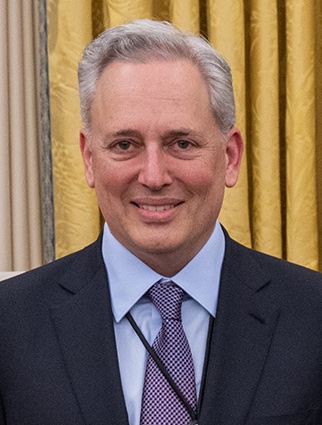 David Sacks
19
31 Jan 2025 – 23 Aug 2026
-222 d
David Sacks
19
31 Jan 2025 – 23 Aug 2026
-222 d
-
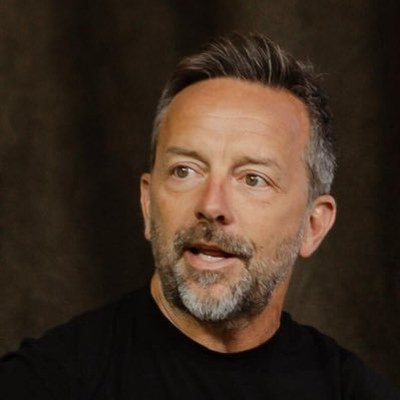 Brad Gerstner
1
thin
10 Sep 2025 – 10 Sep 2025
+0 d
Brad Gerstner
1
thin
10 Sep 2025 – 10 Sep 2025
+0 d
-
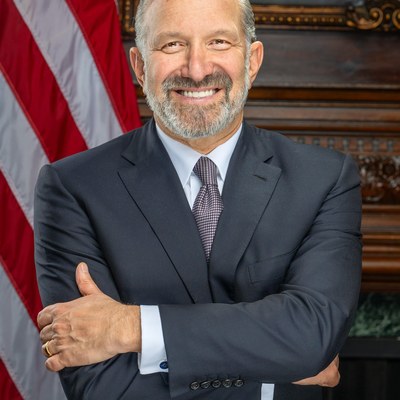 Howard Lutnick
3
thin
1 Oct 2025 – 1 Oct 2025
+21 d
Howard Lutnick
3
thin
1 Oct 2025 – 1 Oct 2025
+21 d
-
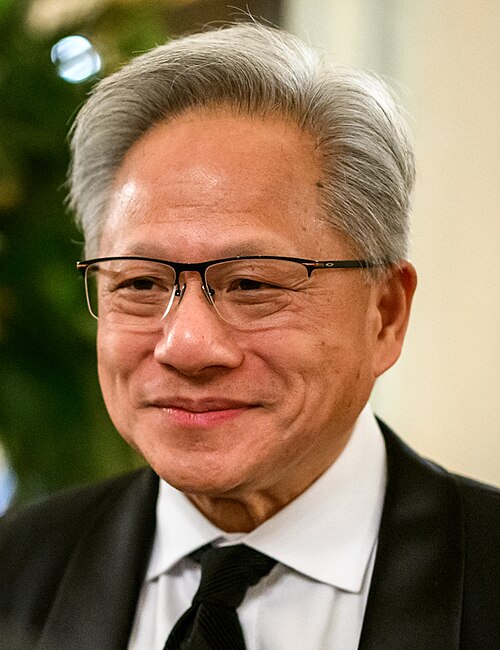 Jensen Huang
1
thin
16 Jun 2026 – 16 Jun 2026
+279 d
Jensen Huang
1
thin
16 Jun 2026 – 16 Jun 2026
+279 d
The chronologysourced and dated, oldest first
-
-
Dylan Patel
Patel explains China can only buy A100-level GPUs from NVIDIA due to export controls, not H100s.
“Well, so NVIDIA made a special version of their a 100 GPU that can ship to China, and so that's that's pretty much it.”
-
Dylan Patel
Patel argues export restrictions clearly failed because China manufactured advanced Huawei chip demonstrating broader capabilities.
“The export restrictions have clearly failed because China is still able to manufacture. And what's surprising about the chip that Huawei did is, you know, it's a phone chip.”
-
Dylan Patel
Patel notes the unrestricted 1980i tool continues receiving upgrades through 2023, creating a regulatory loophole.
“But remember the 1980i has continued to be upgraded and there's an upgraded version in 2023, right? And that tool, sort of the line is in between those tool, right?”
-
Dylan Patel
Patel argues the unrestricted 1980i tool can reach five nanometer with only modest cost increases on total chip economics.
“And many folks including, not just myself, but many folks in the industry as well think that the 1980i could be used for five nanometer, right?”
-
-
-
Dylan Patel
Patel says China still receives over a million NVIDIA H20 GPUs annually despite October sanctions.
“Right? Because you have you have sanctions on how many NVIDIA GPUs you can get in. Now, they're still north of a million a year.”
-
Dylan Patel
Patel argues US cannot effectively sanction advanced packaging because the largest company relocated to Singapore from Hong Kong.
“where The US can control China. Right? So advanced packaging capacity is kind of a shot because the vast the the largest advanced packaging company in the world was Hong Kong headquartered.”
-
Dylan Patel
Patel asserts chip export controls to China are working effectively despite smuggling through third countries.
“The chip side of things is actually being controlled quite effectively, I think. Right? Like, yes, there is, like, shipping GPUs through Singapore and Malaysia and and other countries in Asia to China.”
-
Dylan Patel
Patel argues US export controls are counterproductive because China can now build better chips domestically than what's allowed for export.
“They can build better chips in China, then we restrict them in terms of chips that NVIDIA or AMD or an Intel can sell to China.”
-
Dylan Patel
Patel argues current export controls are flawed because China can build better chips domestically than what West can sell them.
“the equipment that is shipped can be used to build chips that are better than what the Western companies can actually ship them. John, Dylan seems to think the”
-
-
-
Dylan Patel
Patel says Malaysia will add three gigawatts of data center capacity by 2027, mostly Chinese companies claiming to be Singaporean.
“Malaysia from 2024 to 2027, not the country itself, but companies operating there, mostly Chinese companies, many of them claiming they're now Singaporean companies. Right?”
-
Dylan Patel
Patel says Chinese data center operators are relocating to Singapore to circumvent US export controls while building in Malaysia.
“Right? Like, the largest operator in China of data centers in China, GDS, moved to Singapore and says they're Singaporean now.”
-
Dylan Patel
Patel says Chinese data center companies are building three gigawatts in Malaysia by 2027, claiming Singaporean status.
“Like, the largest operator in China of data centers in China, GDS, moved to Singapore and says they're Singaporean now. It's like but now they're these companies are building three gigawatts of data center capacity.”
-
Dylan Patel
Patel reveals Oracle planned 20 percent of capacity in Malaysia, now blocked by seven percent rule.
“Oracle was planning to have, like, 20% of their capacity in Malaysia. So now it's like, what do I do with these data centers that I was gonna build?”
-
Dylan Patel
Patel explains the 7% rule limits non-US data centers, benefiting only Microsoft, Meta, Amazon, and Google.
“So, like, it's, like, Microsoft, Meta, Amazon, Google. Right? These four companies have, you know you know, 70 plus percent of their data center AI data center capacity in The US.”
-
Dylan Patel
Patel reveals each country is capped at 50,000 GPUs for four years while NVIDIA makes 6 million annually.
“There is there is one obvious loophole, which is well, there's, like, strict caps. Right? Like, each country can only buy 50,000 GPUs for the next four years.”
-
Dylan Patel
Patel identifies the 50,000 GPU cap per country as trivial compared to NVIDIA's six million unit annual production.
“Like, each country can only buy 50,000 GPUs for the next four years. And it's like, that's kinda nothing when NVIDIA's making, you know, 6,000,000 plus this year.”
-
David Sacks
Sacks argues the $6 million DeepSeek cost claim compares final training run to fully loaded US company costs.
“I mean, if you were to make the apples to apples comparison, you would need to compare the final training run cost by DeepSeek to that of OpenAI or Anthropic.”
-
David Sacks
Sacks cites analyst estimate that DeepSeek has about 50,000 Hopper GPUs including 10,000 H100s.
“Dylan Patel, who's leading semiconductor analyst, has estimated that DeepSeac has about 50,000 hoppers. And specifically, he said they have about 10,000 h one hundreds,”
-
Dylan Patel
Patel argues export controls primarily limit AI inference deployment in China, not frontier model training capabilities.
“A large part of export controls, if they work, is just that the amount of AI that can be run-in China is going to be much lower.”
-
Dylan Patel
Patel argues export controls primarily limit AI inference deployment in China, not frontier model training capabilities.
“A large part of export controls, if they work, is just that the amount of AI that can be run-in China is going to be much lower.”
-
Dylan Patel
Patel argues export controls aim to limit AI usage scale in China, not prevent AGI development.
“And I think that is a much easier goal to achieve than trying to debate on what AGI is.”
-
Dylan Patel
Patel reports ASML had 45% of equipment and more of revenue from China despite export controls.
“On equipment though, last year ASML, many quarters they've had 45% of their equipment and even more of their revenue come from China.”
-
Dylan Patel
Patel reports ASML had 45% of equipment and more of revenue from China despite export controls.
“On equipment though, last year ASML, many quarters they've had 45% of their equipment and even more of their revenue come from China. And likewise for ASML, Lam Research and all these companies, right?”
-
Dylan Patel
Patel says China imported one million H20 GPUs in recent quarters, enough to build largest cluster.
“This is more than enough if they even took 30 of it, concentrated it, to be a bigger cluster than any American company has.”
-
“But, like, you know, can you give them no GPUs? No. They're gonna retaliate. Like, there is a middle ground, and, like, Huawei is eventually going to have a lot of production capacity,”
-
Brad Gerstner
Gerstner warns that requiring AI companies to get Washington approval for foreign launches would prevent American technology dominance.
“Imagine in 2001, 2002, if we had said to Google, You can't launch in any other country unless you come to Washington and beg for a license to launch in any other country.”
-
Dylan Patel
Patel says Huawei trained significant models on Ascend chips before 2020 Trump ban took full effect.
“The the full ban. And so they were only able to make a small volume of these chips, but they had trained significant models on these chips that they made then.”
-
Dylan Patel
Patel reveals Huawei acquired nearly 3 million chips from TSMC through shell companies resulting in billion-dollar TSMC fine.
“But they were able to acquire 3,000,000 chips, 2,900,000 chips from TSMC through these other entities. Right?”
-
Dylan Patel
Patel reports Huawei acquired 2.9 million chips worth $500 million from TSMC through shell companies before getting caught.
“they were able to acquire 3,000,000 chips, 2,900,000 chips from TSMC through these other entities. Right?”
-
Dylan Patel
Patel estimates NVIDIA had north of $20 billion in China H20 revenue that had to be written off after ban.
“Our our revenue estimate for NVIDIA in China for just h 20 was north of 20,000,000,000 because that's what they were booking in capacity slash had to write off.”
-
Dylan Patel
Patel says China increased lithography imports to 40% of equipment spending to stockpile before bans took effect.
“They were importing lithography at a much higher rate than that. Right? Like, 40% of their equipment imports were lithography, and they were stockpiling lithography equipment.”
-
“the Commerce Department has the most tools, right? It has BIS, right? BIS, the Bureau of Industry and Security, Export controls, two thirty two tariffs, that's the auto tariffs, the pharmaceutical tariffs, the semiconductor tariffs, All steel and aluminum, these, and these are not part of the Supreme Court case. They are not. These are durable, defensible.”
-
Howard Lutnick
Lutnick explains Commerce Department controls export controls and 232 tariffs on autos, pharmaceuticals, and semiconductors.
“It has BIS, right? BIS, the Bureau of Industry and Security, Export controls, two thirty two tariffs, that's the auto tariffs, the pharmaceutical tariffs, the semiconductor tariffs,”
-
Howard Lutnick
Lutnick explains Commerce Department controls 232 tariffs on autos, pharmaceuticals, semiconductors, steel and aluminum through BIS and export controls.
“BIS, the Bureau of Industry and Security, Export controls, two thirty two tariffs, that's the auto tariffs, the pharmaceutical tariffs, the semiconductor tariffs, All steel and aluminum,”
-
David Sacks
Sacks argues selling some chips to China takes market share from Huawei, preventing its dominance.
“And what Huawei wants is for all American chips to be banned in China so they can dominate that huge market for themselves.”
-
David Sacks
Sacks criticizes restrictions on UAE chip sales, saying they push American allies toward China.
“They just want to be partners with The United States, and yet we've put all sorts of restrictions on their ability to do business with us.”
-
David Sacks
Sacks frames data center decision as binary: countries will choose American or Chinese technology.
“Every sovereign country that can afford them is gonna have data centers. Is that gonna be American technology or Chinese technology?”
-
David Sacks
Sacks says October 2023 restrictions assumed US semiconductor monopoly justified any export controls.
“We were the only ones who could really make advanced semiconductor, so therefore, we could impose whatever restrictions we Nobody would have a choice.”
-
David Sacks
Sacks reveals NYT fact-check alleged he heard chip export arguments at a dinner with Jensen Huang that never happened.
“During the dinner, Sachs heard a convincing counterargument that selling American chips to rivals, including China, will get those nations hooked on US tech.”
-
“I just saw an article that said that China was rejecting the h 200, so apparently, they don't want them.”
-
David Sacks
Sacks states the administration views H200 as no longer leading edge but a previous generation chip.
“And I think the the administration's view is that, the h 200 was once a leading chip couple years ago. It is no longer on the leading edge. It's a previous generation chip.”
-
“And it's sort of the perfect export control because there's only one company that makes these machines.”
-
-
-
“You know, if we look around the world in five years and we see that American companies, American technology has say 80% market share, it means we did a good job.”
-
Dylan Patel
Patel explains TSMC must follow US export restrictions regardless of Taiwan's government due to banking and equipment dependencies.
“The way American export restrictions are upheld is that Taiwan utilizes American banking systems, American equipment industries. And so they'll still have to uphold any US export restrictions.”
-
Dylan Patel
Patel says NVIDIA has locked up over 60% of supply chain capacity this year in long-term contracts.
“The NVIDIA has locked up over 60% of the capacity this year in long term contracts alone, and they're buying more on top of that.”
-
David Sacks
Sacks argues American tech stack becoming global standard benefits US economically and for national security.
“You want the American tech stack to become the global standard. That's good for us economically. I think it's also good in terms of national security and spreading our influence.”
-
Jensen Huang
Huang argues national security, technology leadership, and economic prosperity are not mutually exclusive.
“You could have national security, you have technology leadership, and you could have economic prosper ity all at the same time.”
-
David Sacks
Sacks asserts Chinese GLM model now matches currently available OpenAI and Anthropic models in capability.
“So we now have a Chinese open weight model that is as good as the currently available models from OpenAI and Anthropic.”
-
David Sacks
Sacks explains export control letter required three conditions including Dario calling model cyber weapon and Amazon reporting failed guardrails.
“Number two is you have a trusted partner of Anthropic, which is Amazon, which did its testing of Fable, which was Mythos with guardrails, and they reported that the guardrails failed.”
-
Dylan Patel
Patel reports both US and Chinese governments unhappy about Chinese open-source models benefiting American companies more than Chinese ones.
“There have been reports in China about the Chinese government not so happy that American companies are profiting more from Chinese open source models than Chinese companies are.”
-
David Sacks
Sacks says Dario argued for US data centers to create thousands of Nobel Prize-level AI scientist agents.
“Dario actually made this argument in the context of trying to ban export of chips.”
-
David Sacks
Sacks recounts Dario's argument that having thousands of AI agents versus China's dozens would ensure US dominance.
“And if we have thousands or millions of those and China has only dozens or a 100, whatever, then we're going to win everything.”
-
David Sacks
Sacks argues current policies ban the very data centers Dario advocated for and restrict chip sales to allies.
“But now we're basically banning the data centers. We're not gonna have those data centers full of geniuses. And he's done his best to restrict sale of chips to our allies as well.”
-
David Sacks
Sacks says chip export restrictions to allies also prevent their data center development.
“We're not gonna have those data centers full of geniuses. And he's done his best to restrict sale of chips to our allies as well.”
-
David Sacks
Sacks says restricting allies from data centers means the US is shooting itself in the foot.
“So I guess our allies aren't gonna have the data centers either. So we are totally shooting ourselves in the foot.”
-
Where they overlapsame programme, same subject
- CNBC Television also carries David Sacks and Dylan Patel on this subject, at different times.