Who is on this subjectordered by the date of their first quote here
3 of 6 lanes rest on fewer than 5 quotes and are marked thin. Offsets are days from the middle first-quote date, 23 Jun 2020 — a date, and nothing else. It is not a claim about who reached a view first.
-
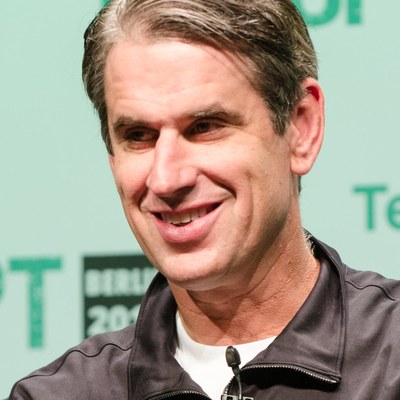 Bill Gurley
22
2 Jul 2019 – 11 May 2026
-357 d
Bill Gurley
22
2 Jul 2019 – 11 May 2026
-357 d
-
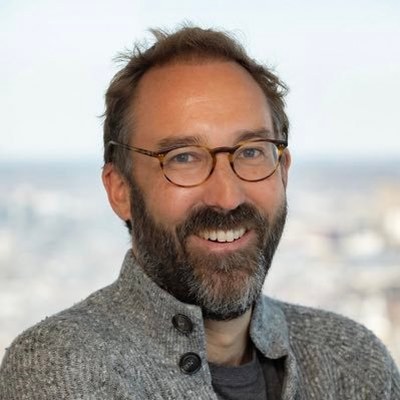 Gavin Baker
3
thin
26 Nov 2019 – 25 Jan 2022
-210 d
Gavin Baker
3
thin
26 Nov 2019 – 25 Jan 2022
-210 d
-
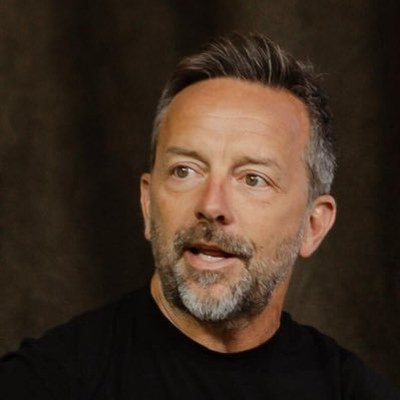 Brad Gerstner
7
23 Jun 2020 – 5 Feb 2025
+0 d
Brad Gerstner
7
23 Jun 2020 – 5 Feb 2025
+0 d
-
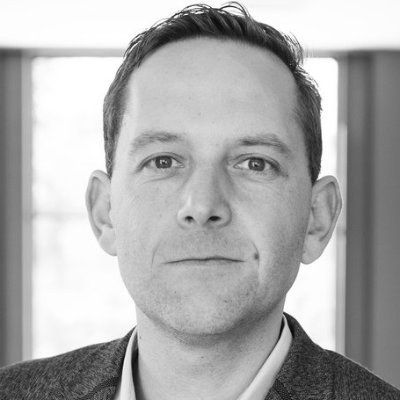 David Friedberg
4
thin
19 Sep 2020 – 11 Sep 2025
+88 d
David Friedberg
4
thin
19 Sep 2020 – 11 Sep 2025
+88 d
-
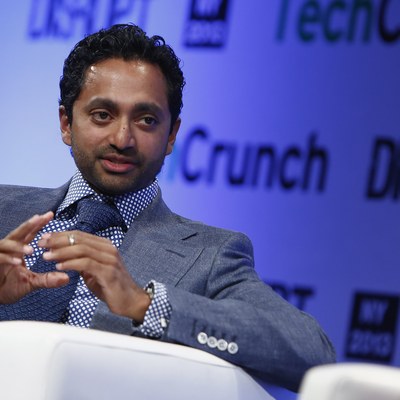 Chamath Palihapitiya
7
13 Dec 2025 – 7 Jul 2026
+1999 d
Chamath Palihapitiya
7
13 Dec 2025 – 7 Jul 2026
+1999 d
-
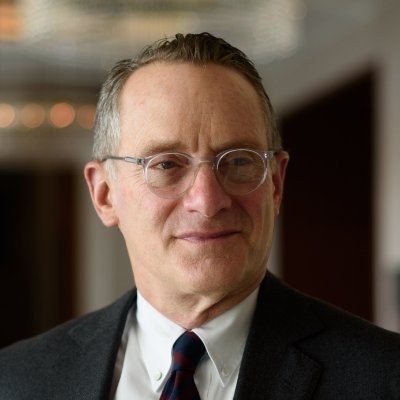 Howard Marks
3
thin
4 May 2026 – 12 Jun 2026
+2141 d
Howard Marks
3
thin
4 May 2026 – 12 Jun 2026
+2141 d
The chronologysourced and dated, oldest first
-
-
Bill Gurley
Gurley criticizes VCs who think cheap capital enables them to pursue low-return businesses in new industries.
“But I overheard a VC on a panel say that now that capital's become so cheap, we as venture capitalists get to go after all these new industries.”
-
Bill Gurley
Gurley argues that VCs using cheap capital to enter new industries are actually funding low-return businesses.
“I overheard a VC on a panel say that now that capital's become so cheap, we as venture capitalists get to go after all these new industries.”
-
Gavin Baker
Baker recounts how Sunu Kalra's simple iPod vs Walkman comparison gave him conviction to hold Apple long-term.
“And as soon as I heard that, it's like, wow. It really doesn't matter. Apple went on to be seven x, 10 x, 15 x from there.”
-
-
-
Brad Gerstner
Gerstner warns his team that being too early on investments is as dangerous as being too late.
“When we think about the future we're always paying attention you know one thing that I would say is I remind my team it's just as dangerous to be too early as it is to be too late.”
-
Brad Gerstner
Gerstner warns his team that being too early on a trend is as dangerous as being too late.
“And I was talking of I was worried about the future of search and the future of vertical search starting in 2010,”
-
David Friedberg
Friedberg admits he was wrong betting against vegetarian meat alternatives, shocked consumers pay premiums for sustainability.
“I've been fucking shocked by how many people are choosing to pay a premium for vegetarian meat alternatives. I was wrong on this. I I bet against these companies eight years ago.”
-
-
-
Bill Gurley
Gurley argues Robinhood is glorifying speculation rather than democratizing investing.
“And so what what Robinhood's really doing, I think, is kinda glorifying speculation. They're not they're not democratizing investing.”
-
Brad Gerstner
Gerstner calls access to top tech companies the most asymmetric bet in investing history.
“The the the most asymmetric bet maybe in the history of all of investing is having a golden ticket to have access to the best technology companies in the world today.”
-
Bill Gurley
Gurley reveals personal position in Ethereum after studying crypto, says Ethereum crowd more pragmatic than Bitcoin.
“We are in chain analysis, which you referenced. And I'm swayed by the Ethereum crowd. The parties that are involved there seem to be way more pragmatic.”
-
-
-
Gavin Baker
Baker says the key trait for public equity investors is the ability to be rational when wrong.
“If I could know one thing about a person to know whether or not they would be a good public equity investor, it would simply be, are you capable of being rational when you're wrong?”
-
Gavin Baker
Baker says great public equity investors are often wrong more than right, with best batting averages around 55%.
“They're wrong more than they're right, but because they make more money when they're right, they still have a great track record.”
-
-
-
Bill Gurley
Gurley says all investors must hold strong opinions loosely because variables constantly change.
“And Yes. I think I think all investors have to work within that framework because things change.”
-
Bill Gurley
Gurley discovered Dell had 20-to-1 ROIC advantage versus competitors using return on invested capital framework.
“It turned out just by happenstance that Dell stood out like a sore thumb with ridiculously high ROIC numbers versus the rest of the industry. Like, night and day, like, 20 to one.”
-
Bill Gurley
Gurley says Dell's return on invested capital was 20 to 1 versus competitors, so extreme Mauboussin didn't believe it.
“Like, night and day, like, 20 to one. Wasn't even close. And in fact, it was so ridiculous. Like, the first time I showed him, he didn't Michael didn't believe it was true.”
-
Bill Gurley
Gurley found Dell's return on invested capital was 20 times higher than competitors, initially unbelievable.
“Like, night and day, like, 20 to one. Wasn't even close. And in fact, it was so ridiculous.”
-
Bill Gurley
Gurley believes Facebook's stock would double if they shut down VR, which costs $5-10 billion annually.
“Wall Street's on my side on this one. I think if they shut down the VR effort, not only will the profitability would soar because they're spending real money, like 5 to 10,000,000,000 a”
-
“I think there's plenty of time. If this is going to be as big and as transformational as humanity as we all think it will be, remember, you didn't have to invest in search until Google's IPO in 2004 to capture 95% of all ever generated by Internet search.”
-
Brad Gerstner
Gerstner reveals Altimeter has passed on 75 AI investment opportunities in the last twelve months.
“Today to me, you know, we've passed on 75 AI businesses over the course of the last twelve months that we've looked at, not because we don't think those are good founders or maybe even good business models,”
-
-
-
Brad Gerstner
Gerstner proposes three investment categories instead of two: venture under $100M revenue, quasi-public over $1B, and public markets.
“One thing that we have done and I've encouraged LPs like endowments to think about is we used to have these two buckets. Right? Venture and public when I talk to technology investors.”
-
Bill Gurley
Gurley argues increasing returns vary in strength, with some linear and some exponential, forming a scale of network effects.
“It's arguable there are levels of increasing returns. Like, you could come up with some kind of scale or index because some of them are more linear and some of them can go exponential.”
-
Bill Gurley
Gurley admits pattern recognition led VCs to miss HubSpot, Shopify, and Twilio due to anti-small-business bias from Intuit precedent.
“And so you develop this anti small business mindset, which keeps you out of HubSpot and Shopify and Twilio. Then miss massive amounts.”
-
-
-
Brad Gerstner
Gerstner contrasts buying NVIDIA in fall 2022 based purely on tech fundamentals versus today's layered policy risks.
“What do I do as an investor? You know, what did I do in the fall of twenty two that led me into NVIDIA in the first place?”
-
David Friedberg
Friedberg argues ag tech delivers real innovation and value despite poor VC returns in the sector.
“But that doesn't mean that ag tech isn't innovating and that we aren't improving productivity and bringing value to farmers and improving the quality of our food systems.”
-
David Friedberg
Friedberg explains ag tech sales cycles are fundamentally longer than enterprise software due to seasonal farming windows.
“You know, you get to keep your sales cycle going all the time. In ag tech, you have seasonal cycles that you're kind of stuck to.”
-
David Friedberg
Friedberg argues ag tech delivers real innovation and farmer value despite poor VC returns in the sector.
“But that doesn't mean that ag tech isn't innovating, and that we aren't improving productivity and bringing value to farmers and improving the quality of our food systems.”
-
Chamath Palihapitiya
Palihapitiya argues hundred-billion-dollar deals signal past value while billion-dollar deals indicate future potential.
“$100,000,000,000 deals are typically about things in the past. What is the future? Billion dollar deals.”
-
Bill Gurley
Gurley warns retail investors that 100x AI returns already happened; current odds are very low.
“And that's not to say there won't be an incremental AI investment that makes money, I think there will. But your odds right now of that being the case are really, really low.”
-
-
-
Chamath Palihapitiya
Palihapitiya predicts utilities will be the biggest short trade if homeowners become their own power sources.
“I think the single biggest dollar short, it's not clear when, that one will be able to make will be on these utilities.”
-
Chamath Palihapitiya
Palihapitiya predicts a silicon renaissance where small teams building decode silicon will make fortunes over 10-20 years.
“If you look at the Trail of Breadcrumbs, my belief, there's gonna be a renaissance in silicon. Young, small teams building decode silicon can make a fortune over the next ten to twenty years.”
-
Bill Gurley
Gurley quotes Bezos saying he only invests when founders will pursue their vision regardless of funding.
“I only look for one thing. I want to know that this person's gonna go do this thing come hell or high water, whether I invest or not.”
-
Chamath Palihapitiya
Palihapitiya says visceral negative reactions from others about investments are the best signal of asymmetric outcomes.
“My best friends were up in arms. My wife at the time up in arms. Why are you doing this? This makes no sense.”
-
Chamath Palihapitiya
Palihapitiya says he lost $4 to $5 billion during the SPAC phase.
“Right before the SPAC phase. The SPAC phase, I torched like 4 or $5,000,000,000. That was brutal. But before that, I had another drawdown.”
-
Bill Gurley
Gurley used return on invested capital analysis to identify Dell's ten to one advantage despite street hatred.
“Their laptop had caught on fire, and they had this option hedging strategy gone awry Uh-huh. That they had to do mea culpa to the street.”
-
Bill Gurley
Gurley emphasizes the person matters more than the concept, citing founders who pivoted 180 degrees.
“And we've seen incredible businesses be built by great founders who have pivoted a 180 degrees from the original idea.”
-
Bill Gurley
Gurley found Dell trading at six times earnings after laptop fire and option hedging problems.
“It was trading at six times earnings. Their laptop had caught on fire, and they had this option hedging strategy gone awry Uh-huh.”
-
Bill Gurley
Gurley says venture capital requires breaking your own rules or you'll say no to everything.
“venture capital is a game where you have to one of the reasons, group decision making works so well is you're you're gonna have to break one of your rules or you're gonna say no to everything.”
-
Bill Gurley
Gurley asked Bezos how he made successful angel investments while running Amazon, learning his one criterion.
“have that? I'll give you a few. And the first one I borrowed from Jeff Bezos.”
-
Bill Gurley
Gurley says Bezos only looks for one thing in founders: determinism that they'll succeed regardless of his involvement.
“Because it's not like he's got a lot of free time. He said, I only look for one thing, the determinism of the founder.”
-
Bill Gurley
Gurley quotes Bezos saying he only looks for determinism in founders who will succeed regardless of investment.
“He said, I wanna believe this person's gonna go do this, come hell or high water, whether I get involved or not, nothing's gonna stop him. And that's the trade he's looking for.”
-
Chamath Palihapitiya
Palihapitiya suggests investing in companies receiving the trillion dollars annually spent by hyperscalers, claiming they are underpriced.
“Like, a trillion dollars a year going out of the hyperscalers. Where is it going? Just follow those dollars and buy those companies because those companies are already underpriced.”
-
Howard Marks
Marks argues ego causes investors to stick with past approaches, but continuous change is necessary.
“I would imagine, tend to make somebody say, I've always done it this way, it's worked in the past, I'm an enormous success, you know, I'm worth this much money, so why should I change my approach? But you have to keep changing.”
-
Bill Gurley
Gurley explains venture capitalists live in fear of missing the one or two asymmetric deals each year.
“Once again, because of this asymmetric outcome thing, live in fear of missing this one or two deals a year. There's like, how could you possibly minimize the chance of not finding that?”
-
Bill Gurley
Gurley cites Uber shifting from burning $2B yearly to generating $10B in free cash flow through unit economics understanding.
“I mean, Uber was burning 2,000,000,000 a year and Dara had 10,000,000,000 in free cash flow last year. Being able to make that shift, it's gonna require an innate understanding of your true unit economics.”
-
Howard Marks
Marks calls AI the hardest thing he has ever seen in investing due to enormous uncertainty.
“This is the hardest thing I think I've ever seen in the investment world because of this enormous degree of uncertainty.”
-
Howard Marks
Marks outlines four ways to achieve superior returns: buying below value, financial structure, adding operational value, and premium valuations.
“You apply the right financial structure, which also which often means leverage, you add value intrinsically to the operation, and you see it go to a premium valuation relative to what you pay.”
-
Chamath Palihapitiya
Palihapitiya cites Michael Dell going public at $85M valuation as example of democratized access to operating genius.
“What that allowed is any man, woman, and child, man or woman, any American, most important to actually access a share of Michael Dell's operating genius.”
-
Where they overlapsame programme, same subject
- Invest Like the Best also carries Bill Gurley, Brad Gerstner and Gavin Baker on this subject, at different times.
- All-In Podcast also carries Brad Gerstner and Chamath Palihapitiya on this subject, at different times.
- Nikhil Kamath also carries Chamath Palihapitiya and Howard Marks on this subject, at different times.