Who is on this subjectordered by the date of their first quote here
4 of 9 lanes rest on fewer than 5 quotes and are marked thin. Offsets are days from the middle first-quote date, 20 Jun 2025 — a date, and nothing else. It is not a claim about who reached a view first.
-
 David Friedberg
5
29 Sep 2022 – 22 May 2025
-995 d
David Friedberg
5
29 Sep 2022 – 22 May 2025
-995 d
- Stanley Druckenmiller 1 thin 7 Jun 2023 – 7 Jun 2023 -744 d
-
 Brad Gerstner
9
25 Oct 2023 – 20 Jun 2025
-604 d
Brad Gerstner
9
25 Oct 2023 – 20 Jun 2025
-604 d
-
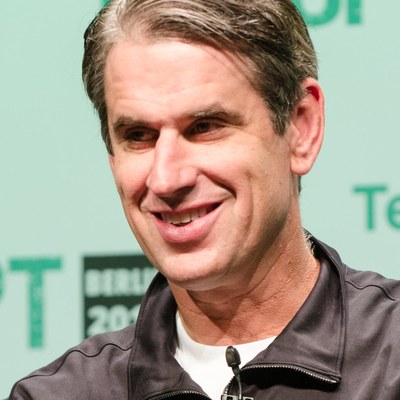 Bill Gurley
6
20 Jun 2025 – 15 Jul 2026
+0 d
Bill Gurley
6
20 Jun 2025 – 15 Jul 2026
+0 d
-
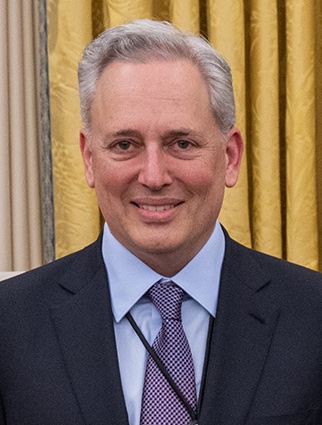 David Sacks
2
thin
19 Dec 2025 – 10 Jan 2026
+182 d
David Sacks
2
thin
19 Dec 2025 – 10 Jan 2026
+182 d
-
 Howard Marks
3
thin
21 Feb 2026 – 21 Feb 2026
+246 d
Howard Marks
3
thin
21 Feb 2026 – 21 Feb 2026
+246 d
- Dylan Patel 7 9 Mar 2026 – 22 Jul 2026 +262 d
-
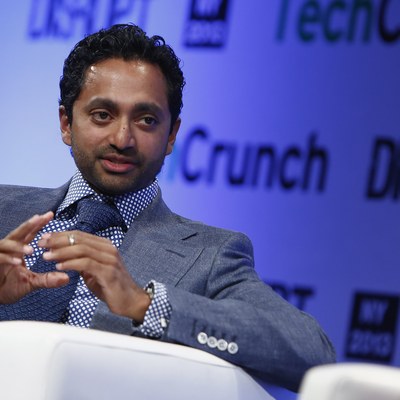 Chamath Palihapitiya
1
thin
29 May 2026 – 29 May 2026
+343 d
Chamath Palihapitiya
1
thin
29 May 2026 – 29 May 2026
+343 d
-
 John Williams
5
John Williams
5
The chronologysourced and dated, oldest first
-
-
David Friedberg
Friedberg argues sustainability should focus on enabling vastly increased consumption through productivity gains, not consumption reduction.
“our objective shouldn't be about in sustainability, shouldn't be about, hey, can we get people to consume less? It should be, can we get people to consume more?”
-
-
-
Stanley Druckenmiller
Druckenmiller says AI is making top coders seven to eight times more productive than five months ago.
“it's already making the top coders seven to eight times, seven to eight times more productive than they were five months ago.”
-
Brad Gerstner
Gerstner cites Amazon CodeWhisperer reporting 56% increase in engineering productivity from AI coding tools.
“I think Amazon CodeWhisperer, so this is a cogeneration copilot Mhmm. Is reporting that they've seen 56% increase in engineering productivity”
-
Brad Gerstner
Gerstner claims AI delivers 30 to 50 percent productivity gains to engineers, unprecedented in technology history.
“If you think about what AI is already doing for the enterprise, we're seeing 30 to 50% productivity improvements in engineers. There's never been a technology history of technology.”
-
Brad Gerstner
Gerstner conducted search experiment with Paul Reeder showing ChatGPT delivered answer instantly versus three to four minutes on Google.
“I said to Paul, you use Google and I'll use ChatGPT. I got the answer instantaneously. It took him three or four minutes of hunting and pecking around.”
-
-
-
Brad Gerstner
Gerstner claims AI will be bigger than the Internet in economic productivity impact despite near-term disillusionment ahead.
“But my my sense here is, you know, and I've said the AI is gonna be bigger than the Internet itself in terms of impact on economic productivity.”
-
Brad Gerstner
Gerstner believes AI will have a bigger impact on economic productivity than the internet itself.
“my sense here is, you know, and I've said the AI is gonna be bigger than the Internet itself in terms of impact on economic productivity.”
-
David Friedberg
Friedberg predicts the world will be surprised by ag and food productivity acceleration in the next ten years.
“I think the world will be surprised by how much we see acceleration and advancement in productivity in ag and food systems in the next ten years.”
-
David Friedberg
Friedberg predicts the world will be surprised by acceleration in agricultural productivity over the next decade.
“I think the world will be surprised by how much we see acceleration and advancement in productivity in ag and food systems in the next ten years.”
-
David Friedberg
Friedberg says turning genes on or off can increase farmer yields by 50% per acre, capabilities impossible ten years ago.
“It really is astounding what we can do today that we literally couldn't do ten years ago.”
-
Brad Gerstner
Gerstner says US productivity growth fell from 2.5-3% in 90s to 1.8% in 2000s to slowest ever in last decade.
“if you look at the 90s our productivity growth in The United States was about 2.5% to 3% a year, okay, and then in the 2000s it slowed down to about 1.8% and then the last ten years has been the slowest productivity growth”
-
Brad Gerstner
Jensen believes NVIDIA can triple revenue adding only 25% more humans using 100,000 autonomous agents for software and security.
“he thinks they can three X, you know, the top line of the business while only adding 25% more humans because they can have a 100,000 autonomous agents doing things like building the software, doing the security, and that he becomes really a prompt agent,”
-
Brad Gerstner
Gerstner says Jensen claims NVIDIA can scale business 2-3x while increasing headcount only 20-25% using AI agents
“This idea that Jensen can scale the business two or three times with, you know, increasing the headcount by, you know, 20 or 25%. Right?”
-
-
-
David Friedberg
Friedberg's non-engineer chief of staff used AI to write a Python script in hours to screen hundreds of resumes.
“Laura asked AI to write a Python script for her, to download all the resumes from Greenhouse, scan them, score them, and give her results. She did this all in a couple of hours.”
-
Brad Gerstner
Gerstner calculates that 2.5-3.5% annual productivity growth for a decade could substantially reduce the US debt-to-GDP ratio.
“if productivity for the next decade or so was about two and a half to three and a half percent per year, we could achieve substantial reductions in this key ratio of debt to GDP.”
-
Bill Gurley
Gurley contrasts Google's 187,000 employees with OpenAI's 2,700, noting OpenAI plans to stay under 20,000 using AI agents.
“Google has 187,000 employees, OpenAI 2,700. We're not going to be a company of 20,000 employees. He didn't say we're not going be a company of 187,000 employees, Right?”
-
Bill Gurley
Gurley describes how ChatGPT replaced his multi-step workflow of search, webpage navigation, and calculator use with single prompts.
“I used to do a Google search, go to a webpage, find a number, and then put that into a formula and multiply it on a calculator. It can just do all that.”
-
David Sacks
Sacks cites Vanguard study showing AI-exposed occupations have 1.7% job growth and 3.8% wage growth versus lower rates elsewhere.
“So if you look at job growth in occupations exposed to AI, it's 1.7% compared to 0.8% for other. For wage growth, it's 3.8% versus 0.7% for other.”
-
-
-
David Sacks
Sacks cites breaking data showing US productivity at 4.9% and Q4 GDP forecast climbing to 5.4%.
“US productivity just surged 4.9%, the strongest reading in nearly six years. And this is the news item, is that the Atlanta Fed, their forecast for q four GDP just climbed to 5.4%.”
-
Howard Marks
Marks quotes Buffett distinguishing productivity gains from profitability in technology like internet and AI.
“There's no doubt that the internet will produce a great increase in productivity. It's not clear that it'll have a positive impact on profitability.”
-
Howard Marks
Marks cites Buffett's point that productivity gains from internet and AI may not translate to profitability, now applied to AI.
“There's no doubt that the internet will produce a great increase in productivity. It's not clear that it'll have a positive impact on profitability. And I think the same is true of AI.”
-
Howard Marks
Marks notes CNN reported AI could eliminate half of entry level jobs while maintaining US GDP, raising profitability questions.
“And obviously if you can produce The US GDP and eliminate half the entry level jobs, it could be more profitable or certainly more productive.”
-
Dylan Patel
Patel says engineer spent $8,000 on Claude Code in one day, which he deemed justified after seeing output.
“Right? And it was because one one one of my engineers spent like $8,000, he's Canadian, so whatever, right, on on Cloud Code. Right?”
-
“one of my engineers spent like $8,000, he's Canadian, so whatever, right, on on Cloud Code. Right? And it's like, oh, shit. Right?”
-
Dylan Patel
Patel reports a non-programmer employee now spends $5,000 daily using Claude Code to build tools via natural language.
“I'm just telling you what to do and it's doing these things. And his daily spend now on 4.6 fast 1,000,000 context is $5,000 a day.”
-
Dylan Patel
Patel reports a single employee's daily AI spend reaching $5,000 and considers it acceptable given productivity.
“And his daily spend now on 4.6 fast 1,000,000 context is $5,000 a day. Jeez. And I look at the productivity, it's fine. Right?”
-
Dylan Patel
Patel claims his company moves 10x faster than competitors using Claude Code, enabling more hiring and business wins.
“It's actually insane. And so my plans of hiring and the business we win and the basis we're able to do is actually just growing.”
-
Chamath Palihapitiya
Palihapitiya asserts AI has not delivered measurable productivity gains yet despite token consumption in enterprises.
“But underneath that is not AI because we know this. It hasn't done anything measurable yet at the end consumption of these tokens.”
-
Dylan Patel
Patel says their AI spending equals over a third of employee compensation for their 90-person firm.
“We're spending, you know, more like, you know, more than a third of the spend, you know, employee spend, a third of it is also on top of that is AI.”
-
Bill Gurley
Gurley cites Neil Cotchill using AI throughout Supreme Court tariff case preparation, making top lawyer run faster.
“I was just at Ted and Neil Cotchill, who is one of the most famous lawyers in the world, he just argued the case where they beat the tariff in front of the Supreme Court.”
-
Bill Gurley
Gurley cites Neil Cotchill using AI throughout Supreme Court tariff case preparation as example of top performers accelerating.
“Neil Cotchill, who is one of the most famous lawyers in the world, he just argued the case where they beat the tariff in front of the Supreme Court.”
-
Bill Gurley
Gurley says being the most AI-productive person in your field makes you indispensable and sought-after.
“And if you are the most AI productive human in your field, you're not getting fired. Like, you're you're the one they're asking all the questions of. Like, what's this capable of?”
-
Bill Gurley
Gurley says being the most AI productive person in your field makes you indispensable and sought after.
“if you are the most AI productive human in your field, you're not getting fired. Like, you're you're the one they're asking all the questions of.”
-
Dylan Patel
Patel argues that AI helps companies improve productivity by moving from Excel to twenty-plus-year-old SQL technology.
“And so this massively improves their productivity, despite the fact that this is all old, twenty plus year old technology.”
-
-
-
John Williams
Williams links 1970s productivity slowdown to stagflation and 1990s-2000s boom to low-inflation prosperity.
“The productivity slowdown of the 1970s contributed to stagflation. And the productivity boom of the late 1990s and early 2000s was a contributing factor to that decade’s economic prosperity with low inflation.”
-
John Williams
Williams notes productivity growth swings from minus 2 to 7 percent yearly versus 2 percent long-run average.
“Year-over-year productivity growth swings from minus 2 percent to 7 percent, compared to the long-run average of just over 2 percent ( Figure 1 ).”
-
John Williams
Williams identifies two distinct productivity regimes: 3 percent during boom periods versus 1.5 percent otherwise.
“In each of these episodes, productivity growth averaged around 3 percent. At other times, relatively slow productivity growth of around 1-1/2 percent prevailed.”
-
John Williams
Williams says AI investment will support productivity growth but currently supply and demand are racing.
“I am confident that these investments will support strong productivity growth in coming years. But, right now, we’re in a race between available supply and surging demand.”
-
John Williams
Williams says standard theory paradoxically predicts productivity increases cause downturns with declining investment and hours worked.
“Assuming immediate recognition, standard macroeconomic theories predict a paradoxical result: an increase in trend productivity growth drives up real interest rates and causes an economic downturn, with hours worked, investment, and output declining.”
-
Where they overlapsame programme, same subject
- Bill Gurley and Brad Gerstner — BG2 Pod, 1 appearance together
- All-In Podcast also carries Chamath Palihapitiya and David Sacks on this subject, at different times.