Who is on this subjectordered by the date of their first quote here
1 of 5 lane rests on fewer than 5 quotes and is marked thin. Offsets are days from the middle first-quote date, 15 Jul 2021 — a date, and nothing else. It is not a claim about who reached a view first.
-
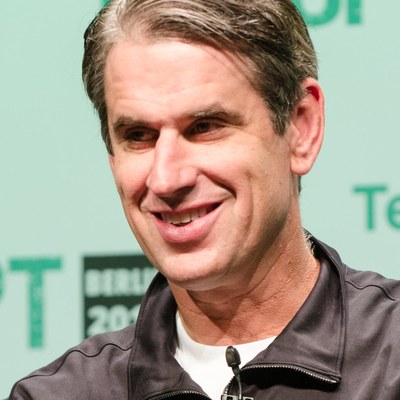 Bill Gurley
9
11 Dec 2012 – 10 Jun 2025
-3138 d
Bill Gurley
9
11 Dec 2012 – 10 Jun 2025
-3138 d
-
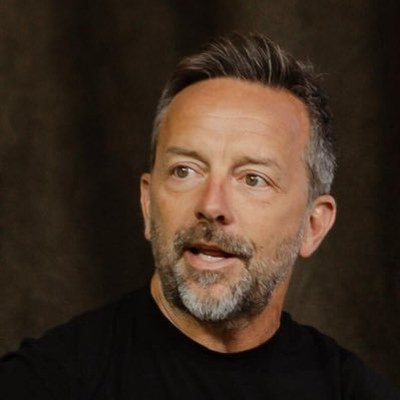 Brad Gerstner
11
23 Jun 2020 – 5 May 2026
-387 d
Brad Gerstner
11
23 Jun 2020 – 5 May 2026
-387 d
-
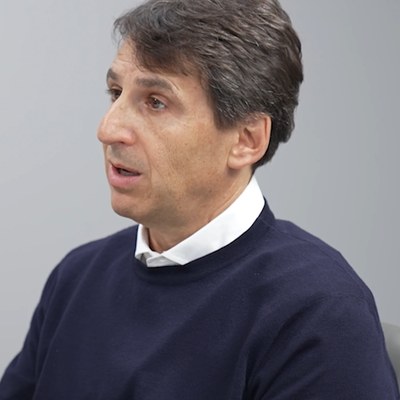 Marc Rowan
16
15 Jul 2021 – 3 Mar 2026
+0 d
Marc Rowan
16
15 Jul 2021 – 3 Mar 2026
+0 d
-
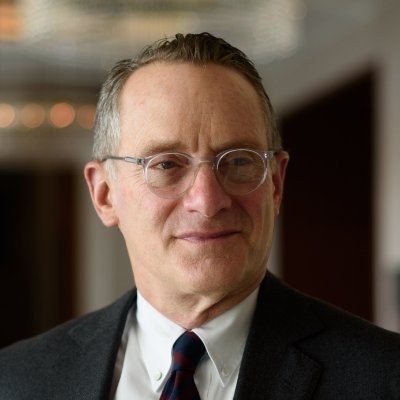 Howard Marks
17
4 Oct 2023 – 12 Jun 2026
+811 d
Howard Marks
17
4 Oct 2023 – 12 Jun 2026
+811 d
-
 David Friedberg
2
thin
9 Jan 2024 – 9 Jan 2024
+908 d
David Friedberg
2
thin
9 Jan 2024 – 9 Jan 2024
+908 d
The chronologysourced and dated, oldest first
-
-
Bill Gurley
Gurley cites LP analysis showing top 10 VC funds all fell out when removing their single best performer.
“And then they took the top performer out of those funds and they all fell out of the top 10 or maybe one of them stayed.”
-
Bill Gurley
Gurley says top ten venture funds all fell out when their single best performer was removed.
“And then they took the top performer out of those funds and they all fell out of the top 10 or maybe one of them stayed.”
-
-
-
Bill Gurley
Gurley argues that funding businesses because capital is cheap is equivalent to funding low-return businesses.
“The exact flip way of saying that is, I'm excited about funding low return businesses and I'm gonna go do it.”
-
-
-
Brad Gerstner
Gerstner notes Google compounded at similar rates to other platforms despite his early worries about search's future.
“And I was talking of I was worried about the future of search and the future of vertical search starting in 2010, But look at Google's compounded at about the rate the other big platforms have in The US.”
-
-
-
Brad Gerstner
Gerstner calls access to top tech companies the most asymmetric bet in investing history.
“The the the most asymmetric bet maybe in the history of all of investing is having a golden ticket to have access to the best technology companies in the world today.”
-
Marc Rowan
Rowan cites 44% net returns on Apollo's 2001 fund to counter concerns about too much money chasing deals.
“And in that fund, which was the two thousand and one fund, 44% net returns. So now you fast forward and you look at the last three funds we've done.”
-
Marc Rowan
Rowan identifies hybrid as a $30 billion business offering mid-teens returns with lower risk than opportunistic strategies.
“This thing called hybrid, which is 30,000,000,000, is actually really interesting because it is neither yield nor opportunistic. It is never going to be the highest rate of return.”
-
Marc Rowan
Rowan commits Apollo will grow 15% plus cash on cash annually with embedded options in democratization of finance.
“what we've told the Street is we will grow our business 15% plus cash on cash year over year, and I think that's really good.”
-
Marc Rowan
Rowan cites 44% net returns in Apollo's 2001 fund and recent funds ranging from $15-25 billion.
“And in that fund, which was the 2,001 fund, 44% net returns. So, now you fast forward and you look at the last three funds we've done.”
-
Marc Rowan
Rowan reports 44% gross and high 20s net returns on Apollo's $25 billion fund.
“For the last time we announced results, 44% gross on the $25,000,000,000 fund, high 20s net.”
-
Marc Rowan
Rowan reports Apollo's $25 billion fund is delivering 44% gross returns and high-20s net returns.
“44% gross on the $25,000,000,000 fund, high 20s net. The world just keeps moving. The world just keeps changing. It's our job to continue to reinvent ways to extract and to produce value.”
-
-
-
Marc Rowan
Rowan reports Apollo's 32-year track record shows 36% gross and 26% net returns with every fund profitable.
“If you look at the now thirty two year history, 36% gross 26% net returns every fund has made carry. We've done really well.”
-
Marc Rowan
Rowan reports Apollo's thirty-two year track record shows 36% gross and 26% net returns with every fund making carry.
“If you look at the now thirty two year history, 36% gross 26% net returns every fund has made carry.”
-
Marc Rowan
Rowan questions whether massively scaling private equity benefits investors or is even possible given return requirements.
“It is unclear to me that massively scaling that business is good for investors or good for us or possible. Our job as investors and alternatives is to produce excess return per unit of risk.”
-
Brad Gerstner
Gerstner distributed $6B last year, exceeding total capital raised in first five funds.
“Last year, we distributed over $6,000,000,000, which was more than all the venture we raised in our first five funds.”
-
-
-
Marc Rowan
Rowan says Apollo runs private equity for returns not growth, calling it a farming business.
“But literally, we run this business for rate of return. If we do a good job for investors, we will grow a little.”
-
Marc Rowan
Rowan says investors can earn single A corporate rates plus 300 basis points for 90-180 days of illiquidity.
“If you can earn single A corporate bond rates plus 300 for being less liquid for ninety or one hundred and eighty days, it seems like a pretty good trade.”
-
Bill Gurley
Gurley says firms that exited in the late 1990s bubble missed the vast majority of returns.
“But the vast majority of the returns are in these periods at the top of these bubbles.”
-
Bill Gurley
Gurley says venture capital's outperformance comes from tiny windows of frothy markets according to longtime LPs.
“I went and talked to some LPs that have been in the business for a very long period of time and a vast majority of the reason Venture outperforms other asset classes has to do with these tiny windows when you have a super frothing market.”
-
Bill Gurley
Gurley argues venture capital becomes uninteresting when peak years are stripped from forty-year assessments.
“And if you don't, if you aren't around for that part, you know, you strip those years out a forty year assessment, it's actually not that interesting an asset class, which highlights the need for venture funds to get liquidity at the peak.”
-
Howard Marks
Marks says credit instruments now offer equity-type returns with high single to low double digit yields.
“Today, you can get equity type returns from what we call credit instruments, loans, corporate corporate loans, loans for buyouts.”
-
Brad Gerstner
Snowflake grew from $170M to over $50B enterprise value with Altimeter still a major shareholder.
“Yeah, that was total enterprise value of Snowflake when we got involved, and we're still one of their largest shareholders today, and it's over $50,000,000,000 in enterprise value,”
-
-
-
David Friedberg
Friedberg notes top NASDAQ stocks returned 10x over ten years while top 5% of venture funds only returned 3x.
“In the past ten years, if you bought the top 10 stocks on the NASDAQ, you would have made 10 x. Okay. It's a crazy statistic.”
-
David Friedberg
Friedberg cites top VC firm data showing 40% of capital in down rounds lost money while up rounds generated returns.
“On the rest of the portfolio where things were up rounds and things were going well and they put more money in, they made a lot of money.”
-
Brad Gerstner
Gerstner says portfolio return targets normalized from 80% in early 2023 to 20-30% now.
“I think the return to target in our portfolio is 20 to 30%, whereas the start of last year, Bill, it was like 80%.”
-
Howard Marks
Marks defines real investment accomplishment as making money with controlled risk, not just returns.
“To me, the real accomplishment is making money with the risk under control. And that's what thinking about risk, I think, helps you do.”
-
Brad Gerstner
Gerstner identifies hyperscaler total CapEx at $200 billion as the real concern drawing criticism and return questions.
“In fact, I think if people are gonna be critical of anything, a lot of people are looking at the total CapEx of the hyperscalers now at $200,000,000,000”
-
Brad Gerstner
Gerstner notes stocks are up 60% in six quarters since Q1 2023 when ChatGPT launched.
“So that's just six quarters ago. Right after chat GPT hit the screens, you know, stocks are up 60%.”
-
Marc Rowan
Rowan says Australian superannuation with private market access delivers 50-60% better outcomes.
“The returns have been nothing short of spectacular. Outcomes for investors can be not a little better 5060% better.”
-
Bill Gurley
Gurley recounts PE firm making billion dollars on DoubleClick exit but struggling because it was in $4 billion fund.
“I said to him, I want to say, congratulations, man, that's incredible. He goes, well, it's in a $4,000,000,000 fund. Wow. Wow. You know? Yeah. So, That's you have an incredible outcome.”
-
-
-
Brad Gerstner
Gerstner earned 100x returns on Amazon in public markets, returns now going to private investors instead.
“So I earned a 100 x return in the public markets. Right? By all accounts, venture capitalists would do back flips for that return, but those returns were going to private market participants.”
-
Marc Rowan
Rowan dismisses disappointment from investors who expected a God-given right to 11% annual returns.
“Those people who are tied to asset prices who thought we were had a God given right that everything move up at 11% annually are disappointed.”
-
Bill Gurley
Gurley calculates that delaying exits from year ten to fifteen requires 2.5x higher returns to meet expectations.
“If you just take that 10% compounding, it now needs to be worth a $160 in year fifteen.”
-
Bill Gurley
Gurley calculates that delaying exits five years requires 2.5x higher returns due to compounding and dilution.
“If you make the argument that these people invested in venture to get a big return, then your cost of capital is not five.”
-
Brad Gerstner
Gerstner notes Amazon is up 87x since Blodgett's 2000 call, validating long-term thinking.
“Amazon is up 87 times today from where it was when he made that call.”
-
Howard Marks
Marks argues that if risky investments guaranteed higher returns, they would not be risky by definition.
“if riskier investments could be counted on to produce higher returns, then by definition, they're not risky. So that can't be right.”
-
Howard Marks
Marks clarifies that risky assets must appear to offer higher returns to attract investors, not guarantee them.
“assets that are expected to be riskier have to appear to offer a higher return or nobody will make those investments. That makes a 100% sense, doesn't it?”
-
Howard Marks
Marks clarifies that risky assets must appear to offer higher returns, not that they deliver them.
“assets that are expected to be riskier have to appear to offer a higher return or nobody will make those investments. That makes a 100% sense, doesn't it? So that's what this relationship means”
-
Brad Gerstner
Gerstner reveals Altimeter invested in NVIDIA in December 2022, up 10x as revenue grew from $30B to over $200B.
“The stock's up over ten ten times. 10 x over that period of time as the revenue went from roughly $30,000,000,000 a year to over $200,000,000,000 a year.”
-
Marc Rowan
Rowan says investors move from equity and high yield to levered lending for same returns with less volatility.
“Generally, what investors are doing is they're taking money out of equity or out of high yield bonds and moving into levered lending. It's roughly the same return, and it is less volatile.”
-
Howard Marks
Marks says current S&P PE ratios historically predict very low single-digit returns over next decade.
“Historically, if you bought at this PE ratio, your return over the next ten years averaged in the very low single digits. So I I think we're in a moderate return scenario.”
-
Howard Marks
Marks says S&P valuation suggests very low single-digit returns over the next ten years based on historical PE ratios.
“Historically, if you bought at this PE ratio, your return over the next ten years averaged in the very low single digits.”
-
-
-
Howard Marks
Marks says 2023-2025 is the seventh best three-year period for the S&P 500 in a century, signaling elevated optimism.
“The period, twenty three four five is for the S and P 500 is, I think, the seventh best three year period out of the last 100. Seventh out of a 100.”
-
Howard Marks
Marks quotes Buffett preferring lumpy 15% return over smooth 12%, challenging volatility aversion.
“Buffett again. Buffett says, I'd rather have a lumpy 15% return than a smooth 12.”
-
Howard Marks
Marks quotes Buffett preferring a lumpy 15% return over a smooth 12%, challenging excessive focus on volatility.
“And I would say to people, if you'd rather have a smooth 12 than a lumpy 15, you have to ask yourself what's going on.”
-
Howard Marks
Marks quotes Buffett preferring lumpy 15% returns over smooth 12% if you can survive volatility.
“And if you can survive long enough to enjoy the long term benefit of the lumpy 15, it beats the hell out of the smooth 12.”
-
Howard Marks
Marks explains risky assets must appear to offer high returns, but don't have to deliver them.
“What the relationship means is that an asset that appears to be risky has to appear to offer a high return or else nobody will buy it.”
-
Howard Marks
Marks notes the last three years rank among the top six in S&P 500 history.
“The S and P 500 stock index has been around for about a century. There have been ninety seven or ninety eight three year periods by definition.”
-
Marc Rowan
Rowan claims an extra 1% return compounded over time produces 50-100% better retirement outcomes for retirees.
“But if you look around the world, every place that private assets have been added to public portfolios, you've gotten better outcomes.”
-
Marc Rowan
Rowan calculates an extra one percent compounded return produces 50% to 100% better retirement outcomes.
“And if you go to the extreme and you take retirees, for instance, in 04/2001, an extra percent compounded over the duration of how long you're going to be in there is a 50% to 100% better outcome by having better investments.”
-
Howard Marks
Marks says optimism and credulousness dominate today's market, making excess returns harder to achieve.
“I think you would have to say, optimism, not pessimism, credulousness, not skepticism, are in the ascendancy today, and when optimism and credulousness are in the ascendancy, it gets hard to make return investments that will produce what we call excess returns,”
-
Howard Marks
Marks says direct lending stopped offering excess returns one to two years ago, delivering only adequate returns.
“I would say that as of a year or so, maybe two years ago, direct lending was, as you say, you use the term alpha, it was no longer special.”
-
Brad Gerstner
Gerstner reports last month was Altimeter's best month ever in over twenty years.
“It was our best month in the history of Altimeter. And we're bouncing off, you know, a bottom that was a, you know, a tough month the month before, but we stayed the course.”
-
Howard Marks
Marks outlines four ways to achieve superior returns: buying below value, financial structure, adding operational value, and premium valuations.
“You apply the right financial structure, which also which often means leverage, you add value intrinsically to the operation, and you see it go to a premium valuation relative to what you pay.”
-
Howard Marks
Marks notes declining rates made financial engineering and leverage particularly effective at generating returns.
“In this period we've been through of declining interest rates, financial engineering helped a lot, merely owning assets with leverage helped a lot, things regularly went to premium valuations.”
-
Where they overlapsame programme, same subject
- All-In Podcast also carries Bill Gurley and Brad Gerstner on this subject, at different times.
- BG2 Pod also carries Bill Gurley and Brad Gerstner on this subject, at different times.
- Barron's also carries Howard Marks and Marc Rowan on this subject, at different times.
- Bloomberg Television also carries Howard Marks and Marc Rowan on this subject, at different times.
- CNBC Television also carries Brad Gerstner and Marc Rowan on this subject, at different times.
- David Rubenstein also carries Howard Marks and Marc Rowan on this subject, at different times.
- Invest Like the Best also carries Bill Gurley and Brad Gerstner on this subject, at different times.