Who is on this subjectordered by the date of their first quote here
7 of 11 lanes rest on fewer than 5 quotes and are marked thin. Offsets are days from the middle first-quote date, 20 Apr 2022 — a date, and nothing else. It is not a claim about who reached a view first.
-
 Bill Gurley
17
20 Mar 2015 – 13 Jul 2026
-2588 d
Bill Gurley
17
20 Mar 2015 – 13 Jul 2026
-2588 d
-
 Howard Marks
148
30 Mar 2015 – 12 Jun 2026
-2578 d
Howard Marks
148
30 Mar 2015 – 12 Jun 2026
-2578 d
-
 Sir Richard Dearlove
1
thin
14 Dec 2017 – 14 Dec 2017
-1588 d
Sir Richard Dearlove
1
thin
14 Dec 2017 – 14 Dec 2017
-1588 d
-
 Gavin Baker
3
thin
2 Apr 2020 – 4 Aug 2026
-748 d
Gavin Baker
3
thin
2 Apr 2020 – 4 Aug 2026
-748 d
-
 Marc Rowan
16
20 Apr 2022 – 15 Apr 2026
+0 d
Marc Rowan
16
20 Apr 2022 – 15 Apr 2026
+0 d
-
 David Friedberg
4
thin
9 Jan 2024 – 9 Oct 2025
+629 d
David Friedberg
4
thin
9 Jan 2024 – 9 Oct 2025
+629 d
-
 Brad Gerstner
5
16 May 2024 – 15 May 2026
+757 d
Brad Gerstner
5
16 May 2024 – 15 May 2026
+757 d
-
 David Tepper
2
thin
26 Sep 2024 – 18 Sep 2025
+890 d
David Tepper
2
thin
26 Sep 2024 – 18 Sep 2025
+890 d
- Dylan Patel 1 thin 22 Sep 2025 – 22 Sep 2025 +1251 d
-
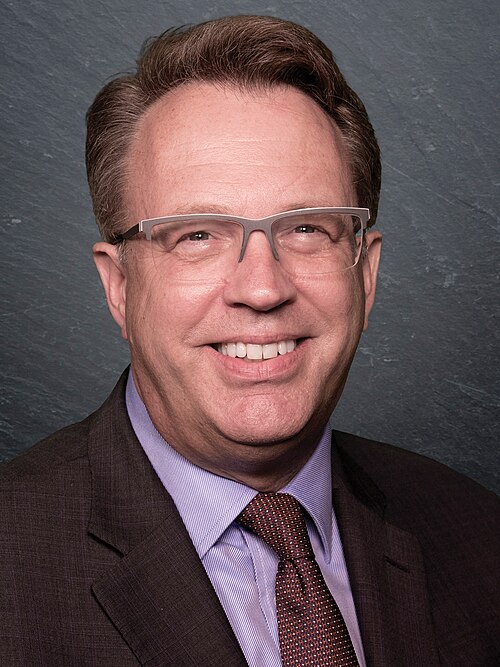 John Williams
2
thin
John Williams
2
thin
-
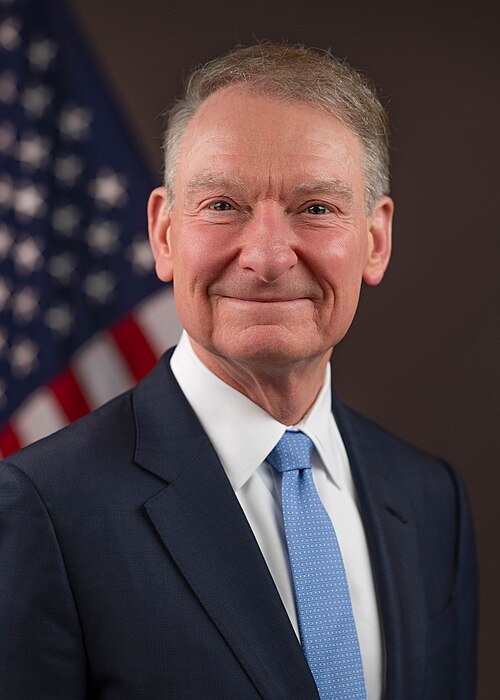 Paul Atkins
1
thin
Paul Atkins
1
thin
The chronologysourced and dated, oldest first
-
-
Bill Gurley
Gurley argues current risk bubble differs from 1999 because investors now put hundreds of millions into four-year-old private companies.
“But you didn't have a situation where people were putting $102,103 $104,109 $1,001,000,000,000 dollars into a private company who might only be four years old. These companies just haven't had the time to mature.”
-
Bill Gurley
Gurley observes there is a complete absence of fear in Silicon Valley right now, which typically leads to problems.
“And while I'm I'm not here to accuse people of being greedy, there is no fear in Silicon Valley right now, a complete absence of fear.”
-
Howard Marks
Marks argues outcomes cannot determine decision quality because randomness causes good decisions to fail and bad ones to succeed.
“you can't tell from an outcome whether a decision was good or bad. It's very important. Most people don't understand this. Totally counterintuitive.”
-
Howard Marks
Marks says good decisions fail and bad decisions succeed frequently due to randomness in investing.
“good decisions fail to work all the time. Bad decisions work all the time. The investment business is full of people who are, quote, right for the wrong reason.”
-
Howard Marks
Marks argues investors must not assume likely outcomes will occur, unlike in physical sciences where determinism applies.
“you should not act as if the things that should happen are the things that will happen. Again, in the world of the physical sciences, you can probably bet that that's true.”
-
Howard Marks
Marks cites definition that risk means more things can happen than will happen.
“There's a professor at the London Business School who put it succinctly. He said risk means more things can happen than will happen. And again, this is profound in my opinion.”
-
Howard Marks
Marks cites definition that risk means more things can happen than will happen.
“There's a professor at the London Business School who put it succinctly. He said risk means more things can happen than will happen. And again, this is profound in my opinion.”
-
Howard Marks
Marks quotes London Business School professor defining risk as more outcomes being possible than will actually occur.
“risk means more things can happen than will happen. And again, this is profound in my opinion. In the economic world, people generally make their decisions based on something called expected value,”
-
Howard Marks
Marks quotes London Business School professor defining risk as more outcomes being possible than will actually occur.
“risk means more things can happen than will happen. And again, this is profound in my opinion. In the economic world, people generally make their decisions based on something called expected value,”
-
Howard Marks
Marks states the secret to investing is buying assets for less than intrinsic worth, not buying quality.
“So if you buy a high quality asset and I say in the book, there's a guy on the radio when I lived in LA,”
-
Howard Marks
Marks cites buying America's best companies from 1968 to 1973 lost 90% due to overpricing.
“if you bought the bonds of Hewlett Packard, PerkinElmer, Texas Instruments, Merck, Lilly, Xerox, IBM, Kodak, Polaroid, AIG, Coca Cola, and Procter and Gamble, and if you bought them all in 'sixty eight and you held them until 'seventy three, you lost 90% of your money. Why? Because they were overpriced.”
-
Howard Marks
Marks reveals fund averaging 37th percentile yearly ranked fourth over fourteen years because managers blow up spectacularly.
“What percentile do you think that fund was in for the whole fourteen years? Four. Four. And if you think about it, it's really almost mysterious. Why the fourth, not the thirty seventh?”
-
Howard Marks
Marks launched the first distressed debt fund in 1988, investing in bonds already in default.
“in 'eighty eight, we brought out the first distressed debt fund. Now we're not investing in companies that have a risk of default.”
-
Howard Marks
Marks launched the first distressed debt fund in 1988, investing in bonds of bankrupt or near-bankrupt companies.
“we brought out the first distressed debt fund. Now we're not investing in companies that have a risk of default. We're investing in bonds that are either in default or sure to be.”
-
Howard Marks
Marks illustrates how zero yields on safe investments drive investors mindlessly into riskier assets.
“He gets a statement from Fidelity. He opens it up, and it says, the yield on your fund is now zero. He grabs the phone.”
-
-
-
Sir Richard Dearlove
Dearlove argues terrorism does not present a systemic threat to the nation despite horrible incidents.
“I don't think terrorism in its current form, you know, presents a systemic threat to the nation. It presents, the possibility of horrible happenings,”
-
-
-
Howard Marks
Marks defines exceptional investors as those achieving good returns disproportionate to risk taken.
“I think that an exceptional investor is someone who has a good return disproportionate to the risk born. A good return with the risk under control.”
-
Howard Marks
Marks defines exceptional investors as those achieving good returns disproportionate to risk taken.
“I think that an exceptional investor is someone who has a good return disproportionate to the risk born. A good return with the risk under control.”
-
Howard Marks
Marks argues that at cycle extremes investors need money and nerve to spend it, not selectivity.
“you don't need conservatism, caution, risk control, discipline, patience or selectivity. You need money and the nerve to spend it.”
-
Howard Marks
Marks argues that at cycle extremes investors need money and nerve to spend it, not selectivity.
“you don't need conservatism, caution, risk control, discipline, patience or selectivity. You need money and the nerve to spend it.”
-
-
-
Gavin Baker
Baker challenges the notion of truly recurring revenue, noting software was only 7-10% of IT spend in 2008-09.
“A lot of people are baselining off what happened in 'eight, 'nine. And I think that is dangerous because in 'eight, 'nine software was seven to 10 of IT spend.”
-
-
-
Marc Rowan
Rowan argues institutions should get paid for liquidity risk rather than equity or credit risk.
“I often say you can take equity risk. You can take credit risk. The risk these institutions should always get paid for is liquidity risk.”
-
Howard Marks
Marks argues that average returns with below-average risk are a great accomplishment but easily overlooked because only returns are visible.
“I believe that achieving an average return with below average risk is an equally significant accomplish, but easily overlooked because only the risk is evident, only the return is evident.”
-
Howard Marks
Marks argues that average returns with below-average risk are a great accomplishment but easily overlooked because only returns are visible.
“I believe that achieving an average return with below average risk is an equally significant accomplish, but easily overlooked because only the risk is evident, only the return is evident.”
-
Howard Marks
Marks argues average returns with below-average risk are equally significant but overlooked because only returns are visible.
“achieving an average return with below average risk is an equally significant accomplish, but easily overlooked because only the risk is evident, only the return is evident.”
-
Howard Marks
Marks argues average returns with below-average risk are equally significant but overlooked because only returns are visible.
“achieving an average return with below average risk is an equally significant accomplish, but easily overlooked because only the risk is evident, only the return is evident.”
-
“I think that one of the things you're taught here is that volatility is a measure of risk. Volatility is risk.”
-
“I think that one of the things you're taught here is that volatility is a measure of risk. Volatility is risk.”
-
Howard Marks
Marks invokes Einstein's quote that not everything that counts can be counted and not everything that can be counted counts.
“Einstein, there's a great quote from Einstein, who said that not everything that counts can be counted, and not everything that can be counted counts.”
-
Howard Marks
Marks states risk cannot be quantified in advance and historical volatility is not a good risk indicator.
“risk is unquantifiable in advance. You can make reference to the historical volatility, the historical standard deviation, but number one, that's not a very good indicator of risk.”
-
Howard Marks
Marks states risk cannot be quantified in advance and historical volatility is not a good risk indicator.
“risk is unquantifiable in advance. You can make reference to the historical volatility, the historical standard deviation, but number one, that's not a very good indicator of risk.”
-
Howard Marks
Marks argues that risk cannot be quantified even after the fact, citing an example of a doubled investment.
“You buy something for 100. A year later, sell it for 200. Was it risky? You can't tell. Even when it's over, you can't tell.”
-
“Even when it's over, you can't tell. Was that a safe investment that it was sure to produce a double? Or was it a risky investment where you got lucky?”
-
Howard Marks
Marks contends that the belief that there's no risk is itself the riskiest thing because it drives risky behavior.
“I believe that the riskiest thing in the world is the belief that there's no risk.”
-
Howard Marks
Marks contends that the belief that there's no risk is itself the riskiest thing because it drives risky behavior.
“I believe that the riskiest thing in the world is the belief that there's no risk.”
-
Howard Marks
Marks argues the belief that there is no risk is the riskiest thing because it encourages dangerous behavior.
“the riskiest thing in the world is the belief that there's no risk. Because when police when people believe there's no risk, they act in very risky ways, which makes the world a risky place.”
-
Howard Marks
Marks argues the belief that there is no risk is the riskiest thing because it encourages dangerous behavior.
“the riskiest thing in the world is the belief that there's no risk. Because when police when people believe there's no risk, they act in very risky ways, which makes the world a risky place.”
-
Howard Marks
Marks explains how the absence of prior nationwide mortgage defaults led investors to view mortgage securities as safe before 2008.
“prior to the subprime crisis, the fraudulent mortgages that gave rise to the global financial crisis, there had never been a nationwide wave of mortgage defaults.”
-
Howard Marks
Marks argues risk is hidden because it only becomes visible when negative events occur, like flaws exposed by earthquakes.
“I also believe that risk is hidden and deceptive. This is really important. Loss is what happens when risk, the potential for loss collides with negative events.”
-
Howard Marks
Marks argues risk is hidden because it only becomes visible when negative events occur, like flaws exposed by earthquakes.
“I also believe that risk is hidden and deceptive. This is really important. Loss is what happens when risk, the potential for loss collides with negative events.”
-
Howard Marks
Marks says high-quality assets can be risky if overpriced, citing nifty-fifty stocks that lost almost everything from 1969 to 1974.
“A high quality asset can be priced so high that it's risky. I started work at Citibank in September 1969, when I got out of Chicago Booth.”
-
“And if you bought those stocks, the day I got there in '69, and you held them firmly for five years, you lost almost all your money.”
-
Howard Marks
Marks states that price, not asset quality, determines risk, and good investing means buying things well, not buying good things.
“B, that good investing is not a matter of buying good things, but buying things well. And the difference is not only grammatical.”
-
Howard Marks
Marks challenges the risk-return line saying if higher returns are certain from risky assets, they aren't risky.
“if you can count on higher returns from a risky asset, then by definition, it's not risky. So it's kind of an oxymoron. And I was never comfortable with this graphic.”
-
Howard Marks
Marks uses a probability metaphor: investment outcomes are like drawing one ticket from many possible outcomes in a bowl.
“the outcome of pulling a ticket from the bowl, the outcome of which investment performance will occur, never amounts to one ticket picked from among many.”
-
“And then risk off tends to be very abrupt and we've seen that here, right? This this cycle, risk on was from o nine. That's well said. To five months ago.”
-
Howard Marks
Marks says when any company can raise money on any basis, that's a danger signal in the market.
“I'd hold up an article from the news, I said, Look at this piece of crap that got issued yesterday. If a company can raise money on this basis, there's something wrong in the market.”
-
Howard Marks
Marks explains Oaktree's logic for buying during the Lehman crisis: if the system melts down, nothing matters anyway.
“Either the financial system is going to melt down or it's not. If it melts down, it doesn't matter whether we bought or not, because it's, you know, it's game over for everything.”
-
Howard Marks
Marks argues risk cannot be quantified even after the fact, using a doubling investment as example.
“Or was it a really clever thing that nobody else had figured out where you were sure to double your money? And the answer is you can't tell.”
-
-
-
“2022 was a good opportunity for us to realize that public can be both safe and risky, and private can be both safe and risky. The only difference is a degree of liquidity.”
-
Bill Gurley
Gurley says during booms every firm started multiple funds, piling up money and slowly taking on unrecognized risk.
“So when things boom, everyone starts a venture firm. Right? And in this past boom, in addition to everyone starting a venture firm, every venture firm started multiple venture firms and growth firms, and all that money gets piled up and you're slowly taking on risk and you don't realize it.”
-
Bill Gurley
Gurley says in the recent boom every venture firm started multiple funds, slowly piling up risk unknowingly.
“And in this past boom, in addition to everyone starting a venture firm, every venture firm started multiple venture firms and growth firms, and all that money gets piled up and you're slowly taking on risk and you don't realize it. It's like the roller coaster goes, nink, nink, nink, nink, nink.”
-
Bill Gurley
Gurley says in the recent boom every venture firm started multiple funds, piling up risk unnoticed.
“And you're taking more and more risk and you don't know it because everyone around you is taking the same amount of risk.”
-
Bill Gurley
Gurley calls FTX the perfect pinnacle of the recent bubble where legendary investors ignored risk.
“And maybe FTX is the perfect pinnacle of this past one where a bunch of legendary investors just ignored risk. You know, and they wouldn't have done that in 2009.”
-
Bill Gurley
Gurley notes SVB stock traded at $260 on March 8, arguing Wall Street misjudged risk too.
“So on March 8, the stock was trading at $260 a share. So there are people that want to put this on risk taking in Silicon Valley, but Wall Street got it wrong too.”
-
Bill Gurley
Gurley criticizes FTX investors for funding a company with no board and commingled businesses.
“I mean, the markets have a way of separating, very risk seeking individuals from their capital. It may not happen overnight, but it always happens eventually. Like there's no easy money.”
-
Bill Gurley
Gurley says FTX investors ignored basic governance red flags including no board and commingled side business.
“I love the FTX story, not because I wanna pick on anybody, but to make the decision to give money to somebody that has no board and that has a side business that's commingled, who tells you it's not commingled, it turns out it was commingled.”
-
Howard Marks
Marks says great investors are right only 60-80% of the time; those needing certainty should avoid investing.
“The great investors are right 60%, 70%, maybe 80% of the time. If you're the kind of person who has to be right all the time, you shouldn't be in in investing.”
-
Howard Marks
Marks argues security prices depend on people's reactions to events, not the events themselves.
“it's not just whether the event was positive, it's how people reacted to the event that determines the impact on the security prices.”
-
-
-
David Friedberg
Friedberg argues complexity breeds fear of failure, explaining why people pursue smaller ideas requiring fewer things to go right.
“Well, there's I don't know about, using the term thinker, but I think that the, the big concepts are scary because there's so many things that have to go right to get them to work.”
-
David Friedberg
Friedberg explains people avoid big ideas because complexity breeds fear of higher failure probability.
“And, you know, complexity breeds fear because it breeds a higher chance of failure. You know, you have to get each of these things right for something to work.”
-
David Friedberg
Friedberg invested in Ohalo for four and a half years despite uncertainty before seeing results.
“And we had to get multiple things right in a row over time to see if this thing even worked. And fortunately it works, but it took us four and a half years.”
-
Howard Marks
Marks says sharing investment wisdom poses little risk because most people cannot implement the concepts even if they know them.
“So I'm not putting myself at risk, because some people are gonna say, well, that's what he says. I'm not into that.”
-
Howard Marks
Marks states that controlling risk while making money is the real investment accomplishment, not just returns.
“To me, the real accomplishment is making money with the risk under control. And that's what thinking about risk, I think, helps you do. So, you know, Bernstein's, writing is very important.”
-
Howard Marks
Marks states that controlling risk while making money is the real investment accomplishment, not just returns.
“To me, the real accomplishment is making money with the risk under control. And that's what thinking about risk, I think, helps you do. So, you know, Bernstein's, writing is very important.”
-
Howard Marks
Marks defines real investment accomplishment as making money with controlled risk, not just returns.
“To me, the real accomplishment is making money with the risk under control. And that's what thinking about risk, I think, helps you do.”
-
Howard Marks
Marks defines real investment accomplishment as making money with controlled risk, not just returns.
“To me, the real accomplishment is making money with the risk under control. And that's what thinking about risk, I think, helps you do.”
-
Bill Gurley
Gurley says venture firms incrementally adopted risk like boiled frog before reaching iBuying extremes
“And so people adopt incremental risk with the whole boiled frog metaphor without kinda realizing they're doing it.”
-
Brad Gerstner
Gerstner warns Nasdaq at all-time high amid slowing economy, light earnings, and AI disruption.
“And the backdrop is that the economy is slowing, earnings are coming in lighter than people expected, and AI is creating more disruption, creating more uncertainty than we expected.”
-
Brad Gerstner
Gerstner explains nine units of risk means 4.5 billion directionally long on 5 billion portfolio.
“So let's say that you're managing $5,000,000,000 of public equities. Nine units of risk would be that you have 4,500,000,000 of that risk directionally long the market.”
-
Howard Marks
Marks argues academics adopted volatility as the risk measure largely because it was quantifiable, not because it was accurate.
“The academics developing investment theory, largely at the University of Chicago in the early sixties, just a couple years before I got there, adopted volatility as their measure of risk.”
-
Howard Marks
Marks argues academics adopted volatility as the risk measure largely because it was quantifiable, not because it was accurate.
“The academics developing investment theory, largely at the University of Chicago in the early sixties, just a couple years before I got there, adopted volatility as their measure of risk.”
-
Howard Marks
Marks argues academics chose volatility as risk measure because it was quantifiable, not because it was accurate.
“I think that volatility can be an indicator of the presence of risk, a symptom if you will, but it's not risk itself.”
-
Howard Marks
Marks argues academics chose volatility as risk measure because it was quantifiable, not because it was accurate.
“I think that volatility can be an indicator of the presence of risk, a symptom if you will, but it's not risk itself.”
-
Howard Marks
Marks defines risk as the probability of loss, not volatility as academics measure it.
“So if risk is not volatility, then what is it? And in my opinion, and in the real world sense, risk is the probability of loss.”
-
Howard Marks
Marks defines risk as the probability of loss, not volatility as academics measure it.
“So if risk is not volatility, then what is it? And in my opinion, and in the real world sense, risk is the probability of loss.”
-
Howard Marks
Marks realized in 2006 that risk cannot be quantified even after the fact, not just in advance.
“I was writing my first memo about risk in 2006. I wrote about my belief that risk is not quantifiable in advance.”
-
Howard Marks
Marks realized in 2006 that risk cannot be quantified even after the fact, not just in advance.
“I was writing my first memo about risk in 2006. I wrote about my belief that risk is not quantifiable in advance.”
-
Howard Marks
Marks says buying at highs and holding through declines eventually recovers as new highs exceed old highs.
“The fact that you experienced a downward fluctuation might have been uncomfortable for a little while. But by the time the new high is achieved, you're you're you're back to to your cost and more.”
-
Howard Marks
Marks quotes Rick Kane saying everything interesting in finance happened outside two standard deviations, not within them.
“My friend Rick Kane once said that 96% of financial history has occurred within two standard deviations, but everything interesting has happened outside of two standard deviations.”
-
Howard Marks
Marks says risk is hidden and deceptive; loss occurs when potential for loss meets negative events.
“I think it's important to grasp a concept. Risk is hidden, and risk is deceptive. Loss is what happens when risk, the potential for loss, collides with negative events.”
-
Howard Marks
Marks says risk is hidden and deceptive; loss occurs when potential for loss meets negative events.
“I think it's important to grasp a concept. Risk is hidden, and risk is deceptive. Loss is what happens when risk, the potential for loss, collides with negative events.”
-
Howard Marks
Marks asserts risk is not a function of asset quality, opposing conventional belief about quality and safety.
“One of the most important things for every investor to learn is that risk is not a function of asset quality. This too sounds counterintuitive.”
-
Howard Marks
Marks asserts risk is not a function of asset quality, opposing conventional belief about quality and safety.
“One of the most important things for every investor to learn is that risk is not a function of asset quality. This too sounds counterintuitive.”
-
Howard Marks
Marks argues investment success comes from buying things well, not buying good things, as any asset can become overpriced.
“My conclusion was it's not what you buy, it's what you pay. And investment success doesn't come from buying good things, but from buying things well.”
-
Howard Marks
Marks argues no asset is so good it cannot be overpriced or so bad it cannot become attractively cheap.
“There are no assets that are so good that they can't become overpriced and dangerous. There are very few assets that are so bad that they can't be cheap enough to be attractive as investments.”
-
Howard Marks
Marks refutes the idea that riskier assets produce higher returns, arguing they only offer higher expected returns to induce participation.
“Very simply, if it were true that riskier assets produce higher returns, then they wouldn't be riskier, would they? So that can't be the right explanation.”
-
Howard Marks
Marks says risky assets must offer higher expected returns to attract investors, but do not have to deliver them.
“What the upward sloping line, the positive correlation, means is that investments that are perceived as being risky have to be perceived as offering higher returns to induce people to make those investments.”
-
Howard Marks
Marks argues imprecise expert judgment about loss probability beats precise but irrelevant volatility numbers.
“I believe imprecise qualitative expert opinion about the probability of loss is far more useful than precise but largely irrelevant numbers concerning past and projected volatility.”
-
Howard Marks
Marks argues risk control should follow soccer's continuous play model, not American football's discrete offense-defense switches.
“I think the right model for thinking about whether we need risk control isn't American football, it's soccer. In American football, the team with the ball has the offense on the field.”
-
Howard Marks
Marks argues risk control should follow soccer's continuous play model, not American football's discrete offense-defense switches.
“I think the right model for thinking about whether we need risk control isn't American football, it's soccer. In American football, the team with the ball has the offense on the field.”
-
David Tepper
Tepper warns that markets could face problems if the split government outcome gets surprised.
“And as long as it's split and and and this may be a problem because the market thinks it's gonna be split right now.”
-
-
-
Brad Gerstner
Gerstner contrasts buying NVIDIA in fall 2022 based purely on tech fundamentals versus today's layered policy risks.
“What do I do as an investor? You know, what did I do in the fall of twenty two that led me into NVIDIA in the first place?”
-
Brad Gerstner
Gerstner believes robotaxis pose a fundamental risk to Uber's business model.
“I I I think this does pose a risk fundamentally to the Uber business model.”
-
Marc Rowan
Rowan says he wouldn't have taken Trump's tariff gamble and cites short-term uncertainty and longer-term brand as risks.
“That's not a gamble I would have taken from the position we had. Having said that, short term uncertainty, that's the risk. Longer term brand, that's the risk,”
-
Marc Rowan
Rowan warns tariff strategy increases risk of financial accident and damages long-term US brand.
“Longer term brand, that's the risk, and the propensity for a financial accident has definitely gone up, but we just don't know yet.”
-
Marc Rowan
Rowan states he would not have employed this riskier tariff strategy, citing short-term uncertainty and long-term brand risks.
“It's not the strategy I would have employed. It's a riskier strategy than I personally would have employed. I think it has risks short term, uncertainty, longer term brand,”
-
Marc Rowan
Rowan challenges the perception that public markets are safe and private markets are risky.
“We have a perception that what's public is safe and what's private is risky. But what if we're wrong? What if public is safe and risky and private is safe and risky?”
-
Marc Rowan
Rowan identifies the expectation of daily liquidity in everything as the biggest risk buildup in the world.
“What I worry about and the biggest buildup of risk I see in the world is we are brought up with an expectation of being able to trade everything every day. Everything is daily liquid.”
-
Howard Marks
Marks warns that at PE ratio of 23, historical S&P returns over next decade were always between 2% and -2%.
“And it showed that historically, you bought the S and P when the PE ratio was 23, in every case, there were no exceptions.”
-
Howard Marks
Marks asserts that following the crowd guarantees you will not outperform the market.
“The only thing I'm sure of is if you zig when they zig, you're not gonna outperform.”
-
Howard Marks
Marks raised $8 billion in early 2007, took only $3.5 billion, held rest in standby fund.
“But we would like to have the remainder of your interest in a standby fund that will implement if the stuff hits the fan.”
-
Howard Marks
Marks explains his logic for investing during 2008 crisis despite apocalyptic fears.
“But if I don't invest it and the world doesn't melt down, then we didn't do our job. QED, you have to move forward.”
-
Howard Marks
Marks warns that assuming you are smart and others are dumb is a major investing mistake.
“One of the biggest mistakes you can make in life, but especially in investing, is to assume that you're smart and everybody else is dumb.”
-
Howard Marks
Marks argues that if risky investments guaranteed higher returns, they would not be risky by definition.
“if riskier investments could be counted on to produce higher returns, then by definition, they're not risky. So that can't be right.”
-
Howard Marks
Marks explains why the claim that riskier investments have higher returns is logically incoherent.
“if it were true that taking more risk is the surefire path to a higher return, then it wouldn't be risky. Can't be right. So I was always unsatisfied with that.”
-
Howard Marks
Marks explains why the claim that riskier investments have higher returns is logically incoherent.
“if it were true that taking more risk is the surefire path to a higher return, then it wouldn't be risky. Can't be right. So I was always unsatisfied with that.”
-
Howard Marks
Marks clarifies that risky assets must appear to offer higher returns to attract investors, not guarantee them.
“assets that are expected to be riskier have to appear to offer a higher return or nobody will make those investments. That makes a 100% sense, doesn't it?”
-
Howard Marks
Marks clarifies that risky assets must appear to offer higher returns, not that they deliver them.
“assets that are expected to be riskier have to appear to offer a higher return or nobody will make those investments. That makes a 100% sense, doesn't it? So that's what this relationship means”
-
Howard Marks
Marks states that 99% of startups and 90% of venture capital investments fail despite high return potential.
“something like probably 99% of all startups fail, probably something like 90% of all the investments that venture capital funds make fail.”
-
David Tepper
Tepper says too much more Fed easing on interest rates enters danger territory for the economy.
“to go too much more on interest rates, depending what happens with the economy, you know, is is it gets into the danger territory.”
-
Dylan Patel
Patel recounts that NVIDIA ordered Xbox production volume before receiving Microsoft's official order.
“No. No. No. Like, NVIDIA ordered the volume for the Xbox before Microsoft gave them the order.”
-
David Friedberg
Friedberg left Google at 25 in 2005, walking away from stock worth a couple million dollars without full funding.
“I left all my stock options on the table, all my RSUs I'd been given. It was worth a couple million dollars, and I was 25 years old back in 2005.”
-
Howard Marks
Marks defines bubbles primarily as psychological excess where no price seems too high.
“To me, the main ingredient in bubbles is psychological excess. There's no such thing as a price too high.”
-
Gavin Baker
Baker warns a true DRAM capacity cycle could see prices increase 10X, not the typical 30-50%.
“If the price of DRAM, if like a DRAM wafer is valued at like a five carat diamond.”
-
Marc Rowan
Rowan contrasts tolerance for equity volatility with outsized reaction to single private credit defaults.
“We don't think anything of Nvidia or the S and P going up or down 10 or 15%, and yet one private credit loan or one broadly syndicated loan defaults and people lose their mind.”
-
Marc Rowan
Rowan cautions that owning data center equity does not guarantee profits despite valuable data.
“But I don't think it is a foregone conclusion that because you own a data center and you own equity in it and data is valuable that you will make money in data center equity.”
-
Marc Rowan
Rowan warns owning data center equity is not guaranteed to be profitable despite valuable data and strong current demand.
“I don't think it is a foregone conclusion that because you own a data center and you own equity in it and data is valuable that you will make money in data center equity.”
-
Howard Marks
Marks says smart lending requires good visibility on repayment likelihood, not purely conjectural outcomes.
“I mean, in order to be a smart lender, you have to have good visibility on the extent to which the thing has is likely to repay interest and principal.”
-
Howard Marks
Marks argues lending to high-risk activities creates unlimited downside with limited upside, making it the wrong risk-reward combination.
“You certainly shouldn't do that in in in activities that have a high probability of not paying off at all because then you have unlimited downside and limited upside.”
-
Howard Marks
Marks cites Buffett's principle that investor imprudence requires greater personal prudence and should signal worry.
“Buffett says, the less prudence with which others conduct our affairs, the greater the prudence with which we must conduct our own affairs.”
-
Howard Marks
Marks cites Buffett principle that imprudent market behavior should increase investor caution and worry.
“So when other people are acting imprudently and mindlessly and carefree, we should be worried.”
-
Howard Marks
Marks characterizes Fed interventions as price controls that induce excessive risk-taking when money is artificially cheap.
“And the Fed manipulations are a form of price controls. You know, they control the price of money. And if Fed puts money artificially cheap, then it induces behavior like risk taking.”
-
Howard Marks
Marks characterizes Fed interventions as price controls that induce excessive risk-taking when money is artificially cheap.
“And the Fed manipulations are a form of price controls. You know, they control the price of money. And if Fed puts money artificially cheap, then it induces behavior like risk taking.”
-
Howard Marks
Marks calls Fed rate setting a form of price controls that forces investors into riskier activities.
“And the Fed manipulations are a form of price controls. You know, they control the price of money.”
-
Howard Marks
Marks argues artificially cheap Fed money forces investors into riskier activities when safe returns are too low.
“And if Fed puts money artificially cheap, then it induces behavior like risk taking. It forces people into riskier activities because the returns on safe activities are so low.”
-
Howard Marks
Marks argues artificially cheap Fed money forces investors into riskier activities when safe returns are too low.
“And if Fed puts money artificially cheap, then it induces behavior like risk taking. It forces people into riskier activities because the returns on safe activities are so low.”
-
Howard Marks
Marks says S&P valuation suggests very low single-digit returns over the next ten years based on historical PE ratios.
“Historically, if you bought at this PE ratio, your return over the next ten years averaged in the very low single digits.”
-
Howard Marks
Marks cites math where consistently staying between 27th and 47th percentile for fourteen years produced overall fourth percentile performance.
“So solidly in the second quarter for fourteen years in a row. But interestingly, as a result, for the fourteen years overall, they were in the fourth percentile.”
-
Howard Marks
Marks says General Mills achieved fourth percentile over fourteen years by staying between twenty-seventh and forty-seventh annually.
“for the fourteen years overall, they were in the fourth percentile. Now that's incredible math. You would say, well, if you bounce back in '40 between '27 47, on average, you're probably about 37.”
-
“And the answer turns out to be that most investors, shoot for the stars and occasionally shoot themselves in the foot and wreck their record.”
-
Howard Marks
Marks explains that most investors wreck their records by occasional big losses that take years to recover from.
“most investors, shoot for the stars and occasionally shoot themselves in the foot and wreck their record. And once you have a big loss, it takes a long time to get back to scratch.”
-
Howard Marks
Marks adopted if you avoid the losers, the winners take care of themselves as Oaktree's founding motto in 1995.
“in equities, if you can avoid the losers and losing years, the winners will take care of themselves.”
-
“And when we started Oaktree in 1995, I wrote that down, and that became our motto and still is.”
-
Howard Marks
Marks says Oaktree's founding motto is that avoiding losers lets winners take care of themselves.
“And when we started Oaktree in 1995, I wrote that down, and that became our motto and still is. If you can avoid the losers, the winners will take care of themselves.”
-
Marc Rowan
Rowan says investors use levered lending to reduce risk compared to equities and high yield bonds.
“We don't think anything of Nvidia or the S and P going up or down 10 or 15%, and yet one private credit loan or one broadly syndicated loan defaults and people lose their mind.”
-
-
-
Bill Gurley
Gurley explains asymmetric risk: funding failures lose 1x while missing big wins loses 10,000x your money.
“If you fund something that doesn't work, you lose one times your money. If you miss this big thing, you lose, you know, 10,000 extra money.”
-
Marc Rowan
Rowan challenges the forty-year assumption that private markets are inherently riskier than public markets.
“The disconnect in people's minds of private and investment grade is actually funny to watch sometimes, because we've grown up with forty years of thinking that private is risky and public is safe.”
-
Marc Rowan
Rowan argues public and private markets both contain risk; the key difference is liquidity, not safety.
“What if private is safe and risky, and public is safe and risky, and we're talking about differing degrees of liquidity in different markets? I think that's what we're seeing.”
-
Howard Marks
Marks contrasts binary AI startup bets versus investing in established tech companies with AI upside.
“If they have the low probability of success, you should accept that that means chances are good of unsuccessful.”
-
Howard Marks
Marks frames the AI investment choice as binary moonshot bets versus incremental gains in established tech companies.
“Or do you want to invest in a great tech company, which is already existing and making a lot of money where AI could be incremental, but not life changing?”
-
Howard Marks
Marks cites Dimson saying the future is a probability distribution, not a single outcome that can be predicted.
“The future is not a set single thing that if you're smart enough, you can figure it out what it's going to be and it's going to materialize and make you right.”
-
Howard Marks
Marks argues the future is a probability distribution of possibilities, not a single predictable outcome.
“It's a probability distribution. It's a range of possibilities in each thing, whether it's GDP growth next year or inflation next year, or who's going to win the next election,”
-
Howard Marks
Marks argues feeling uncomfortable when investing during crisis is normal and necessary for good investing.
“If you committed to spend money as we did on September 19 and you're not uncomfortable, there's something wrong with you.”
-
Howard Marks
Marks argues people's asymmetric response to gains versus losses warps their ability to bear necessary risk.
“Most people care a little about a dollar made and a lost. Exposing yourself to the risk of loss is integral in trying to have a good investment return.”
-
Howard Marks
Marks argues people's asymmetric response to gains versus losses warps their ability to bear necessary risk.
“Most people care a little about a dollar made and a lost. Exposing yourself to the risk of loss is integral in trying to have a good investment return.”
-
Howard Marks
Marks distinguishes risk control from risk avoidance, emphasizing intelligent risk-bearing is integral to good returns.
“Exposing yourself to the risk of loss is integral in trying to have a good investment return. So, you know, even though our investment philosophy, stresses, risk control, we're not talking about risk avoidance.”
-
Howard Marks
Marks distinguishes risk control from risk avoidance, emphasizing intelligent risk-bearing is integral to good returns.
“Exposing yourself to the risk of loss is integral in trying to have a good investment return. So, you know, even though our investment philosophy, stresses, risk control, we're not talking about risk avoidance.”
-
Howard Marks
Marks quotes Buffett preferring a lumpy 15% return over a smooth 12%, challenging excessive focus on volatility.
“And I would say to people, if you'd rather have a smooth 12 than a lumpy 15, you have to ask yourself what's going on.”
-
Bill Gurley
Gurley says AI makes safe jobs riskier and pursuing passion a better career defense.
“if you were put in a safe job that you don't truly love, I would encourage you to consider this alternate door that I'm representing, to maybe find something you're passionate about and get away from that risk.”
-
Howard Marks
Marks argues it's desirable to learn investment lessons early when there's not much money at stake.
“And so that was very informative and it's very desirable to learn your lessons early and also preferable to learn your lessons when there's not a lot of money at stake, which I did.”
-
Howard Marks
Marks admits his risk aversion was costly since 1980 when optimism consistently paid off.
“And given the, if you think about it, from 1980 when the inflation was solved, essentially to date, generally speaking, the more optimistic you were, the more money you made.”
-
Howard Marks
Marks argues good investing is not just buying good things but buying things well at the right price.
“it's not what you buy, it's what you pay. And good investing is not just a function of buying good things, but of buying things well.”
-
Howard Marks
Marks says good investing is not just buying good things but buying things well at the right price.
“And good investing is not just a function of buying good things, but of buying things well.”
-
Howard Marks
Marks defines risk as the probability of an undesirable outcome, not volatility or fluctuation.
“Risk, in my opinion, and my view has evolved, risk is the probability negative outcome, of an undesirable outcome.”
-
Howard Marks
Marks defines risk as the probability of an undesirable outcome, not volatility or fluctuation.
“Risk, in my opinion, and my view has evolved, risk is the probability negative outcome, of an undesirable outcome.”
-
Howard Marks
Marks defines risk as the probability of an undesirable outcome, not volatility.
“Risk, in my opinion, and my view has evolved, risk is the probability negative outcome, of an undesirable outcome. It is not the volatility of the stream.”
-
Howard Marks
Marks defines risk as the probability of an undesirable outcome, not volatility.
“Risk, in my opinion, and my view has evolved, risk is the probability negative outcome, of an undesirable outcome. It is not the volatility of the stream.”
-
Howard Marks
Marks quotes Buffett preferring lumpy 15% returns over smooth 12% if you can survive volatility.
“And if you can survive long enough to enjoy the long term benefit of the lumpy 15, it beats the hell out of the smooth 12.”
-
Howard Marks
Marks explains risky assets must appear to offer high returns but do not have to deliver them.
“If a risky asset can be counted on to have a high return, then it's not risky. So it can't be true. It's incorrect on its face.”
-
Howard Marks
Marks explains risky assets must appear to offer high returns, but don't have to deliver them.
“What the relationship means is that an asset that appears to be risky has to appear to offer a high return or else nobody will buy it.”
-
Marc Rowan
Rowan says investors fund BDC investments by selling equities, making safer first-lien choice.
“people are not funding their investments in these BDCs with their treasury portfolio. They're selling their equities. Last I looked, first lien debt is senior to equity.”
-
Bill Gurley
Gurley says at Benchmark's level, 80% of portfolio can fail because winners are so large.
“The winners are so big at that level, you could have 80% of your portfolio fail. So it's a game that's a lot riskier, and you're searching for the really big outcomes.”
-
Howard Marks
Marks warns AI may move faster than society can adjust, creating a formula for disruption.
“one of my concerns is that AI moves faster than the ability of society to adjust to it. And that and that is a formula for disruption.”
-
Howard Marks
Marks says if you think you know what will happen with AI, you don't understand what's going on.
“I think it was Walter Cronkite who said if you're not confused, you don't know what's going on. I would say if you think you know what's gonna happen,”
-
Howard Marks
Marks describes AI as the first inning of a long unpredictable game with unknown rules.
“We're at the we're in the first inning of a very long unpredictable game. We don't know what the rules are or or have any idea how many innings there are”
-
Howard Marks
Marks argues AI makes the world more unpredictable than any time in his lifetime, challenging investment decision-making.
“the changes that are underway today, and in particular the introduction of AI, render the world much less predictable than at any time, probably any time ever, and certainly any time in my lifetime.”
-
Howard Marks
Marks notes worst loans are made in best times, citing seventeen years of good times since March 2009 bottom.
“one of the long standing sayings in the banking business is that the worst of loans are made in the best of times, and it's for this reason.”
-
Howard Marks
Marks notes the S&P 500 has doubled since September 2022 while intrinsic values have not, discouraging analysis.
“I mean, company values haven't doubled, intrinsic values, but prices have doubled, so it's been a great time, and great times encourage the desire to put money to work and discourage analysis,”
-
Howard Marks
Marks observes yield spreads at low end of range indicate no fear or compensation for elevated defaults.
“if the yield spreads are at the low end of normal range, you would have to say that the fear of elevated defaults is not present and compensation for an elevated default rate is not available.”
-
Howard Marks
Marks says optimism and credulousness dominate today's market, making excess returns harder to achieve.
“I think you would have to say, optimism, not pessimism, credulousness, not skepticism, are in the ascendancy today, and when optimism and credulousness are in the ascendancy, it gets hard to make return investments that will produce what we call excess returns,”
-
Howard Marks
Marks recalls Citibank and money center banks invested in the nifty 50 in 1969, believing no price was too high.
“Well, know, when I started Citibank in September sixty nine, the bank and most of the money center banks, it's an old fashioned expression, invested in what we call the nifty 50.”
-
Howard Marks
Marks recalls nifty fifty stocks in 1969 where banks believed nothing could go wrong at any price.
“These were the 50 best and fastest growing companies in America, where nothing could go wrong and there was no price too high.”
-
Howard Marks
Marks says holding nifty fifty stocks for five years from September 1969 resulted in 95% losses.
“So if you bought the stocks the day I got there, I think it was 09/22/1969, if I'm not mistaken, and if you held them tenaciously for five years, the greatest company is America, you lost about 95% of your money.”
-
Howard Marks
Marks explains excess returns require buying at unfair prices, not fair ones.
“We want to get returns that are more than commensurate with risk. And to do that, you have to buy assets not at fair prices, but are unfair prices.”
-
Howard Marks
Marks observes a 17-year period without profound low points led people to forget leverage risks.
“And from March of o nine until, let's say, January '26, there generally were not profound low points. And when good times roll on that long, people forget about the possibility of bad times.”
-
Marc Rowan
Rowan argues risky lending belongs in investment markets, not government-backed banking systems.
“I always ask the provocative question, if what the activity is risky, do we want it in the government backed, government guaranteed banking system, or do we want it in the investment marketplace?”
-
Marc Rowan
Rowan says investors de-risked by selling equities for private credit, not by selling safe bonds.
“no one sold their treasuries or their investment grade bonds to buy private credit. Investors sold their equities. Investors made a logical decision to get equity like returns by owning first lien debt,”
-
Howard Marks
Marks argues private credit managers took in too much money and invested it too fast, making bad decisions.
“There's nothing wrong with lending money to companies. The question is, do you do it wisely?”
-
Howard Marks
Marks defines proper private asset valuation as the price an intelligent, unemotional buyer would pay today.
“I think it should be valued at what an intelligent, unemotional buyer would pay for it today.”
-
Howard Marks
Marks argues government can replace paychecks but not the sense of purpose and structure that work provides.
“And and the government, in theory, can make up the paycheck, but they can't make up the sense of purpose and the reason to get out of bed and the structure for your day.”
-
Howard Marks
Marks identifies the biggest investor mistake as believing something can outperform forever, leading to overvaluation.
“The the biggest I thought I've spent a lot of time thinking about the biggest mistake that investors make. It is the belief that something can go up more than something else forever.”
-
Howard Marks
Marks quotes Jamie Dimon saying when you see one cockroach there are probably more.
“Jamie Dimon of JPMorgan says a lot of things best. He said, you know, when you see one cockroach, there are probably more. So, people started to say, well, maybe there's something wrong here.”
-
Howard Marks
Marks argues good investing comes from buying things well, not buying good things; price determines outcomes.
“it's not what you buy, it's what you pay that counts. Good investing doesn't come from buying good things, it comes from buying things well.”
-
Bill Gurley
Gurley says he is seeing the most risk seeking venture capital behavior he has ever seen in his entire life.
“You would have a hard time convincing me that risk capital is in shortage in America right now. I'm seeing the most risk seeking venture capital behavior I've ever seen in my entire life.”
-
Howard Marks
Marks states Oaktree's default rate over 40 years was one-third the market average of 3.6-3.7% annually.
“over the last forty years, on average, something like 3.6 or 3.7% of all high yield bonds have gone into default every year, and our default rate has been roughly a third.”
-
Howard Marks
Marks quotes trader Wally Deemer: When the time comes to buy, you won't want to.
“And there was a guy named Wally Deemer, was an old time trader, who had some great quotes and he turned them into”
-
Brad Gerstner
Gerstner warns that 30-40% of compute is delayed this year, which could slow the entire AI trade if delays persist.
“And you heard the rumors and seen the headlines that 30 or 40% of compute now is delayed this year. So keep your eye on power and compute.”
-
Howard Marks
Marks argues you can protect against extreme tail risks but won't like the premium cost.
“I'm concerned that there could be nuclear war, and I'm concerned that there could be inflation at 20%. Mhmm. Well, can protect yourself against that.”
-
Howard Marks
Marks states the riskiest condition in markets is when people believe there is no risk.
“The scariest thing in the world, the riskiest thing in the world is the belief there's no risk.”
-
Howard Marks
Marks states the riskiest condition in markets is when people believe there is no risk.
“The scariest thing in the world, the riskiest thing in the world is the belief there's no risk.”
-
Bill Gurley
Gurley says venture capital is getting more risk seeking due to belief in power laws.
“the venture capital community as a whole is is getting more risk seeking and taking on more risk because of their knowledge of how things have played out in the past.”
-
Howard Marks
Marks notes only 3% of 700 direct lending managers existed before the financial crisis, questioning their ability to handle adversity.
“I'm told that of the 700, roughly 3% were in business before the global financial crisis. So we don't know how many of them are have what it takes to deal with a harsh environment.”
-
Howard Marks
Marks notes only 3 percent of 700 direct lending managers existed before the financial crisis.
“of the 700, roughly 3% were in business before the global financial crisis. So we don't know how many of them are have what it takes to deal with a harsh environment.”
-
Howard Marks
Marks argues making money in a favorable environment proves nothing, as it can result from luck rather than skill.
“To make money in a salutary investment environment, you can do it on the basis of good judgment and hard work and skill, or you can do it on aggressiveness and getting lucky.”
-
Bill Gurley
Gurley warns that higher valuations create higher expectations where slight missteps put companies underwater.
“Valuations represent discounted future expectations. So the higher the valuation you take, the more is expected of you and the slight misstep and you could be way underneath.”
-
Gavin Baker
Baker says incredible Anthropic results made him comfortable with Blackwell air pocket risk.
“I think one reason to the podcast two months ago, I got comfortable with that risk was just that you were seeing such incredible things out of anthropic.”
-
-
-
Paul Atkins
Atkins warns removing Rule 611 will unsettle market structure assumptions and raise questions about execution, transparency, and investor confidence.
“Removing Rule 611 would unsettle long-standing assumptions in our market structure and inevitably raise questions regarding best execution, transparency, trading mechanics, and investor confidence.”
-
John Williams
Williams warns AI-driven execution could reduce trade sizes but increase opaqueness and risks in FX markets.
“Although AI-supported algorithmic-based execution could minimize market impact, it could potentially increase opaqueness and impact the ability to identify emerging risks.”
-
John Williams
Williams warns modest reserve declines could cause substantial overnight rate increases and market disruptions based on steep demand curves.
“This implies that banks would have to see large increases in overnight rates to be willing to shed modest amounts of reserves—or, conversely, that a modest decline in reserves could induce a substantial increase in overnight rates.”
-
Where they overlapsame programme, same subject
- CNBC Television also carries Brad Gerstner, David Tepper, Howard Marks and Marc Rowan on this subject, at different times.
- Bloomberg Podcasts also carries Howard Marks and Marc Rowan on this subject, at different times.
- David Rubenstein also carries Howard Marks and Marc Rowan on this subject, at different times.
- Yahoo Finance also carries Bill Gurley and Marc Rowan on this subject, at different times.