Who is on this subjectordered by the date of their first quote here
5 of 14 lanes rest on fewer than 5 quotes and are marked thin. Offsets are days from the middle first-quote date, 22 Feb 2024 — a date, and nothing else. It is not a claim about who reached a view first.
-
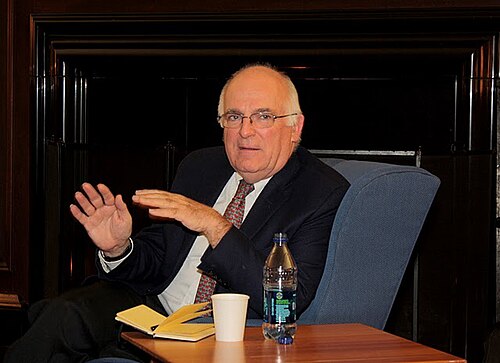 Sir Richard Dearlove
8
16 May 2016 – 13 Mar 2026
-2838 d
-
 David Friedberg
22
15 Mar 2020 – 13 Aug 2026
-1439 d
-
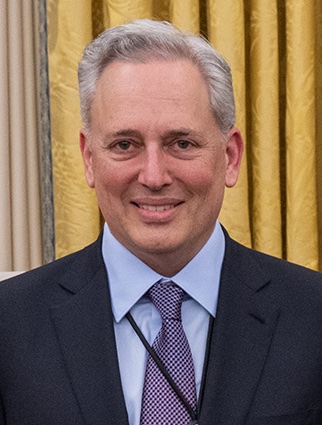 David Sacks
6
20 Jun 2020 – 27 Sep 2025
-1342 d
-
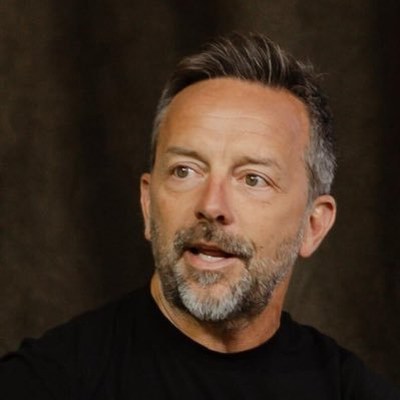 Brad Gerstner
35
17 Apr 2021 – 6 Jul 2026
-1041 d
- Dylan Patel 4 thin 4 Oct 2023 – 9 Mar 2026 -141 d
-
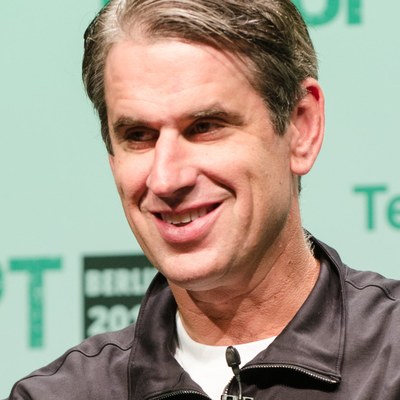 Bill Gurley
19
22 Feb 2024 – 21 Jul 2026
+0 d
-
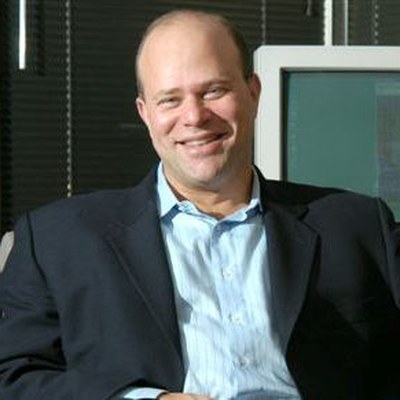 David Tepper
3
thin
26 Sep 2024 – 18 Sep 2025
+217 d
-
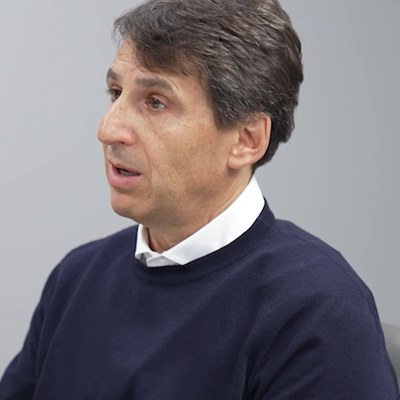 Marc Rowan
6
9 Oct 2024 – 21 Dec 2025
+230 d
-
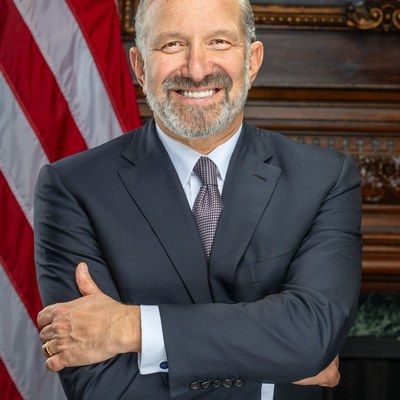 Howard Lutnick
4
thin
12 Mar 2025 – 11 May 2026
+384 d
-
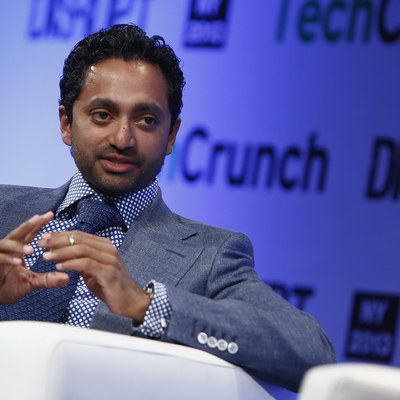 Chamath Palihapitiya
8
7 Sep 2025 – 26 Jun 2026
+563 d
-
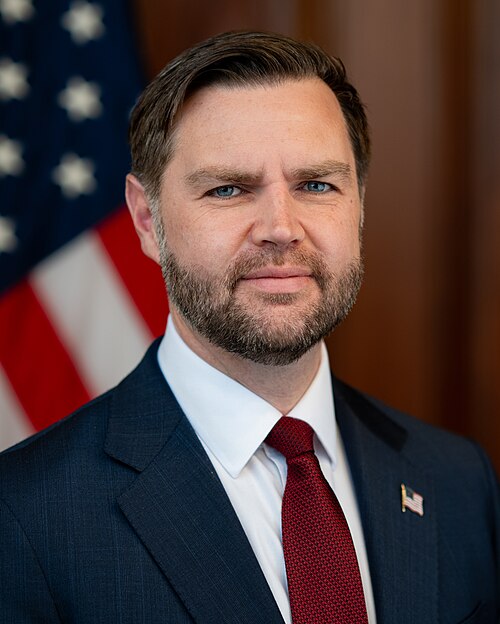 JD Vance
4
thin
24 Aug 2026 – 25 Aug 2026
+914 d
-
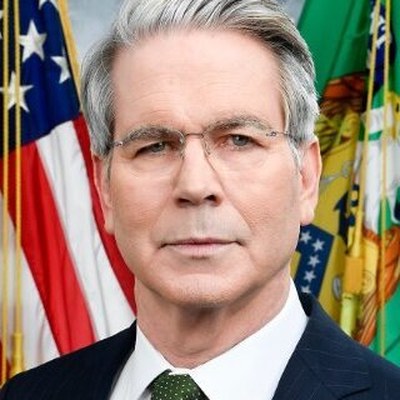 Scott Bessent
20
24 Aug 2026 – 25 Aug 2026
+914 d
-
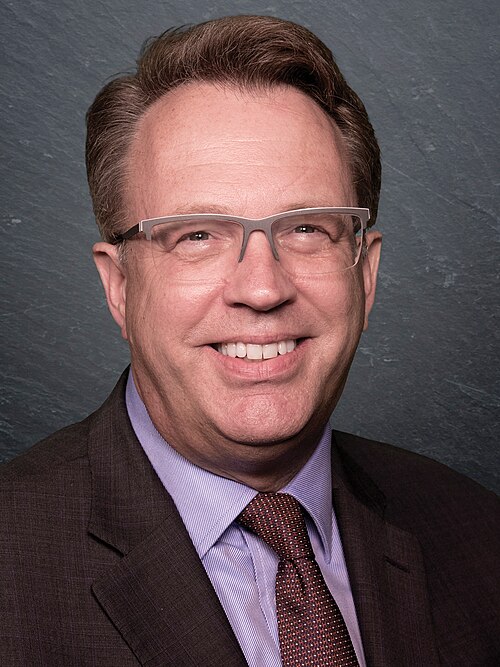 John Williams
10
-
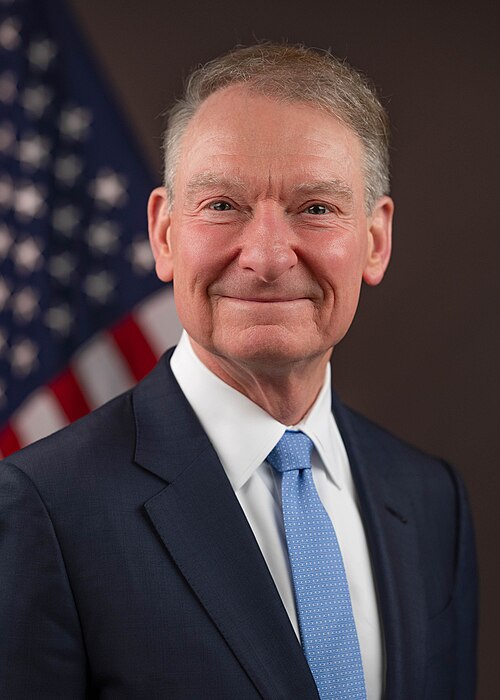 Paul Atkins
2
thin
The chronologysourced and dated, oldest first
-
-
Sir Richard Dearlove
Dearlove argues that closing borders to migration is impossible without removing the underlying causes driving it.
“Simply shutting the door on migration is not an option. History tells us that human tides are irresistible unless the gravitational pull that causes them is removed.”
-
-
-
Sir Richard Dearlove
Dearlove says Iraq invasion decision placed 100% weight on intelligence rather than the usual 80% on overt information.
“when it came to persuading Parliament to vote in favor of the invasion, 100% of the decision weight on the policy was placed on the intelligence.”
-
Sir Richard Dearlove
Dearlove argues Iraq invasion decision placed 100% weight on intelligence rather than normal 80% policy mix.
“So as it were, the intelligence beam had too much weight on it and it buckled.”
-
Sir Richard Dearlove
Dearlove says UK was not consulted on Bremer's dissolution of Iraqi military and advised Blair against it.
“The UK was not consulted on that issue. And my advice to Blair, which he didn't follow,”
-
Sir Richard Dearlove
Dearlove advised Blair not to dissolve Iraqi army and Ba'ath structures but Blair did not follow advice.
“And my advice to Blair, which he didn't follow, because I'm not a policy guy, but I said, look, what we should have because bits of the Iraqi army were not particularly contaminated by Saddam Hussein.”
-
-
-
David Friedberg
Friedberg says the US missed the boat on IgG and IgM antibody tests to know who has been infected.
“But what we really have missed the boat on, and we're still missing the boat on, is knowing who's been infected and to what extent this thing has actually spread already.”
-
David Friedberg
Friedberg argues IgG/IgM tests should have been prioritized because they work like pregnancy kits, unlike expensive PCR tests.
“You should still have the PCR tests, but they're expensive and they take a long time to run and they require chemical labs and all this stuff.”
-
David Friedberg
Friedberg argues remdesivir should be widely available without compassionate use filing since there's no mortality from taking it.
“Remdesivir should be broadly and widely available right now. People shouldn't have to file for compassionate use to get it.”
-
David Sacks
Sacks cites Japan, South Korea, and Czech Republic as proof that mask-wearing controls COVID.
“South Korea, fifty one million people under three hundred deaths. You take a a Western European nation like Czech Republic, they had a huge COVID outbreak, a spike just like the rest of Europe.”
-
David Friedberg
Friedberg advocates ending qualified immunity, demilitarizing police, and retraining them for mental health and empathy rather than trigger-readiness.
“I I'm a huge fan of ending qualified immunity. I think that doesn't make any sense. I think we have to stop arming our police like their military. Don't train them like the military.”
-
David Sacks
Sacks cites research showing unionized police departments have more complaints and use of force issues.
“Bill Gurley has been tweeting a lot of great research that around police departments that are unionized, there's a lot more complaints against them.”
-
David Friedberg
Friedberg argues happiness comes from relative standards and progression, not absolute living standards.
“Well, I don't think happiness comes from, you know, absolute standards of living. I think happiness arises from one's relative standard of living, whether that's relative to how you lived last year or how you're living relative to your neighbor and seeing some progression over time is the only thing that keeps people happy. It's otherwise society decays.”
-
-
-
Brad Gerstner
Gerstner proposes putting up $10-15 million to incubate Invest America accounts directly instead of lobbying.
“I don't wanna go spend 10,000,000 in Washington to lobby them to create the Invest America account. Let's you and I put up the money. Let's incubate this.”
-
Brad Gerstner
Gerstner proposes putting up 10 to 15 million dollars to build Invest America proof of concept.
“Let's, you know, let's let's put up $10.10, $15,000,000. Let's distribute it to families, $2,000 at a pop. Let's build a proof of concept, hire a great CEO.”
-
-
-
David Sacks
Sacks criticizes expansive US objectives in Ukraine including toppling Putin and framing as autocracy versus democracy.
“And moreover, you've got the State Department declaring that we're in a global struggle between autocracy and democracy. So we've defined the struggle in Manichean terms.”
-
David Sacks
Sacks claims no American president has ever declared Ukraine a vital US national interest.
“no American president has ever claimed that The United States has a vital national interest in Ukraine. Name the president who's done it before.”
-
-
-
David Friedberg
Friedberg argues private enterprises can allocate capital faster and smarter than government funding sources.
“I think it's about, you know, we we can aggregate more money through a central source, some federal grants or or what have you.”
-
Dylan Patel
Patel argues export restrictions clearly failed because China manufactured advanced Huawei chip demonstrating broader capabilities.
“The export restrictions have clearly failed because China is still able to manufacture. And what's surprising about the chip that Huawei did is, you know, it's a phone chip.”
-
Brad Gerstner
Gerstner calculates that Invest America started thirty years ago would give 29-year-olds $250,000 today.
“If we had started this thirty years ago, a 29 year old today would have over $250,000 in their Invest America account.”
-
Brad Gerstner
Gerstner proposes legislation for Treasury to create 3.7 million private investment accounts annually for every child born.
“It's legislation that would cause the treasury department to create 3,700,000 private investment accounts a year. So we have 3,700,000 children born a year.”
-
Brad Gerstner
Gerstner proposes federal government seed $1,000 S&P 500 accounts for all newborns since 70% never benefit from investment.
“Seed it with $1,000 in the S and P 500 because today, 70% of families and kids will never benefit from savings or investment, right?”
-
Brad Gerstner
Gerstner proposes federal government seed $1,000 S&P 500 accounts for 3.7 million children born annually.
“This idea is a bipartisan piece of legislation where the federal government will seed a private investment account for every child born in America. So think about this. 3,700,000 children born a year.”
-
-
-
Brad Gerstner
Gerstner proposes seeding 3.7 million accounts annually with $1,000 each, costing $3.7 billion yearly.
“This legislation will cause the Treasury Department to set up 3,700,000 private accounts. Those private accounts will be seeded with $1,000 from the federal government.”
-
Brad Gerstner
Gerstner says Invest America would cost $3.7 billion annually, less than one-tenth of 1% of federal revenue.
“The total cost to the government is $3,700,000,000 less than one tenth of 1% of our federal revenue.”
-
Bill Gurley
Gurley argues US should build semiconductor plants in Mexico or Vietnam rather than onshore them given labor model realities.
“Like I, you know, I'm not- Provocative. Like, yeah, it's provocative because it says that if America is really worried about the concentration in Taiwan, they should probably be trying to help build semiconductor plants in Mexico or Vietnam or that kind of thing versus bringing them here”
-
Bill Gurley
Gurley argues taxing unrealized capital gains would undermine entrepreneurial incentives and is nearly impossible to implement.
“this crazy idea to tax unrealized capital gains and how that in and of itself is not only almost impossible to implement, but also would undermine the very incentive that entrepreneurs have to go create businesses.”
-
Bill Gurley
Gurley says Silicon Valley's political shift is about entrepreneurship policy, not personal tax rates.
“Right? I do hear things around key policy areas that impact entrepreneurship that people care deeply about.”
-
Brad Gerstner
Gerstner states expiring individual tax cuts are worth 150 billion dollars or 60 basis points of GDP.
“the individual tax cuts, which included increasing the child tax credit, the standard deduction, it's it's worth about a $150,000,000,000 a year to put it in perspective.”
-
Brad Gerstner
Gerstner argues US can address nuclear cost problems through regulatory consolidation and clustered reactor construction.
“It seems to me the first two, right, we can tackle, right? You can consolidate the regulatory environment in The United States so that you reduce the time to bring one of these things online and I also think that if you clustered some of these, if we wanted to get back to building more of these reactors”
-
Bill Gurley
Gurley urges US to respect China and Korea's superior execution and pursue Manhattan Project approach.
“And then two, consider some type of Manhattan project like approach where you get out of the current environment,”
-
David Tepper
Tepper emphasizes that China's commitment to do more is very strange language especially for Chinese central bankers.
“Now the Chinese to say we'll do more and more if needed, they don't say that because it's not been healthy to say those sort of things in China.”
-
Brad Gerstner
Gerstner proposes every child born gets a $1000 Invest America account in S&P 500.
“So every child born, 3,700,000 children born in this country a year, they all get a thousand dollar investment account invested in the S and P 500.”
-
Marc Rowan
Rowan predicts a change in administration will introduce illiquidity into 401(k)s, creating substantial industry demand.
“It's my belief that if we have a change in administration, we will have in a very short period of time illiquidity introduced into 04/2001 ks.”
-
Bill Gurley
Gurley argues blocking technology exports to China is not working and US needs to face reality.
“And I don't think blocking ASML or blocking AI technology or blocking anything is working. It's just not working.”
-
Brad Gerstner
Gerstner describes Invest America as creating 3.7M annual investment accounts for newborns with corporate contributions from Uber, Dell, Oracle, Nvidia.
“So the idea is that the federal government would cause to be created 3,700,000 investment accounts a year for every child that's born in America.”
-
Brad Gerstner
Gerstner argues regulatory burdens keep companies private longer, harming retail investors.
“I think we're better off as a country when these companies are coming public sooner. But that's that's in fact what's happened. So we invest early.”
-
Brad Gerstner
Gerstner calculates that $1,000 seed accounts for all newborns would cost $3.7 billion annually.
“So if you give $1,000 in a seed capital account to each of the newborns in this country every year, it costs $3,700,000,000 Okay? $3,700,000,000”
-
-
-
David Friedberg
Friedberg notes Chevron doctrine overturn removes agencies' authority to impose regulatory rules without congressional mandate.
“And the Chevron doctrine basically allowed agencies vested agencies authority to make regulatory, rules that can then be imposed legally, statutorily.”
-
Marc Rowan
Rowan proposes universities eliminate consideration of race, gender, and religion in admissions while allowing first-generation and economic considerations.
“In admissions and in faculty hiring, no consideration of race, ethnicity, gender, sexual orientation, political viewpoint, religious viewpoint, otherwise. Merit.”
-
Marc Rowan
Rowan proposes merit-based admissions and hiring that allows consideration of socioeconomic status but not identity categories.
“In admissions and in faculty hiring, no consideration of race, ethnicity, gender, sexual orientation, political viewpoint, religious viewpoint, otherwise. Merit. That does not mean you cannot hire the best basketball team.”
-
Brad Gerstner
Gerstner argues Trump may have principled decade-long belief in tariffs beyond tactical negotiating.
“I think that Trump may in fact have a much, much deeper and more principled belief in tariffs. If you listen to his speeches, if you read them, and this goes back over a decade.”
-
Brad Gerstner
Gerstner suggests Trump believes America peaked during 1880s high-tariff era before income tax replaced tariff revenue.
“So prior to 1910, which is when we got the income tax, right, the vast majority,”
-
Brad Gerstner
Gerstner argues sovereign wealth fund must clear 5% hurdle rate given $40 trillion debt at 5% cost.
“So we're a debtor nation, and we're paying 5% on all that debt. So the hurdle rate to our return that is needed on the sovereign wealth fund, right, is 5%.”
-
Howard Lutnick
Lutnick reveals Trump's goal is no income tax for anyone making under $150,000 a year.
“I know what his goal is. No tax for anybody who makes less than a $150,000 a year. That's his goal. So you And that's what I'm working for.”
-
Howard Lutnick
Lutnick reveals Trump's goal is no income tax for anyone earning under $150,000 annually.
“I know what his goal is. No tax for anybody who makes less than a $150,000 a year. That's his goal.”
-
Dylan Patel
Patel argues $52 billion Chips Act is insufficient to restore US to even 20% of global semiconductor production.
“S. To even 20% of global production, let alone a higher number, which is what we'd like, going back to maybe the 80s levels, right?”
-
Brad Gerstner
Gerstner says tariffs aim for $500 billion versus current $50 billion, a 10x increase targeting China, Canada, and Mexico.
“The president is targeting 500,000,000,000, so a 10x increase in tariff revenue. Right? He just announced today, again, China, Canada, Mexico.”
-
Brad Gerstner
Gerstner says 70% of Americans lack compounding accounts and proposes $1,000 at birth in private federal accounts.
“We need to get them into the game. So it's a thousand dollars at birth, seeded by the, the federal government, but private accounts.”
-
Brad Gerstner
Gerstner says Invest America would give 3.7 million kids born annually a private account like a 401(k).
“3,700,000 kids born a year. They each get a private account. Think of it as a four zero one k from birth.”
-
Brad Gerstner
Gerstner says $3.7 billion annual cost for Invest America equals one Patriot missile battery, calling it budget dust.
“Just to contextualize that, that's about the cost of a single Patriot missile battery. In in Washington, they call this budget dust.”
-
Brad Gerstner
Gerstner argues it is too early to regulate AI, comparing premature regulation to regulating auto industry out of existence.
“I think we definitely are in the camp that it is way too early to obstruct American AI with you know useless regulations like we don't even know what we should be regulating.”
-
Dylan Patel
Patel says new Trump tax bill allows year-one depreciation of GPU clusters, saving Meta ten billion dollars annually.
“If Jensen was here, you know, I think I think he has a massive, massive balance sheet. Right? Jensen does.”
-
Bill Gurley
Gurley warns bringing manufacturing jobs back may be futile as automation eliminates those positions.
“Like, if you wanna bring the jobs back there by the time you get the jobs back, there may not be any jobs. Like like, at one Because of automation.”
-
Bill Gurley
Gurley found only four of 24 CCP select committee members have visited China, last trips seven years ago.
“I did a deep dive on on your favorite product chat, GBT, $300 version deep research, and on the 24 members of the select committee for the CCP.”
-
Bill Gurley
Gurley finds only four of 24 members on China committee have visited China, last time seven years ago.
“And I think all but four have never been to China. Right. And the ones that went, it was seven years ago.”
-
Marc Rowan
Rowan believes the current administration is enabling more transparency and liquidity in private markets.
“I think we're gonna see more transparency, more market making, more liquidity, more access. And I think the steps that this administration has taken are actually putting us down that path.”
-
David Sacks
Sacks says DC had its first two weeks without murders in a long time under National Guard deployment.
“Crime is down. I think we had the first two weeks where there was no murders in the capital in a long time. The residents are very happy. So this is definitely working.”
-
Chamath Palihapitiya
Palihapitiya proposes Congress require critical economic infrastructure to report anonymized data into blockchains for accurate economic measurement.
“I think we need to figure out a way, and this is where congress should get their act together, and pass an incentive or a requirement for certain parts of the critical economic infrastructure of America to report their data in an anonymized way into a broad set of blockchains.”
-
Brad Gerstner
Gerstner proposes giving every newborn a $1,000 S&P 500 account with corporate contributions from major companies.
“You start every child at birth, 3,700,000 kids with $1,000 investment account in the S and P 500. It's a four zero one ks from birth.”
-
Brad Gerstner
Gerstner says his Invest America proposal was included in reconciliation bill after three-year fight.
“I fought for this for three years. We just got it included in the reconciliation bill. The House lost their mind, some freedom caucusers and tried to rename it MAGA accounts.”
-
David Tepper
Tepper says he doesn't love tariffs but 10% tariffs don't make a meaningful difference to the economy.
“I don't love tariffs. On the other hand, I don't think 10% tariffs, at least at that level, make a difference.”
-
David Tepper
Tepper finds 25% or 50% tariffs destructive but understands 5-10% tariffs as acceptable policy.
“I don't love the the 25% or the 50% tariffs. I think they're a little bit destructive. But quite frankly, you know, five or 10% or, you know, which are a little bit higher.”
-
David Sacks
Sacks argues the $100,000 H-1B fee will redirect applications from low-end IT jobs to high-skilled positions with actual American shortages.
“And I think by putting this $100,000 fee on it, you encourage the applications to go to the actual higher skilled, higher paid jobs where there's actually a shortage of Americans.”
-
David Friedberg
Friedberg proposes two separate programs for highly skilled workers, citing Operation Paperclip which recruited 1,600 German scientists between 1945-1959.
“Well, I think there should be two separate programs for what we could call highly skilled workers.”
-
Brad Gerstner
Gerstner reports 65 million kids qualify for Invest America accounts, with launch expected early December.
“at the start today, there are 65,000,000 kids in the country qualified for an Invest America account, every kid under the age of 18.”
-
Sir Richard Dearlove
Dearlove cites Australia as an example of handling China firmly despite intense commercial ties.
“And the Australian government have shown everybody that they can be very tough when they feel that their national security has been threatened by China, which it has on a number of occasions.”
-
Chamath Palihapitiya
Palihapitiya argues addressing housing, healthcare, and student debt would transform domestic policy and impact 50 to 75 million households.
“So I think if we get these three issues addressed, something in housing, something in health care, and something on the student loan side, it is a transformational domestic policy agenda that puts affordability front and center that will impact 50 to 75,000,000 American households.”
-
David Friedberg
Friedberg states LA City Council limited rent increases to 90% of CPI annually with 12 to 2 vote.
“And what they voted is that the landlord cannot increase the rent on an annual basis by more than 90% of CPI.”
-
David Friedberg
Friedberg states Fannie and Freddie have issued or supported about $8 trillion in home loans combined.
“So Fannie and Freddie combined have issued or supported about $8,000,000,000,000 of home loans. The initial view on that would be, okay. Great.”
-
Chamath Palihapitiya
Palihapitiya explains H-1B abuse where large companies apply for 300,000 visas at once, overwhelming smaller applicants.
“What he described is that when the application window opens for what is a very small number of h one b's, a company that has, you know, call it 300,000 employees abroad will apply on behalf of all 300,000 because they're all roughly the same kind of employee. Whoever gets it gets to come over.”
-
Chamath Palihapitiya
Palihapitiya identifies $45,000 to $63,000 income range as stagnation zone where benefits create poverty trap.
“There is a very specific part of, though, what he said, which I think we should focus on, which is there is an area between $45,000 a year and $63,000 a year, which actually looks like a bit of a stagnation zone.”
-
David Friedberg
Friedberg cites Norway's 2022 wealth tax causing $54 billion capital flight and $448 million revenue loss versus $146 million target.
“The wealth tax was supposed to raise a $146,000,000 of incremental revenue per year. Instead, what happened? $54,000,000,000 of net worth left the country, and they actually had a $448,000,000 tax loss.”
-
Marc Rowan
Rowan argues governments are borrowing record amounts while fragmenting labor and goods flows through immigration and tariff policies.
“We have governments around the world who are borrowing record amounts of money. We are, for maybe good and valid reasons, fractionalizing our labor supply through immigration reform.”
-
Marc Rowan
Rowan says governments are borrowing record amounts while fracturing labor and goods flows through immigration and tariff policies.
“We have governments around the world who are borrowing record amounts of money. We are, for maybe good and valid reasons, fractionalizing our labor supply through immigration reform.”
-
-
-
Brad Gerstner
Gerstner predicts 60 million Invest America accounts will be created by June, calling it a massive change.
“60,000,000 accounts created this year by June. Invest America Trump accounts are gonna change the game. It's gonna be a massive change for this country.”
-
Chamath Palihapitiya
Palihapitiya proposes a $100-200 billion tax equity vehicle for hyperscalers to subsidize homeowner solar and storage.
“The next major thing is when you actually create a 100 or $200,000,000,000 tax equity vehicle, and you have them completely subsidize and pay for the electricity costs of homeowners.”
-
Chamath Palihapitiya
Palihapitiya calls for a $300-500 billion tax equity fund to eliminate electricity costs for 50-100 million households.
“I think the president should try to create a $3.04, $500,000,000,000 tax equity fund and help eliminate the electricity costs of 50 to a 100,000,000 American households.”
-
David Friedberg
Friedberg says removing longtime taxpaying immigrants without a path to citizenship risks civil war.
“I don't know how you're gonna do it. I don't know how you're gonna do it without inciting a civil war.”
-
Brad Gerstner
Gerstner announces that starting July 4, 2026, every child born will receive a thousand-dollar investment account at birth.
“In 2026, this year on July 4, every child born forevermore, think about that, forevermore. This is the magnitude of Social Security.”
-
David Friedberg
Friedberg states Social Security trust fund holds only a $4 trillion IOU from the US government, not actual assets.
“People don't realize this, but Social Security is an independent trust fund that's set up, and it holds one asset. That asset is an IOU from the US government to that From tax.”
-
“The president said last week, twenty years from now, there will be a 100,000,000 kids and families that have 3 to 4,000,000,000,000 in wealth that would have otherwise had zero because they start off with a thousand dollars, and we add money to those accounts.”
-
Bill Gurley
Gurley argues regulation most often protects incumbents despite public perception to the contrary.
“But the idea is simple that regulation, I'd say most often ends up protecting the incumbent and the world thinks the opposite is true.”
-
Bill Gurley
Gurley argues regulation most often protects incumbents rather than constraining them, contrary to public perception.
“And so companies get big, they spend money lobbying, they spend time in Washington and they get laws written to help them rather than to constrain them.”
-
Bill Gurley
Gurley plans to study countries with less regulatory capture to understand their policies for his new institute.
“Want to, and this will be part of my new thing. I want to go study countries that have less of it and try and understand the policies.”
-
Bill Gurley
Gurley notes committee members fundraise across jurisdictions, which he finds inappropriate.
“One thing that's really amazing that most Americans probably don't realize is once your senator or congressman goes on a committee, they start fundraising in other jurisdictions.”
-
Bill Gurley
Gurley states capitalism and democracy corrupt each other over time as they commingle.
“I made up this statement once that capitalism and democracy corrupt each other over time. Like at the starting state, everything's fine.”
-
David Friedberg
Friedberg says US government is using International Development Finance Corporation to directly insure maritime shipping routes through conflict zones.
“And so they're they're leveraging the credit capacity of this old USAID agency to go out and say to all the shipping companies, hey. We'll give you insurance on your routes.”
-
Dylan Patel
Patel criticizes Dario's response to hypothetical nuclear scenario as inadequate for government AI policy discussions.
“If a nuclear missile's heading from China to America and we can use AI to stop it, but it requires surveillance and autonomous weapons, what do we do?”
-
Sir Richard Dearlove
Dearlove reveals US general was in hangar with 400 Iraqi officers when disbandment order arrived ending their pensions simultaneously.
“I mean, the huge mistake that Bremer made in Iraq on which we were not consulted, I was chief at the time, was to disband the Iraqi military.”
-
Sir Richard Dearlove
Dearlove reveals 400 Iraqi officers lost pensions when disbanding order came mid-meeting about governance.
“He said to me last week, couple of weeks ago, that he was actually in a hangar in Baghdad talking to 400 senior Iraqi officers about running the country when the order came through to disband the army, and they all lost their pensions at the same time.”
-
David Friedberg
Friedberg notes California ballot measure for 5% wealth tax on billionaires with legislative power to lower threshold.
“Well, it's it's on the ballot now in California to pass a wealth tax, and it starts as a one time 5% tax for billionaires, but it gives the legislature in California the ability to lower the threshold”
-
David Friedberg
Friedberg asks how to fix agriculture so farmers can earn a living without government checks.
“Do think we have a path to fixing agriculture in this country? And how do we get farmers back on track where they can earn a living without requiring checks from the government?”
-
David Friedberg
Friedberg states tort litigation costs the US economy $900 billion annually, 3% of GDP, growing 10% yearly.
“900,000,000,000 a year. That's how much is spent on the litigation costs, the settlements, the judgments. It's 3% of GDP, and it's growing roughly 10% per year.”
-
Bill Gurley
Gurley credits Pinker and others with shifting public perception on nuclear energy from negative to positive.
“Like like, the the the world has vilified this technology. It's amazing technology. It's clean technology.”
-
Bill Gurley
Gurley credits Pinker, Musk, and others for shifting nuclear energy perception from vilified to positive five years ago.
“Like like, the the the world has vilified this technology. It's amazing technology. It's clean technology. What Germany is doing is bad.”
-
David Friedberg
Friedberg states that 80 billion of California's 100 billion in new tax revenue went to public pensions, not schools.
“Not a big chunk, but I've done my part. And 80,000,000,000 of that went to increase and it was supposed to go to increasing schools and, like, health care services.”
-
David Friedberg
Friedberg estimates nearly half the US population receives government paychecks, pensions, or welfare benefits.
“Today, if you add up federal, state, local government employees, plus all the contractors for the government, plus all the people that live off of a retirement check or or a welfare support check, so all the people that are living off government checks, it's about nearly half The US population.”
-
Chamath Palihapitiya
Palihapitiya says Maine banned all data center buildings, showing compute constraints driving unusual market moves.
“So I think the reason why Allbirds went crazy is a very, very small canary in a very important coal mine, which is we are absolutely compute constrained.”
-
Bill Gurley
Gurley says congressmen raise money outside their geographic area once on committees, which should be illegal.
“And there's another crazy thing that I learned in the Tropo situation is your senator and your congressman, the minute they get on committees, they start raising money outside of your geographic area.”
-
Bill Gurley
Gurley says Austin, one of the fastest growing cities, has seen rents fall for four years due to good policy.
“One of the fastest growing cities in the nation, rents have fallen for four years. That's good policy.”
-
Brad Gerstner
Gerstner says Invest America law launches in sixty days with automatic accounts for every child.
“It's an unbelievable dream that became law last July 4. Starting in, on July 4, just sixty days from today, every child forevermore born in America will start off with an investment account at birth,”
-
Brad Gerstner
Gerstner announces Invest America accounts launching July 4th with automatic $1,000 for every newborn.
“Starting in, on July 4, just sixty days from today, every child forevermore born in America will start off with an investment account at birth, automatic, stapled to their Social Security with a thousand dollars in the S and P 500.”
-
Howard Lutnick
Lutnick commits to using the best and most precise data for decisions affecting lobstermen.
“We promise you that we will use the best data and the most precise data to make sure that our decisions are right for America, and they need to be right for the lobstermen of Maine.”
-
Howard Lutnick
Lutnick commits Commerce will never pick just one winner in technology solutions.
“That is an easy commitment for us. We will never pick just one winner. That that makes no sense for America.”
-
Chamath Palihapitiya
Palihapitiya identifies Canada, UK, and Australia as having moved far toward socialism with disastrous outcomes before the United States.
“I was on Megyn Kelly yesterday, and I had this theory that I've been kind of working through. And I'll just share it with you guys because I'd love your reaction.”
-
Brad Gerstner
Gerstner cites research showing children with savings have better educational, economic, and incarceration outcomes.
“And we know when kids have savings, when they have investment, they're more likely to graduate from high school and college. They're more likely to buy a home.”
-
Brad Gerstner
Gerstner announces that starting Saturday, every American child born will receive a $1,000 S&P 500 account at birth.
“The idea that starting this Saturday, every child born forevermore forevermore in the history of America will get an investment account at birth, seeded with a thousand dollars in the S and P 500 that will compound for their lifetime.”
-
Brad Gerstner
Gerstner opposes any government seizure of company equity regardless of party, calling it unconstitutional and un-American.
“You pick the number. I don't care who's suggesting it. I don't care if a Republican suggesting it. I don't care if a Democrat's suggesting it.”
-
“Every child forevermore born into this country under the age of two is gonna get a thousand dollars invested in the S and P 500 that can compound for their lifetime.”
-
Brad Gerstner
Gerstner opposes Bernie's proposal to take 25-50% of AI companies but supports voluntary 1-5% contributions.
“I totally disagree with Bernie's suggestion that you're just gonna take 50% of these companies or 25% of these companies.”
-
David Friedberg
Friedberg argues California's AI legislation made no sense and couldn't map to current technology, justifying industry self-regulation.
“As we saw in California, when California tried to pass AI legislation, I think it was about a year, a year and a half ago, none of what they wrote even made sense at the time, But fast forward a year, none of those kind of rules and requirements actually map to the technology of the day.”
-
Bill Gurley
Gurley says people elect officials based on intentions without tracking whether they create actual change.
“And I think we elect a lot of people because we like what they're saying, but no one follows up to see if they can actually create change.”
-
Bill Gurley
Gurley suggests highlighting state versus state competition in US modeled on China's provincial competition.
“I'm I'm enamored by the provincial competition in China, and I wonder if shining a brighter light on state versus state competition could lead to some pretty amazing and positive things for our own country.”
-
David Friedberg
Friedberg says housing, education, and healthcare inflated at 5-6% versus 2.5% average where government launched subsidy programs.
“And all three of these categories are categories where the federal government has launched programs to either subsidize or make available these categories of services to people through promises.”
-
David Friedberg
Friedberg argues government spending of $300B housing, $200B education, $2T healthcare makes things more expensive, questioning government role.
“And the more that the government provides, 300,000,000,000 a year in housing support, 200,000,000,000 a year in education, over a trillion dollars, $2,000,000,000,000 almost in health care, the more things get more expensive.”
-
JD Vance
Vance says Trump administration invests $1,000 in every newborn through Trump accounts.
“We have invested a thousand dollars in every new baby born in The United States Of America, thanks to Trump accounts, which we're very proud of.”
-
Scott Bessent
Bessent declares zero breathing space policy to prevent Iran from rebuilding terror capacity.
“There will be no minimal breathing space for the regime to rebuild its capacity to inflict terror against America and the world.”
-
Scott Bessent
Bessent announces zero leakage enforcement approach denying Iran any breathing space to rebuild terror capacity.
“We are enforcing a zero leakage approach. There will be no minimal breathing space for the regime to rebuild its capacity to inflict terror against America and the world.”
-
Scott Bessent
Bessent argues Treasury's credibility with secondary sanctions depends on not taking their use lightly.
“And in the terrorism finance department and in OFAC, the reason we are able to use secondary sanctions is because we do not take their use lightly.”
-
JD Vance
Vance says the administration put government on the side of small businesses against big corporations with legal armies.
“So what have we done? We have put the government on the side of companies like Competec and the workers who are building this community.”
-
Scott Bessent
Bessent says Treasury is giving a cure period but will move very quickly if expectations are not met.
“We believe that it is important to level set and give people a cure period, but they should know that that will move very quickly and that we are serious.”
-
JD Vance
Vance directly attributes Maine overdose decline to border sealing policy.
“We sealed the border, and that's what happened, my friends, and that's why we did it.”
-
Scott Bessent
Bessent declares that buying appeasement from Iran will no longer work with the United States.
“And on the other side, with this regime, trying to buy appeasement will no longer work in the eyes of The United States Of America.”
-
JD Vance
Vance contrasts Democratic anti-business stance with Trump administration's support for businesses that invest locally in workers and American products.
“The Democrats have this idea that business is bad and everybody else is good. Our attitude is much more subtle, but it's much more real and true.”
-
-
-
Scott Bessent
Bessent announces Treasury is doubling the size of liquidity support buybacks for 10-to-30-year nominal securities.
“increasing, by at least double, the size of liquidity support buyback operations for longer-dated nominal coupon securities (the 10-year to 20-year sector and the 20-year to 30-year sector).”
-
Scott Bessent
Bessent announces Treasury will double buyback operation sizes from $2 billion to at least $4 billion starting September 9, 2026.
“The current maximum size of $2 billion per operation will be at least $4 billion per operation.”
-
Scott Bessent
Bessent says Treasury promised to sever every economic lifeline Tehran has left and end the Iranian regime threat.
““Treasury promised to sever every economic lifeline Tehran has left and finally end the threat of the Iranian regime,” said Secretary of the Treasury Scott Bessent”
-
Scott Bessent
Bessent says Treasury is relentlessly targeting narcoterrorist networks profiting from poisoning Americans under Trump's leadership.
““Under President Trump’s leadership, Treasury is relentlessly targeting the narcoterrorist networks that profit from poisoning Americans,” said Secretary of the Treasury Scott Bessent .”
-
Scott Bessent
Bessent argues taxpayers should not fund benefits for those legally barred from receiving them.
““American taxpayers should not be forced to foot the bill for benefits going to those who are barred by law from receiving them.”
-
Scott Bessent
Bessent warns far-left extremists Treasury will use full economic tools against them.
““Far-left extremists, their fronts, and their enablers should be on notice: We will bring the full weight of our economic tools to bear,””
-
Scott Bessent
Bessent says the regulations end abuse, protect tax system integrity, and prioritize Americans.
“These proposed regulations end the abuse, protect the integrity of the tax system, and put Americans first.””
-
Scott Bessent
Bessent says Trump took action predecessors deferred and America is no longer managing the Iranian threat.
““President Trump has taken action that his predecessors have long deferred. Under his leadership, America is no longer managing the Iranian threat.”
-
Scott Bessent
Bessent says Trump is ending Iran threat rather than managing it like predecessors.
““President Trump has taken action that his predecessors have long deferred. Under his leadership, America is no longer managing the Iranian threat. We are ending it.”
-
Paul Atkins
Atkins says SEC is considering combining IIB and SIFMA relief requests into single order.
“the Commission is evaluating potential paths forward on both Notices, including an approach that would address—in a single Commission order—the relief requested in the IIB Notice and the relief requested in the SIFMA Notice concerning the outward facing condition.”
-
Scott Bessent
Bessent pledges to cut financial lifelines of political terrorist groups until eliminated.
““Political terrorism has no place in our society, and we will continue to cut the financial lifelines of these groups until they are eliminated.””
-
Scott Bessent
Bessent says Trump is ending the Iranian threat, not merely managing it.
“And under his leadership, America is no longer managing the Iranian threat. We are ending it.”
-
John Williams
Williams confirms the FOMC ended balance sheet runoff effective December 1.
“the Committee made that decision at its October meeting, with portfolio runoff ending effective December 1.”
-
Scott Bessent
Treasury states transitioning to post-quantum cryptography is essential to protecting U.S. economic security.
“Transitioning to post-quantum cryptography is essential to protecting U.S. economic security and strengthening the resilience of the financial system.”
-
Scott Bessent
Bessent announces a zero-leakage sanctions approach with no breathing space for Iran to rebuild.
“We are enforcing a zero-leakage approach. There will be no minimal breathing space for the regime to rebuild its capacity to inflict terror against America and the world.”
-
Scott Bessent
Bessent says there will be no breathing space for the Iranian regime to rebuild its terror capacity.
“There will be no minimal breathing space for the regime to rebuild its capacity to inflict terror against America and the world.”
-
Paul Atkins
Atkins says registered offering reform would expand shelf registration to nearly all public companies.
“Registered offering reform would expand the full availability of shelf registration to nearly all public companies”
-
John Williams
Williams argues central banks should support economic historians because they can efficiently provide complementary research inputs.
“This observation to me provides a compelling reason for why a central bank Research Group should support economic historians.”
-
John Williams
Williams says regular engagement helps central banks fine-tune approaches by learning from each other's experiences.
“I’ve found that regular engagement allows central banks to fine-tune their individual approaches, so that we can learn from one another’s experiences to better meet the needs of our constituencies.”
-
John Williams
Williams says average effective tariff rate estimates range between 15 and 20 percent.
“Combining enacted and announced tariffs, estimates of the resulting average effective tariff rate range somewhere between 15 and 20 percent.”
-
Scott Bessent
Bessent says Iran's calculus of certain retaliation and negotiable U.S. enforcement is over under Trump.
“For decades, this regime has drawn strength from a calculus that regards Iranian retaliation as certain and American enforcement as negotiable. Under President Trump, that era is over.”
-
John Williams
Williams reports the FOMC held the federal funds rate at 3.5 to 3.75 percent.
“Accordingly, at its meeting last week, the FOMC decided to maintain the target range for the federal funds rate at 3-1/2 to 3-3/4 percent.”
-
John Williams
Williams argues gradual recognition of productivity shifts causes both consumption and investment to grow with delayed interest rate increases.
“With gradual recognition consistent with empirical evidence, an acceleration in productivity results in faster growth of both consumption and investment.”
-
John Williams
Williams announces FOMC will end balance sheet runoff on December 1.
“At its meeting last week, the FOMC decided it would conclude the reduction of its aggregate securities holdings on December 1.”
-
John Williams
Williams says the Committee will consider stopping runoff when reserves reach ample levels.
“The Committee has indicated that it will consider stopping balance sheet runoff when we reach that point.”
-
John Williams
Williams says the Fed will resume growing the balance sheet when reserves reach ample levels.
“When market conditions suggest reserves are ample, we will provide those liabilities by beginning to grow our balance sheet once again.”
-
John Williams
Williams suggests centrally clearing standing repo operations could improve participation and efficacy, noting other central banks moving this way.
“Centrally clearing SRPs would be one way to reduce such cost and thus could further improve counterparty participation and the efficacy of SRPs in curbing rate pressures and maintaining the stability of funding markets.”
-
Where they overlapsame programme, same subject
- Chamath Palihapitiya and David Friedberg — All-In Podcast, 2 appearances together
- David Friedberg and David Sacks — All-In Podcast, 2 appearances together
- Bill Gurley and Brad Gerstner — BG2 Pod, 2 appearances together
- Chamath Palihapitiya and David Sacks — All-In Podcast, 1 appearance together
- CNBC Television also carries Brad Gerstner, David Tepper and Marc Rowan on this subject, at different times.
- Forbes Breaking News also carries Howard Lutnick, JD Vance and Scott Bessent on this subject, at different times.