Who is on this subjectordered by the date of their first quote here
5 of 7 lanes rest on fewer than 5 quotes and are marked thin. Offsets are days from the middle first-quote date, 20 Apr 2022 — a date, and nothing else. It is not a claim about who reached a view first.
-
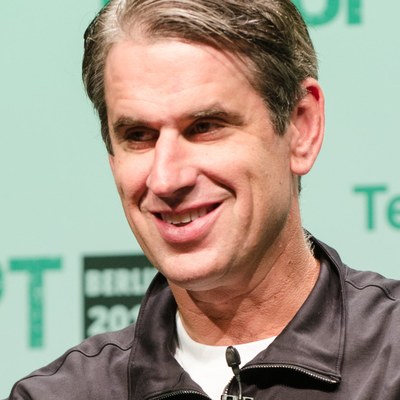 Bill Gurley
7
11 Dec 2012 – 23 Dec 2024
-3417 d
-
 Gavin Baker
1
thin
26 Nov 2019 – 26 Nov 2019
-876 d
-
 Brad Gerstner
4
thin
23 Jun 2020 – 10 Sep 2025
-666 d
-
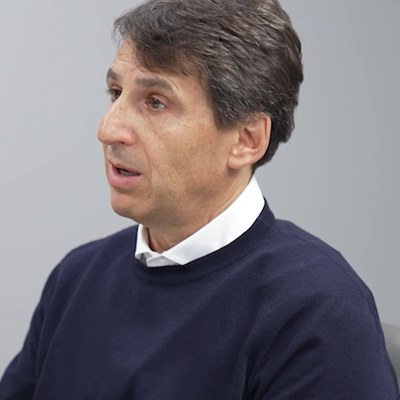 Marc Rowan
1
thin
20 Apr 2022 – 20 Apr 2022
+0 d
-
 David Friedberg
2
thin
2 Oct 2023 – 12 May 2026
+530 d
- Dylan Patel 12 5 Dec 2023 – 30 Jun 2026 +594 d
-
 Jensen Huang
3
thin
13 Oct 2024 – 16 Jun 2026
+907 d
The chronologysourced and dated, oldest first
-
-
Bill Gurley
Gurley argues that while starting is cheap, scaling a company requires both capital and expertise.
“And what I think has come out of it is that you may be able to start a company for nothing but if you want to scale a company you will need capital and you'll need expertise to scale it to the next level.”
-
Bill Gurley
Gurley argues scaling requires capital and expertise even if starting a company is cheap.
“I think has come out of it is that you may be able to start a company for nothing but if you want to scale a company you will need capital and you'll need expertise to scale it to the next level. Not every single player, Benioff who got it up without venture”
-
Bill Gurley
Gurley describes venture capital as an artisan business that fundamentally does not scale.
“In the long run, we like to believe that this is an artisan business that doesn't scale and that if you want someone to help you and trusted you taking this company to the next level that you want what is an artisan,”
-
-
-
Bill Gurley
Gurley argues network effects decay as platforms scale, with each incremental user adding less value than earlier ones.
“Like what's the value of an incremental member joining LinkedIn? It's probably less than what the value of the 10,000 person that joined LinkedIn. And so there are many, many, many nuances.”
-
Bill Gurley
Gurley says marketplace success requires doing unscalable things early, which frustrates most business school-trained entrepreneurs.
“And if you took 90% of the entrepreneurs that have been to business school and understand scaling, it drives them nuts.”
-
Gavin Baker
Baker cites research showing AI quality doubles with every 10x increase in training data quantity.
“All that matters is the quantity of data, and it's been very well established in multiple papers from both Google and Microsoft research that for every order of magnitude increase in the data you use to train an algorithm, the quality of the AI doubles.”
-
-
-
Brad Gerstner
Gerstner argues AWS, GCP and Azure enable software companies to scale faster and more capital efficiently than before.
“But the fact of the matter is because of AWS, GCP and Azure, software companies are scaling faster and in a more capital efficient way”
-
-
-
Marc Rowan
Rowan questions whether massively scaling private equity benefits investors or is even possible given return requirements.
“It is unclear to me that massively scaling that business is good for investors or good for us or possible. Our job as investors and alternatives is to produce excess return per unit of risk.”
-
-
-
David Friedberg
Friedberg says Climate Corp's average data use increased 40x every year for seven consecutive years.
“In the seven years we ran Climate Corp, by the way, we did a study that our average data use per year increased by 40x every year for seven years.”
-
Dylan Patel
Patel predicts open source will match GPT-4 but frontier models will continue advancing beyond it.
“Open source will match GPT-four, but then it's like, what about GPT-four Vision? Or what about five and six and all these kind of stuff?”
-
Dylan Patel
Patel identifies distributed training across data centers with lower bandwidth as a key unsolved problem that would unlock massive scaling.
“Everything that we've seen so far is that large scale training has to happen in an individual data center with very high speed networking.”
-
-
-
Bill Gurley
Gurley says CEOs tell him Silicon Valley is wonderful to start but horrible to scale companies.
“They say Silicon Valley is a wonderful place to start a company. It's a horrible place to scale a company.”
-
Jensen Huang
Huang says models may run 10,000 internal inferences before answering, including tree search and reinforcement learning.
“The idea that a model before it answers your answer had already done internal inference 10,000 times, it's probably not unreasonable. And it's probably done tree search, it's probably done reinforcement learning on that,”
-
Dylan Patel
Patel says GPT-4 used 24,000 GPUs, GPT-5 uses 100,000, and Microsoft is building toward a million GPUs.
“GPT four was trained with 24,000 GPUs roughly, and GPT five is on the order of a 100,000. And then they're trying to build this data center over the next few years. That's a million.”
-
Dylan Patel
Patel calculates that multi-trillion parameter models require transmitting 40 terabytes of data every two seconds during training.
“They're doing it for like multi trillion. Right? So let's call it 10,000,000,000,000 parameters, four bytes parameter, that's 40 terabytes of data you need to transmit in two seconds.”
-
Bill Gurley
Gurley notes AI leaders previously implied linear scaling gains but current reality differs from that impression.
“They had left that impression. And so we get to this place as you described it, it's not quite like that.”
-
-
-
Dylan Patel
Patel calculates next-generation clusters deliver 15x more compute through five times more GPUs and 3x performance gains.
“So you got you have five x the GPUs, and you have three x the performance per GPU roughly. So then you're at, like, 15 x more compute.”
-
“Or or that's what it looks like based on or, you know, one gigawatt in twenty twenty six ish. And Meta's Meta's, like, trying to do, like, two gigawatts by early to mid twenty seven.”
-
Brad Gerstner
Gerstner says DeepSeek needs 10x more compute to reach o three level assuming no breakthroughs.
“in order to get to kind of the o three level now, they got a 10 x the amount of compute. Right?”
-
Dylan Patel
Patel says current models use 100,000 GPUs while next generation will require hundreds of thousands or millions.
“And next generation models that are trained on hundreds of thousands or even millions GPUs, right?”
-
Dylan Patel
Patel argues that efficiency gains alone without capability increases cannot justify massive AI infrastructure investments.
“That would not pay for all of these build outs. Right? AI is useful today, but it's not capable of doing a lot of things.”
-
Dylan Patel
Patel states $10 billion data centers target automated software engineering, not chat models.
“So no one is trying to make with these $10,000,000,000 data centers, they're not trying to make chat models. Right?”
-
Brad Gerstner
Gerstner reports Google inference generation increased 100x in a year, from 9 trillion to 980 trillion tokens monthly.
“A year ago, Google per month was doing about 9,000,000,000,000 tokens a month in terms of inference generation, right, compute generation. Today, it's 980,000,000,000,000 tokens.”
-
Brad Gerstner
Gerstner argues AI is scaling faster than the Internet did, citing his investments in Google and Meta.
“ChatGPT became the verb and I would argue, maybe just So, you know, if we go to this slide right here, You know, AI is scaling way faster than the Internet did.”
-
Dylan Patel
Patel reports Microsoft aims to 10x training capacity every 18-24 months, representing a 10x increase from GPT-5 training.
“We try to 10x the training capacity every eighteen to twenty four months. And so this would be effectively a 10x increase. 10x from what GPD five was trained with.”
-
-
-
Jensen Huang
Huang contrasts Moore's law (100x per decade) with current AI acceleration (1 million times per decade).
“Remember, Moore's law was two times every 18, 10 times every five years, a 100 times every ten. Okay? But where are we now? A million times every ten years.”
-
Dylan Patel
Patel estimates Anthropic needs to reach well above five gigawatts of compute capacity by year-end to support revenue growth.
“Anthropic needs to get to well above five gigawatts by the end of this year, and it's gonna be really tough for them to get there, but it's possible.”
-
David Friedberg
Friedberg describes Koch Industries' 9,000X scaling as algorithmic compounding through continuous cash reinvestment.
“The success at Coke Industries is built on an algorithm, your principles, and you've been able to adapt that algorithm and as a result scale your business, generate cash, reinvest that cash, generate more cash, reinvest that cash and so on. And you've scaled 9,000 X. You've built a compounding advantage in your business.”
-
Jensen Huang
Huang says NVIDIA will quadruple Coherent's indium phosphide fab capacity in one year versus fifty years for original.
“We're gonna take almost one year to build a four x. Are you guys the scale up is incredible. That tells you about the incredible demand that we have for accelerated computing,”
-
Dylan Patel
Patel predicts OpenAI and Anthropic alone will deploy over 100 gigawatts of compute by 2030.
“I think by 2030, just OpenAI and Anthropic will have over 100 gigawatts combined, and then you'll add Meta and Google and so on and so forth. A humongous amount of compute”
-
Where they overlapsame programme, same subject
- BG2 Pod also carries Bill Gurley, Brad Gerstner and Jensen Huang on this subject, at different times.
- Invest Like the Best also carries Bill Gurley, Brad Gerstner and Gavin Baker on this subject, at different times.