Who is on this subjectordered by the date of their first quote here
8 of 12 lanes rest on fewer than 5 quotes and are marked thin. Offsets are days from the middle first-quote date, 25 Jun 2024 — a date, and nothing else. It is not a claim about who reached a view first.
-
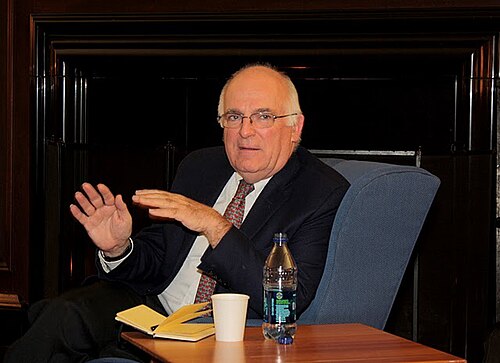 Sir Richard Dearlove
4
thin
14 Dec 2017 – 9 Jan 2026
-2385 d
Sir Richard Dearlove
4
thin
14 Dec 2017 – 9 Jan 2026
-2385 d
- Stanley Druckenmiller 1 thin 16 Jun 2022 – 16 Jun 2022 -740 d
-
 Marc Rowan
5
1 May 2023 – 3 Mar 2026
-421 d
Marc Rowan
5
1 May 2023 – 3 Mar 2026
-421 d
-
 Brad Gerstner
24
11 Aug 2023 – 11 Jul 2026
-319 d
Brad Gerstner
24
11 Aug 2023 – 11 Jul 2026
-319 d
-
 Howard Marks
1
thin
4 Oct 2023 – 4 Oct 2023
-265 d
Howard Marks
1
thin
4 Oct 2023 – 4 Oct 2023
-265 d
-
 David Friedberg
3
thin
25 Jun 2024 – 18 Jul 2026
+0 d
David Friedberg
3
thin
25 Jun 2024 – 18 Jul 2026
+0 d
- Dylan Patel 21 22 Jun 2025 – 25 Aug 2026 +362 d
-
 Jensen Huang
3
thin
5 Feb 2026 – 16 Jun 2026
+590 d
Jensen Huang
3
thin
5 Feb 2026 – 16 Jun 2026
+590 d
-
 Gavin Baker
2
thin
15 May 2026 – 15 May 2026
+689 d
Gavin Baker
2
thin
15 May 2026 – 15 May 2026
+689 d
-
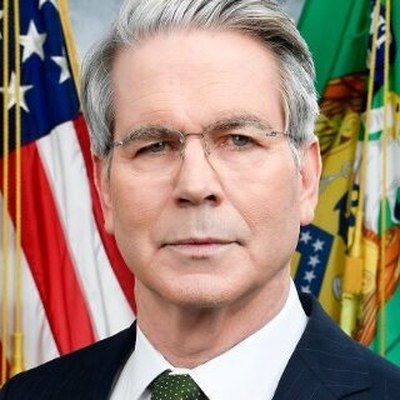 Scott Bessent
2
thin
3 Jul 2026 – 3 Jul 2026
+738 d
Scott Bessent
2
thin
3 Jul 2026 – 3 Jul 2026
+738 d
-
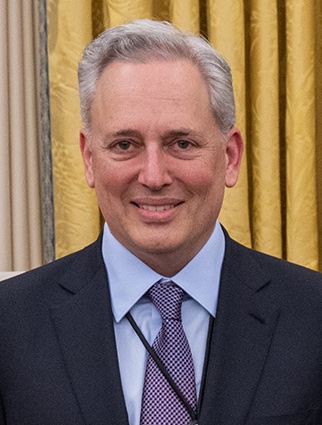 David Sacks
1
thin
18 Jul 2026 – 18 Jul 2026
+753 d
David Sacks
1
thin
18 Jul 2026 – 18 Jul 2026
+753 d
-
 John Williams
29
John Williams
29
The chronologysourced and dated, oldest first
-
-
Sir Richard Dearlove
Dearlove rates UK's Brexit position as near five out of ten, predicting strength after turbulence.
“two years of turbulence? Probably near a five. I would pick near a five. I think we can emerge from that in a pretty strong position”
-
Sir Richard Dearlove
Dearlove rates Brexit turbulence near five out of ten and believes UK can emerge strong with self-confidence.
“I would pick near a five. I think we can emerge from that in a pretty strong position if we do not lose self belief and self confidence.”
-
-
-
Sir Richard Dearlove
Dearlove predicts US and China will negotiate a new global security system within five years.
“at some point in the next two, three, four, five years, I think The United States and China will sit down to work out how a new security system will, as it were, operate across the world to replace Pax Americana.”
-
-
-
Stanley Druckenmiller
Druckenmiller strongly assumes a recession will occur sometime in 2023, uncertain only about timing.
“I pretty strongly assume we're gonna have a recession sometime in '23. I just don't know whether it's gonna be in the early part or the later part.”
-
-
-
Marc Rowan
Rowan says Apollo's asset management business will grow over 25% this year.
“We've already said our business will be up in the asset management side. We've told the street better than 25% this year.”
-
Brad Gerstner
Gerstner forecasts 5-7 good-sized IPOs in Q4 2023 and closer to 10 in Q1 2024.
“I think we're gonna see five, six, seven IPOs, good sized IPOs in q four. We'll probably see closer to 10 in q one,”
-
Howard Marks
Marks forecasts Fed funds rate will settle between two and four percent, not zero to two.
“what I said in the memo is that rates are likely to be between two and four, not between zero and two, the Fed funds rate.”
-
Brad Gerstner
Gerstner says professional analysts predicted NVIDIA data center revenue would decline 6 percent, highlighting how wrong forecasts were.
“The consensus estimate for NVIDIA this year was that data center growth revenue growth was gonna be negative 6%. Right? That's the pros. They got it that wrong.”
-
Brad Gerstner
Gerstner cites Fed forecast of 1.5% GDP, two to three rate cuts, and 2% inflation next year.
“But if you look at the Fed's own forecast for next year, one and a half percent GDP, two to three rate cuts, ending the year with a two two handle on inflation.”
-
-
-
Brad Gerstner
Gerstner notes consensus forecasts Uber reaching almost $10B in free cash flow in a few years.
“if you look at the consensus forecast for the business, which is pretty mind boggling, it's estimated by the consensus that it'll reach almost 10,000,000,000 in free cash flow, just a few years from now.”
-
Brad Gerstner
Gerstner notes consensus forecasts assume Nvidia's share of global compute buildout drops from 55% today to 26% by 2028.
“The line running through the center that starts at 55% and goes down to 26%. That is Nvidia's share of that global compute build out based on current consensus numbers for Nvidia.”
-
Brad Gerstner
Gerstner states consensus Nvidia estimate for next year is around $3.50 per share.
“the consensus estimate for next year for Nvidia, I think is around $3.50 per share.”
-
Brad Gerstner
Gerstner's Nvidia estimate is closer to $5 per share, ahead of consensus since fall 2022.
“we're we're closer to $5 a share. We've been ahead of the consensus estimate since the fall of twenty two.”
-
David Friedberg
Friedberg cites UN estimate requiring over 50% increase in global food production by 2050.
“And so by the year 2050, the UN estimates we'll need to increase global food production by north of 50%.”
-
Brad Gerstner
Gerstner frames NVIDIA debate as 6 million GPUs versus bearish 4.5 million estimate for next year.
“We're kind of at 6,000,000 GPUs for next year. The bearish people are at like 4,500,000. The numbers will ultimately tell.”
-
Brad Gerstner
Gerstner claims 30% annual infrastructure expense growth requires comparable inference revenue growth on both sides.
“So, you know, if you think that infrastructure expenses are going to grow at 30% a year, then I think you have to believe that the underlying inference revenues, right, both on the consumer side and the enterprise side are gonna grow somewhere in that range as well.”
-
Brad Gerstner
Gerstner posits 30% annual infrastructure expense growth requires matching inference revenue growth from enterprises and consumers.
“if you think that infrastructure expenses are going to grow at 30% a year, then I think you have to believe that the underlying inference revenues, right, both on the consumer side and the enterprise side are gonna grow somewhere in that range as well.”
-
-
-
David Friedberg
Friedberg predicts emerging markets will adopt new breeding technologies faster than developed markets due to economic benefits.
“And that's because I think that the benefit, the economic benefit to the smallholder farmer in emerging markets is so profound.”
-
Marc Rowan
Rowan predicts two quarters of negative growth if tariff uncertainty continues without resolution.
“We likely will cause two quarters of negative growth if we, in fact, don't resolve the uncertainty. So until we have resolution of what the rules of the game are, it's gonna be slow.”
-
“US and Mexico together should be the driving economic force in the world for the next fifty years.”
-
Marc Rowan
Rowan sees US moving from hyperexceptionalism to merely exceptional, though alternatives could emerge over time.
“What I've said is I see us moving from what was hyperexceptionalism to merely exceptional because I don't think there are good alternatives to The US today, but that can change over time.”
-
Brad Gerstner
Gerstner now forecasts $300 billion in tariffs, 4x last year's $77 billion revenue.
“Okay? I just told you that last year tariffs were 77,000,000,000. So that's still a four x increase in tariff revenue,”
-
Brad Gerstner
Gerstner calculates Microsoft could reach $7 trillion market cap in ten years growing at just 7% annually.
“the largest company, Microsoft, today is like 3 and onetwo trillion. Let's say that Microsoft, I don't know, doubles in ten years. It would only be growing at 7% per year.”
-
Dylan Patel
Patel forecasts that 70% of robots deployed in China in 2025 will be domestically manufactured Chinese robots.
“'24, it's, it's rapidly growing Chinese share. And '25 is it looks clear, like, the the market shares is, you know, gonna be 60 is gonna be, like, 70% Chinese robots for China's domestic usage.”
-
Brad Gerstner
Gerstner predicts a major US-China deal will be completed before end of 2025.
“I think that there's gonna be a big Chinese deal done before the year's out.”
-
Dylan Patel
Patel forecasts NVIDIA revenue exceeding $300 billion next year as infrastructure spending reaches nation-state scale.
“NVIDIA's revenue this year is gonna be, like, over $200,000,000,000, and next year expects over 300,000,000,000 plus Google's gonna spend, like, $50,000,000,000 on TPU data centers.”
-
Brad Gerstner
Gerstner notes Jensen raised compute buildout forecast from $2 trillion to $3-4 trillion through decade end.
“Jensen said, you know, when he was on our pod last year, he said, we think the build out between now and the end of the decade's $2,000,000,000,000 of total compute.”
-
Brad Gerstner
Gerstner calculates 50% growth would bring NVIDIA to $300 billion datacenter revenue, about $8 per share.
“So the consensus for next year is 250,000,000,000 of data center revenue. If they grow up 50%, that's gonna be closer to 300,000,000,000 or closer to $8 a share.”
-
Dylan Patel
Patel forecasts hyperscaler CapEx at $455-500 billion for next year versus Wall Street consensus of $360 billion.
“The consensus for the banks is $360,000,000,000 of spend next year across all of them. And my number is closer to, like it's, like, $45,500.”
-
Brad Gerstner
Gerstner cites NVIDIA forecast of $200B revenue this year growing to $350B in five years, equating to specific gigawatts.
“This is the NVIDIA sell side forecast. Okay? Forecast this year is for about 200,000,000,000 in revenues, growing to about 350,000,000,000 in revenues over the next five years.”
-
Brad Gerstner
Gerstner clarifies Sam Altman expects OpenAI to exceed $100 billion revenue in 2027 or 2028.
“What Sam said multiple times on the pod and since is that he expects that they'll do over 100,000,000,000 in revenues in twenty seven or twenty eight.”
-
Brad Gerstner
Gerstner notes Altman tweeted OpenAI will exit the year at $20 billion in revenue.
“And he just said in his tweet that they're gonna exit the year at $20,000,000,000 in revenue.”
-
Brad Gerstner
Gerstner reports Altman expects OpenAI to exceed $100 billion in revenue in 2027 or 2028.
“What Sam said multiple times on the pod and since is that he expects that they'll do over 100,000,000,000 in revenues in twenty seven or '28.”
-
Dylan Patel
Patel estimates Microsoft reduced 2028 capacity forecast from 12-13 gigawatts to 9.5 gigawatts due to strategic pause.
“to the pause, versus what we had forecasted for you by '28, you're going to be like twelve, thirteen gigawatts and now we're at 9.5 or so, right?”
-
Dylan Patel
Patel states Oracle will grow from one fifth Microsoft's size to bigger by end of 2027 at 35% margins.
“Oracle is going from like one fifth your size to bigger than you by end of twenty twenty seven.”
-
Dylan Patel
Patel estimates Microsoft's 2028 capacity is three and a half gigawatts lower than forecasted due to paused buildouts.
“And then the other one is, given our estimates on what your capacity is in 2028, is three and a half gigawatts lower? Sure, you could have dedicated that to OpenAI training and inference capacity.”
-
Dylan Patel
Patel states AI labs are projecting one hundred billion dollars in revenue by 2027-2028 with 2-3x growth.
“So, these labs are now projecting revenues of 100,000,000,000 in 2728, and they're projecting revenue keeps growing at this rate of like 3x, 2x”
-
Brad Gerstner
Gerstner says NVIDIA indicated a $100 billion run rate expected by end of next year.
“And they just told us that we should expect a run rate by the end of next year of a $100,000,000,000.”
-
-
-
Sir Richard Dearlove
Dearlove publicly predicts Iran's regime will fall in 2026, standing by his forecast.
“I had to make a podcast prediction for 2026 three weeks ago, and I said fall of the Iranian regime in 2026. I think I'm going to see that or we're going to see that.”
-
Brad Gerstner
Gerstner says the major tech companies will spend over $500 billion on AI capex this year.
“The spending, the CapEx from that group alone is gonna be over $500,000,000,000 this year.”
-
Dylan Patel
Patel predicts semiconductor shortages will return as primary constraint in 2027 affecting both TSMC and memory manufacturers.
“But it will fully beach semiconductors again in '27. Right? And so we see this across the entire space of the ecosystem. It's not just TSMC. It's also memory both.”
-
Dylan Patel
Patel predicts AI startup revenue will exceed $100 billion by end of year, calling it unbelievable to most.
“by the end of the year do how many people even believe by the end of the year AI startup revenue is over a $100,000,000,000?”
-
Dylan Patel
Patel predicts AI startup revenue will exceed $100 billion by end of year, a claim few believe.
“I think that's an insane statement for a lot of people, but that's what it's gonna be. Yeah. Right? And who believes that number? Right? It's like Yeah. Very few people.”
-
Dylan Patel
Patel says Anthropic's $300 billion revenue target for end of decade is actually too conservative.
“when Anthropic says in their funding, like, hey, we're gonna have $300,000,000,000 of revenue by the end of the decade. And it's like, actually, I think that number's too low.”
-
Jensen Huang
Huang cites estimates of eighty-five trillion dollars in infrastructure investment over the next ten years.
“Trillions of dollars, tens of trillions of dollars. Estimates have it close to $100,000,000,000,000 $85,000,000,000,000 in the next ten years.”
-
Dylan Patel
Patel predicts AI industry will hit $100 billion ARR by end of 2025, with China 10x lower.
“And then what's the economic value of that $100,000,000,000? Now, how much of that is in China? Right? Like, China's number is probably 10 x lower.”
-
Dylan Patel
Patel predicts Google will have zero cash flow profit in 2027, spending all revenue on AI infrastructure.
“There's no reason why Google will have any profit in '27 at all, right, in terms of cash flow. They will just spend every dollar they make on on AI infrastructure.”
-
Marc Rowan
Rowan predicts good risk managers will make record profits this year and next from defensive positioning.
“If you were a good risk manager, you are going to make more money this year and next year if it continues than you ever have before because you've been risk off.”
-
Dylan Patel
Patel predicts Anthropic revenue will grow from $19B to $60B by year end amid majority-negative AI sentiment.
“The sentiment is already more than half Americans have a negative view of AI. As we fast forward to the end of this year, as Anthropix revenue goes from 19,000,000,000 to maybe 60, and OpenAI is similar, if not higher, the amount of jobs that get supplemented, the amount of change that happens in society,”
-
Brad Gerstner
Gerstner cites a trillion dollars in Nvidia orders over the next six to eight quarters.
“But I think if you just look at the numbers, a trillion dollars over the course of the next, you know, six to eight quarters, I think speaks for itself.”
-
Gavin Baker
Baker says he would take the over on every AI capex and demand number given by other speakers.
“And I would just say, I take the over on every number that they gave. Every single number. As what I think, you know, they're conservative guys.”
-
Gavin Baker
Baker takes the over on every AI capex and memory forecast number given by other speakers at the conference.
“And I would just say, I take the over on every number that they gave. Every single number.”
-
Brad Gerstner
Gerstner warns the market could see a 10 to 20% consolidation after recent gains.
“But the bigger risk right now is simply that we've come a long way quickly. Right? We could have a 10 to 20% consolidation in the socks or these other technology and AI markets,”
-
Jensen Huang
Huang forecasts tens of trillions of dollars in new computer infrastructure over the next ten years.
“We've now built about sixty years with the computer infrastructure, the Internet and all the computers and email.”
-
Jensen Huang
Huang forecasts tens of trillions of dollars in new computer infrastructure over the next decade.
“We're now in the process of reinventing all of that, which is the reason why over the course of the next ten years, we're going to be building tens of trillions of dollars of new computers to replace the old computers that we built over the last sixty years.”
-
Dylan Patel
Patel predicts OpenAI and Anthropic alone will deploy over 100 gigawatts of compute by 2030.
“I think by 2030, just OpenAI and Anthropic will have over 100 gigawatts combined, and then you'll add Meta and Google and so on and so forth. A humongous amount of compute”
-
Dylan Patel
Patel predicts OpenAI and Anthropic alone will deploy over 100 gigawatts of compute by 2030.
“by 2030, just OpenAI and Anthropic will have over 100 gigawatts combined, and then you'll add Meta and Google and so on and so forth.”
-
Scott Bessent
Bessent expects real wage growth to resume as soon as next month after April spike.
“But we had had before April, we had seen real wage growth for working Americans every month during President Trump's presidency, and I would expect maybe even as soon as next month we will go back to that.”
-
Scott Bessent
Bessent forecasts real wage gains could return as soon as this month after inflation spike.
“I would expect that perhaps as soon as this month, we're going to see real wage gains.”
-
Brad Gerstner
Gerstner predicts AI companies ending the year over $100B could triple to quintuple revenue next year.
“If these guys end the year over 100,000,000,000, I think that they're on a revenue trajectory that they could three to five x again next year.”
-
David Sacks
Sacks states US will face energy deficit equivalent to 2.5 Californias by 2050.
“By 2050, The United States Of America will be two and a half California's worth of energy in deficit. 2.5 California's, the fourth largest economy in the world.”
-
David Friedberg
Friedberg predicts anti-aging enzyme application will create a trillion dollar market opportunity.
“It will be a trillion dollar market. Yeah. You can create a If you could”
-
Dylan Patel
Patel forecasts AI CapEx will exceed $2 trillion by 2028, up from just over $1 trillion in 2025.
“As we go forward into the future, the the numbers for computer ballooning, right, we're at, you know, you know, a little bit over a trillion dollars of CapEx this year.”
-
Dylan Patel
Patel predicts AI labs will scale from tens of billions to trillions in annual spending by decade's end.
“As we go out into '28, it's gonna be more than $2,000,000,000,000. The labs are also taking an increasing percentage of this.”
-
Dylan Patel
Patel says OpenAI and Anthropic represent 30% of new compute in 2025, rising to 40-50% in 2026.
“When you when you look at the incremental compute added, that's about 30% of the compute added this year.”
-
Dylan Patel
Patel predicts Anthropic and OpenAI will take 40-50% of all new compute in 2026, accelerating centralization.
“You've got Anthropic OpenAI are taking as much as 40% to 50% of compute next year. And the centralization doesn't look like it's slowing down or stopping. In fact, it looks like it's only accelerating.”
-
Dylan Patel
Patel's models show $11 trillion AI CapEx through 2029, requiring over $5 trillion in new debt.
“In the modeling that we do, we have about $11,000,000,000,000 of CapEx from 2024 to 2029. Total. Total.”
-
-
-
John Williams
Williams says inflation is at 4 percent, driven first by higher tariffs on imported goods.
“This elevation primarily reflects three drivers. The first is the effect of higher tariffs on imported goods.”
-
John Williams
Williams expects new tariffs to replace expiring ones without adding significant additional price pressure.
“My expectation is that any new tariffs will primarily replace those that were curtailed or will soon expire, so we shouldn’t see a significant additional impulse on prices from this source going forward.”
-
John Williams
Williams expects tariffs to boost overall prices by 1 to 1.5 percent through first half of next year.
“All in all, I expect tariffs will boost overall prices by a total of between 1 and 1-1/2 percent, with these effects continuing through the first half of next year.”
-
John Williams
Williams forecasts tariffs will add roughly 1 percentage point to inflation through early 2026.
“Overall, I expect tariffs to boost inflation by about 1 percentage point over the second half of this year and the first part of next year.”
-
John Williams
Williams expects tariffs to have one-off price effects and inflation to decline later this year after peak tariff impact.
“Given the lack of second-round effects and well-anchored inflation expectations, I expect the tariffs largely to have one-off effects on prices.”
-
John Williams
Williams forecasts inflation peaking at 2.75 to 3 percent in first half 2026, reaching 2 percent goal in 2027.
“I anticipate inflation will peak at around 2-3/4 to 3 percent sometime during the first half of this year, before starting to fall back.”
-
John Williams
Williams forecasts inflation peaking at 2.75-3 percent in first half, reaching 2 percent goal in 2027.
“I expect inflation will be just under 2-1/2 percent for this year as a whole, before reaching the FOMC’s longer-run 2 percent goal in 2027.”
-
John Williams
Williams expects GDP growth of 2.5 to 2.75 percent in 2026, driven by fiscal policy and AI investment.
“I expect the economy to grow above trend this year, with real GDP growth between 2-1/2 and 2-3/4 percent.”
-
John Williams
Williams expects GDP growth near 2.5 percent this year from fiscal policy, financial conditions, and AI investment.
“I expect real GDP growth to be close to 2-1/2 percent this year, reflecting tailwinds from fiscal policy, favorable financial conditions, and investment in AI.”
-
John Williams
Williams expects inflation around 3 percent this year, reaching 2 percent target in 2027.
“Looking ahead, my base case is for inflation to be about 3 percent this year, before dropping to our 2 percent target in 2027”
-
John Williams
Williams forecasts inflation at 3 percent in 2026, returning to 2 percent target in 2027.
“Looking ahead, my base case is for inflation to be about 3 percent this year, before dropping to our 2 percent target in 2027 as the effects of tariffs and energy prices move into the rearview mirror.”
-
John Williams
Williams expects inflation around 2.75 percent this year, reaching 2 percent target in 2027.
“And with various short-term factors affecting prices, I expect overall inflation to come in at around 2-3/4 percent this year, before reaching our longer-run 2 percent target in 2027.”
-
John Williams
Williams expects inflation around 2.75 percent this year, reaching 2 percent target in 2027.
“I expect overall inflation to come in at around 2-3/4 percent this year, before reaching our longer-run 2 percent target in 2027.”
-
John Williams
Williams expects GDP growth of about 2.5 percent this year driven by fiscal stimulus, financial conditions, and AI investment.
“I expect real GDP to grow about 2-1/2 percent this year, supported by stimulus from fiscal policy, favorable financial conditions, and robust investments in artificial intelligence.”
-
John Williams
Williams expects real GDP growth to slow considerably to just over 1 percent this year.
“I expect real GDP growth this year will slow considerably from last year’s pace, to just over 1 percent.”
-
John Williams
Williams forecasts GDP growth of 2 to 2.25 percent and unemployment of 4.25 to 4.5 percent.
“Consequently, with growth around its trend pace, I expect the unemployment rate will remain in its recent range of 4-1/4 to 4-1/2 percent.”
-
John Williams
Williams forecasts unemployment rising to 4.5 percent, inflation hitting 3 percent in 2025 before declining to 2 percent.
“With this deceleration of real GDP, I expect the unemployment rate to rise to around 4-1/2 percent by the end of this year.”
-
John Williams
Williams forecasts unemployment declining, inflation at 2.5 percent in 2026, then falling to 2 percent in 2027.
“And with the effects of tariffs on inflation waning later in the year, I expect overall inflation to come in at around 2-1/2 percent in 2026, then fall to 2 percent in 2027.”
-
John Williams
Williams expects real GDP growth of about 1 percent in 2025.
“As a result, I expect real GDP growth this year to be about 1 percent.”
-
John Williams
Williams forecasts unemployment rising to around 4.5 percent by end of 2025.
“With this slowdown in growth, I expect the unemployment rate to rise to around 4-1/2 percent by the end of this year.”
-
John Williams
Williams forecasts inflation of 3 to 3.5 percent in 2025, declining to 2 percent by 2027.
“I anticipate inflation will come in between 3 and 3-1/2 percent in 2025, and then fall back to about 2-1/2 percent next year before reaching 2 percent in 2027.”
-
John Williams
Williams expects GDP growth in 2025 to be between 1.25 and 1.5 percent.
“As a result, I expect GDP growth this year to be between 1-1/4 and 1-1/2 percent.”
-
John Williams
Williams forecasts unemployment rising to 4.5 percent, inflation at 3 to 3.25 percent this year, reaching 2 percent in 2027.
“And I expect PCE inflation to come in between 3 and 3-1/4 percent this year, before declining to around 2-1/2 percent next year, and reaching 2 percent in 2027.”
-
John Williams
Williams estimates tariffs have added 0.5 to 0.75 percentage points to current inflation without second-round effects.
“My estimate is that increased tariffs have contributed about one half to three quarters of a percentage point to the current inflation rate.”
-
“Looking ahead, I expect real GDP growth to be around 2 to 2-1/4 percent this year and over the next two years.”
-
John Williams
Williams forecasts GDP growth of 2 to 2.25 percent with unemployment declining to 4 percent by 2028.
“With growth running modestly above my estimate of its potential rate of 2 percent, I expect the unemployment rate to edge down very gradually to 4 percent in 2028.”
-
John Williams
Williams expects tariff effects to fade by mid-2026, with inflation reaching 2% in 2027.
“As a result, I expect the effects of tariffs on inflation will play out over the rest of this year and the first half of next year.”
-
John Williams
Williams expects inflation to fall to 3.25 percent by year-end, reaching 2 percent target in 2028.
“For the reasons I outlined a moment ago, I expect overall inflation to decline to around 3-1/4 percent by year-end, then continue on a glide path toward our 2 percent goal in 2027 and land on target in 2028.”
-
John Williams
Williams notes Treasury estimates TGA balances could peak around $1.025 trillion by late April, drawing down reserves.
“In fact, the U.S. Treasury recently estimated that TGA balances could peak around $1.025 trillion by late April, amid tax season inflows, likely resulting in a notable drawdown in reserves.”
-
Where they overlapsame programme, same subject
- All-In Podcast also carries Brad Gerstner, David Friedberg and David Sacks on this subject, at different times.