Who is on this subjectordered by the date of their first quote here
6 of 11 lanes rest on fewer than 5 quotes and are marked thin. Offsets are days from the middle first-quote date, 9 Apr 2025 — a date, and nothing else. It is not a claim about who reached a view first.
-
 David Friedberg
10
15 Mar 2020 – 18 Jul 2026
-1851 d
-
 Brad Gerstner
17
27 Oct 2020 – 2 Jul 2026
-1625 d
-
 David Tepper
3
thin
26 Sep 2024 – 26 Sep 2024
-195 d
-
 Bill Gurley
6
31 Oct 2024 – 23 Apr 2026
-160 d
-
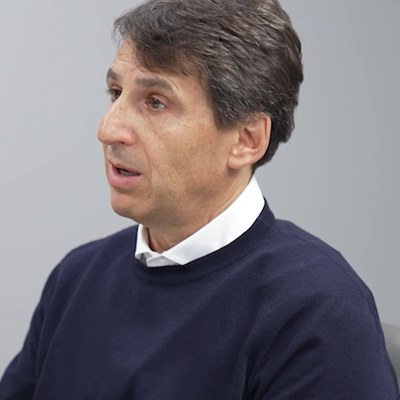 Marc Rowan
6
9 Apr 2025 – 3 Mar 2026
+0 d
-
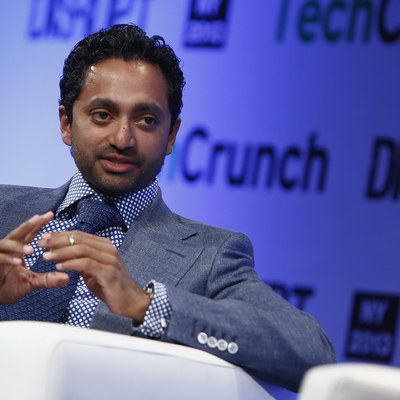 Chamath Palihapitiya
6
10 Oct 2025 – 4 Sep 2026
+184 d
-
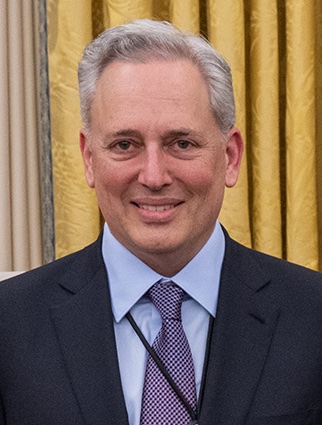 David Sacks
3
thin
10 Oct 2025 – 1 Aug 2026
+184 d
-
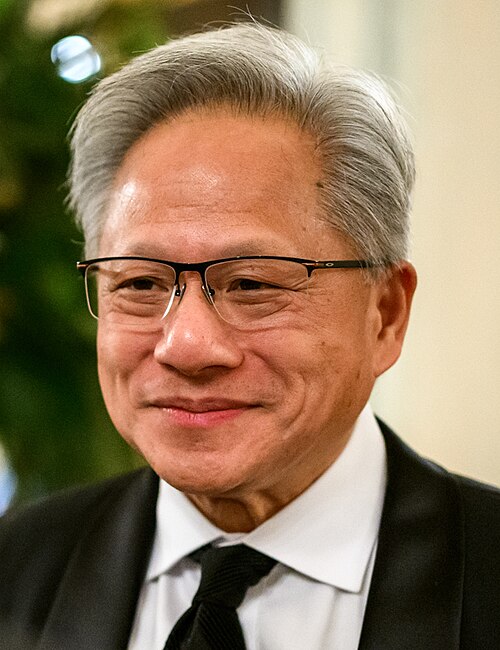 Jensen Huang
1
thin
4 Feb 2026 – 4 Feb 2026
+301 d
-
 Gavin Baker
1
thin
4 Aug 2026 – 4 Aug 2026
+482 d
-
 Kevin Warsh
2
thin
28 Aug 2026 – 28 Aug 2026
+506 d
-
 John Williams
2
thin
The chronologysourced and dated, oldest first
-
-
David Friedberg
Friedberg compares market retracements: 1987 saw 33%, 2000 saw 47%, 2008 saw 56%, but we're only 20% into this one.
“1987, we saw 33% retracement. 2000, we saw 47%. 2008, we saw 56% and we're only 20 into this one.”
-
“In 2008, we traced back twelve and a half years. And so far we've only traced back thirteen months to the S and P where it was thirteen months ago.”
-
David Friedberg
Friedberg admits he was wrong about vegetarian meat alternatives; consumers pay premiums for sustainability.
“I've been fucking shocked by how many people are choosing to pay a premium for vegetarian meat alternatives. I was wrong on this.”
-
David Friedberg
Friedberg admits he was wrong about plant-based meat, having bet against companies because he thought consumers needed cheaper prices.
“I didn't bet against them, but I chose not to bet for them because I made the argument consumers will only buy stuff that's cheaper and taste as good, and I was wrong.”
-
Brad Gerstner
Gerstner reports Altimeter's software index expanded from 11x to 14.5x and internet index from 23x to 33x.
“I feel obliged to do that. We started the year in our gross software index at 11 times. Now we're at about 14 and a half times two year forward.”
-
Brad Gerstner
Gerstner reports software multiples expanded from 11x to 14.5x and internet from 23x to 33x in 2020.
“We started the year in our gross software index at 11 times. Now we're at about 14 and a half times two year forward.”
-
Brad Gerstner
Gerstner notes internet multiples expanded from 23x to 33x in 2020, mirroring 2018 Q4 contraction without COVID.
“If you look at the multiple expansion that's occurred, it's almost the identical mirror image of the multiple contraction that occurred in the fall of twenty eighteen. In Q4 twenty eighteen, we didn't have COVID.”
-
Brad Gerstner
Gerstner argues markets correctly priced digital transformation arc despite initial concerns after 50% bounce in May.
“What it has been slow in pricing in is how dramatically different the arc will be for many of these digital businesses. I remember having conversations with Rich and many others in May.”
-
-
-
Brad Gerstner
Gerstner predicted every one percent move in ten-year treasury causes 10 to 20 percent drawdown in growth multiples.
“Right? And for every 1% move in the ten year, you've got a 10 to a 20% drawdown in growth multiples.”
-
Brad Gerstner
Gerstner expects more multiple compression in public markets over next three months despite Tiger's activity.
“You can believe the next three months that we're likely to have more multiple compression in the public markets. Right?”
-
-
-
David Friedberg
Friedberg notes only 3% of beverage brands reaching retail achieve $10 million in sales.
“only 3% of beverage brands that launch and get retail space actually make it to 10,000,000 in sales.”
-
-
-
David Friedberg
Friedberg reports 40% of biotech companies now trade below cash due to shifted investor time horizons.
“40% of biotechs are trading below cash now, because historically you've bet on a biotech company, and then if they hit their mark, they go and raise more money, And then they hit that mark, they raise more money.”
-
David Friedberg
Friedberg states two-thirds of post-COVID IPOs now trade below total cash raised.
“I think two thirds of the companies that went public since COVID are trading at less than the cash they raised to date as public companies now.”
-
-
-
“He said to me, the IPO market is slow in volume terms for lack of supply, not lack of demand. And I've been making this case that the IPO window is wide open.”
-
Brad Gerstner
Gerstner reports S&P earnings excluding Mag Seven came in below expectations with quarterly shrinkage.
“in the quarter, if you back out, you know, mag seven, we're coming in, below expectations. Right? You're actually seeing earnings shrink on a quarter over”
-
Brad Gerstner
Gerstner warns Nasdaq at all-time high amid slowing economy, light earnings, and AI disruption.
“And the backdrop is that the economy is slowing, earnings are coming in lighter than people expected, and AI is creating more disruption, creating more uncertainty than we expected.”
-
David Tepper
Tepper characterizes the election choice as between a populist and a progressive populist.
“If it's a sweep on either side? Democrat sweep. So let me I'll just I'll just and I don't wanna talk about it that much politics, but I'll just say in general, you have a populist on one side and a progressive populist on the other.”
-
David Tepper
Tepper says from a market and economic perspective he wants split government.
“But from a from this market perspective, an economic perspective, what's good for the economy, I wanna split government.”
-
David Tepper
Tepper warns that markets could face problems if the split government outcome gets surprised.
“And as long as it's split and and and this may be a problem because the market thinks it's gonna be split right now.”
-
Bill Gurley
Gurley asks what percentage of 1,400 pre-LLM private unicorns could raise up rounds today.
“What percentage of those could raise an up round right now? Yeah. What is the number?”
-
-
-
Brad Gerstner
Gerstner explains last four weeks of market decline through rising uncertainty driving up discount rates and risk premiums.
“So think about what we just talked about. It's all uncertainty. Yeah. When uncertainty goes up, discount rates go up, risk premiums go up, multiples come down, markets come down.”
-
Brad Gerstner
Gerstner explains recent market decline as rising uncertainty increasing discount rates and compressing multiples.
“When uncertainty goes up, discount rates go up, risk premiums go up, multiples come down, markets come down. That's that's the explanation for the last four weeks in the market.”
-
Brad Gerstner
Gerstner frames $500 billion tariffs plus $1 trillion Doge spending cuts as $1.5 trillion total government austerity.
“At the same time, Elon and members of the House and Senate are talking about cutting a trillion dollars of government spend. So one way to think about this is 1,500,000,000,000 of government austerity.”
-
Brad Gerstner
Gerstner argues successful government austerity means short-term pain for markets by withdrawing liquidity from economy.
“I think ironically, what people are not yet bracing for is that the success of austerity, the success of balancing the budget, the success of Doge, likely means short term pain for markets.”
-
Marc Rowan
Rowan argues the US should reconsider being the freest trading market and could rank tenth or twentieth instead.
“The US is the second freest trading market in the world financially after Japan and is the freest trading market in the world considering non tariff barriers.”
-
Marc Rowan
Rowan dismisses disappointment from investors who expected a God-given right to 11% annual returns.
“Those people who are tied to asset prices who thought we were had a God given right that everything move up at 11% annually are disappointed.”
-
Marc Rowan
Rowan sees US moving from hyperexceptionalism to merely exceptional, though alternatives could emerge over time.
“What I've said is I see us moving from what was hyperexceptionalism to merely exceptional because I don't think there are good alternatives to The US today, but that can change over time.”
-
Marc Rowan
Rowan identifies the expectation of daily liquidity in everything as the biggest risk buildup in the world.
“What I worry about and the biggest buildup of risk I see in the world is we are brought up with an expectation of being able to trade everything every day. Everything is daily liquid.”
-
Brad Gerstner
Gerstner reports NASDAQ moved 30 percentage points in sixty to seventy days from trough to recovery.
“It's a 30 move in about sixty or seventy days, which is extraordinary even by the historical patterns that we've seen over the course of the last five years.”
-
David Friedberg
Friedberg states potatoes are the third largest calorie source globally, with India's market being 90% table potatoes.
“Around the world, potatoes are a very significant staple crop, third largest source of calories for humans on earth.”
-
David Sacks
Sacks states AI represents 40% of US GDP growth and 80% of stock gains this year.
“40% of US GDP growth this year is AI and AI companies have accounted for 80% of the gain in US stocks this year.”
-
Chamath Palihapitiya
Palihapitiya identifies Tether as the most important new gold buyer, issuing Tether Gold stablecoin alongside central bank rebalancing.
“Gold is up because there are many more net new buyers. Who is the most important net new buyer? It's Tether.”
-
Chamath Palihapitiya
Palihapitiya predicts everything will become tokenized markets, including sports, knowledge, equities, and debt instruments.
“You'll have knowledge that becomes a market, and then you'll ultimately have equities and debt instruments also behave this way, meaning they'll be tokenized.”
-
Brad Gerstner
Gerstner views recent selloff as healthy, notes NVIDIA now trades below 20x his 2027 estimates.
“I think it's healthy. We're taking some of the air out of the bubble. There's a wall of worry that stands in front of us. NVIDIA now is trading below 20 times our 27 numbers.”
-
Chamath Palihapitiya
Palihapitiya says a billion-dollar short position would have gotten his attention, unlike the erroneously reported amount.
“If you saw a yard short, I mean, yeah, like, that would have probably gotten my attention had I read it. A billion dollars is, you know, reasonable position to have.”
-
Chamath Palihapitiya
Palihapitiya argues short sellers create chaos and innuendo under free speech guise rather than uncovering real malfeasance.
“There is supposed to be a check on financial malfeasance, but it's not that. When you look at these short selling firms, for every one of them that actually uncovers malfeasance, what it really is is them creating chaos and innuendo under the guise of their right to free speech.”
-
Marc Rowan
Rowan observes yield curve steepening with ten-year rates rising despite lower short rates.
“And what we're seeing is a steepening of the yield curve. Rates that matter, the ten year, are higher even if short rates are lower.”
-
-
-
Jensen Huang
Huang calls the notion that AI will replace software tools illogical, despite software stock pressure.
“There's this notion that the tool in this the software industry is in decline and will be replaced by AI.”
-
Bill Gurley
Gurley argues citizens mistakenly believe IPOs work like direct listings with price-based allocation.
“I think they think a bunch of people put orders in, you sort them based on who's willing to pay the highest price”
-
Bill Gurley
Gurley argues freshman students would design IPO process as anonymous auction matching supply and demand.
“They would craft a direct listing. It's obvious that you should match supply and demand and be indifferent to who the It should be an anonymous auction.”
-
Bill Gurley
Gurley says IPO bankers hand-pick price and allocations, creating expected pops as one-day giveaways to clients.
“And for the past twenty five, thirty years, you have these pops that have become expected, I would say. And it's a one day giveaway to their clients.”
-
David Friedberg
Friedberg explains prediction markets concentrate profits in large accounts with edge while small accounts burn through capital.
“So the the accounts that have a lot of money, they generally only trade in things where they have an edge, where they make markets, Sharp.”
-
Chamath Palihapitiya
Palihapitiya claims Warren Buffett's outperformance disappeared after Reg FD eliminated information asymmetry in 2000.
“His returns were double the market returns when this kind of information sharing was legal.”
-
Bill Gurley
Gurley explains tech valuations depend on terminal value, so existential concerns collapse price-to-earnings multiples dramatically.
“for most of these high-tech companies, the next five years cash flow are a fraction of their actual market cap, which means all the values in the terminal value.”
-
Marc Rowan
Rowan mocks recent market reaction to AI's software impact as obvious rather than surprising.
“lo and behold, we think that AI might impact software. Is that news? Did we just discover that two weeks ago?”
-
Bill Gurley
Gurley says he is seeing the most risk seeking venture capital behavior he has ever seen in his entire life.
“You would have a hard time convincing me that risk capital is in shortage in America right now. I'm seeing the most risk seeking venture capital behavior I've ever seen in my entire life.”
-
Brad Gerstner
Gerstner warns $120 oil will hurt markets if Iran situation isn't resolved in three to four months.
“A $120 oil will take its toll on the market if we don't solve that over the course of the next three to four months.”
-
Brad Gerstner
Gerstner announces Monday's historic joint NYSE-Nasdaq opening bell from Oval Office, first time in history for account launch.
“I'll be at the White House on Monday for a historic joint bell ringing where the New York Stock Exchange and Nasdaq are coming together for the first time, and we're gonna ring the opening bell, a joint bell from the Oval Office for the first time in history, marking the celebration for the launch of these accounts.”
-
David Friedberg
Friedberg predicts anti-aging enzyme application will create a trillion dollar market opportunity.
“It will be a trillion dollar market. Yeah. You can create a If you could”
-
David Sacks
Sacks argues the chip stock correction is momentum-driven, noting a 10x run-up in memory chips over the past year.
“Meaning that over the past year, you've had this roughly 10 x run up in memory chip stocks, and you've seen this overall huge rise in any stock that's related to the AI boom.”
-
David Sacks
Sacks notes Nasdaq fell 10% from peak while momentum trades dropped 30-40%, showing amplified correction.
“I think there was something like a 10% pullback in the Nasdaq from the peak. But when you look at this momentum trade, was down like 30% or 40%.”
-
Gavin Baker
Baker reports AI stocks down 40-60% in a month despite no negative quantitative metrics or deceleration.
“Loads of AI names are down 60% from their highs. We'll call it 40% to 60% in a month in a straight line.”
-
Kevin Warsh
Warsh notes profit margins are quite elevated relative to history with low equity volatility.
“he says profit margins are quite elevated related to history and overall equity market, the volatility is low.”
-
Kevin Warsh
Warsh observes profit margins are elevated relative to history and equity volatility is low.
“profit margins are quite elevated related to history and overall equity market, the volatility is low.”
-
Chamath Palihapitiya
Palihapitiya predicts AI euphoria will continue for another three years before market correction.
“I honestly, I don't see this stopping. We're at the beginning of the beginning. I think it's gonna be like this for another probably three years.”
-
-
-
John Williams
Williams describes unusual April 2025 dollar depreciation alongside rising Treasury yields and falling equities.
“Amid elevated uncertainty in U.S. trade policy last April, we observed unusual price action: the dollar depreciated while Treasury yields rose and equities declined.”
-
John Williams
Williams says recent evidence suggests hedging activity driving dollar weakness may have plateaued.
“Recent evidence suggests this hedging activity may have plateaued, but it reinforces the need for consistent engagement with market participants to better understand shifts in trading activity that can have broader implications for the value of a currency and the FX market in general.”
-
Where they overlapsame programme, same subject
- Chamath Palihapitiya and David Friedberg — All-In Podcast, 1 appearance together
- Chamath Palihapitiya and David Sacks — All-In Podcast, 1 appearance together
- CNBC Television also carries Brad Gerstner, David Tepper and Marc Rowan on this subject, at different times.
- BG2 Pod also carries Bill Gurley and Brad Gerstner on this subject, at different times.
- Invest Like the Best also carries Brad Gerstner and Gavin Baker on this subject, at different times.