Who is on this subjectordered by the date of their first quote here
3 of 9 lanes rest on fewer than 5 quotes and are marked thin. Offsets are days from the middle first-quote date, 12 Mar 2025 — a date, and nothing else. It is not a claim about who reached a view first.
-
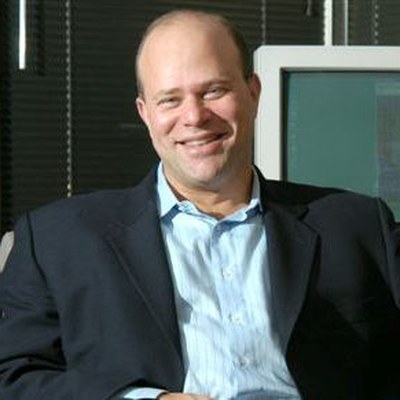 David Tepper
4
thin
6 May 2018 – 18 Sep 2025
-2502 d
-
 Bill Gurley
3
thin
16 May 2024 – 26 Feb 2026
-300 d
-
 Brad Gerstner
17
27 Nov 2024 – 6 Jan 2026
-105 d
-
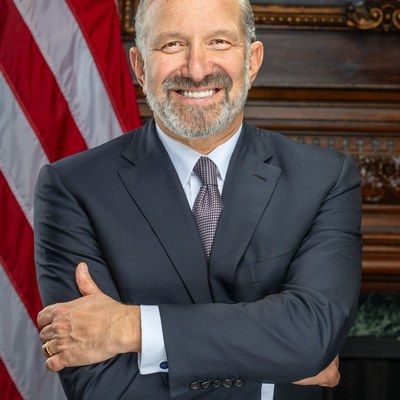 Howard Lutnick
30
12 Mar 2025 – 27 Aug 2026
+0 d
-
 Marc Rowan
14
9 Apr 2025 – 21 Dec 2025
+28 d
-
 Howard Marks
1
thin
21 Apr 2026 – 21 Apr 2026
+405 d
-
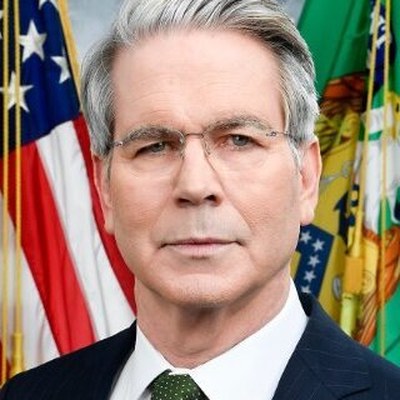 Scott Bessent
14
20 Aug 2026 – 24 Aug 2026
+526 d
-
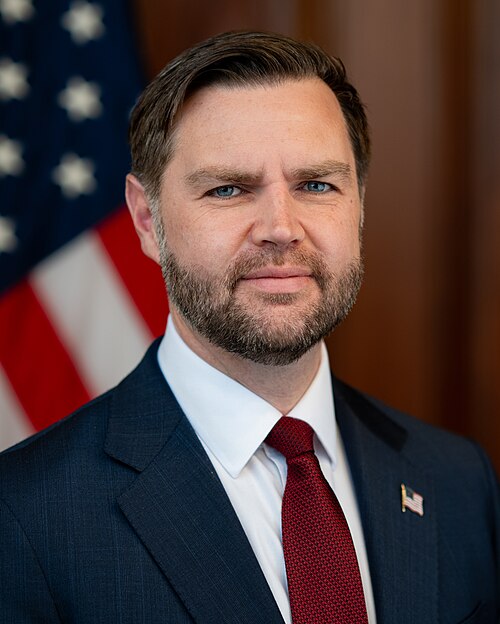 JD Vance
10
21 Aug 2026 – 25 Aug 2026
+527 d
-
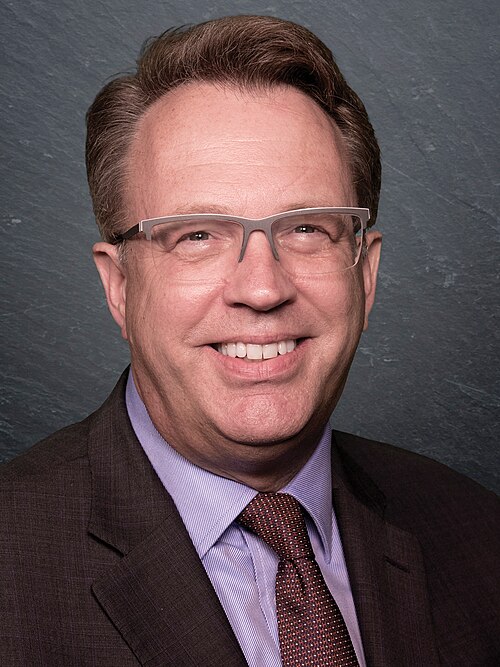 John Williams
33
The chronologysourced and dated, oldest first
-
-
David Tepper
Tepper warns that tariff wars have historically led to real wars, making him nervous about the current path.
“And if you look at the history of of terrorists, they've resulted in, a lot of times, real wars. So I get a little nervous when you start down that path.”
-
-
-
Bill Gurley
Gurley argues deglobalization is highly inflationary and makes US companies less competitive, not more.
“Like, this is just, you know, deglobalization, highly inflationary, and will make our companies less competitive, not more.”
-
Brad Gerstner
Gerstner cites Scott Bessent describing Trump's tariff strategy as loaded gun that will rarely be discharged.
“His nominee to be treasury secretary, Scott Bessent, has said, quote, the tariff gun will be loaded but rarely discharged, end quote.”
-
Brad Gerstner
Gerstner frames Trump's 25% tariff threat as negotiating anchor to achieve objectives, not final position.
“He's gonna raise these tariffs in order to achieve national objectives, and then he's gonna be willing to negotiate away from them, but only if he achieves the national objectives.”
-
-
-
Bill Gurley
Gurley argues tariffs on BYD will make Detroit less competitive rather than more competitive globally.
“Detroit is not globally competitive anymore. And putting tariffs on BYD's cars is not gonna make Detroit more competitive. It's gonna make them less competitive and they're gonna fall further behind.”
-
Brad Gerstner
Gerstner argues Trump may have principled decade-long belief in tariffs beyond tactical negotiating.
“I think that Trump may in fact have a much, much deeper and more principled belief in tariffs. If you listen to his speeches, if you read them, and this goes back over a decade.”
-
Brad Gerstner
Gerstner suggests Trump believes America peaked during 1880s high-tariff era before income tax replaced tariff revenue.
“So prior to 1910, which is when we got the income tax, right, the vast majority,”
-
Howard Lutnick
Lutnick says tariffs are about preventing 75,000 annual fentanyl deaths in America.
“But remember, the tariffs were about fentanyl deaths in America. I mean, the president is not gonna allow Americans, about seventy five thousand, autopsy deaths in America.”
-
Howard Lutnick
Lutnick says tariffs are about preventing 75,000 annual fentanyl deaths in America.
“But remember, the tariffs were about fentanyl deaths in America. I mean, the president is not gonna allow Americans, about seventy five thousand, autopsy deaths in America.”
-
Howard Lutnick
Lutnick claims each trillion dollars of investment brought back equals one percent of GDP growth.
“Each trillion of Donald Trump's investment that he's bringing back with these tariffs is 1% of GDP.”
-
Howard Lutnick
Lutnick claims each trillion dollars of investment brought back equals one percent of GDP growth.
“Each trillion of Donald Trump's investment that he's bringing back with these tariffs is 1% of GDP.”
-
Brad Gerstner
Gerstner coins Besant consensus referencing fully loaded gun rarely discharged, says Trump sits in middle negotiating hard.
“You know, he wrote in his LP letter, a fully loaded gun rarely discharged. And where does the president sit? I think the president sits right in the middle.”
-
Brad Gerstner
Gerstner says CEO uncertainty from tariff negotiations forces real decisions on pricing and supply chains.
“They gotta make real life decisions about what do I do with prices, what do I do with my supply chain, etcetera.”
-
Brad Gerstner
Gerstner argues White House is moving fast because delaying tariff resolution risks 2026 midterms with recession.
“But that's why I think that the speaker and the White House are moving at lightning speed. They know this can't drift into the summer or fall, or you run the risk of starting 2026.”
-
Brad Gerstner
Gerstner calculates proposed tariffs would 10x revenue to $500B while Doge cuts $1T spending, totaling $1.5T austerity.
“If you look at tariffs, they're likely to impose, we currently generate about $50,000,000,000 in tariff revenue. The president is targeting 500,000,000,000, so a 10x increase in tariff revenue.”
-
Brad Gerstner
Gerstner says tariffs aim for $500 billion versus current $50 billion, a 10x increase targeting China, Canada, and Mexico.
“The president is targeting 500,000,000,000, so a 10x increase in tariff revenue. Right? He just announced today, again, China, Canada, Mexico.”
-
Howard Lutnick
Lutnick claims the administration will cut a trillion in expenses and raise a trillion in new revenues.
“I think we're going cut a trillion dollars a year in expense, and then I think we can, through tariffs and other means, we're going to get revenues of a trillion dollars.”
-
Howard Lutnick
Lutnick claims the administration will cut a trillion in expenses and raise a trillion in new revenues.
“I think we're going cut a trillion dollars a year in expense, and then I think we can, through tariffs and other means, we're going to get revenues of a trillion dollars.”
-
Howard Lutnick
Lutnick argues America was built on tariffs with no income tax until 1913, defining Trump's Make America Great Again reference.
“America was built on tariffs with no income tax. No income tax till 1913. None. Greatest, richest country in the world.”
-
Howard Lutnick
Lutnick argues America was built on tariffs with no income tax until 1913, defining Trump's Make America Great Again reference.
“America was built on tariffs with no income tax. No income tax till 1913. None. Greatest, richest country in the world.”
-
Howard Lutnick
Lutnick argues America was richest from 1880 to 1913 using tariffs without income tax.
“No income tax till 1913. None. Greatest, richest country in the world. So when Donald Trump says, Make America great again, what he's talking about is from 1880 to 1913,”
-
Howard Lutnick
Lutnick reveals Kuwait has the highest tariffs against the US despite America freeing them.
“You know who has the highest tariffs against The United States Of America? The number one country with the highest tariffs against The United States Of America? Kuwait. And you think, what? That's insane.”
-
Howard Lutnick
Lutnick claims Kuwait has the highest tariffs against the US despite being freed by America.
“You know who has the highest tariffs against The United States Of America? The number one country with the highest tariffs against The United States Of America? Kuwait.”
-
Howard Lutnick
Lutnick claims Kuwait has the highest tariffs against the US despite being freed by America.
“You know who has the highest tariffs against The United States Of America? The number one country with the highest tariffs against The United States Of America? Kuwait.”
-
Howard Lutnick
Lutnick claims $2 trillion in production commitments returned to US in seven weeks due to tariffs.
“$2,000,000,000,000 of committed domestic production coming back because of his tariffs. TMC saying, I'll build, you know, semiconductor wafers.”
-
Howard Lutnick
Lutnick claims $2 trillion in production commitments returned to US in seven weeks due to tariffs.
“$2,000,000,000,000 of committed domestic production coming back because of his tariffs. TMC saying, I'll build, you know, semiconductor wafers.”
-
Marc Rowan
Rowan says he wouldn't have taken Trump's tariff gamble and cites short-term uncertainty and longer-term brand as risks.
“That's not a gamble I would have taken from the position we had. Having said that, short term uncertainty, that's the risk. Longer term brand, that's the risk,”
-
Marc Rowan
Rowan warns tariff strategy increases risk of financial accident and damages long-term US brand.
“Longer term brand, that's the risk, and the propensity for a financial accident has definitely gone up, but we just don't know yet.”
-
Marc Rowan
Rowan argues the US is the freest trading market considering non-tariff barriers and questions why that should be permanent.
“The US is the second freest trading market in the world financially after Japan and is the freest trading market in the world considering non tariff barriers. Why is that written in stone?”
-
Marc Rowan
Rowan argues the US should reconsider being the freest trading market and could rank tenth or twentieth instead.
“The US is the second freest trading market in the world financially after Japan and is the freest trading market in the world considering non tariff barriers.”
-
Marc Rowan
Rowan prescribes sequencing tariff deals with Mexico and Canada first, then budget, before addressing China and Europe.
“Four four big markets. Mexico, Canada, Europe, China. Get Mexico and Canada done first. Get your budget done.”
-
Marc Rowan
Rowan reports meeting 200 top Mexican business leaders who were unanimously pro-tariff, a shocking finding he shared with administration.
“And I came back and I reported to the administration to a person they were pro tariff, which is a shocking thing to say”
-
Marc Rowan
Rowan quotes a leading Mexican family saying they accept tariffs if needed to make Mexico great again.
“One of the leading families said to me, if it takes tariffs to make Mexico great again, so be it.”
-
Marc Rowan
Rowan reports Mexican business leader told him they support tariffs if needed to make Mexico great again.
“One of the leading families said to me, if it takes tariffs to make Mexico great again, so be it. Imagine an administration that stood up”
-
Marc Rowan
Rowan states he would not have employed this riskier tariff strategy, citing short-term uncertainty and long-term brand risks.
“It's not the strategy I would have employed. It's a riskier strategy than I personally would have employed. I think it has risks short term, uncertainty, longer term brand,”
-
Marc Rowan
Rowan predicts two quarters of negative growth if tariff uncertainty is not resolved.
“They do not hire. They do not make moves. We likely will cause two quarters of negative growth if we, in fact, don't resolve the uncertainty.”
-
Marc Rowan
Rowan predicts two quarters of negative growth if tariff uncertainty continues without resolution.
“We likely will cause two quarters of negative growth if we, in fact, don't resolve the uncertainty. So until we have resolution of what the rules of the game are, it's gonna be slow.”
-
Marc Rowan
Rowan reports a Mexican industrialist told him they would accept tariffs to make Mexico great again.
“As one leading Mexican industrialist said to me, if it takes tariffs to make Mexico great again, so be it.”
-
Marc Rowan
Rowan warns the tariff approach has damaged the US brand for stability and predictability, with long-term costs.
“Longer term, the way we've done this, we have done damage to The US brand. The brand for stability, for predictability, for regularity. That will eventually have some cost to us.”
-
“There's gonna be a lot of alpha. This is a stock pickers market. This is not a market just to own the index and go to sleep.”
-
Brad Gerstner
Gerstner says tariffs and AI create diverging company outcomes requiring active stock picking over index investing.
“So active managers get paid right now to do their job, find those companies that are gonna benefit, and avoid the companies that are gonna get hurt.”
-
Brad Gerstner
Gerstner recalculated tariffs from original $800 billion estimate on Liberation Day to new figure.
“So remember, I came on here on liberation day, and I held up the list of tariffs that that that were on the poster board that Trump showed.”
-
Brad Gerstner
Gerstner recalculates tariffs at $300 billion under new framework versus $77 billion last year.
“And if you put China at 30% on strategic, at 15% on nonstrategic, and the rest of the world roughly at 10%, you come up with about 300,000,000,000 in tariffs.”
-
Brad Gerstner
Gerstner now forecasts $300 billion in tariffs, 4x last year's $77 billion revenue.
“Okay? I just told you that last year tariffs were 77,000,000,000. So that's still a four x increase in tariff revenue,”
-
Brad Gerstner
Gerstner observes import prices rising slower than domestic goods, opposite of expected tariff impact.
“Import prices have been going up at a slower rate than domestically produced goods. Okay, so this is the exact opposite of what you would have expected from tariffs.”
-
David Tepper
Tepper says he doesn't love tariffs but 10% tariffs don't make a meaningful difference to the economy.
“I don't love tariffs. On the other hand, I don't think 10% tariffs, at least at that level, make a difference.”
-
David Tepper
Tepper calls 25% or 50% tariffs destructive, drawing a line above 10% levels.
“I don't love the the 25% or the 50% tariffs. I think they're a little bit destructive.”
-
David Tepper
Tepper finds 25% or 50% tariffs destructive but understands 5-10% tariffs as acceptable policy.
“I don't love the the 25% or the 50% tariffs. I think they're a little bit destructive. But quite frankly, you know, five or 10% or, you know, which are a little bit higher.”
-
Howard Lutnick
Lutnick says he and Trump designed the tariff policy together over a year and a quarter before taking office.
“We talked it through, he taught me, I tell you what, he taught me everything about tariffs. We designed the tariff policy together, and we talked Did you about the believe in tariffs?”
-
Howard Lutnick
Lutnick says he and Trump designed the tariff policy together over a year before taking office.
“We designed the tariff policy together, and we talked Did you about the believe in tariffs? Security I didn't really understand tariffs before I met Donald Trump.”
-
Howard Lutnick
Lutnick says he and Trump designed the tariff policy together over a year before taking office.
“We designed the tariff policy together, and we talked Did you about the believe in tariffs? Security I didn't really understand tariffs before I met Donald Trump.”
-
Howard Lutnick
Lutnick says they implemented full tariff policy by April because they prepared for over a year, faster than anyone before.
“Think about January 20, he walks into the Oval Office, and by April, full on tariff policy is gone.”
-
“the Commerce Department has the most tools, right? It has BIS, right? BIS, the Bureau of Industry and Security, Export controls, two thirty two tariffs, that's the auto tariffs, the pharmaceutical tariffs, the semiconductor tariffs, All steel and aluminum, these, and these are not part of the Supreme Court case. They are not. These are durable, defensible.”
-
Howard Lutnick
Lutnick explains Commerce Department controls export controls and 232 tariffs on autos, pharmaceuticals, and semiconductors.
“It has BIS, right? BIS, the Bureau of Industry and Security, Export controls, two thirty two tariffs, that's the auto tariffs, the pharmaceutical tariffs, the semiconductor tariffs,”
-
Howard Lutnick
Lutnick explains Commerce Department controls 232 tariffs on autos, pharmaceuticals, semiconductors, steel and aluminum through BIS and export controls.
“BIS, the Bureau of Industry and Security, Export controls, two thirty two tariffs, that's the auto tariffs, the pharmaceutical tariffs, the semiconductor tariffs, All steel and aluminum,”
-
Howard Lutnick
Lutnick says 15% tariff rate was chosen as the trade-maximizing number for the EU deal.
“Yes. Right? Because everyone, otherwise, you just raise your price forever. So there's a price where so we knew that 15% was the maximizing number,”
-
Howard Lutnick
Lutnick says 15% tariff on Europe was calculated as the revenue-maximizing rate without reducing trade volume.
“So there's a price where so we knew that 15% was the maximizing number, where you do the most trade with Europe,”
-
Howard Lutnick
Lutnick says 15 percent was calculated as the optimal tariff rate to maximize U.S. revenue without reducing trade with Europe.
“we knew that 15% was the maximizing number, where you do the most trade with Europe, and that's the highest price you could charge without denting that trade.”
-
Brad Gerstner
Gerstner notes NVIDIA dropped to $92 on tariffs but has recovered to $180.
“Remember the deep sea moment? Stock stock was down 25%. And then on the tariff moment, the stock got down to $92 a share. It's at a 180 today.”
-
Marc Rowan
Rowan says immigration reform and tariffs are fractionalizing labor and goods flows in inflationary ways.
“We are, for maybe good and valid reasons, fractionalizing our labor supply through immigration reform. We're fractionalizing our flow of goods through the other tariff and other measures.”
-
-
-
Brad Gerstner
Gerstner reduced exposure to tiny by April 2024 due to fears about the Navarro nuclear option on tariffs.
“By April, we were tiny in terms of our overall exposure to the market because of our fears about I came on this program and talked about, you know, the Navarro nuclear option around tariffs.”
-
Bill Gurley
Gurley warns undiplomatic US behavior could push global partners toward China, which he observed hitting on many cylinders in August.
“And China is, I just spent some time there in August is hitting on many, many cylinders.”
-
Howard Marks
Marks dates Trump's tariff announcement to April 1 as a market turning point.
“April 1, President Trump announced, second, announced some massive tariffs, more much more than had been expected, and put them on, and then a week later paused them, and then put some more on and took some off, and and the the market had a negative reaction.”
-
Scott Bessent
Bessent says 2025 showed fiscal consolidation at 5.7% of GDP, with tariff refunds temporarily inflating the deficit.
“We actually had a fiscal consolidation for the calendar year 2025. You know, we we had we were at about 5.7% of GDP.”
-
Scott Bessent
Bessent says deficit fell to 5.7% of GDP in 2025, cites temporary tariff refunds as factor.
“You know, we we had we were at about 5.7% of GDP. And one of the things that's temporary here that's influencing the deficit has been these tariff refunds.”
-
Scott Bessent
Bessent forecasts 2026 tariff revenue will match 2025 levels and contribute to budget consolidation.
“I would expect that our 2026 tariff income is gonna be roughly what it was in '25, and we're gonna be able to keep that in terms of the budget consolidation.”
-
Scott Bessent
Bessent expresses confidence that Section 301 tariffs will return tariff income to 2024 levels or higher.
“with the section three zero one tariffs, I am confident that we will be back to a, the same level, if not higher, of tariff income for last year,”
-
Scott Bessent
Bessent expresses confidence that Section 301 tariffs will return tariff income to 2024 levels or higher.
“with the section three zero one tariffs, I am confident that we will be back to a, the same level, if not higher, of tariff income for last year,”
-
Scott Bessent
Bessent expresses confidence that tariff income will match or exceed last year's level, attributing most deficit increase to tariffs.
“I am confident that we will be back to a, the same level, if not higher, of tariff income for last year, and that is most of the increase in the deficit.”
-
Scott Bessent
Bessent says Democratic attorneys general sought to return tariff money to corporations, calling it corporate welfare.
“Democratic attorney generals who filed a ridiculous lawsuit against this administration wanted the money to go back to the payer of record, So that is corporate welfare.”
-
Scott Bessent
Bessent argues the American people already had the tariff money through the U.S. treasury.
“The American people had that money. And if I hear another Democratic legislature say make the inane remark, the American people should get the money.”
-
Scott Bessent
Bessent argues the American people already had tariff refund money through the US treasury before being forced to return it.
“The American people had the money in the US treasury, and we were forced to give it back.”
-
Scott Bessent
Bessent says Section 301 tariffs, which survived over 5,000 lawsuits, will restore the tariff income to government.
“But the using the three o ones, which have survived more than 5,000 suits, that we will get that tariff income back.”
-
Scott Bessent
Bessent says Treasury will recover tariff income using Section 301 authority that has survived over 5,000 lawsuits.
“using the three o ones, which have survived more than 5,000 suits, that we will get that tariff income back.”
-
Scott Bessent
Bessent calls tariff refunds a corporate bonanza because companies keep the discounts they received from Chinese suppliers.
“what you are seeing is that we don't know the discount that Target got from the Chinese suppliers. Oh, gotcha. You know, this is a corporate bonanza, which I said it would be”
-
JD Vance
Vance claims trillions of dollars of new investment have poured into U.S. manufacturing facilities under Trump.
“We have seen trillions, with a t, trillions of new dollars of investment pour into The United States Of America to build new smelters, build new manufacturing facilities, build new mills, build new everything.”
-
JD Vance
Vance cites economists linking opioid crisis to locations where jobs were shipped overseas.
“Now economists have measured the ways in which the opioid crisis exploded in the very locations where jobs were shipped overseas.”
-
JD Vance
Vance claims Canadian dairy enters Maine at 0% tariffs while Maine dairy faces 250% tariffs.
“If you buy dairy, cheese, butter, milk that comes from Canada into Maine, you probably are buying a product that has 0% tariffs on it.”
-
JD Vance
Vance claims Canadian dairy enters Maine at 0% tariffs while Maine dairy faces 250% tariffs.
“If you buy dairy, cheese, butter, milk that comes from Canada into Maine, you probably are buying a product that has 0% tariffs on it.”
-
Scott Bessent
Bessent questions whether Carney is benefiting himself or the Canadian people with his approach.
“And I think one has to act ask oneself, is he trying to benefit himself, the Liberal Party, or the Canadian people?”
-
Scott Bessent
Bessent says Carney rose to power on anti-American platform after being 20 points behind.
“prime minister Carney Carney rose to power on an anti American, anti Trump platform. I believe he was more than 20 points behind,”
-
JD Vance
Vance outlines three criteria the Trump administration wants companies to meet: buy, hire, and invest American.
“We want companies that buy American, that hire American, and that invest in American communities.”
-
JD Vance
Vance declares Canada and China the two worst countries for trade policy anywhere in the world.
“Canada and China have been the two worst countries when it come to trade policy anywhere in the world.”
-
JD Vance
Vance accuses Canada of applying ridiculous tariffs on Maine products without expecting retaliation.
“They apply ridiculous tariffs and other non tariff duties on Maine products coming into to Canada, and they don't expect Maine or anybody else to fight back, we're sick of that.”
-
JD Vance
Vance accuses Canada of applying ridiculous tariffs on Maine products without expecting retaliation.
“They apply ridiculous tariffs and other non tariff duties on Maine products coming into to Canada, and they don't expect Maine or anybody else to fight back, we're sick of that.”
-
JD Vance
Vance accuses Canada of serving as a backdoor for Chinese goods and favoring them over Maine products.
“We know that Canada allows itself to be used as a backdoor for Chinese goods. They treat Chinese goods more fairly than they do the goods that come for the people of Maine.”
-
JD Vance
Vance reveals he thought a trade deal with Canada was reached but now seeks to send a clear message.
“I frankly thought we had a deal. I think that we should have a deal, but I think that we need to send a message loud and clear to the prime minister of Canada.”
-
Howard Lutnick
Lutnick claims Canada walked away from a finalized trade deal that both sides had agreed to for political reasons.
“We had a deal. We shook hands. The president announced it. Right? Everybody was positive. Canada made the decision for political purposes.”
-
“I met with LeBlanc 10 times. I spoke to Carney twice. These were not raised. These were not part of it. This is different thing.”
-
-
-
John Williams
Williams says first-half GDP growth was about 1.5 percent, well below last year's 2.5 percent pace.
“Looking through the downs and ups in the data, growth in the first half of the year was about 1-1/2 percent, well below last year’s 2-1/2 percent pace.”
-
John Williams
Williams says tariff effects on inflation should begin to dissipate later this year.
“Inflation remains somewhat elevated due to the effects of tariffs, but those effects should begin to dissipate later this year.”
-
John Williams
Williams concludes tariffs have been overwhelmingly borne by domestic businesses and consumers, not foreign producers.
“Based on granular analysis of the data in hand, we can draw a few conclusions. First, the tariffs have been overwhelmingly borne by domestic businesses and consumers, rather than by foreign producers.”
-
John Williams
Williams concludes tariffs have been overwhelmingly borne by domestic businesses and consumers, not foreign producers.
“First, the tariffs have been overwhelmingly borne by domestic businesses and consumers, rather than by foreign producers.”
-
John Williams
Williams estimates tariffs have added roughly half a percentage point to current inflation running at about 2.75 percent.
“My current estimate is that the increase in tariffs to date has contributed around one half of a percentage point to the current inflation rate of about 2-3/4 percent.”
-
John Williams
Williams notes inflation expectations have receded to pre-pandemic averages after April tariff pullback.
“Longer-run inflation expectations have remained stable. And with the pullback in tariffs since early April, short- and medium-term inflation expectations have receded back close to their pre-pandemic averages.”
-
John Williams
Williams says short- and medium-term inflation expectations returned to pre-pandemic levels after April tariff pullback.
“And with the pullback in tariffs since early April, short- and medium-term inflation expectations have receded back close to their pre-pandemic averages.”
-
John Williams
Williams says inflation is at 4 percent, driven first by higher tariffs on imported goods.
“This elevation primarily reflects three drivers. The first is the effect of higher tariffs on imported goods.”
-
John Williams
Williams identifies tariffs, Middle East conflict, and AI-driven demand as the three drivers of elevated inflation.
“The first is the effect of higher tariffs on imported goods. The second is supply chain disruptions and higher energy and commodity prices owing to the conflict in the Middle East.”
-
John Williams
Williams attributes about one percentage point of March inflation to tariffs and energy prices.
“The combination of higher tariffs and energy prices has contributed about a percentage point to that figure.”
-
John Williams
Williams anticipates tariff pass-through to prices will mostly complete in the next few months.
“I anticipate the pass-through of current tariffs to prices to be mostly completed in the next few months and therefore their effects on the inflation rate to fade.”
-
John Williams
Williams states inflation is around 3 percent with tariffs adding 0.5 to 0.75 percentage points.
“inflation is currently hovering around 3 percent, with tariffs contributing between one half and three quarters of a percentage point to this figure.”
-
John Williams
Williams says tariffs have been overwhelmingly borne domestically by U.S. firms and consumers per New York Fed analysis.
“First, the tariffs have overwhelmingly been borne domestically—a New York Fed analysis estimates that most of the burden has fallen on U.S. firms and consumers.”
-
John Williams
Williams says average effective tariff rate estimates range between 15 and 20 percent.
“Combining enacted and announced tariffs, estimates of the resulting average effective tariff rate range somewhere between 15 and 20 percent.”
-
John Williams
Williams notes actual tariffs in effect recently were much smaller than announced rates.
“But actual tariffs in effect in recent months were much smaller than that, as seen by the amount of tariff revenue collected each month.”
-
John Williams
Williams expects new tariffs to replace expiring ones without adding significant additional price pressure.
“My expectation is that any new tariffs will primarily replace those that were curtailed or will soon expire, so we shouldn’t see a significant additional impulse on prices from this source going forward.”
-
John Williams
Williams estimates tariffs have added 0.5 to 0.75 percentage points to the current 3 percent inflation rate.
“My current estimate is that, to date, the increase in tariffs has contributed around one half to three quarters of a percentage point to the current inflation rate of about 3 percent.”
-
John Williams
Williams estimates effective tariff rates at 15-20 percent, with receipts rising from 2.25 percent to 10 percent by July.
“By comparison, net tariff receipts as a share of imports rose from about 2-1/4 percent in the first three months of the year to around 10 percent in July.”
-
John Williams
Williams reports tariff receipts as share of imports rose from 2.25 percent early year to 8 percent in May.
“Net tariff receipts as a share of imports rose from about 2-1/4 percent in the first three months of the year to about 8 percent in May.”
-
John Williams
Williams reports manufacturers saw 20 percent cost increases from tariffs, service firms 15 percent.
“Manufacturers indicated that over the past six months, the cost of their tariffed goods had risen by about 20 percent, on average. For service firms, the increase was about 15 percent.”
-
John Williams
Williams says there are no signs of significant second-round effects from tariffs.
“There are no signs of significant second-round effects from tariffs spilling over to the rest of the economy,”
-
John Williams
Williams sees no significant second-round tariff effects or labor market inflation pressures.
“There are no signs of significant second-round effects from tariffs spilling over to the rest of the economy, and the labor market is not adding to inflation pressures.”
-
John Williams
Williams notes three-quarters of businesses passed tariff costs to customers, half of service firms fully.
“The survey’s key finding is that about three-quarters of respondents in both sectors passed along at least some of these higher costs to their customers by raising prices.”
-
John Williams
Williams sees no significant second-round effects from tariffs spilling over to broader economy yet.
“In addition, underlying inflation outside of imported goods and energy has so far remained stable, and there are still no signs of significant second-round effects from tariffs spilling over to the rest of the economy.”
-
John Williams
Williams reports three-quarters of businesses passed along tariff costs, with a third to half fully passing them through.
“Indeed, almost a third of manufacturers and nearly half of service firms reported fully passing along all tariff-related cost increases.”
-
John Williams
Williams expects tariffs to boost overall prices by 1 to 1.5 percent through first half of next year.
“All in all, I expect tariffs will boost overall prices by a total of between 1 and 1-1/2 percent, with these effects continuing through the first half of next year.”
-
John Williams
Williams expects tariff effects on aggregate data to increase in coming months despite modest impacts so far.
“All in all, although we are only seeing relatively modest effects of tariffs in the hard aggregate data so far, I expect those effects to increase in coming months.”
-
John Williams
Williams forecasts tariffs will add roughly 1 percentage point to inflation through early 2026.
“Overall, I expect tariffs to boost inflation by about 1 percentage point over the second half of this year and the first part of next year.”
-
John Williams
Williams expects tariffs to have one-off price effects and inflation to decline later this year after peak tariff impact.
“Given the lack of second-round effects and well-anchored inflation expectations, I expect the tariffs largely to have one-off effects on prices.”
-
John Williams
Williams expects uncertainty, tariffs, and reduced immigration to restrain spending and labor force growth.
“But based on what the data tell us today, I expect uncertainty and tariffs to restrain spending and reduced immigration to slow labor force growth.”
-
John Williams
Williams estimates tariffs have added 0.5 to 0.75 percentage points to current inflation without second-round effects.
“My estimate is that increased tariffs have contributed about one half to three quarters of a percentage point to the current inflation rate.”
-
John Williams
Williams sees no second-round effects from tariffs, citing anchored expectations and no supply chain bottlenecks.
“In particular, inflation expectations are very well anchored, no broad-based supply chain bottlenecks have emerged, labor markets are not creating inflationary pressures, and wage growth has moderated.”
-
John Williams
Williams expects tariff effects to fade by mid-2026, with inflation reaching 2% in 2027.
“As a result, I expect the effects of tariffs on inflation will play out over the rest of this year and the first half of next year.”
-
Where they overlapsame programme, same subject
- Bill Gurley and Brad Gerstner — BG2 Pod, 1 appearance together
- CNBC Television also carries Brad Gerstner, David Tepper, Marc Rowan and Scott Bessent on this subject, at different times.
- Forbes Breaking News also carries Howard Lutnick, JD Vance and Scott Bessent on this subject, at different times.